
The Complicated Danger Of Walking And Driving In America
Infrastructure reform undoubtedly needs to happen, but until it does, only we can protect ourselves and each other
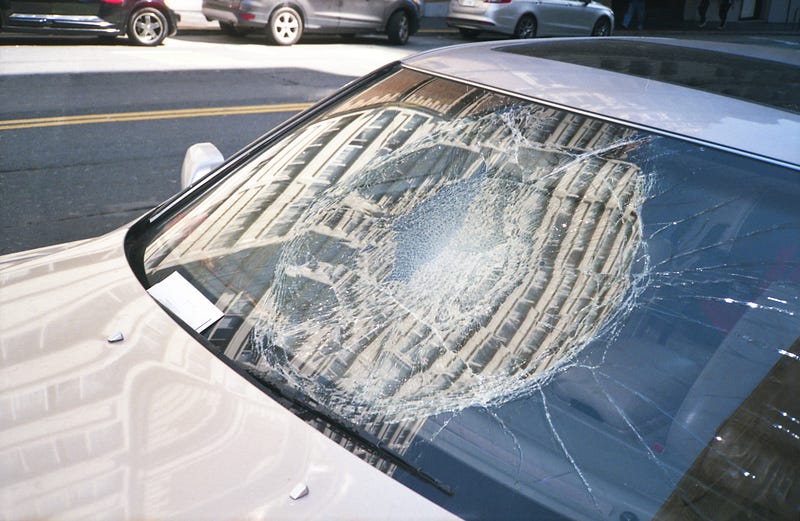
I recently listened to an episode of The Daily that asked Why Are So Many More Pedestrians Dying in the U.S.? This was a podcast about the rising number of pedestrian traffic deaths, especially at night. The podcast interviews New York Times writer, Emily Badger, who talks about how 3,000 more pedestrians died in 2021 compared to 2009, and the causes are largely a mystery. This is a uniquely American problem, as this rise is not seen in other countries. In fact, pedestrian deaths are falling in many other countries.
Badger points to a plethora of reasons. The most obvious one is the proliferation of smartphones. Drivers and pedestrians have been more distracted by their phones since the iPhone was introduced in 2007 and became ubiquitous shortly thereafter. There has also been a growth in technology inside vehicles that are essentially like smartphones themselves, with screens allowing drivers not only to use navigation apps, but tinker with changing music and podcasts.
However, other countries have these vehicles and smartphones too. So why is this still a uniquely American problem? One reason is that American drivers can be more distracted since cars have automatic transmissions, while in Europe, most cars have manual transmissions, which forces drivers to pay more attention. The implication is that automatic transmissions make drivers pay attention a lot less and allow drivers to spend a lot more time distracted.
Badger did, however, try to get all sides of the story. From the perspective of many drivers, the problem is pedestrians. Pedestrians are, allegedly, the ones who are more distracted, who repeatedly don’t look both sides prior to crossing the street. According to drivers, pedestrians, since the pandemic, seem to jaywalk more often and not cross at actual crosswalks and aren’t wearing light colors as often.
But Badger’s reporting finds that the biggest problem is the American road itself. She reports on a major demographic trend where a lot of Americans are moving from the cities and the suburbs, and this trend, coupled with the rise in American homelessness, is leading more pedestrians to more dangerous roads in the suburbs, particularly when it’s dark outside at night. And this transportation system, especially in the suburbs, is not necessarily designed to protect pedestrians as much as much as these systems are designed to incentivize speed and convenience. Roads in America are just not that safe, and often, penalties for running red lights and speeding are minimal. The problem, according to Badger, is that the American transportation system is just not designed for pedestrians.
By contrast, a January New York Times Magazine article, Why Are American Drivers So Deadly, highlights how many American drivers have gotten significantly worse at driving since the start of the pandemic. The author, Matthew Shaer, ends the article with an anecdote of how his Uber driver steered in and out of traffic relentlessly and drove onto the curb to get past a UPS truck trying to make a left turn. When he told his driver he would have been okay waiting for the UPS truck to turn, the driver said that’s just how she drove — and that’s just how everyone drove. But Shaer also interviewed many doctors, the Department of Transportation, police officers, and researchers who reported car accidents these days are some of the worst they’ve ever seen.
Shaer cited a report from the AAA Foundation for Traffic Safety, which gave a survey of 2,500 licensed drivers which found 22% of drivers admitted to changing lanes at high speeds or tailgating, 25% admitted to running a red light, 40% admitted to holding a phone while driving, and 50% admitted to speeding above 15 miles per hour. Never mind the fact that these are people knowingly reporting driving behaviors they shouldn’t — who knows how underreported these numbers are compared to the actual population, which includes people who would never admit their worst behaviors and impulses to a stranger.
The problem, it seems, is not just that the American transportation system isn’t great, but that drivers are worse, pedestrians are more careless, drivers are more distracted, and roads were not designed for pedestrians. The problem, then, is everyone.
I am a marathon runner, and during the week, when I have a lot going on with work and law school, I often run at night since it’s the only time I have time and don’t have time constraints. As a runner. , I do not expect drivers to stop.I don’t expect them to stop when I have the right of way on a turn. I don’t expect them to stop when they have a stop sign. I do not expect them to stop even when they have a red light. I have seen far too many run stop signs and red lights in my city (Baltimore) to take the risk, and that problem seems to spread to the surrounding suburbs. Most of the time, drivers do stop, and I won’t say the problem is the majority of drivers.
The problem is the 10% of exceptions that ruin my expectations of everyone else and make me prepare for the worst possible scenario. It’s the cars that don’t stop at stop signs, the cars turning that do not yield to me as a pedestrian. One time, I was almost hit at a crosswalk that explicitly told drivers to “stop for pedestrians.” I went, expecting the drivers to stop since the speed limit was 25 miles per hour. I’m not sure if the driver did not see me, but they were going 40 miles per hour and did not stop, and I had to come to a complete stop abruptly in the middle of the road to avoid getting run over.
But I am also a driver on a road that exemplifies the problems of the American suburban road: Reisterstown Road in Baltimore. Reisterstown Road is a very busy road in northwest Baltimore that has two lanes going in each direction, and the speed limit is 35 miles per hour. But more often than not, drivers are driving much faster than 35 miles per hour.
In July of last year, there was a pedestrian death on Reisterstown Road, and the driver had fled the scene. There was another hit-and-run death about half a year later, at 4:02 a.m.
From a driver’s perspective, however, pedestrian behavior on Reisterstown Road is a huge part of the problem. Often, it seems like so many people don’t look when they cross, and just cross whenever they want, expecting drivers to stop. I have seen, multiple times, pedestrians who stand in the double yellow lines in the middle of the road, expecting drivers going 35 miles per hour or even faster to just never run into those double yellow lines. Because of how busy traffic is, these pedestrians often need to wait for more than two minutes in an incredibly dangerous part of the road.
I used to be more judgmental of these pedestrians, but as a runner and pedestrian on this road myself, I started to see why so many pedestrians behaved in this manner. This road had crosswalks very sparingly. I would estimate that it only had a crosswalk every quarter mile or so on my stretch of the road. If a pedestrian lived in between these quarter-mile gaps and needed to cross, then why wouldn’t they do so as jaywalkers in the middle of the road? I have crossed in the middle of the road myself on various occasions after I looked both ways and saw there are no cars coming, which is a much more convenient option than walking for 20 minutes and then waiting for two or more minutes at an inconvenient crosswalk.
This is just not a road designed for pedestrians — it is a road designed for drivers to drive as fast as possible and be inconvenienced by stops as little as possible.
But I would be remiss to sit here and not admit that I am part of the problem. I contribute through my speeding. I often match the speed of other cars, but I do often just drive naturally and look down, finding that I’m actually driving much faster than I thought I was driving. I drive faster and angrier when I’m being cut off. I admit that I sometimes change lanes too often when I’m in a rush in the morning to make the lights I need to make to not be marked late at work.
I admit that my driving has gotten worse and more aggressive since the pandemic started, and I suspect that most people are not the most ideal and picturesque drivers — we’re all human at the end of the day. Whether everyone is willing to admit their poor driving habits, publicly, is another question. There is most certainly a part of me that would logically acknowledge that more red lights and speed cameras on Reisterstown Road would make me safer and everyone else safer, but there is a more innate part of me that would be annoyed at the inconvenience.
So the problem of pedestrian deaths at night and the broader problem of unsafe streets for pedestrians in general is very multifaceted. I honestly thought that Badger’s conclusion that the problem is just within the American transportation system and road infrastructure was a bit of a cop-out. Yes, my anecdotal experiences as a driver and pedestrian may not be everyone’s by any stretch of the imagination, but we can all be part of the solution as we may all be part of the problem.
Each one of us can work to be less distracted by technology, more vigilant of our surroundings, and as defensive as possible. As a public health matter, I am not an expert. But as a practical matter for our own personal safety, I do think we need to assume the worst of our fellow drivers and pedestrians — that anyone can change into your lane at any time, that everyone is on their phone, that any pedestrian can suddenly emerge on the street at any time.
Infrastructure reform undoubtedly needs to happen, but until it does, only we can protect ourselves and each other.