
The Complete Guide To Coffee and Health
The science and the (surprising) real-life implications of your favorite hot beverage

I used to run a specialty coffee company. That gave me an excuse to nerd out on all things coffee. Now, I run a health-tech company. This has given me an excuse to nerd out on all things health-related. Even in my coffee-nerdin’ days, I was mostly interested in the plant pharmacology behind coffee, and how the nuances of this popular beverage can impact the body.
I’m bringing the totality of my experience to this guide to help you understand exactly how coffee affects your health, so you can decide what role you want it to play in your life going forward. Will it be a trusted ally? An old friend who visits only on occasion? A secret fling? Or perhaps an ex-lover you sometimes dream of late at night…
Let’s Start From the Beginning: What Is Coffee?
I’m pretty sure most people don’t know what coffee actually is. We call them coffee “beans” because they look like beans. But that term is far from accurate. Beans are the seeds of various legumes while coffee “beans” are the seeds of a fruit, namely the coffee cherry. These cherries come from the coffee tree which grows naturally in tropical climates near the equator in the shade of the forest or jungle.
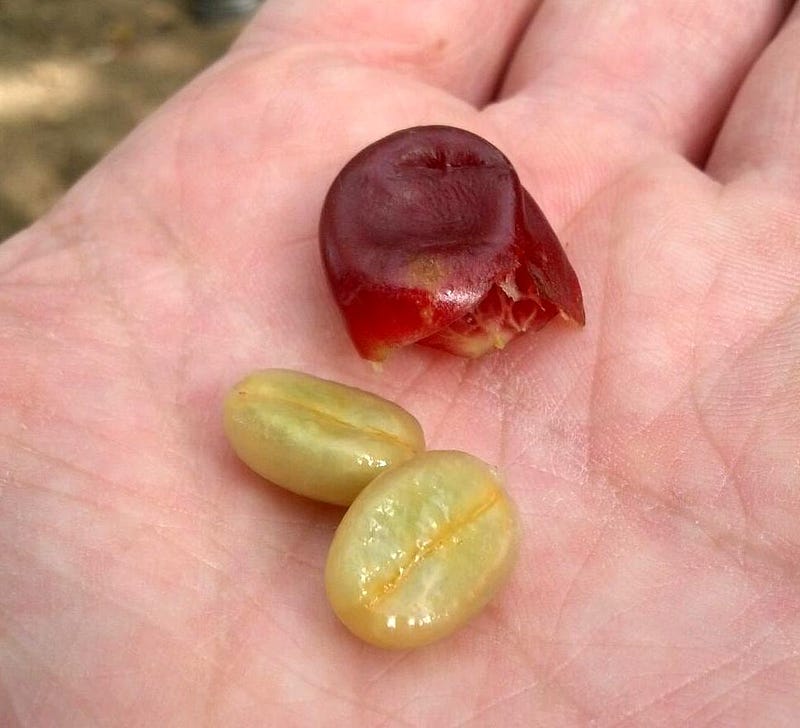
Now, I don’t know about you, but I normally don’t eat the seeds of regular cherries. They seem kind of… “chewy”.
Coffee seeds are special, however, due to the processing they go through, and the liquid form in which we consume them. To make coffee, the skin and pulp are removed from the seeds, either partly or completely, and the seeds are left to ferment and dry. After this, the seeds are shipped to roasters around the world who make and sell the final product as we know it: roasted coffee beans.
Fun fact: one coffee tree takes about five years to reach maturity, and will then produce just 1 kg (2 lbs) of green coffee beans per year, which yields about half of that as the final product after processing and roasting.
What Happens in the Body When You Drink Coffee?
During the roasting process, all sorts of chemical reactions take place. As a result, coffee can contain more than 1,000 chemical compounds, making it several times more complex than wine.
The most interesting of these compounds for our quest are caffeine and polyphenols.
Coffee is also a common food at risk of mold growth. If this happens, and you drink the coffee, it will likely have an additional impact on your health — but more on this later.
Before we dig in, I believe it is important to portray caffeine in a very particular light. The caffeine in coffee comes from the seeds, which are generally the most biochemically protected part of any plant (because their genetic linage depends on the seeds). So, it’s not surprising to learn that coffee trees produce caffeine in their seeds primarily as a pesticide. Caffeine is produced for this purpose by other plants as well, such as the guarana, tea, and cacao plants — yes, there is caffeine in your chocolate! (Caffeine is actually what gives the strong, bitter taste to coffee, which makes a lot of sense when viewed in this light).
So, when you drink coffee, what you are really doing is loading your body with a highly unnatural amount of natural pesticide (yum)!
Now, that sounds really bad. But it’s not that simple. Humans run a different biochemical “operating system” than plants do. And our bodies are much bigger than the usual pests that threaten the coffee plant. So, as we shall see, drinking coffee likely has both positive and negative effects on the human body.
Caffeine & sleep
The biggest misconception there is about coffee is that it gives you energy. People say things like, “don’t talk to me before I’ve had my morning coffee”. I’m sorry to tell you, but if that’s you, it says much more about the state of your overall health (and personality) than it does about caffeine!
The main characteristic of caffeine after it enters the body seems to be as an adenosine antagonist, meaning it competes with the molecule adenosine to bind to receptors in your cells — the more caffeine you have in your system, the less adenosine can bind to these receptors.
This is important because adenosine plays a vital role in sleep. Primarily, it affects your deep sleep. You can think of adenosine as a measure of the wear and tear that occurs on your body’s tissues during the day, and therefore how much deep sleep you need to repair them during the night. Based on this, adenosine levels build up over the course of the day and contribute to making you sleepy. Caffeine prevents this buildup, by taking up the “parking spots” in the adenosine receptors.
So, coffee doesn't give you energy, it merely interrupts the natural process of becoming sleepy during the day.
It’s like Michael Pollan describes in this video, “caffeine borrows energy from your future, and gives it to you in the present”.
Caffeine, hormones, and the nervous system
However, coffee does also have psychostimulant effects, such as increased cognitive performance and mood. This is likely what most people refer to when they say it gives them energy, and why lots of people gravitate towards drinking coffee when they need to focus, such as during work hours.
Caffeine causes dopamine receptors in the brain to be more receptive, which is one of the reasons it makes you experience increased alertness and improved mood, and probably one reason most people like coffee so much.
This heightened alertness makes sense if we recall the fact that you are actually loading your body with a plant toxin — what you are really doing is putting your body in a prolonged stress response! In fact, when you drink coffee, stress hormone levels like adrenaline, noradrenaline, and cortisol increase. It’s also possible that this causes blood pressure to go up, at least in the few hours after drinking coffee.
Insulin sensitivity goes down, which isn’t unexpected given the rise in stress. This is generally not a good thing, as it could contribute to weight gain etc.
Note: one caveat to all of this is that the body seems to get used to the regular consumption of caffeine (it can even be addictive). According to one study, cortisol responses to caffeine are “reduced, but not eliminated, in healthy young men and women who consume caffeine on a daily basis”.
Polyphenols & hormesis
Besides caffeine, coffee also contains various polyphenols. You might have heard of these before — the more “famous” ones are resveratrol and curcumin, found in red wine and turmeric respectively.
Diets rich in polyphenols have been associated with a lower risk of developing some age-related diseases, which has been explained by their anti-oxidant effects (it’s important to note, however, that the overall research on polyphenols and health is unclear).
What many polyphenol enthusiasts miss is that polyphenols may not actually be anti-oxidants at all! They have also been shown to have pro-oxidant effects and the seeming anti-oxidant qualities could instead be caused by the body’s own anti-oxidation mechanisms as a response to this pro-oxidant exposure.
This makes sense when considering the role of polyphenols in plants: they work either as a pigment or a pesticide. Those that work as pesticides seem likely to have pro-oxidant effects. The main polyphenol found in coffee is chlorogenic acid, and this molecule, just like caffeine, is indeed a pesticide.
Whether this “challenge” to the body is a net positive or a net negative is debatable. But if these compounds have a positive effect on your health, the reason is probably that they cause a so-called hormetic response (xenohormetic to be precise) which really just triggers the body’s own mechanisms for maintaining health & vitality (perhaps caffeine also contributes to this hormesis?).
Mold & mycotoxins
Lastly, coffee is a common food at risk of mold growth, which often happens during shipment and storage.
In some circumstances, mold can produce mycotoxins which are capable of causing disease and death in humans and other animals. One type called aflatoxin, for instance, is the most potent natural carcinogen known.
If the coffee you drink has mold on it, it could have some negative effects on your health compared to “clean” coffee. Some signs to look out for are headaches, weakness or fatigue, respiratory problems, or chronic stomach problems.
What Do the Studies Say About Coffee And Health?
A significant amount of research exists linking coffee to health. Most of this research has to do with metabolism and related diseases such as diabetes type 2, vascular & heart disease, cancer, dementia, and stroke. These are some of the most common causes of death in the modern world, so this roughly translates to a connection between coffee and a longer lifespan.
Let’s take some examples:
- Diabetes. In a 2014 meta-analysis with more than a million participants, it was found that drinking more coffee (up to 6 cups a day) was correlated with an up to 33% decrease in relative risk for developing diabetes type 2.
- Heart disease. A study published in the medical journal Nature Communications found regular caffeine consumption is linked to increases in the liver’s ability to remove inflammatory excess cholesterol particles from the bloodstream, protecting against heart disease.
- Dementia & stroke. Another study published in PLOS Medicine found that having both coffee and tea in the diet was associated with a reduced risk of dementia and stroke, compared with those who didn’t drink either tea or coffee.
- Cancer. Some of the by-products of the roasting process have been rumored to increase the risk of cancer in humans, but according to this review, no clear evidence for this exists.
Please note! This research only shows an association between coffee consumption and health — it doesn't prove that coffee is the cause of those associations.
What Do the People in the Trenches Experience?
Through my work, I know and interact with all sorts of health practitioners, from functional nutritionists to medical doctors to health coaches.
I used my Instagram to poll some of them and got some interesting responses. Whether or not they think coffee is a good idea for their patients (and themselves) basically comes down to this: it depends.
For example, if you’ve had past experiences with substances that affect your nervous system and hormones, such as drug addiction, coffee may trigger a too “exhilarating” dopamine response to be a net positive for you.
Or, if your metabolic health is already compromised, coffee (especially in the morning) can trigger big spikes in blood sugar. The same thing goes for autoimmune conditions, where coffee is often a trigger for flareups.
For some people, coffee seems to cause adrenal issues, and for some women, it even disturbs their cycle.
For all of these reasons, many practitioners use the same strategy: they have patients take a break from coffee from time to time to see how their body reacts.
How Everything Fits Together
By now you should be thoroughly confused. On the one hand, coffee contains several types of natural pesticides and effectively puts you in a prolonged state of stress, which is why it makes you alert and productive. On the other hand, a significant amount of research indicates an association between coffee and long-term health benefits.
So, what should you make of all this, and what does it mean for you?
Scientists are scratching their heads to figure out which specific chemical compounds are responsible for the seeming health benefits of coffee, and how. But I actually think there is a much simpler explanation. I believe that coffee, fundamentally, is not good for you (it’s a highly processed food full of plant toxins)!
However, I believe there are two specific reasons why it seems to be linked to better health and a longer life span.
The first reason is the simple fact that coffee is a treat. We all crave little breaks from the tediousness of life, and oftentimes this takes the form of a treat. This should not be underestimated; instead of eating an extra snack, or craving dessert after a meal, people who drink coffee get their treat from this relatively healthy, zero-calorie drink. If you take this small behavioral change over a whole lifetime, this alone could explain the potential health benefits of coffee!
But then there is also the fact that coffee creates real, measurable increases in alertness, focus, and as a result; productivity. This, on average, will lead to higher income, which is perhaps the most consistent factor associated with better health.
So, if you want to allow your body to be naturally healthy, you should probably never drink coffee. But if you drink coffee, it will likely give you a lot of pleasure over your lifetime, and it could help you achieve a higher income and higher standard of living, which comes with its own associated health benefits.
To make decisions about your own coffee consumption, to get the most benefits and avoid the most downside, there are a couple of factors you need to consider:
Amount
The amount of coffee you drink is highly relevant. Caffeine has an average half-life of five hours in the body, so some of the caffeine you consume in the morning will “stack” on top of the caffeine you consume later in the day. Drinking coffee too late in the day means you will have a significant amount of caffeine in your system as you are trying to go to sleep.
Product quality
There is a huge difference between coffee and coffee. High-quality coffee will be much less likely to contain mold, will taste better, and will likely have more chemically intact flavor compounds (less oxidation of the fats, etc.)
- Roast. Go for light or medium roast, so you can taste the quality of the actual coffee. This will also decrease the acrylamide content and other products of burning starch-rich organic matter, which may or may not be bad for us.
- Origin. Buy from single-origin sources, meaning all the coffee beans in the bag come from the same plantation. This knowledge alone will almost ensure you are not buying a low-quality commodity coffee.
- Roaster. Get to know your roaster. You will very quickly get a sense of their values, which will help you make informed decisions about the coffee you buy.
Besides, by buying higher quality coffee, you are also making a more sustainable choice, as the production of commodity coffee shares many of the same problems as industrial agriculture in general.
Additives
Be honest with yourself — are you drinking coffee or are you using coffee as an excuse to drink processed milk (or even worse — plant ”milk”) and sugar? As soon as you start adding things to your coffee, you are very quickly moving into a territory where drinking it is not worth it from a health perspective.
Genetics
Different people react differently to coffee. The easiest way to figure out how you react is by trial and error. When it comes to how long caffeine will stay in your body, you can do a simple DNA test. (I personally am a slow burner, although I'm not really experiencing this in real life).
How I Use Coffee
I’ve spent the better part of a decade tinkering with and optimizing my coffee intake. On several occasions, I stopped drinking coffee for 1–2 weeks and noticed very slight differences. My conclusion is that for me, it raises overall stress hormone levels slightly so that I’m a little more sensitive to other stress factors in my life. But as long as I‘m smart about the factors laid out above, I am able to make my coffee consumption a net positive.
- I usually drink exactly two large black cups of coffee (I don’t put anything in it) per day — one early in the morning, and another sometime between 12 pm–2 pm.
- I only drink really high-quality coffee, almost exclusively single-origin “specialty coffee” from roasters I know and trust. This way, I minimize the risk of mycotoxin exposure from mold (and also, it tastes SO much better).
- I don’t drink coffee out of habit. If I don’t really feel like having a coffee when I usually have it, I will skip it for that day.
Finally, it should be said that despite all these scientific and philosophical ramblings, I view coffee as one of the few things in my life that don't factor into my health choices. I just love it too much, and I think it’s worth having it in my life! I guess in a way, coffee is my trusted, healthy ally, AND my dirty, dirty, mistress — all at the same time.
What role will coffee play in your life going forward?


