
The Commonplace Book: A Writer’s Secret Weapon
There’s nothing more powerful than a mind filled with clarity.
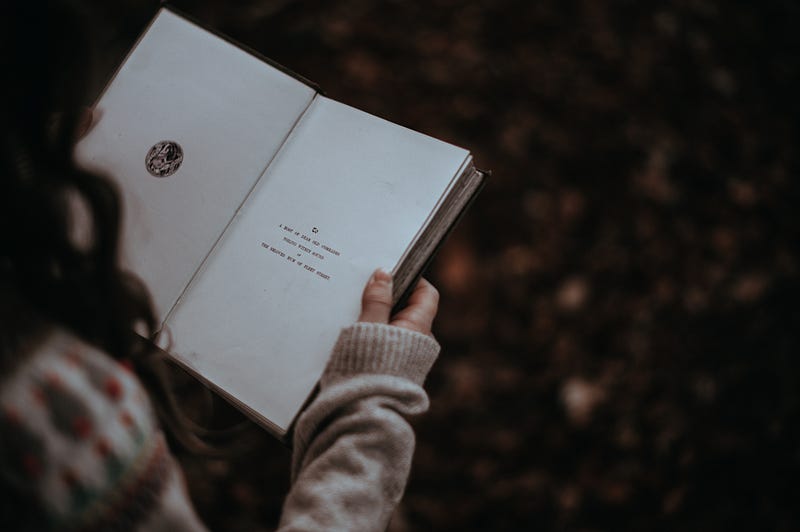
The thing about our ability to create thoughts is that this process never stops, especially when you’re a writer; it all becomes an endless cycle of turning words into reality.
We’re thinkers by nature, and that means we’re endless thinkers; the mind never sleeps. They’re always forming in your mind, and sometimes that becomes a burden like you can’t always make sense of what you’re feeling, and it becomes a mass of tangles in what I like to call ‘your mental realm.’
That’s hard, especially when you go to bed and then you’re left pondering about all of those thoughts in your mind and trying so very hard to connect their dots. But if you can’t see where they’re meant to link up and become one, how do you even do that?
As a writer, a big part of our responsibility is making sense of everything we see, think, feel, and imagine. When the world so very often doesn’t make sense, that task seems near impossible. The problem with modern-day living is that there such a huge sense of chaos and pressure in the ‘every day.’ What we’re expected to do — whether by society or our own internal objectives — and the heartbreak that comes with it means creating sense is more than just a skill to have in your armory. Ultimately, it’s also about being able to be resilient in times that try their hardest to tear you down. Sometimes it feels a lot like madness, but that’s the beauty in making art — it always comes from something a little crazy.
“…Every day of your life something is written upon you. And when you die, the entirety of that written record returns to the earth. All we have on this earth, all we are, is a record.” — Madeleine Thien, Do Not Say We Have Nothing
Embrace the crazy
So as people — because we writers are people, not just marketers— we need to find a healthy and productive channel, somewhere we can release all of this chaos and madness and find relevance. We need somewhere that helps us connect the dots. For some, that’s just having access to blank pages. For others, it’s the ability to lean on another shoulder when you need it most.
Personally, blank pages hold a lot more power for me than anything else. They’re just there for me when I need to scribble away and make something out of my emotions — word or doodles. That’s the powerful thing about journaling — which I have previously written about before; it can change your life completely.
I’m talking flip-it-upside-down kind of change. It can transform how you’re feeling into clarity when all you’ve had going on in utter confusion. It can turn madness into sense.
On a base level, it gives you the ability to eliminate the power of those emotions that are holding you back and keeping you hostage; you let the pages keep them hostage instead.
“The act of writing accesses your left brain, which is analytical and rational. While your left brain is occupied, your right brain is free to create, intuit and feel. In sum, writing removes mental blocks and allows you to use all of your brainpower to better understand yourself, others and the world around you.” — Psych Central
The point of journaling is that you’re able to create tangible meaning out of what you experience in your typical day-to-day life. Life is so full of unknowns, and in 2020 we have seen that more than ever before. A journal is a safe spot — whether you’re a writer or not — that you can go to and be entirely unburdened by your mind.
But I’d like to make one important point about keeping a journal. If you are not one to spread your wings into the ‘Dear Diary’ world, that’s absolutely okay. Not everyone is that kind of person. But what I want you to understand is that the journal doesn’t need to be a diary. I prefer to call it a commonplace book. And for the rest of this piece, I’m going to explain why.
What is the commonplace book?
The commonplace book is not necessarily a journal, and it’s not necessarily a book. It doesn’t involve a refined process of making art out of words. It’s just a place where you can scribble your notions, emotions, thoughts, and ramblings — in any form — into one place. I’m talking absolutely anything that pops into your head: your shopping list, funny things those darn kids said today in the car, a poem you read in a magazine.
It doesn’t matter what you put in there; the most important part is understanding that it’s your little haven in any way, shape, or form that you’d like it to be. For example, a great alternative to a physically bound book is this card-based version from Ryan Holiday and Amy Landino, which I also personally admire.
I don’t necessarily consider it a journal because it’s not about documenting your feelings entirely or processing your day from start to finish. While that can be a part of it, it shouldn’t be the entirety. As a writer, you’ll experience many ‘lightbulb’ moments, and I’m sure you’ve had a few times — like myself — where you’ve scribbled article ideas on a used napkin in the car or tried to articulate it to Siri when she’s not listening. A commonplace book eradicates these discrepancies and hassles and puts them somewhere safe for you to refer back to at any point in time.
That’s the reason it’s called the commonplace book — because you submit everything into it that’s common to you. Eventually, it becomes a collective of your mental adventures, and trust me, they prove extremely helpful in the future.
It’s the perfect companion as a writer
In my own journey, dealing with anxiety and depression means clarity is often the thing I call upon when I’m feeling insecure or unsafe. In moments of despair, the inner writer in me looks to create meaning in the mayhem I feel like I’m drowning in, and my commonplace is my channel for it.
When you’re trying to create work all the time and craft valuable content, your ideas often run short. It’s only natural.
When you’re facing dead-ends and writer’s block, the commonplace book is a great way to pick and pull different parts of your life apart and use them as inspiration. Not only does this give an anecdotal touch to your work, but it lets you reflect on moments in your life and turn them into masterpieces that others out there can benefit from.
I use my commonplace book as a start and end of my day; I’ve worked hard to build it into my daily routine. What I’ve learned is that I can turn back time and reflect on months gone by, turning that into lessons that make me a ‘better version’ of myself. I’m obsessed with upskilling and acquiring new knowledge, so I feel my commonplace book allows me to do that, simply by living and recording my journey along the way.
Maybe one day I’ll close my commonplace book for good, but for now, it’s the light in my day and the clarity I need when everything else seems foggy.
How to start a commonplace book
Look, no doubt that being a writer also means you’re somewhat picky about the way you make your work happen. I’m more of a pen-to-paper kind of girl, so a Moleskine notebook is my go-to, paired with a smooth, gel-based ballpoint. I never start my creative work digitally; my ‘artsy’ side can’t be summoned that way, but I know it’s the opposite for other writers out there.
Another important note to make is that it’s worthwhile opting for a smaller notebook if you’re choosing a physical format. I say this because to really get the most out of your commonplace book; you need to bring it with you everywhere you go. If that means keeping it in an app like OneNote or Evernote on your phone, then do that. Just make sure it’s in your pocket when you hit the pavement every morning.
Maybe one day I’ll close my commonplace book for good, but for now, it’s the light in my day and the clarity I need when everything else seems foggy.
From there, what you choose to write in it is entirely your own, and there are no ‘rules’ about ways to start. Perhaps think about the one word that pops into your head when you reflect on 2020. How would you describe it? That might be enough of a trigger point to get your mind rolling and from there, roll with it.
Remember that being a writer revolves much around your ability to turn life into meaning. That’s why others read our work and why users Google their biggest questions. We are all after answers, so let your commonplace book help you craft answers for those who yearn for your words.


