Summary
A young boy, Daniel Clark, exercises control over his toy soldiers, symbolizing the complexities of power and responsibility.
Abstract
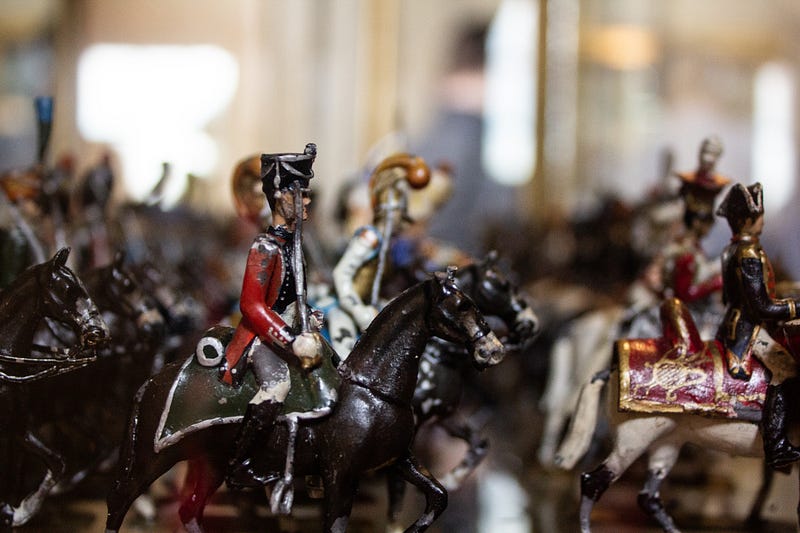
The article titled "The Commander" depicts a scene where a boy named Daniel Clark orchestrates a lineup of a hundred toy soldiers, commanding them as if they were real. The text paints a vivid picture of the boy's delight in his perceived power, savoring the control he has over the miniature army. As he issues commands, the soldiers topple over onto a worn rug, illustrating the fleeting nature of control and perhaps the innocence of youth in understanding the gravity of power. The article also includes a link to a related poem titled "Fickle," suggesting themes of changeability and the transient aspect of authority.
Opinions
- The author portrays the boy's enjoyment of his power over the toy soldiers, highlighting a child's perspective on control.
- The imagery of the soldiers falling onto a tattered rug may imply the author's view on the impermanence and limitations of power.
- The inclusion of the poem "Fickle" suggests a thematic connection to the unpredictable and changeable nature of control and influence.
- The use of a photograph by Jemima Whyles adds a visual element that complements the text, emphasizing the solitary nature of command and the contrast between the boy's world and the reality of the soldiers.