
HONOURING AN ECO-HERO
The Co-Founder of Greenpeace Takes His Final Breath
He put his life on the line to save the whales and our planet and we need to continue the fight
Do you know the names of those who were on the frontlines when the global environmental movement began? Who were the people that sparked the anger and the activism for people like Greta Thunberg or celebrity eco-fighters like Jane Fonda and Leonardo DiCaprio?
Robert Lorne Hunter, the Godfather of the environmental movement and one of Time Magazine’s top ten Eco-Heroes of the 20th Century. I think of him almost every day.
Every time somebody mentions the “unusually hot weather” or “a lack of rain” or “too much rain,” all evidence of climate change, I think of Bob.
When developers announce plans to build homes, factories, or highways in green space, I think of Bob.
Every time I watch a documentary about the planet, the wilderness, the oceans, lakes, and seas, I think of Bob.
Bob was an environmental activist, but he wasn’t just any activist, he was the G.O.A.T., the Greatest Of All Time, a co-founder of Greenpeace, and its first president. You probably saw him on the evening news when he put his life on the line trying to block whaling ships on the high seas, often in an inflatable Zodiac boat. He knew how to attract attention to something he cared deeply about.
He was a journalist, author of a dozen books, and Time Magazine named him one of the top ten Eco-Heroes of the 20th Century. He was also one of the kindest, gentlest people you would ever meet. Without an inflated ego he was compassionate and committed.
I got to know Bob when we worked at the same TV station in the late ‘80s, ‘90s, and early 2000s. He was the ecology specialist at CITY-TV in Toronto. I was a news writer and then a producer and was one of the lucky ones who got to be a producer of some of his weekly talk shows that focused on environmental issues.
Some people talk about a problem but Bob did something about it. He didn’t just highlight the issues, he would focus on solutions, things we could all do to protect the future of Mother Earth.
He always crafted a compelling editorial at the end of the show. He was brilliant and I was always amazed at the breadth of his knowledge. And yet he never made me feel dumb. He didn’t lecture anyone; he spoke to you and helped you understand the issues through his storytelling and his anecdotes.
Of course, not everyone liked him, although that couldn’t have been easy. He was a thorn in the side of anyone who threatened the environment and he was a formidable opponent. He would try to win you over with well-thought-out arguments, and philosophical discussions, before resorting to political pressure and finally, when push came to shove, he would take action, like launching a protest march or riding a zodiac on the high seas.
I also was lucky enough to get to know Bob the person, not just the eco-warrior or the celebrity. He would talk about the important stuff, but he would also talk about his wife Bobbi, who was also one of the co-founders of Greenpeace, and he would talk about his children. His two grown sons and his two daughters. The youngest, Emily, would often come into the TV station after school or on school holidays. She knew who her dad was, what he stood for and the cause her parents had fought for their entire lives. She would sit at his desk and quietly take it all in, Bob’s heir apparent.
Not surprisingly, Emily followed in her parent’s footsteps as an activist, organizer, author, and filmmaker. She comes by it naturally.
In 1998 Bob was diagnosed with terminal prostate cancer. He tried alternative therapies and treatments that provided some improvement. It was around 2003 or early 2004 when I sat down with Bob at his desk. What I expected was just going to be just a brief chat about an upcoming show, turned into a heart-to-heart.
We talked about his cancer and his treatments and he told me that they had stopped working. I don’t know if he had just received some bad news, but he knew his time was limited. While he tried to remain positive he was also emotional. Who wouldn’t be? He said there were others who would continue to “fight the good fight”. Many of them had been inspired by his words and his actions.
Bob died on May 2, 2005 and his ashes were scattered in the waters that he fought so hard to protect in Canada’s Arctic and the Galapagos Islands and on an iceberg in Antarctica. At his funeral, all the guests were given a small fir tree to plant in his honor, a fitting tribute to a man who devoted his life to our planet.
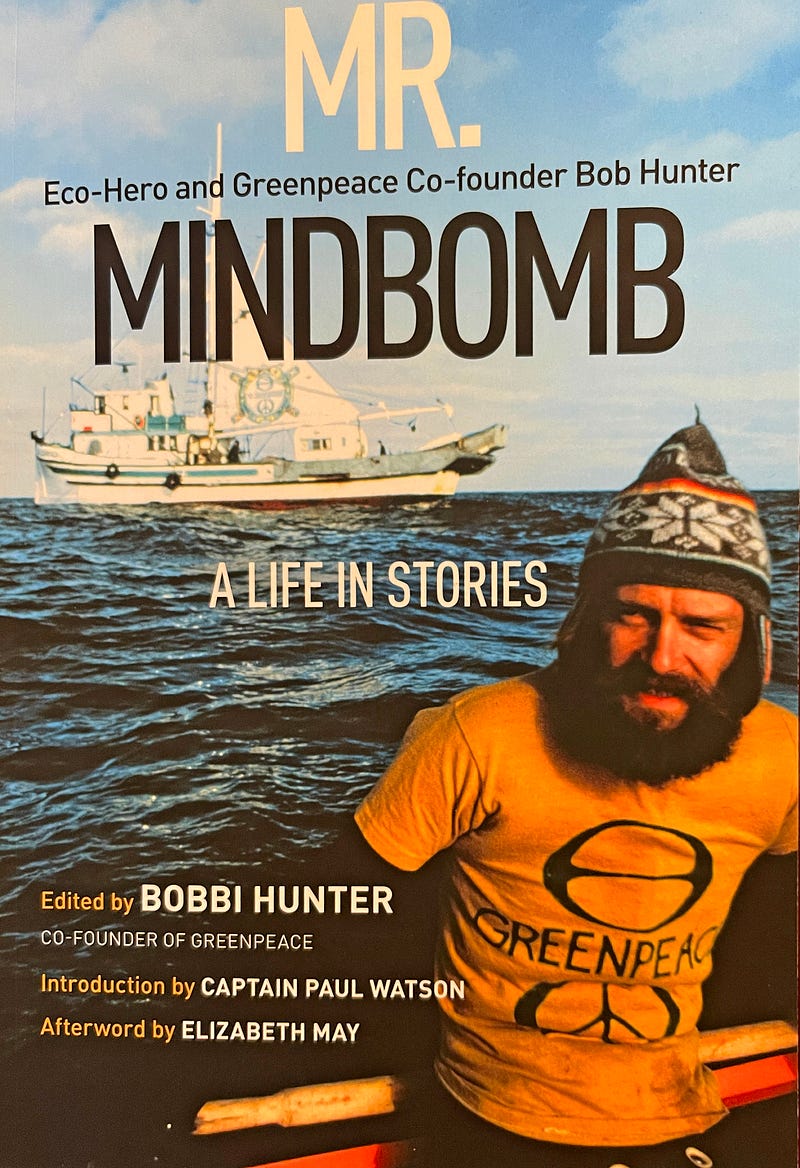
A new book has just been released about Bob and his role in the environmental movement called ‘Mr. Mindbomb.’ It’s edited by his widow Bobbi and the chapters are essays written by those who knew him the best and follows moments throughout his life.
One of the most gut-wrenching essays in the book is the one written by Emily Hunter. Her evocative storytelling brings the reader into the hospital room with her and her family, as Bob takes his final breath. It is one of the most moving stories I have ever read and brought me to tears.
As my mother held him, kissed him, and whispered into his ear, he emitted one last breath. One last slow exhale. Nothing More. He was gone.
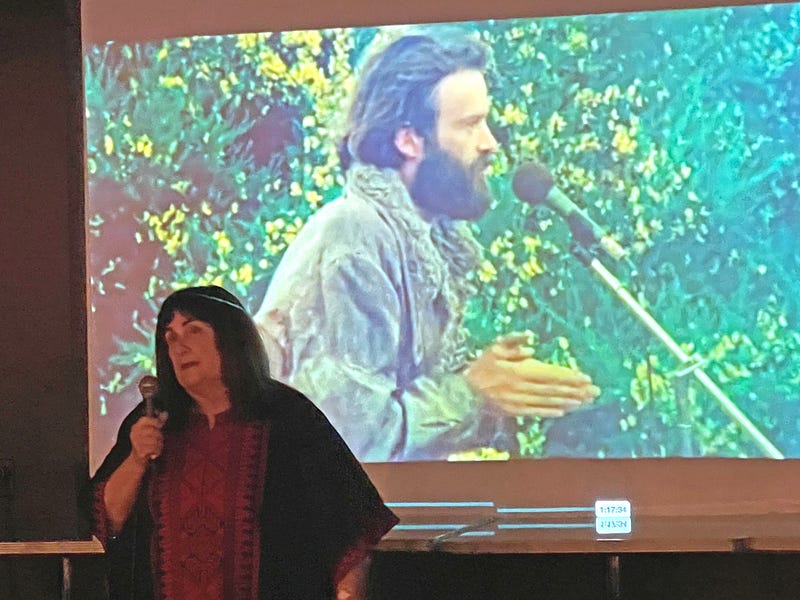
Filmmaker Jerry Rothwell developed a documentary about Bob Hunter, the birth of Greenpeace, and the early days of the campaign to save the earth. ‘How To Change The World’ premiered at the Sundance Film Festival in 2015. Here’s a trailer for the film…
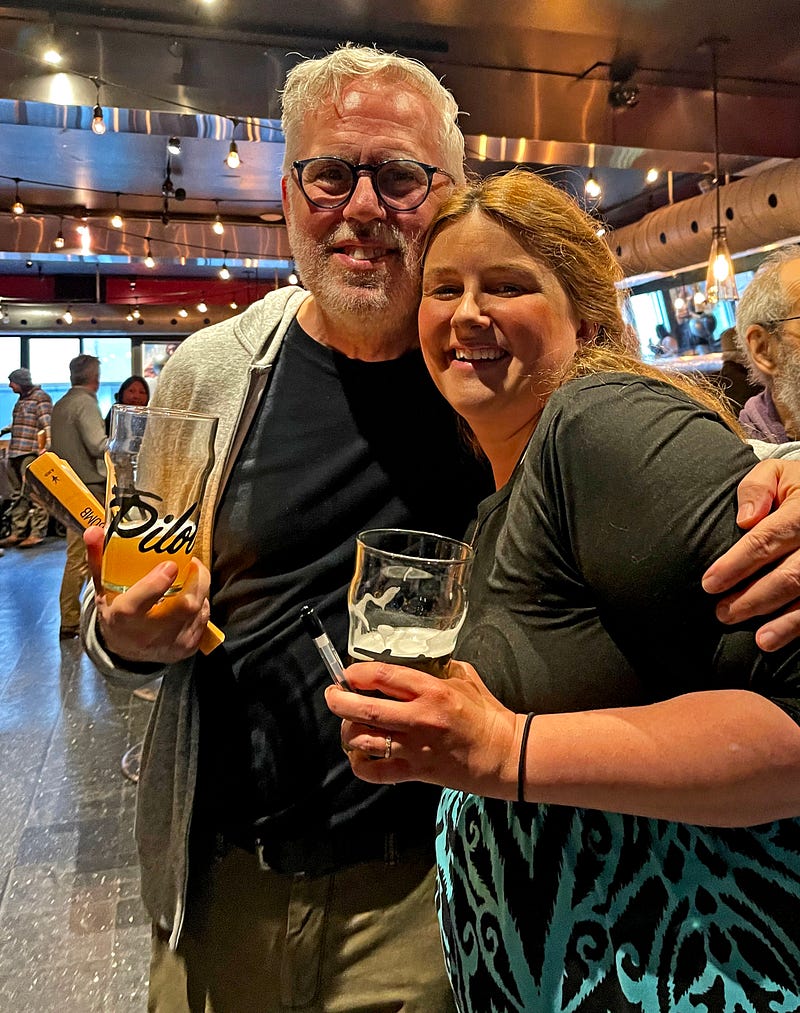
The greatest gift that Bob gave me, and I talked about it with Emily at the book launch, is the belief that anything is possible. Greatness is inside all of us and we each have the power to inspire positive change in the world. Bob was just a guy born in Winnipeg, Manitoba who took on one of the biggest challenges of his generation and made a difference.


