
The Clothesline: My Altar in the World
How do you find solace in everyday tasks?
I needed some ways in my life that would force me — by nature of the process — to slow down. My mind had been spinning on the fast cycle for so long that my thoughts were banging around in my head creating an over-crowded toxic dump of anger, regret, discontent, and confusion. My heart had been neglected for so long — told to hush — that it felt cold, rigor-mortis-like, unable to melt over puppy breath or leak tears over a fiery orange sunset like it used to do. I needed to find the way back to me.
Instinctively — not with a plan or a life coach or a guru — I began peeling back the conveniences of a life lived on the run and opting for the slow versions of ordinary tasks.
I stopped using the dishwasher in favor of standing at the sink where I could look out into the pasture, hands soaked in translucent bubbles as I observed cardinals, sparrows, bluebirds, and finches taking the tasks of life one at a time. I watched the way goats and cows tear at grass and weeds and noticed the passing clouds or the way the always strong Texas breeze caressed and shaped the peach trees.
I planted some seeds to grow things I could easily buy at the grocery store just so I could let my heart melt as those seeds sprouted and I found I could once again take pleasure in the simple — yet not-to-be-taken-for-granted — profound wonder of life springing from the tiniest of potentiality.
How do I love the slow life? Let me count the ways.
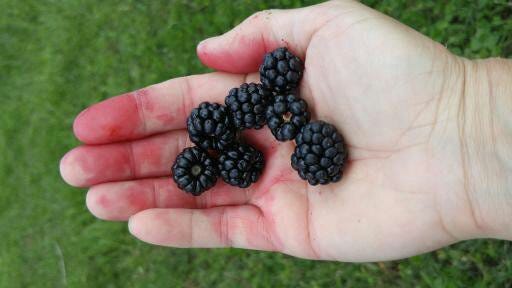
I made a list of all the things I could make from scratch that I would no longer buy for convenience sake. Jam from the wild dewberries collected along the fence lines of the property was one. I cried like a girl receiving a puppy for her birthday when my husband said, “Come with me, I have something to show you,” and placed wild, purple berries in my hand. I was overcome with emotions and memories — when was the last time I had picked berries in the wild?
I made lemonade from scratch and tried to start my own lemon tree with no success. I brewed fresh iced tea, froze shredded zucchini for bread and cookies all year, dried rosemary, basil, and oregano as I perfected the perfect homemade pizza crust.
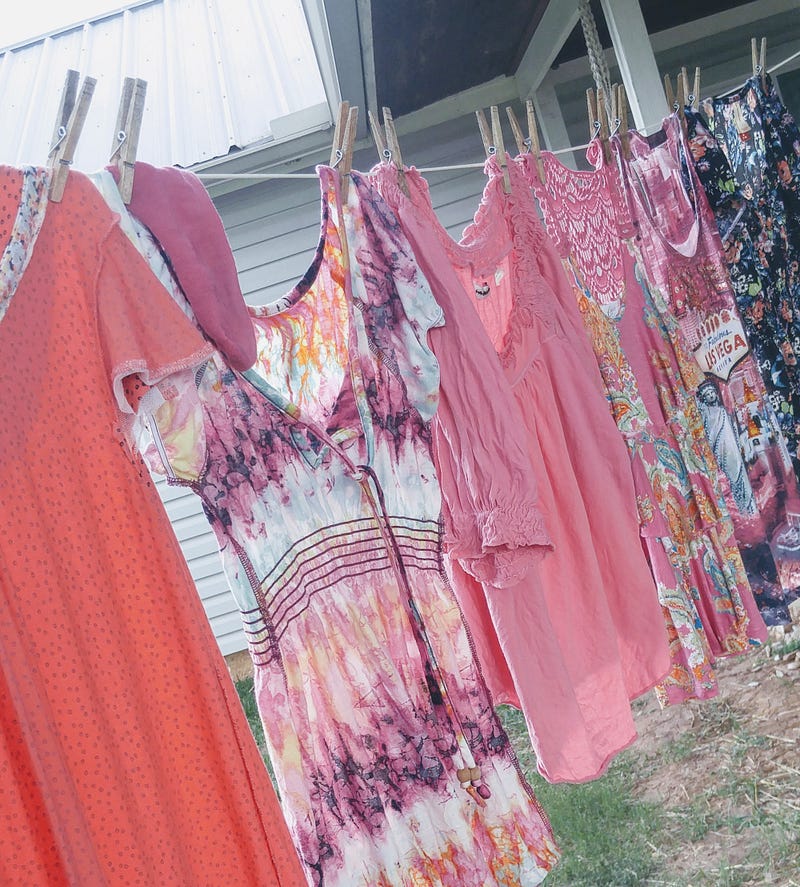
I was on a quest to absorb all I could from the slower ways. But, by far, my favorite slow-down-and-enjoy-the-process activity has been hanging laundry on the line. From the memories of my mother’s clothesline in my childhood days to the years I hung clothes out when my boys were little, I’ve had this slow-down chore in my blood. There is something rewarding about taking wet, crumpled clothes and transferring them one at a time to the clothesline where the sun and wind — mother nature’s drying and ironing systems — transform them into soft, fresh-smelling items worthy of a place in my drawers and closets.
Each load takes me about 15 minutes to sort and hang. That’s 15 minutes of quiet, away from the clanging and beeping of notifications on my phone and incoming emails. It’s a chance to stand and restore my body from its unnatural computer-facing posture and it’s an opportunity to listen.
I listen to the sounds of the countryside. A far-off train passing through town, the bird calls I can’t identify but I put words to — “pretty birdie, pretty birdie” — it sounds like a mating call, perhaps? And the gentle cluck-cluck of my hens gathering bugs and seeds brings my blood pressure down a few notches.
I pay attention to actively feel the wind as it touches my face, a gentle lover happy to see me again. I notice the sun’s heat on my shoulders, a warm hand massaging out knots in my muscles. I discern where to hang each item, heavy jeans to the left near the strong tree trunk where the clothesline is taut and won’t bow to the weight of wet denim. Delicates go over near the porch overhang in case it rains or the wind gets too rough. I know just how to hang each article of clothing so it floats with the wind — nature's iron — to get all the wrinkles out without stretching the fabric or crimping the material under the clothespin’s grip.
I prefer the old-fashioned clothespins that you slip on the line — the kind with the notch that little kids in vacation Bible school paint and decorate to look like Shadrach, Meshach, and Abednego. Those cheap kinds with the springs always break, but I remember my mom had a set in colored plastic and I used to sort and play with them.
My mother’s clothesline stretched from the corner of the garage to the corner of the back of the house, cutting the driveway on a diagonal. On wash days, I was only allowed to turn my donut-shaped sprinkler up a tiny bit so the delicate fountain would not reach the sheets hanging in the wind. But I could play nicely in the water that low and still cool off the cement for my always-barefoot feet. It was a magical tent of escape where I could sit on my sprinkler and clean newly-found special rocks while bed sheets billowed around me keeping me hidden from the outside world.
Dora (noun) is a female given name: from a Greek word meaning “gift.”
Our first home on Dora Lane where we raised our boys in a tiny, two-bedroom cottage complete with a dormer bedroom and twisting staircase to the attic, felt like a storybook dream come. My sister, upon seeing it the first time, said, “It’s a dollhouse.” I think she meant it was too small. I responded, “I know!” as if she too understood the magic my little cottage held under its roof.
I felt safe in that little starter home where I hung my laundry out to dry and the lilacs bloomed in May and my boys zig-zagged through and under the sheets on the line on their tricycles and Big Wheels. My heart smiled knowing that with the simple act of hanging clothes outside, I was creating magical kingdoms for them on the street named Gift.
Dora Lane yielded to bigger homes in proper neighborhoods where hanging laundry outside was verboten! — against homeowner association rules and said to look unsightly.
I should have seen my transition from the clothesline to the dryer as a warning sign that my life was moving too fast.
My heirloom clothespins inherited from my mom, along with the steel pole used to prop up the line went in the moving sale.
After too many years of fast laundry, fast food, and forgotten kingdoms of dreams, and clothes that sat crumpled in the dryer because I was too busy to fold them, I knew the first thing I would set up on the farm would be a clothesline. As moving boxes lay unpacked all around us, I asked my husband to string up the clothesline so I could learn to slow down again.
It’s a simple but humble act to handle each piece of clothing.
The torn-up farm jeans remind me that I’ve been given a special place to land to reclaim my soul. The T-shirts speak of adventures from the mountains of Sedona to the beaches of Hawaii and Florida. The act of touching each item of clothing, carefully selecting its position on the line, and then removing it to feel the soft cotton against my arms as I carry and fold, sort and stack, creates the act of gratitude that grabbing handfuls of wet garments and tossing them in heaps into the dryer simply cannot do.
Our hearts know what we need and it’s oftentimes what we crave.
Of all the things I could have yearned for living in the country, like learning to use a shotgun — Annie Oakley style — or planting acres of crops or becoming a milkmaid to milking goats, I only longed for a clothesline. It’s a rebellious act, a middle finger that I could shove at the world’s conveniences as an act of civil disobedience to the hamster wheel of productivity and multi-tasking.
The clothesline was an instinctive need to help me recalibrate my heart and soul and has become my altar in the world. It’s a place where I determine what’s important, the place where my balance is restored and margin wins over efficiency.
“My life will always have dirty dishes. If this sink can become a place of contemplation, let me learn constancy here.” -Gunilla Norris
What simple task is your heart craving? What chore can you replace a modern convenience with a mindful activity? Where can you find space to soothe your soul and cultivate the art of paying attention? The answer might lie in a sweet childhood memory where ordinary became magical with the touch of slowness.
Torn blue jeans, winds smooth
billowing sheets, nod and wave
my altar in the world.


