
The Cinematography in Stranger Things Pt.1
Intro
We think that success in videography comes not only from practical skills but also from a keen eye and right inspiration. Which inspiration is right, you might ask? Sometimes it is not the feeling that something is exciting but the understanding of why exactly it evokes emotions in us.
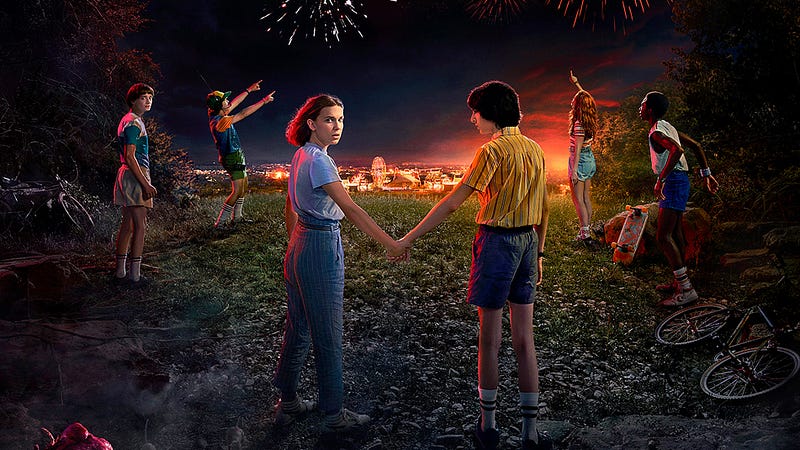
We want to tell you how the best cinematographers create visually inspiring frames and atmosphere. Tonight’s guest is Netflix show Stranger Things by the Duffer Brothers.
Frame Composition
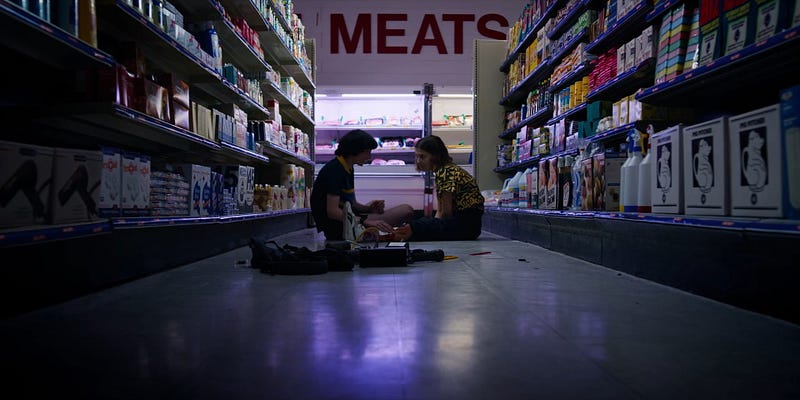
When the Eleven and Mike are trying to sort things out in the store, a central symmetry appears in the frame. Shelf space serves as a frame for both heroes. The camera zooms in on the characters and helps the viewer focus on them. Heroes are visually brought together by a “frame” from racks. Further, Eleven and Mike are united through horizontal guides: shelves of the rack in the background and the girl’s wounded leg.
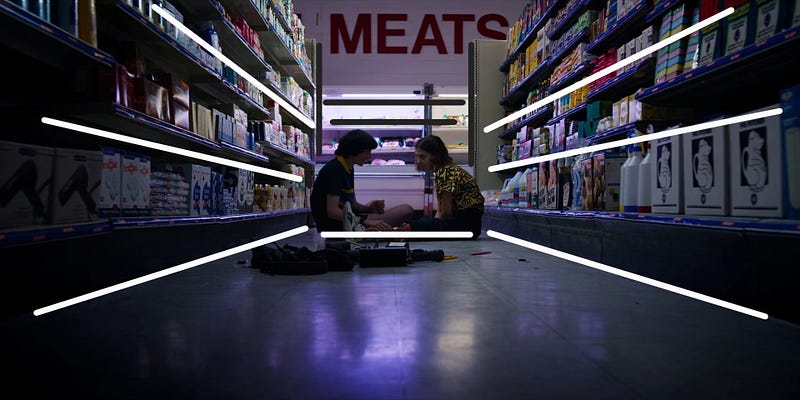
Axis symmetry is used also to show the viewer cohesion, confidence, and dominance of the heroes in the frame. Eleven’s friends appear on both sides after Eleven smashed the guards. This technique creates the axis symmetry relative to the vertical line that passes through the center of the frame.
Another example that can be noticed by the curious viewer is the sign “Meat” on the wall. It may refer to the Mind Flayer who views the protagonists as the prey and addition to his army.
The Eleven’s squad is shown at an angle preserving their position relative to the guys on the first floor. Therefore, the perspective and alternation of heroes remove the slightest opportunity for any symmetry. This, along with camera tracking in on the face of Eleven and Dustin. This emphasizes the difference between the situations in which the heroes happened to be. On the other hand, it shows the joy of friendship and unexpected meetings.
Characters and Environment
Long shots were taken with traveling, pan, and smooth camera tracking in. It allows you to show personal objects that tell the viewer about the interests of the character. There could be different references to the definite era like pop culture, interiors, clothes and so on. It is an enjoyable trick to reveal the character of a hero and immerse viewers into the movie.
Reverse example of this technique is the scene where characters must part with their past, experience, and memories which were amassed and retained as different personal stuff and trinkets. We see how they disappear from the frame. They don’t belong to the characters anymore. All characters are now standing alone in empty rooms. This way they escape their past life and are in the privacy of own mind. Now heroes are the only thing for which the viewer can catch his eye in the frame.
Interaction between frames
The mall not only destroyed small shops in Hawkins but also sucked the city life out and turned it into a hopeless and disturbing place. Empty streets, protests which are dissolving by police. Against it, we see the bright mall, full of youth having fun. Of course, it is a more attractive place for Hawkins locals. Such shots exactly show us the contrast of the public attitude of mind.
Finally, to show how impressed one character was by another character, the frames can be connected to them using a J-cut. So, while Eleven is in the frame we hear Billy talking about what Eleven did to him. Such transition turns the still-showing shot of the girl into a powerful memory.
Controlling the actions of the characters and their predictability for the viewer
The long-shot following the hero who runs across all obstacles before the labyrinth helps to reveal the personality traits and distinguish the characters.
Hopper as a relatively law-abiding Sheriff and a good man, even at the time of danger, tries to go through all the snakes of fences and warn people before going into the room. In contrast, the Soviet agent, who jumps all the obstacles, chasing Hopper.
We hope that these tricks are a good thought material that can make your videos more artful and cinematic. The next part is coming soon. Share your opinion below. If you want a specific movie to be reviewed drop us a line, too.
NAÏVE™️ is a tool that finds defects in your footage and helps you edit videos easier. Get connected to the videographer community and receive interesting and non-trivial information on our social media.


