
The Chosen Baby
Spoiler Alert: If You’re Adopted, You Probably Weren’t Chosen
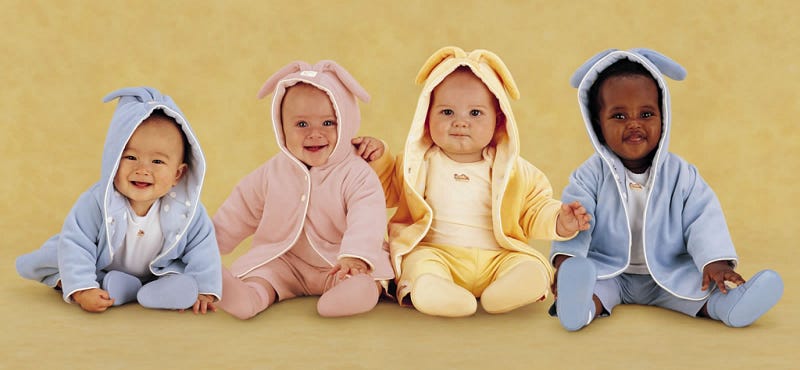
Despite the common use of the “word” chosen, most babies aren’t chosen. An adopted adult can be devastated when she finds out she wasn’t chosen, that she’s been lied to.
The Chosen Baby
Telling adopted kids they were chosen has occurred so often that children’s books have been written with “chosen” as the theme. When I was old enough to listen to my Father and Mother read stories, they read The Chosen Baby to me. And then when I learned to read, I read The Chosen Baby over and over.
It was my favorite book. I still have the book even though the story isn’t my story. It was my first book. Written by Valentina Wasson in 1939, the book was republished with a new cover by Lippincott in 1950 and then again in 1970 by Harper Collins and 2nd updated cover.
It’s a story about a husband and wife who don’t have children, and they would like to adopt a baby from an orphanage. In the book, it’s called a “home.”)
Here’s a bit of “ The Chosen Baby “:
“Then suddenly one day the lady at the home called up and said, we have three fine babies for you to choose from. Will you both come and see them please. So, the very next day, the Man and his Wife feeling very excited, hurry to the home and the lady told them all about the babies.”cousicC
The husband and wife choose one of the three, the one they like the best, the most beautiful baby. They choose the “perfect” baby out three babies: “a lovely, rosy, fat baby boy [who] opened his big brown eyes and smiled.
The baby gurgled, and the Man and his Wife said ‘This is our Chosen Baby. We won’t have to look any further.’”
They name the baby “Peter.” When he’s old enough to walk, they “choose” a baby girl to adopt so Peter will have a little sister. It’s a happy family story complete with adoring grandparents
There’s nothing wrong with the story for its time and for infants unless you weren’t chosen. Unless you were told this story as if it were true for you. That was my situation: I wasn’t chosen. Not only was I told that I was “chosen,” everyone in the family heard I was “chosen.”
To Nana’s from the State Home
When I was three months old, my parents adopted me from the Colorado State Home for Dependent and Neglected Children. Although I wasn’t chosen, some infants and older children were chosen from the home.
In 1995 I attended a reunion picnic with others who had been in the Home, many until they were old enough to leave on their own. Some told stories of standing in line in their Sunday best with hair combed and faces scrubbed while perspective adoptive parents looked them over and chose their child.
The State Home shut its doors in 1971, and the barbaric practice of having children stand in line hoping to be “chosen” stopped. Fortunately, this procedure wasn’t part of my story.
Once my adoption papers were signed and sealed, I was taken to Nana’s, my maternal grandmother, instead of my parents’ home. I’m not quite sure why? Possibly because I was sick. But I don’t think that’s whole story and unlikely I’ll ever know.
When I arrived at Nana’s, I was greeted by my cousins, the youngest of whom was just 6 months older than I. Their father, my uncle, was a medic in the army during World War II and stationed in California. Their mom had gone out to visit him.
My new cousins heard right away that I was “special. That I was “chosen.” The inference being they were not chosen, They were not special.
Everyone in the family would repeat this story over and over again: “MaryJo was chosen.” Eventually it morphed into “MaryJo was spoiled.” Somehow by being an only child who’d been “chosen,” meant one, by definition, was spoiled.
Arranged Not Chosen
“Chosen,” “special,” and “spoiled” weren’t true. By the time I was a teenager, I had a feeling that the story was off but couldn’t put my finger on it. I never asked any questions.
Many years later, when part of the adoption records from the Colorado State Home were open, I received information that confirmed I had not been chosen. I was what’s called an “arranged adoption.”
I don’t know the details of this “arrangement.” When the woman in charge of the records of the State Home, said, “Oh, you were an arranged adoption,” I asked what that meant. She replied, “Oh dear, I wasn’t supposed to tell you. I assumed you knew.” Now I had proof that I had not been chosen.
By the time I discovered “arranged” and not “chosen,” no one was living who would know the truth.
I’m guessing that Nana knew someone who knew my maternal natural grandmother. That they concocted a plan that my parents, under the direction of Nana, would adopt the baby of my natural grandmother’s daughter.
As long as the adoption records were sealed, nobody would ever know anything about where the baby came from or why.
But Isn’t It Love that Matters?
Some might say “Who cares whether the baby is chosen or not chosen? As long as the baby’s parents love the baby, what difference does it make?”
I believe it matters because it’s a lie and serious repercussions can follow.
Everyone’s story is different. Mine involved my beloved cousins who were taught that I was a special baby. I had been chosen. A few years ago, I discovered just what a big deal that was.
One day, Peggy, the oldest of my cousins and with whom I was very close, said “You know Mary Jo, We all loved you and everything, but we kind of also didn’t like you.”
I gasped and replied, “What do you mean you didn’t like me? I was stunned. I had no brothers and sisters. I was very close to my cousins. I adored them.
She responded, “Well, we resented the fact that you were the chosen baby. You were special. Everyone made such a fuss over you. You got all that attention from Nana. And all that attention from Daddy.” (Daddy being my uncle, the doctor who had returned from his time in the Army during the War.)
Oh, right,” I thought, “that meant that because they weren’t chosen, they weren’t special.
Not long after that, her younger brother, who had been one my best friends forever, said much the same thing: that he, his sister and his older brother resented me. He told me how the cousins believed Nana loved me more than she loved them.
“We got tired of hearing how special you were, how you were chosen. We assumed we weren’t as good as you were.”
And in retrospect, he had good reason to feel Nana loved me more. I was sick so I would get more attention than he did. I all but lived at her house until I was old enough to stay home alone. And she had probably arranged the adoption.
I felt terrible. Of course, I hadn’t realized this as a child. I had held these cousins in deepest love.
From my perspective as a lonely only child, they were my brothers and sister. We played together: cards and hide and seek and making trains out of the footstools in Nana’s living room. Being told time after time to stop sliding down the banister.
As adults we recalled childhood stories: “Hey Steve, remember when we wrote our names on the back of my house with Reddi Wip? (Who knew that “Reddi Wip” is correct? It’s not “Whip.”) And how Mother got mad at us?”
“Peggy, I was just thinking how much fun it was to feed Lamby when we were together at the Alpine Cabins in Granby.” I still have the paper dolls Peggy made for me.
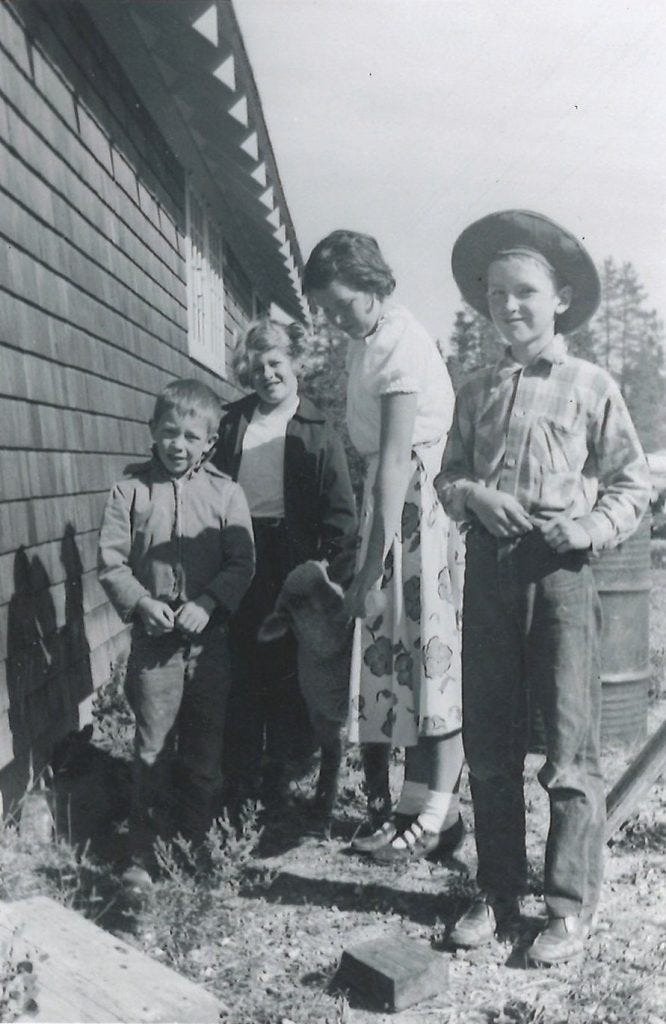
Adopted women live with feelings of abandonment and rejection from the day their mothers signed adoption papers. We can feel rejected by people who do care about us very much. Still feel the pain of rejection by childhood events that happened 50 or 60 years earlier.
We may think it’s not rational but unconscious feelings from the past override rational every time.
Abandoned and Rejected
After my Mother’s death, I discovered that the sealed records weren’t so sealed after all! In going through her papers, I found documents from the orphanage with my natural parents’ names on them and a newspaper clipping about my natural father’s death on D-Day.
I discovered that he knew his girlfriend was pregnant because the records showed that while home on leave, he had gone up to Denver to pay the maternity costs. Clearly he had enlisted in the Army with no thoughts of marriage.
I’d been rejected, left alone in an orphanage by my natural mother and natural grandmother.
When I took in the rejection again, I was stunned and sad, holding back tears. Even though I already knew these details, seeing them written down, signed, dated, and notarized felt like a final blow.
Every woman’s adoption story begins with the back-story of rejection by one’s natural mother: usually a rejection that is formalized in a legal document.
One can argue that many natural mothers feel great sadness at losing a child. But such is irrelevant to the adopted child who often feels that she did something wrong to cause the rejection by her mother.
Recently, Peggy, the oldest of the cousins died. The family gathered to arrange the memorial service and grieve together. A niece and nephew came from Seattle to Denver for the service. We chatted and reminisced.
My cousin’s nephew asked “Hey MaryJo, how do you fit in here?” I told him I was his paternal grandfather’s sister’s daughter. “What?” he said. “My Grandfather had a sister?”
“Yes,” I replied, “two sisters. And you met my Mother when you were a kid.” He was surprised. Had no idea he had two great-aunts, much less that one of them had a daughter.
I told him I knew all about the restaurant he owned. That when he and my son were just little boys, they had cleared the table together in his father’s restaurant after a big family Thanksgiving dinner. My Mother had been at that dinner. He didn’t remember.
I told him that Peggy had shown me dozens of pictures of his two kids. That I knew his daughter Frankie had been named after her grandfather and her great-grandfather who was my grandfather. He was startled. I was dismayed and sad.
I felt rejected all over again.
Telling the Truth about Adoption
The story itself doesn’t matter as much as telling our children the truth.
My story isn’t an ugly story. My cousins did love me. Three have died but I’m still best friends with the cousin with whom I went through high school.
It’s an understandable story about good people who wanted to do the right thing.
Sometimes an adoption story is ugly. But we still deserve to know the truth.
Often parents and grandparents resist telling the story. It’s up to us to insist, to badger, to ask the hard questions. And certainly to search for records. To join groups petitioning for records if we live in states that still haven’t opened the records.
The Science
Scientists are now telling us that on a cell level, a physical level, we “know” a lot we don’t remember. They call it “cellular memory.” The science is fascinating and being done by researchers in major universities. It confirms my early doubts about the story I was told.
With the current popularity of open adoption, adoption, by definition, has become less secretive. However, I still hear adoption stories that aren’t true.
My story is about love from cousins, parents, and grandparents, all of whom believed they were doing the right thing.
Adopted women are often traumatized to find that a dad who died in the war didn’t really die in a war. He was a drunk who abandoned his pregnant girl friend. That the mom who raised her wasn’t really her mom but her aunt.
Knowing one was lied to can be more devastating than finding out the unpleasant facts. Everyone’s going to have a different story, but if the story that’s told isn’t true, the lie will eventually have negative consequences.
Originally published on my blog at https://livingwithadoption.com on January 29, 2019.


