
RELIGION
The Chhat Puja Festival
The austere six-day mega-festival with two strict fasts of thirty hours and then for forty hours that don’t allow even water.
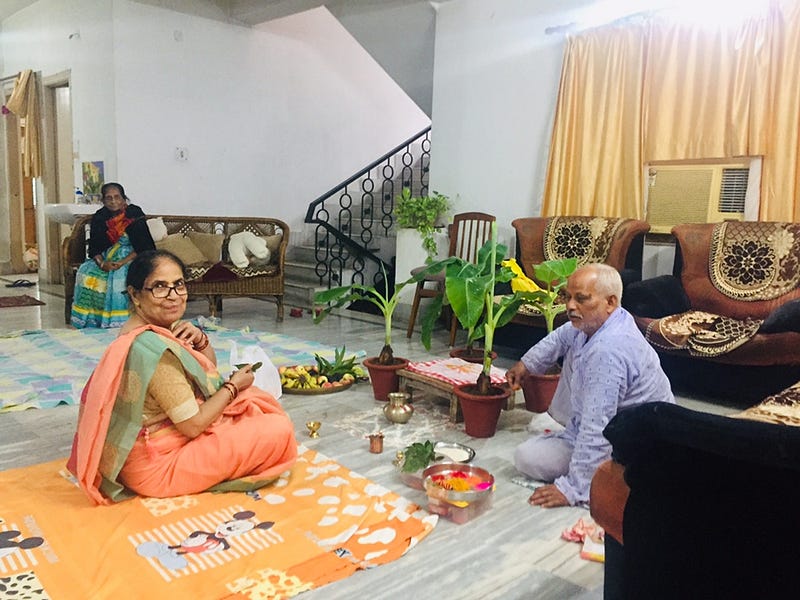
My city comes to a standstill for this festival. All work is suspended to help the devotees offer their prayers. Mango-wood-fire on mud stoves with cow dung as fuel, brass vessels, banana leaves and dominate the festive scene in an abrupt return to the old traditions for the six days of the festival.
Overloaded vegetable and fruit markets cater to the pious. Chhati Maiyya, mother of the sixth day of the moon, is offered all the vegetables under the sun, and so there is a wide variety.
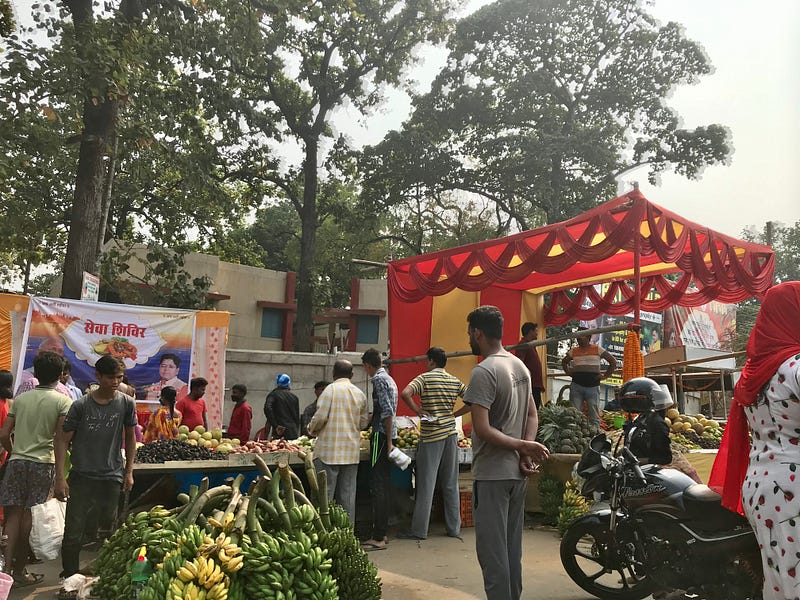
People crowd around, some stand in line. Local politicians who lost last time’s election serve the public, so they will be remembered in next time’s election. This busy scene belies the preparation at home.
The thirty hour fast, called the day of bathe-and-eat
The Vrati will fast in two hops. On 18th afternoon, the Vrati partakes of lauki-bhaat, bottle-gourd with rice. This is prepared with rock salt, not with regular salt, so it has a peculiar sweetish taste.
End of the thirty hour fast, and the beginning of the forty-hour fast
The Vrati then fasted till the next evening, 19th night. Then she ate Kheer-roti-kela, that is a rice pudding with flatbread and a banana. The pudding and flatbread are prepared on a mango wood fire with cow dung cake fuel.
This meal on 19th night was followed by over 40 hours of fasting. An offering to the Sun God was made in the evening of the 20th, and another on the 21st at sunrise. Both of these offerings are made while standing in water.
People stand knee-deep or waist deep depending on their level of fitness and faith. Essentially what they have promised themselves they will do.
No modern materials are allowed
Plastic, silver, glass and stainless steel aren’t used for Chhatt. Of course, no non-vegetarian food is permitted or even imagined. Root vegetables, considered non-vegetarian, aren’t allowed either, so out go your onion and garlic.
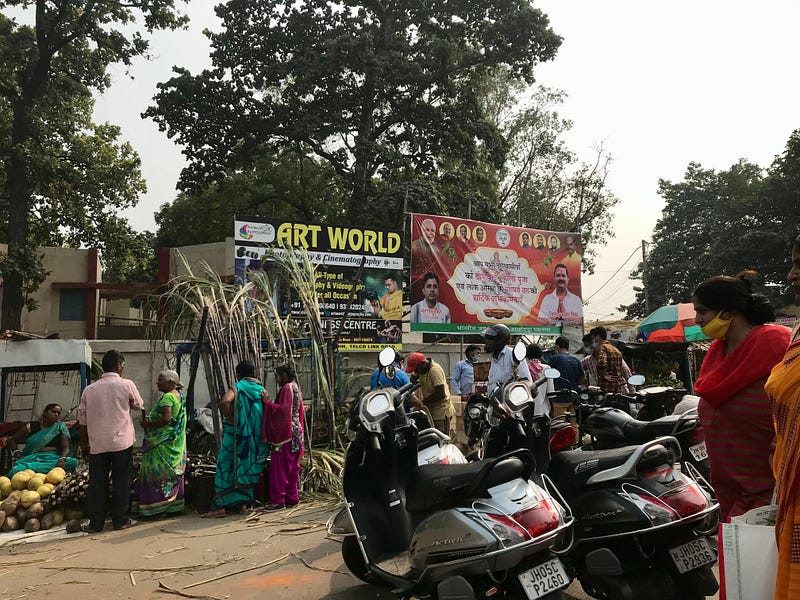
The festival is celebrated by rich man and commoner alike. When fasting, everyone is equal. Is it? (NO IT ISN’T)
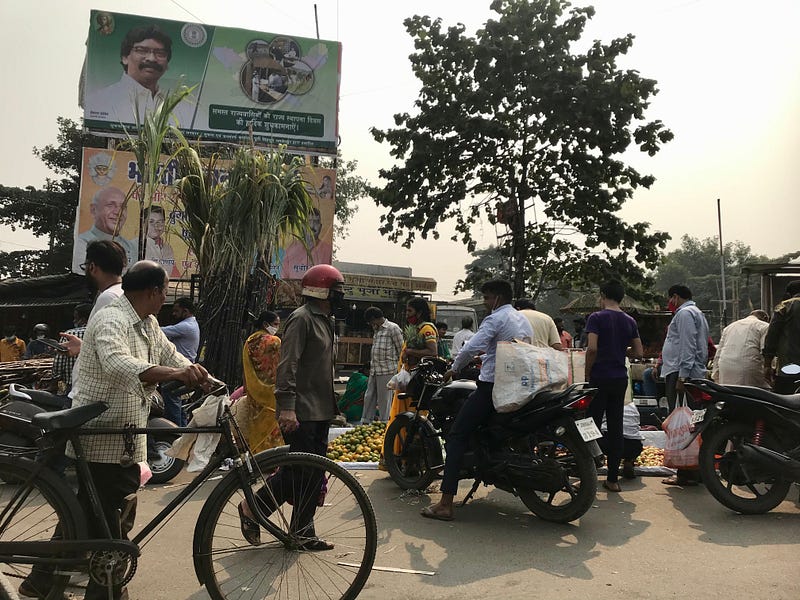
Everyone is in a tearing hurry.
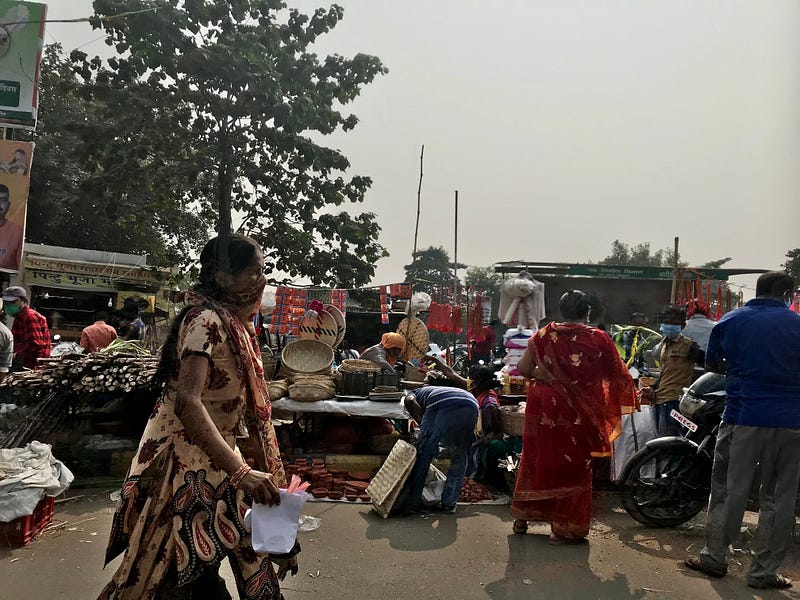
There’s lots to be done back home after the purchasing is completed.
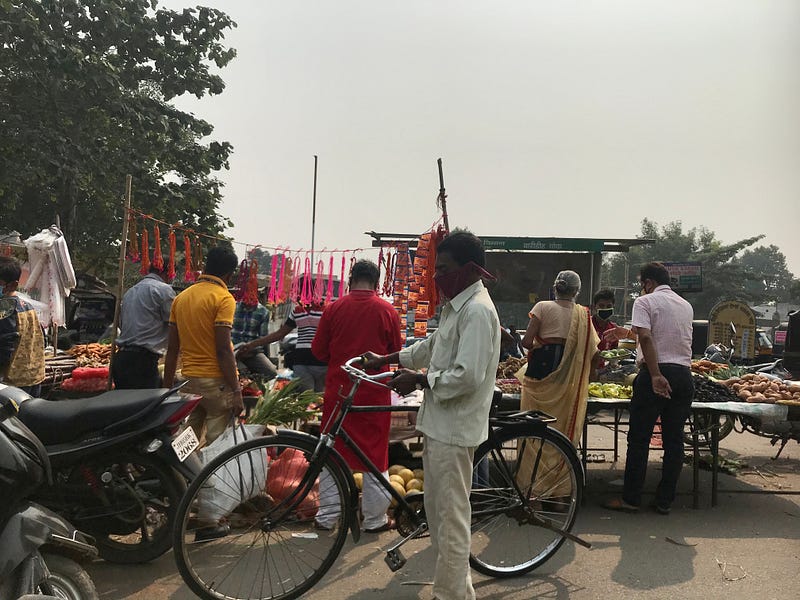
It isn’t all vegetables and fruits. People buy thread and garlands to decorate the prayer area.
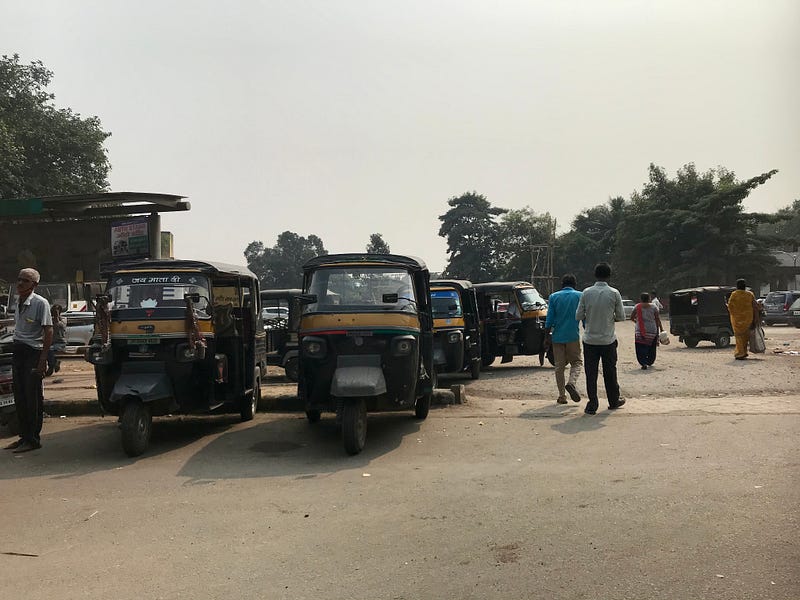
The only part of the market which isn’t crowded is the three-wheeler stand.
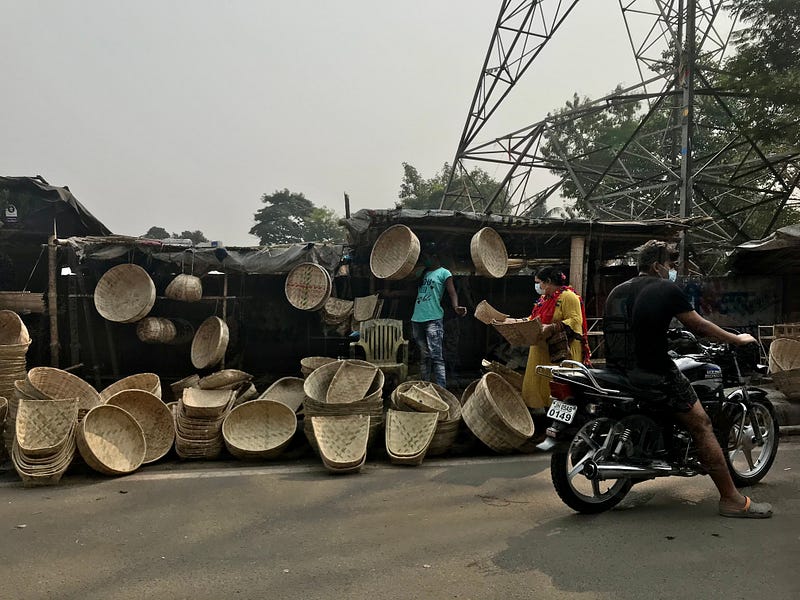
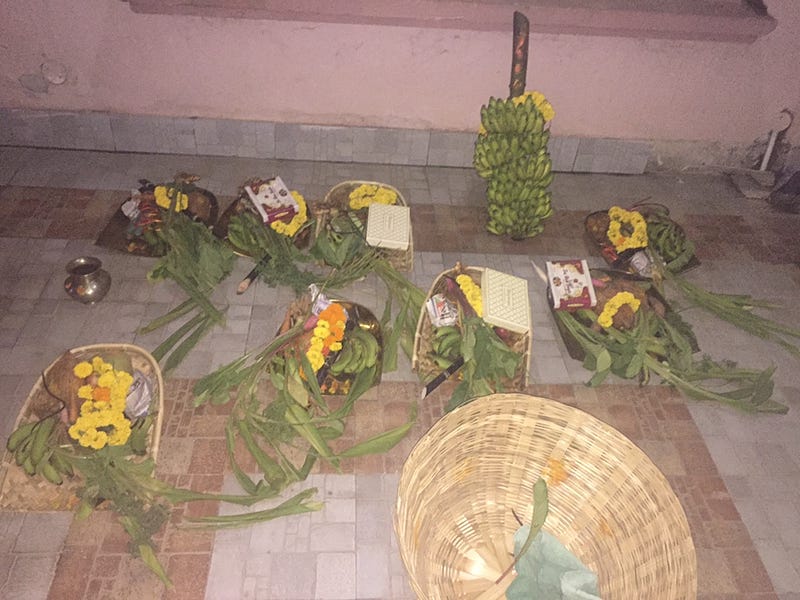
These wicker basket scoops are used for winnowing rice and wheat in the villages. Today, they are on sale because when the devotees offer the veg and fruit to the Chatti Maiyya Goddess, they hold the offering in these scoops, called “Soop”. Every customer has to buy a new Soop every year.
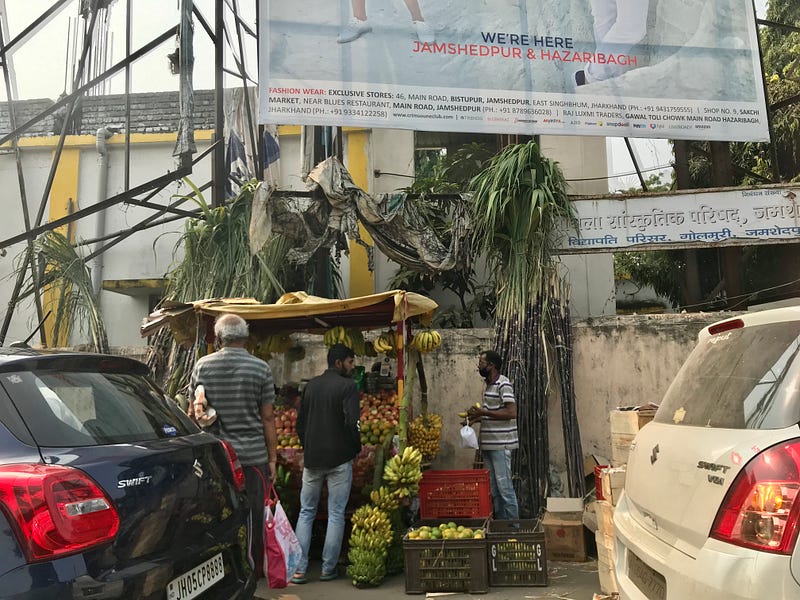
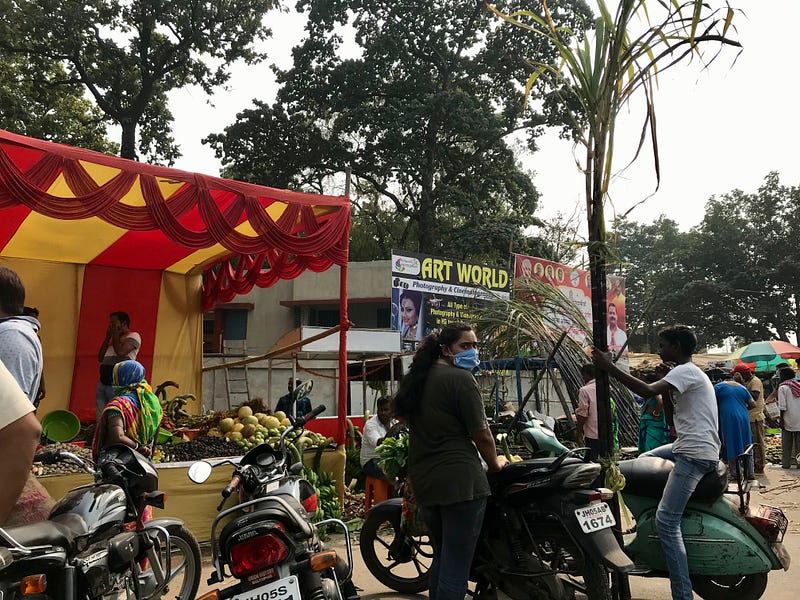
We move away from Baridih vegetable market towards Golmuri fruit and vegetable market. Here, too, we see an abundance of sugarcane and bananas.
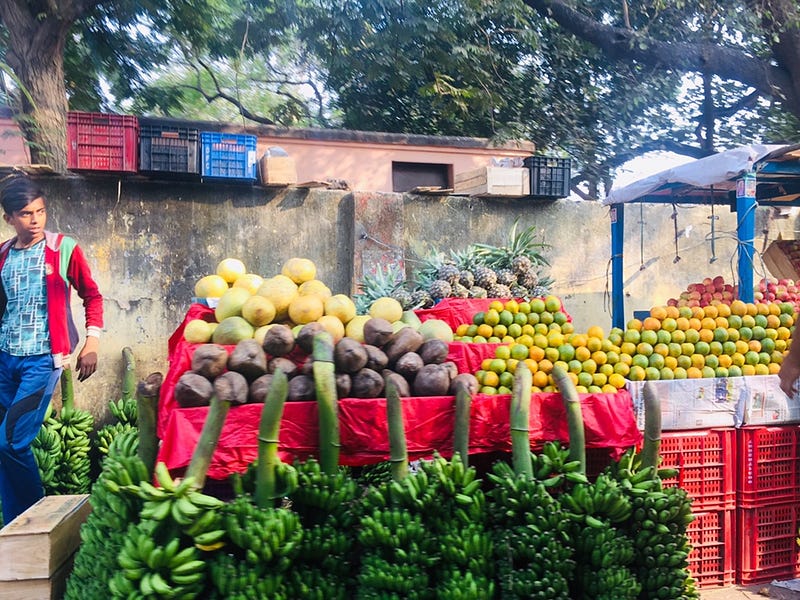
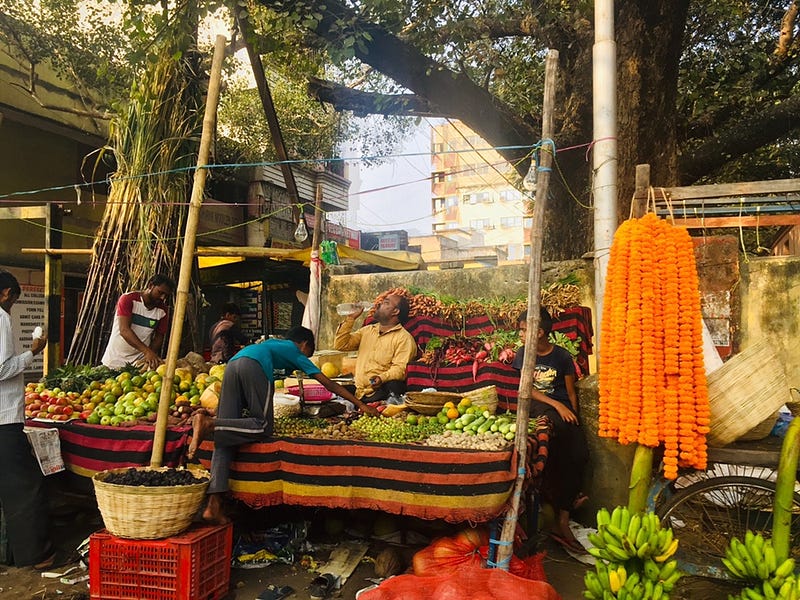
Bright colours and expectant fruit sellers greet our eyes. We aren’t doing the Puja at home, so we aren’t likely to stop and buy these. We’re some of the few that won’t, though.
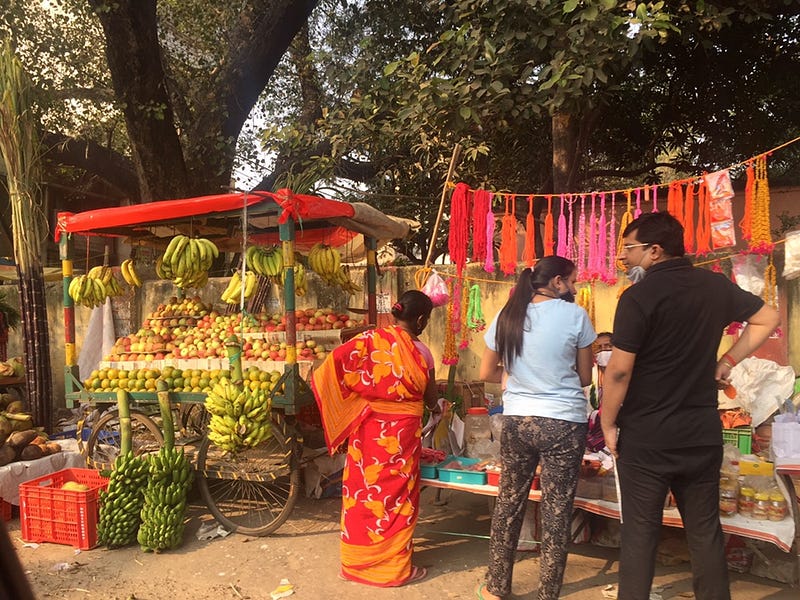
This area is crowded. Though I am not tradition-bound to perform Chhat as my family has never done it, I enjoy the hubbub, the frenetic activity and the buzz in the markets.
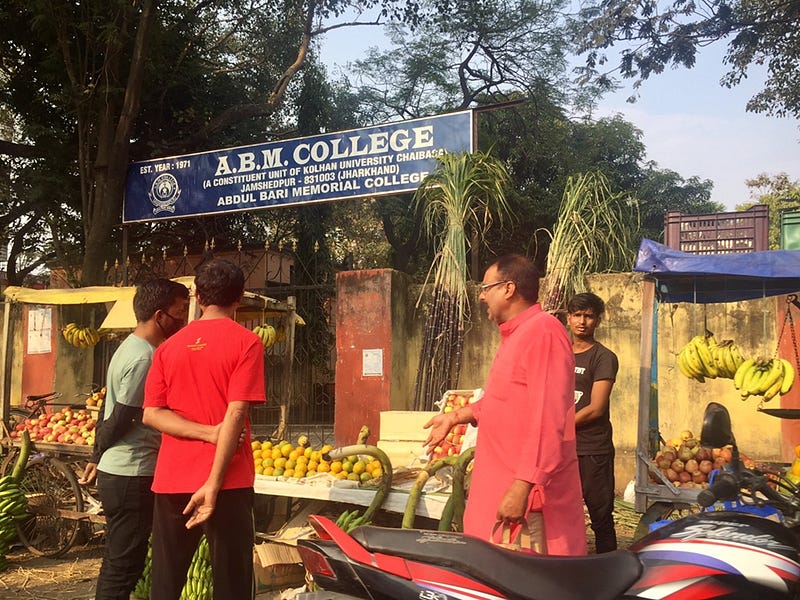
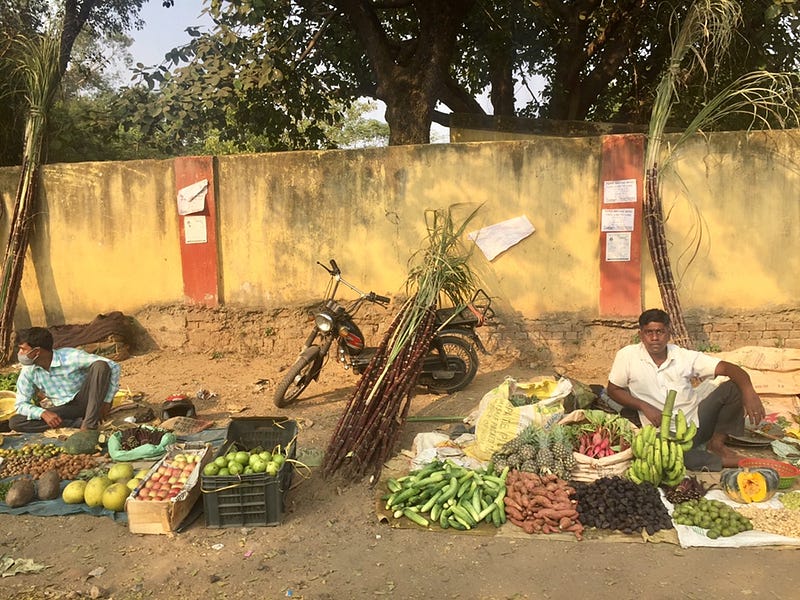
The festive market lasts for just two days
This street will look different in just a day, when the Puja is over. Everybody will be back home, cutting and preparing the purchases for the night-long vigil in which devotees pray to the setting sun as well as the rising sun.
Disallowed from the riverside by Corona, rich devotees constructed tanks. The poor made do with the river and symbolic, not real head dips in the river.
The offerings are made standing in water. This year was interesting because many people have constructed tanks for the Puja. The administration has disallowed people from going to the riverside where the prayers are ordinarily offered. Poor people who can’t construct tanks at home, who will go to the river, are not allowed to dip their faces in.
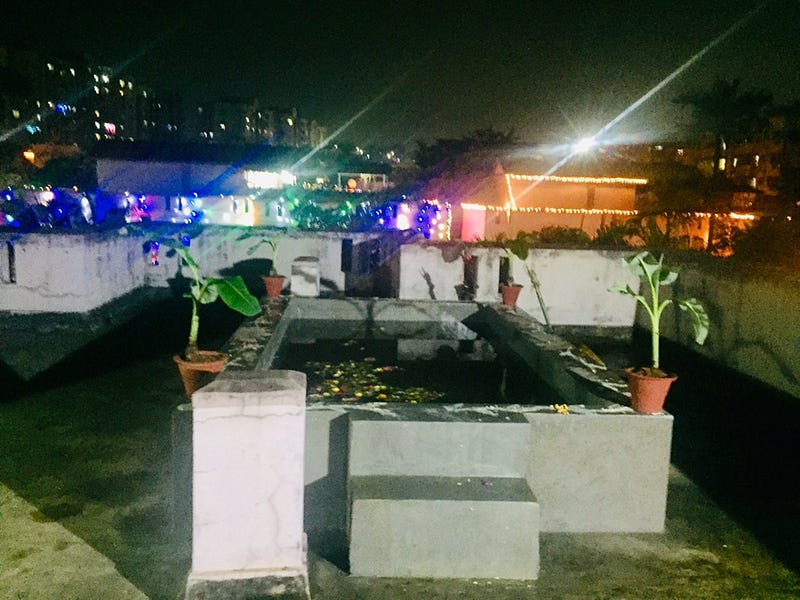
Not for the faint of heart
There is no festival quite like Chhat. Devotees pray to the setting as well as the rising sun while standing in water, after hopping consecutive fasts of 30 and 40 hours, back to back. Conducted during our winter, this can get bitterly cold.
Devotees who perform Chhat cannot stop. If you do Chhat just the once, you have to keep doing it till somebody else “takes” it from you.
The gender-neutral festival
This decision is made when the marriage takes place. Each family has a person who performs Chhat. So when a prospective daughter-in-law enters a family, she knows that she can have to do the fasting when the baton is handed over. Right? Wrong! Chhat is done by men devotees as well as women. This festival is gender neutral, unlike MANY other Indian festivals.
The following morning the prayers are completed.
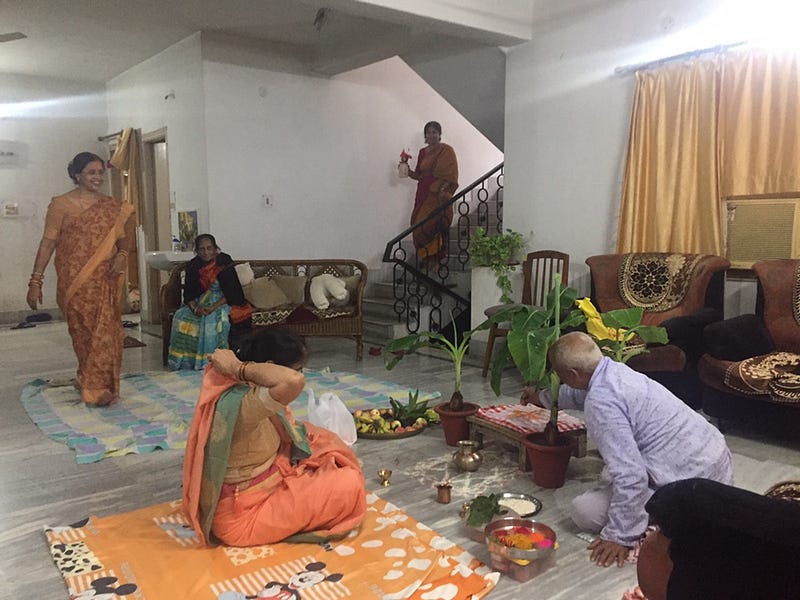
The Sun and His Family are worshiped
The Chhat Puja is celebrated after Diwali to worship the Sun God and his sister, Chhati Maiyya. She is also known as the sixth incarnation of Goddess Durga, Devi Kathyayini. The Sun God is worshiped along with his consorts, Usha, the first ray of the Sun, and Pratuyusha, the last ray of the sun. Devotees believe that the rigorous cleansing and fasting will fulfill their otherwise unattainable desires.
When the ancient Goddess prayed
Instances in the ancient texts when Chhat Puja has been offered have led to miraculous reversals of fortune for the Gods that prayed for them. Goddess Parvati prays for her four-year old son, Murugan, to be victorious over Demon Tarakasura. Draupadi prays for the lost glory of the Pandavas to be restored.
If you want it badly enough to do Chhatt Puja for it, you’ll get it. Whatever “It” might be.
I have heard of medical diagnoses being overturned after a Chhat Puja for the same. Women who have conceived after years of trying, jobless men who get employment, families who get court decisions in their favour and get back land or property. The kind of rigorousness that the festival demands made me feel that the human will does bend certain decisions in their own favour.


