
The Checklist You Need For Sourdough Success
A downloadable infographic with videos
Being a surgeon doesn’t make me a better baker, but being a perfectionist does
I’m not a baker. I can cook, but I didn’t bake. As you know, people generally divide themselves into two camps- those who cook, and those who bake. I’ve always wondered why — theories abound. My favorite postulation, gauging from my own experience, is that good cooking involves a marriage of ideas and flavors — melding into a point of maximum impact. Baking, on the other hand, in an exact science — precise weights in grams create the chemistry of bread. Someone once asked me, shouldn’t you, as a scientist, a surgeon, be a baker then? I thought about this for a minute. The answer is no, and it’s because I am so careful, so precise in the rest of my life, I don’t want to do that in cooking. I can’t follow a recipe at home.
Except. I bought into this sourdough craze and I can’t stop. I’m onto my 6th or 7th loaf; my partner is sick of eating bread and the ensuing 2 pounds of bread bloat. The fascination is exactly that each subsequent loaf can be better than the last. Unlike in cooking, practice does make perfect. I’ve been against buying all kinds of fancy tools like bench scrapers and proofing bowls, making do with what I have. I have, however, been fine-tuning the steps with every iteration until I have a golden brown ball of beauty. Too bad I can’t smell it, but it tastes delicious.
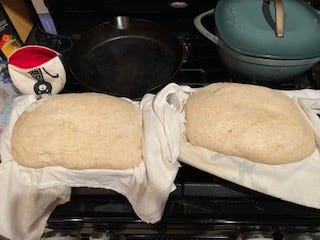
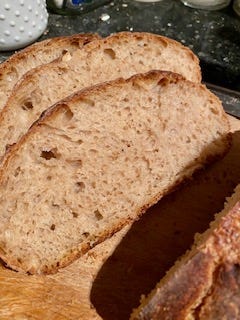
The biggest tip I have is to have a light touch when stretching the dough. I tried using the KitchenAid for my second loaf and it knocked all the air out. Also, resting in the fridge overnight is imperative for a sour loaf. If you want it to be more like regular bread, then bake it the same day. The Dutch oven method makes way better bread — the hot steam creates a shiny, tender crust. Lastly, the loaf must rest for at least two hours! It’s so tempting to eat it hot out of the oven, but when you take it out, you tap on the crust and it sounds hollow, you know it’s done. But the crust is hard! Let it rest and the crust becomes tender yet crispy, and the inside has time to steam and settle.
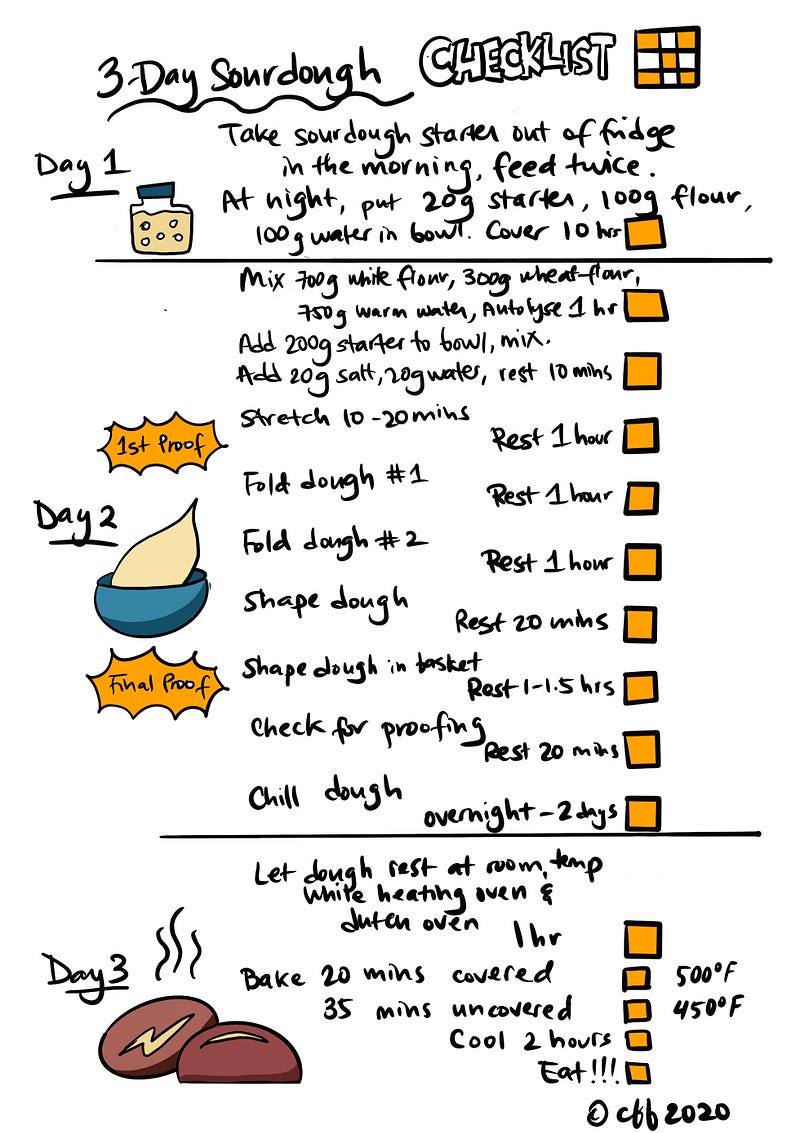
The New York Times recipe is the best of the 3 that I’ve tried. (My first attempt was with King Arthur Flour, and second with Earth Wind &Fire, but I find the NYT method is the easiest to follow— you can even swap in all white flour, 300g of wheat flour, or 150g of rye and 150g of wheat).With a few modifications, I made a checklist. I am a list person, and I wanted to keep track of the number of times I stretched it, proofed it, etc. You can download it as a PDF and write on it on your phone, checking the boxes or even marking the time beside each box. Then erase everything and use it again!
For specifics on stretching and folding, check out this video.
Here is one on checking for proof. It should spring back slowly.
Happy baking!
Subscribe to my monthly newsletter, Flying Penguins Plus, a digest of my best work every month delivered directly to your Inbox!


