
The ChatGPT Power User’s Handbook on Prompts
Expert Strategies for Crafting Perfect Prompts Every Time

Artificial Intelligence (AI) has come a long way in recent years, and one of the most exciting advancements is the emergence of AI-powered conversational models like ChatGPT. These models have the potential to revolutionize how we interact with technology, making our lives easier and more efficient. However, to make the most of ChatGPT’s capabilities, we need to know how to write effective prompts that can guide the AI towards generating the desired responses.
In this comprehensive guide, we will explore the intricacies of crafting effective prompts for ChatGPT. With a combination of practical tips and real-life examples, we’ll help you unlock the full potential of AI conversations, whether you’re using ChatGPT for business, creative writing, or personal assistance. So, let’s embark on this journey to optimize your AI-powered communication!
Section 1: Understanding ChatGPT’s Foundation
ChatGPT, or Chatbot Generative Pre-trained Transformer, is an AI-powered conversational model developed by OpenAI. It is based on the GPT architecture, which uses deep learning and natural language understanding to generate human-like responses to text inputs. ChatGPT is trained on vast amounts of text data from various sources, making it capable of understanding context, producing coherent answers, and engaging in multi-turn conversations.
Section 2: Crafting Effective Prompts
To ensure that ChatGPT provides the desired responses, it’s crucial to craft well-thought-out prompts. Here are some guidelines to help you create effective prompts:
2.1 Be specific and clear
When writing prompts for ChatGPT, it’s essential to be specific and clear about your request. Avoid ambiguous language or phrasing that could lead the AI to generate a response that doesn’t fully address your query. For example, instead of asking, “Can you tell me about AI?”, consider asking, “Can you provide an overview of the history and applications of artificial intelligence?”
2.2 Provide context and background information
Providing context and relevant background information in your prompts will help ChatGPT generate more accurate and meaningful responses. For instance, if you’re asking for advice on a specific issue, briefly outline the situation and any relevant factors to consider. This additional information will help the AI understand the context better and tailor its response to your needs.
For example, instead of: “What should I do next?”, try: “I’m working on a marketing campaign for a new product, and we’ve already conducted market research and identified our target audience. What should be our next step?”
2.3 Use step-by-step instructions or numbered lists
For complex queries or multi-part questions, breaking them down into step-by-step instructions or numbered lists can help guide ChatGPT toward generating a more structured and coherent response. This approach makes it easier for the AI to understand the different components of your query and address them sequentially.
For example, instead of: “How do I create a budget and stick to it?”, try: “Please provide a step-by-step guide on: 1) creating a personal budget, 2) tracking expenses, and 3) maintaining discipline in sticking to the budget.”
With a clear understanding of how to craft effective prompts, the next section will focus on fine-tuning your prompts to optimize AI-generated responses further.
Section 3: Fine-Tuning Your Prompts
Once you’ve mastered the basics of crafting effective prompts, it’s time to focus on fine-tuning and optimizing them to get the most out of ChatGPT. Here are some strategies to consider:
3.1 Experiment with different approaches
There’s often more than one way to phrase a prompt, and experimenting with different styles and phrasings can help you discover which approach yields the best results. Don’t hesitate to try several variations of your prompt to find the one that produces the most accurate and helpful response from ChatGPT.
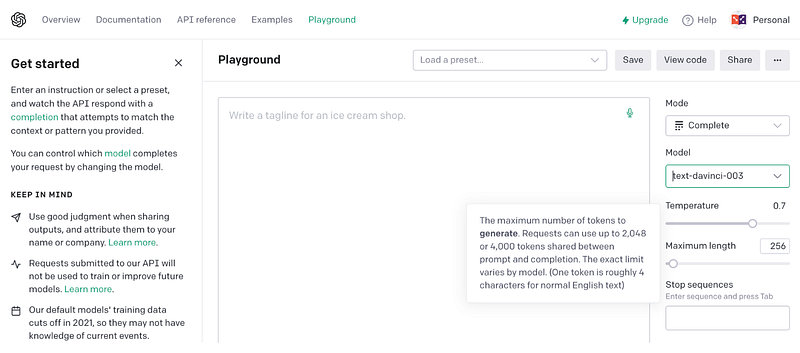
3.2 Leverage chatGPT parameters such as temperature and max tokens settings
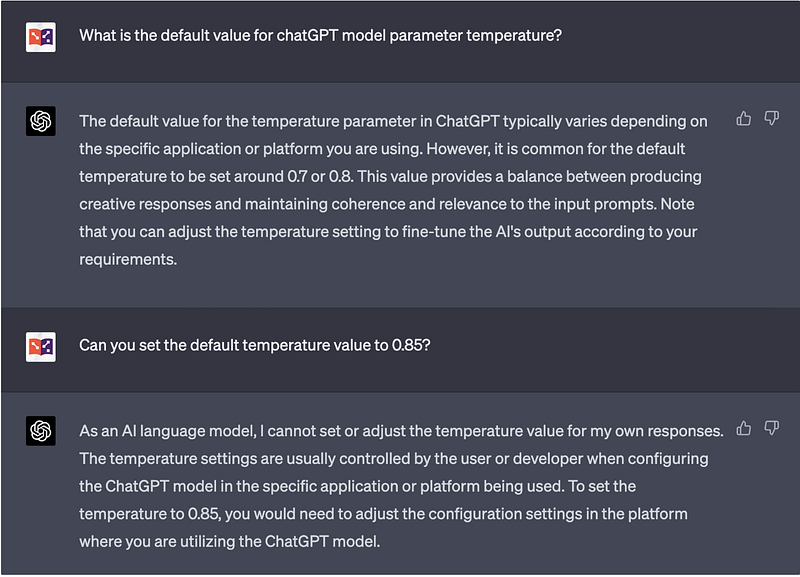
Adjusting the temperature and max tokens settings can significantly influence the AI’s output. The temperature parameter controls the randomness of the generated response: higher values (e.g., 0.8) lead to more diverse and creative outputs, while lower values (e.g., 0.2) make the output more focused and deterministic. The max tokens setting limits the length of the generated response. You can experiment with these settings to find the right balance between creativity and coherence for your specific use case. Currently, these settings are available through chatGPT playground and API requests.
We cannot change the parameter by telling chatGPT in the conversation.
3.3 Iterate and refine
As with any AI model, ChatGPT may not always provide the perfect response on the first try. It’s essential to evaluate the AI’s output and refine your prompts as needed. Analyze the response to identify any shortcomings, then adjust your prompt to address those issues and guide the AI towards a more desirable outcome.
By applying these fine-tuning strategies, you’ll be well-equipped to optimize your prompts and get the most value out of your interactions with ChatGPT. The final section of this guide will provide real-life examples and best practices for crafting effective prompts across various domains.
Section 4: Real-Life Examples and Best Practices
In this section, we’ll provide example prompts across different domains to help you craft effective prompts for ChatGPT.
Here are 20 example prompts across different domains:
- Customer Support: Instead of: “How to fix issues?” Try: “A customer is experiencing difficulty connecting their smartphone to Wi-Fi. What troubleshooting steps should they follow?”
- Content Writing: Instead of: “Write about AI.” Try: “Please write a 200-word introductory paragraph on the potential benefits of artificial intelligence in healthcare.”
- Brainstorming: Instead of: “Ideas for a party?” Try: “Can you provide 5 unique and creative theme ideas for a company’s summer outdoor team-building event?”
- Social Media Marketing: Instead of: “Social media tips?” Try: “Can you provide 5 strategies for increasing organic engagement on Instagram for a small e-commerce business?”
- Event Planning: Instead of: “Plan a wedding.” Try: “Please outline a timeline for planning a wedding, including the key milestones and tasks to be accomplished 12 months, 6 months, 3 months, and 1 month before the event.”
- Financial Planning: Instead of: “How to invest?” Try: “Describe a diversified investment strategy for a 30-year-old individual with moderate risk tolerance looking to invest $10,000 for long-term growth.”
- Personal Fitness: Instead of: “Workout routine?” Try: “Design a 4-week beginner’s workout plan for someone with a sedentary lifestyle looking to improve their cardiovascular fitness and build muscle strength.”
- Nutrition: Instead of: “Healthy meals?” Try: “Suggest a 7-day meal plan for a vegetarian looking to maintain a balanced diet while consuming approximately 2,000 calories per day.”
- Career Advice: Instead of: “Job interview tips?” Try: “List 5 strategies for effectively preparing for a job interview in the field of software engineering, including research, communication, and technical skills.”
- Productivity: Instead of: “Be more productive?” Try: “Explain the Pomodoro Technique and how implementing it can help increase productivity and focus during work or study sessions.”
- Travel Planning: Instead of: “Travel to Paris?” Try: “Create a 5-day itinerary for a first-time visitor to Paris, France, highlighting must-see attractions, local cuisine, and cultural experiences.”
- Educational Technology: Instead of: “EdTech tools?” Try: “Identify 3 innovative EdTech tools that can facilitate remote learning and enhance student engagement in a high school setting.”
- Personal Development: Instead of: “How to be confident?” Try: “Discuss 4 practical techniques for building self-confidence and improving communication skills in both personal and professional situations.”
- Mental Health and Wellness: Instead of: “Reduce stress?” Try: “Outline 5 evidence-based techniques for managing stress and promoting mental well-being in a high-pressure work environment.”
- Parenting: Instead of: “Parenting tips?” Try: “Provide 3 practical strategies for promoting healthy communication and fostering emotional intelligence in children aged 6–10 years.”
- Home Organization: Instead of: “Organize a room?” Try: “Describe a step-by-step process for decluttering and organizing a home office to maximize productivity and maintain a tidy workspace.”
- Environmental Sustainability: Instead of: “Eco-friendly habits?” Try: “List 5 lifestyle changes individuals can make to reduce their carbon footprint and contribute to a more sustainable environment.”
- Public Speaking: Instead of: “Improve public speaking?” Try: “Identify 4 techniques for overcoming stage fright and delivering engaging, persuasive presentations in a professional context.”
- Creative Writing: Instead of: “Write a story?” Try: “Write the opening scene of a science fiction short story set in a dystopian future where technology has surpassed human intelligence.”
- Project Management: Instead of: “How to manage projects?” Try: “Explain the Agile methodology and discuss its benefits for managing software development projects in a rapidly changing environment.”
More tutorials are available on GrabNGoInfo YouTube Channel, GrabNGoInfo.com, and LinkedIn.
Recommended Tutorials
- GrabNGoInfo Machine Learning Tutorials Inventory
- Topic Modeling with Deep Learning Using Python BERTopic
- Five Ways To Create Tables In Databricks
- Time Series Anomaly Detection Using Prophet in Python
- Multivariate Time Series Forecasting with Seasonality and Holiday Effect Using Prophet in Python
- Time Series Causal Impact Analysis in Python
- 3 Ways for Multiple Time Series Forecasting Using Prophet in Python
- Hierarchical Topic Model for Airbnb Reviews
- Hyperparameter Tuning For XGBoost


