
The Changing Camino de Santiago: Exploring Climate Challenges and Community Adaptation
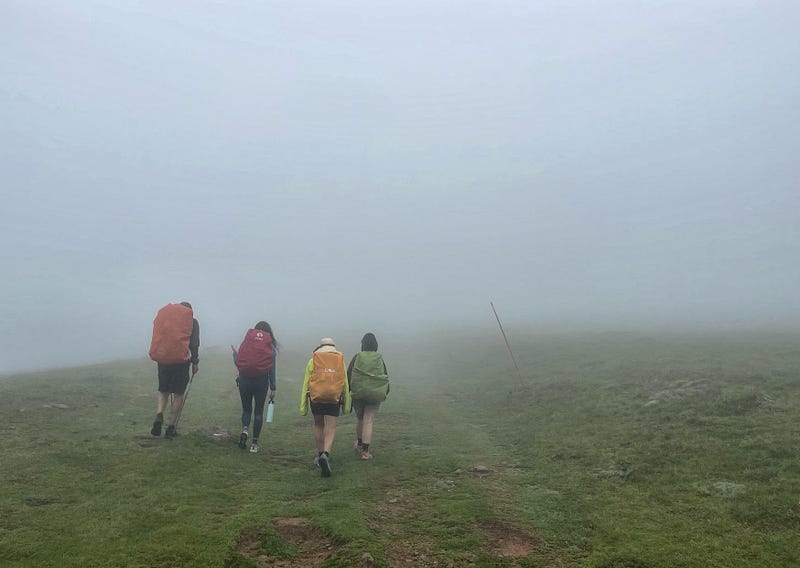
It is the Camino that brought me back to Spain. Since I finished my five-week pilgrimage last year, I have longed to return. Perhaps the contrast between the long, cold, and white Canadian winter and the colorful views of Spain in summer strengthened my desire to walk the way of Saint James again.
In the past year, I often found my thoughts wandering back to the enchanting landscapes of northern Spain. I missed the simplicity of life on the Camino and the profound sense of fulfillment it gave me. I am eager to return to a way of life where practically all I need fits into that bright red backpack, and anything else I need is available at the local cafe in the next village on the trail.
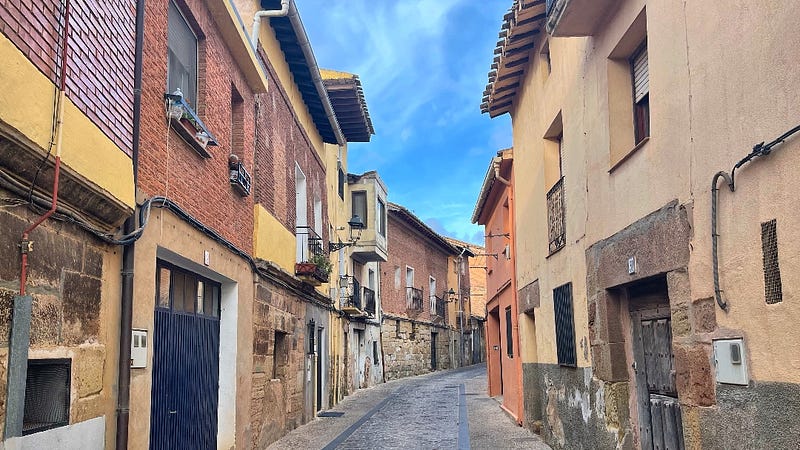
I’m writing you from a hostel in Madrid, the beautiful Spanish capital I visited about a year ago when I returned from Santiago de Compostela, the reputed burial place of Saint James the Great. Soon, I will travel from here to the French side of the Pyrenees mountains to start my journey.
I see the pilgrimage as an opportunity to reflect, let go, and gain clarity on global challenges, like climate change, that keep me awake at night. For many years, I have worked in different roles on issues related to climate change. With a decades-long background in international security and environmental aspects of diplomacy, I saw how these two seemingly unrelated issues formed an unwelcome synergy in my lifetime.
Throughout history, the impact of war on the environment has predominantly been negative. However, a new understanding has recently emerged, recognizing the reciprocal relationship between security and the environment. Over the past few decades, environmental challenges have increasingly given rise to security challenges, prompting journalists to speak about future “climate wars” and “water wars.” I prefer the phrase planetary security to describe the security risks of crossing planetary boundaries.
When I worked at Yale University in 2014, I coined the phrase planetary security because I couldn’t find a proper description for the security threats of our rapidly changing environment; climate security was too narrow. The destruction of the world’s biodiversity, acidification of the oceans, pollution, and mismanagement of water resources will all change the security situation in the world. And security is more than interstate security; we should also consider the impact of all these changes on human security. A poor farmer in a poor country who loses his small plot of land to a climate change-related disaster doesn’t spend much time thinking about the cause of his family’s suffering; war or climate change, the horrible impact of hunger is the same security impact at the individual level.
In 2015, I returned for one year to diplomacy and organized the first Planetary Security Conference in the Peace Palace in The Hague. It was the start of the first annual international meeting on this nexus of crossing planetary boundaries and security. After the conference, I left diplomacy and traveled the world, speaking about planetary security at meetings, conferences, and universities.
Swiss Re
During those presentations, I often referred to the groundbreaking research by Swiss Re. The re-insurance company was a pioneer in assessing and mitigating climate risks. Swiss Re has long recognized climate change’s impact on business and society. Since 1979, the company has been analyzing the effects of global warming and providing innovative solutions to narrow the protection gap and facilitate the transition to a low-carbon economy. So Swiss Re focussed on climate risk from a business perspective while I focussed on climate risk from a security perspective; two approaches with considerable overlap.
I’m therefore thrilled to announce that we will continue to build on this relationship by partnering on a content series looking at the impact of climate change along the Camino de Santiago. Starting this week on Thursday, when I begin my walk in the French town of Saint Jean Pied de Port, I will share my travel experiences on the Camino. This year, I will focus on climate change’s impact on the region and how communities adapt to maintain their resilience amidst the perils of droughts, wildfires, and heat waves. If you are on Twitter, you can follow Swiss Re here.
So I hope you will follow my journey. I will try to post often on my social media channels (I know ‘daily’ is too much to promise, but I will do my best) in various ways, decided mainly by the amount of time available and wifi access. Sometimes a story, at other times a video. If there is no time (walking is more like a full-time occupation than many people realize), I will just post a few photos of the day without much text.
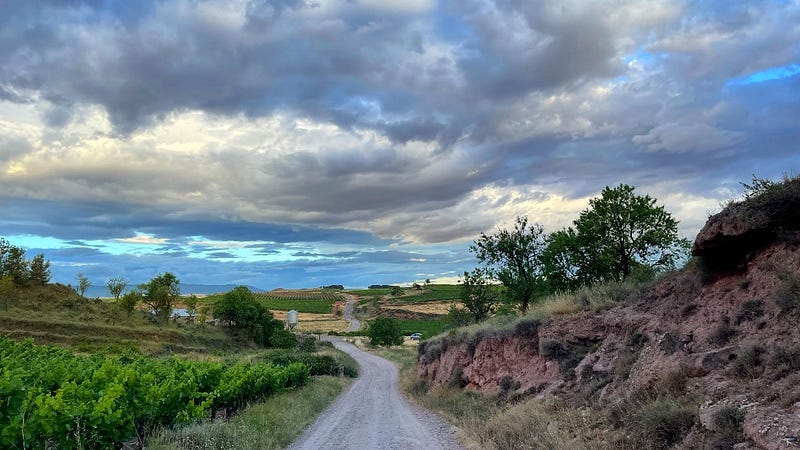
For my followers on Patreon: I promised to a new follower that I would post every morning on the Camino at precisely 8:00 a photo of what I see at that moment (that could be the bottom of the sleeping bunk above me, but usually I’m out in nature or in the outskirts of a city at that moment with still a bit of the warm morning light). No added text, location, or conversation because I want to be offline most of the day, but it may give a fairer impression of real life on the Camino than selecting the most spectacular photo of the day. (If you don’t follow me yet on Patreon but are interested in supporting this initiative, you can follow me via this link.)
If you find articles like this valuable and want to support my work, consider signing up to Medium. It’s $5 a month, giving you unlimited access to all my articles AND all stories on Medium. If you sign up using my link, I’ll earn a small commission, at no additional cost to you.
Email subscription via:


