
The Challenges of Learning a Language
How I finally got over the obstacles to learning my own tongue
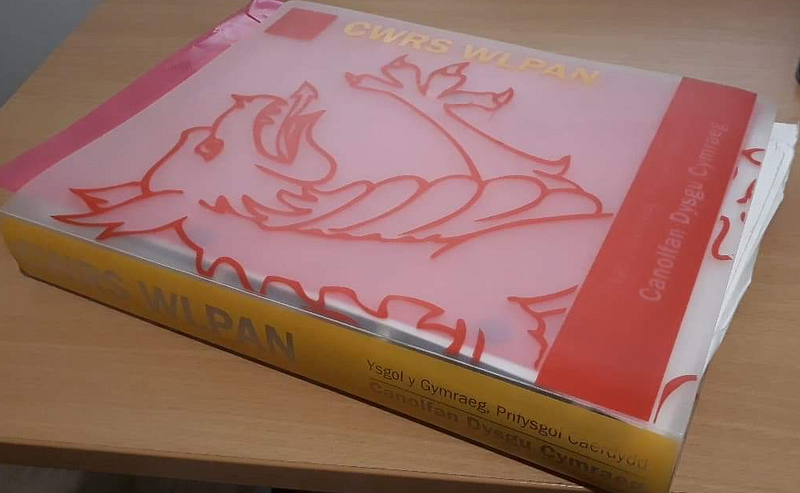
Like most people, I was given lessons in a couple of different languages at school, but never really paid much attention to them. It was clear from the beginning that it just wouldn’t stick for me as it seemed to do for others. Some people were linguists; I wasn’t, and that was fine.
I think this attitude is an easy excuse that we use to give up in many areas of life. From maths to technology, we declare that our brains are just not wired that way — and leave the hard work to others. Except by doing this, we’re also leaving the rewards to others, too.
I’ve always been interested in languages: the exotic feel, the way you’re forced to confront the sheer depth of information concealed from you by an accident of birth — surely an impossible amount for even the most talented to absorb entirely. It just seemed like something I’d never be able to access.
Having been born in a monoglot household, I know each utterance of a foreign tongue can seem so alien and unknowable that even learning more than a handful of phrases in just one extra language can seem an impossible task — with the mind-bending array of possibilities for grammar, you quickly realise that vocabulary is the least of your worries.
But of course, it’s more than possible to learn numerous languages. In most of the world’s countries being at least bilingual is the norm. At university I made friends with a Swede who speaks Swedish and a little Norwegian, a Finn who speaks Finnish, Russian and Swedish and a girl from the Netherlands who speaks Dutch and German. I have a Cuban friend who speaks Spanish, French and a smattering of Russian. All of them speak very good English.
And it’s this prevalence of the English language that is often to blame for English speaking nations being largely populated by monoglots. In America, Canada, the UK, Australia, and New Zealand the attitude that other languages are unnecessary is widespread. But English is the native language to none of these countries, and while English is my first language, a few generations back it wouldn’t have been.
I’m Welsh, born and raised in a mostly monolingual (English) area in the south of the country — but the Welsh language is far from forgotten. Most obviously it is alive in the place names. The pronunciation of words unfathomable to many people over the border in England, like Cwmfelifach, Pentwyn, Llantrisant, Penrhiwceibr, Pontllanfraith or Cilfynydd, were second nature to me as a child.
As many as half of my great, great grandparents were Welsh speakers, and many words and phrases have been passed down (including ones I had no idea came from Welsh). Like everyone else locally, I learned some Welsh in school.
But in a country controlled by another with no regard for its language — in fact, responsible for attempting to eradicate it — it has suffered badly.
Despite having 600,000 people claiming to speak Welsh (that’s 20% of the population) it’s constantly derided as a dead language, while paradoxically an elitist ‘crachach’ of Welsh speakers are accused of controlling every aspect of the country. It is a waste of time learning it, yet a corrupt elite ensures you can’t get a job without speaking it.
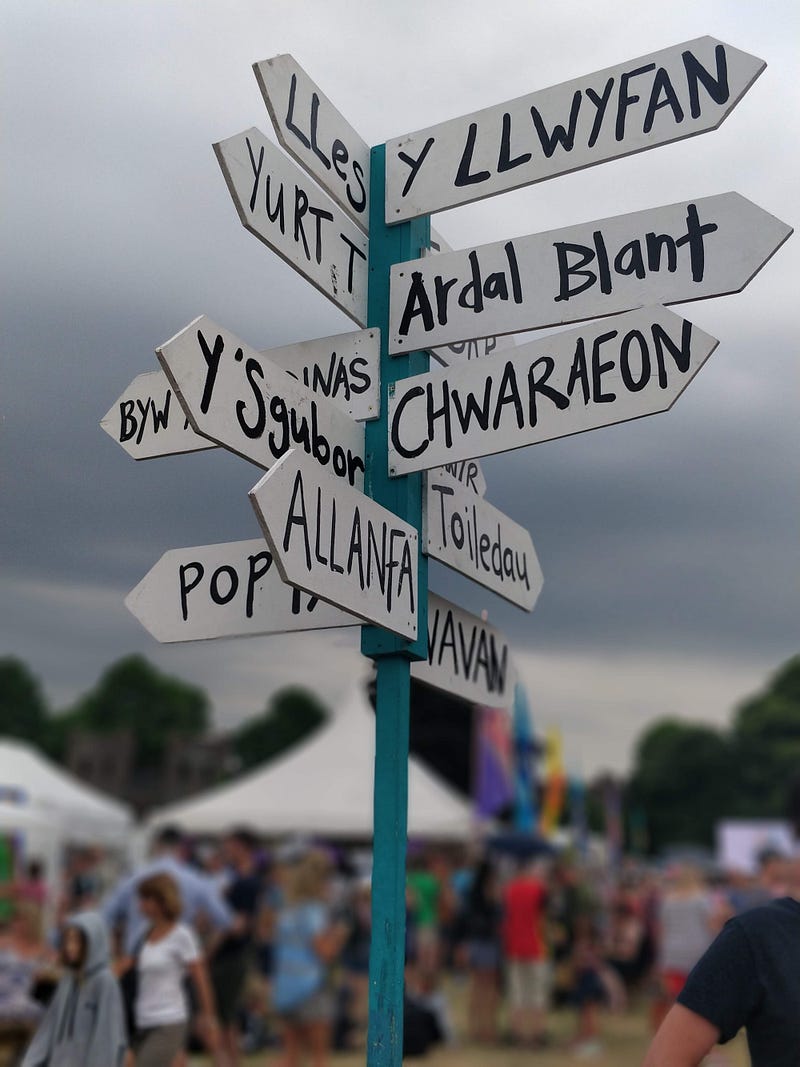
Then there are the road signs. They’re one of the easiest ways visitors can tell they’re in a country separate from the rest of the UK, so they must be lambasted as pointless, a waste of money, and above all so confusing they’re incredibly dangerous — despite the fact bilingual road signs are common around the world, and no accident on Welsh roads has ever been attributed to them.
Such contradictions will never stand up to scrutiny, but of course they don’t need to when the aim is simply to create a general air of negativity around the language for those unlikely to give it much thought.
Growing up, our accents, let alone language, was conspicuously absent from television; from drama to local news bulletins. We were far more familiar with cockney London or Geordie Newcastle accents than the various ‘Gog’ accents of the north of our own country.
Not only do few people outside Wales know Wales has a language, there are even many within the UK unaware of it. It blew the minds of my London cousins when they learned it was a subject in schools (they both, as it happens, have very Welsh names). This is perhaps part of the reason I paid little attention to the subject and left school with no working knowledge of the language.
Despite all this, the language is being spoken by more people than ever before. Despite efforts to persuade the public otherwise, the majority of people in Wales support the language and are proud of it. While in my family none of my generation speaks Welsh, half of the following generation do. This is thanks to the ever-increasing demand for Welsh medium education.
My children are among them, but my journey on the path of an adult learner began before their arrival.
I went to university in the west of Wales where Welsh is still a living community language in many areas. The pride I felt in being surrounded by a tongue I had long considered to belong to me as part of my heritage was matched by a feeling of inadequacy as I understood none of it.
I made good friends with a number of Welsh speakers and made it clear I enjoyed hearing the language spoken — it was a joy to follow them as they switched languages depending on who they were speaking to. But all too often it became English-only as soon as a non-speaker entered the room.
One made an attempt to teach me, plastering sticky labels of nouns all over our accommodation, but a lack of time and commitment from each of us was partly (but not entirely) to blame for this resulting in failure. It did, however, show me that the complexity of language extends beyond literal, word-for-word translations and that even native speakers can have no idea where to begin teaching it. It hadn’t occurred to me that as they weren’t translating from English every time they spoke, the translations didn’t ‘sit next to each other’ in their brains.
But the taster was enough to cement it as an ambition I would not let drop.
A little while later I decided to join an evening class, realising the need for structure. At the time the only class I could afford to commit to was an hour a week, where my fellow learners were mostly retired English people making the commendable effort to learn the local language.
Unfortunately, I found the pace incredibly slow: the fact I knew how to pronounce ‘cyfrifiadur’ (meaning computer, and one of the few words I remembered from school) made me a celebrity for the first three weeks. I stopped going after a month having learned nothing substantial, other than the certainty that I would get nowhere without something more intensive.
That isn’t to say I’m against slower-paced courses — I know people who have fared far better than me — but for me personally, I knew it was never going to be effective.
Years went by with my ambition very much on the back burner, until a couple of chance meetings rekindled it. A conversation with a Latvian resulted in her desire to compare languages, but nothing came to mind. Then, I worked with a Libyan who, after offering me a few words of Arabic, could not grasp that Welsh was more than just an accent of English. I needed only to be armed with a phrase, a word even, but nothing came to mind — not even cyfrifiadur.
The feeling was close to humiliation, not just for myself but for my country. Fortunately this time a lucky coincidence meant I was able to conveniently commit to a course that was two hours, three nights a week. There were other things I could have been doing, easier things, but I knew that if I didn’t take the opportunity when it presented itself then I never would.
This time, though challenging and often frustrating, the learning was real and relatively rapid. This was the real start of my learning, and my desire to eventually learn other languages beyond Welsh. Several years on I am still not fluent, but I’m over the first hurdle.
As soon as I was able to construct a handful of sentences myself, meaningful ones, from scratch, a whole new world suddenly opened up. Rather than parroting phrases without understanding the individual components, I was breaking them down and making sense of them. With the ability to do this for even just a few sentences I could suddenly see that it was possible for me to do this for any concept or idea.
I wasn’t a linguist, but I could be.
I’ve had to take a break from the courses, and there is so much more I need to learn, but I’m getting ever closer to where I want to be. And after that first year, the commitment hasn’t needed to be so intense. To date, nothing has been as difficult as simply starting the journey.
If you are looking for language partners to improve your foreign language skills you can find it on swaplanguage.com.


