
The Challenge of Predicting Volcanic Eruptions
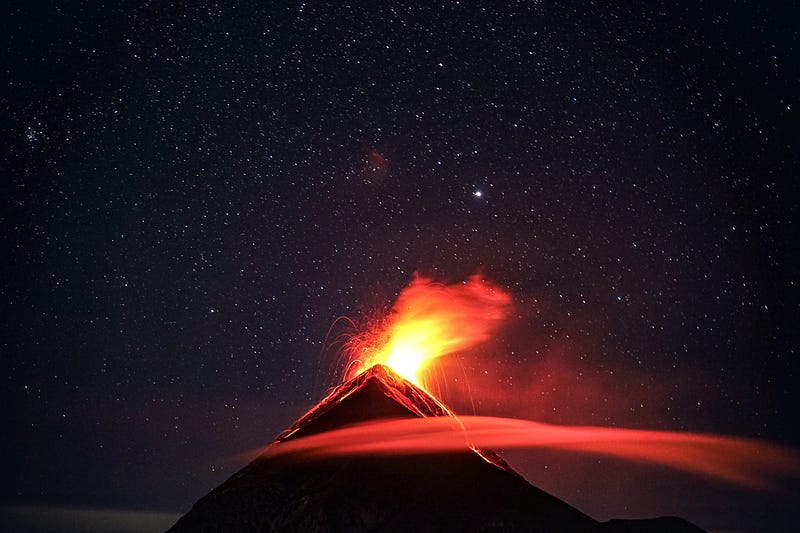
Volcanic eruptions are one of the most dangerous natural phenomena that occur on our planet. Unfortunately, despite years of research and study, volcanologists are still unable to forecast them with 100% accuracy. In this article, we will explore the factors that make it so difficult to predict volcanic eruptions, as well as the advances that are being made in this field of study.
A Lack of Data
One of the main reasons why predicting volcanic eruptions is so difficult is a lack of data. There are thousands of volcanoes around the world, but only a small percentage of them are actively monitored. This means that scientists may not have enough information to accurately predict when a particular volcano is going to erupt.
“The challenge is that we don’t have enough information about most volcanoes to be able to predict with certainty when they will erupt,” says Dr. Janine Krippner, a volcanologist and science communicator.
The Complexity of the Earth’s Systems
Volcanoes are influenced by a range of factors, including the composition of the magma, the shape of the volcano, and the pressure of the magma chamber. Understanding how all of these factors interact is incredibly complex and requires a lot of research and analysis.
“Volcanoes are complex systems that involve multiple processes and interactions,” says Dr. Marie Edmonds, a volcanologist and professor at the University of Cambridge. “Predicting their behavior is a challenge because we have to consider a wide range of factors and their interactions.”
Monitoring Techniques
To try and predict when a volcanic eruption is likely to occur, scientists use a range of different techniques. One of the most common is seismic monitoring, which involves the use of instruments that can detect and record vibrations in the Earth’s crust. By analyzing these vibrations, scientists can often identify patterns and changes that suggest a volcano may be about to erupt.
Another technique used by volcanologists is the monitoring of gas emissions from a volcano. As magma rises to the surface, it releases gases like sulfur dioxide and carbon dioxide. By tracking these emissions, scientists can get a better understanding of what is happening beneath the surface of a volcano.
“Monitoring techniques have improved dramatically over the years,” says Dr. Krippner. “We can now use remote sensing tools like satellites to monitor gas emissions and other changes in a volcano’s behavior. This has greatly improved our ability to predict eruptions.”
Advances in Technology
Despite the challenges, scientists are continuing to work on improving their ability to predict volcanic eruptions. Advances in technology, such as improved sensors and data processing techniques, are helping to make this possible.
“We’re constantly looking for new ways to gather data and monitor volcanoes,” says Dr. Edmonds. “For example, we’re developing new sensors that can be placed inside volcanoes to give us a better understanding of what’s happening inside them. We’re also using machine learning techniques to analyze large amounts of data more quickly and accurately.”
Predicting volcanic eruptions is incredibly difficult, but advances in technology and monitoring techniques are helping to make it more possible. As we continue to study and understand the complex processes that govern volcanoes, we may one day be able to accurately forecast volcanic eruptions and mitigate their potential impacts. However, it is important to remember that volcanoes are still unpredictable natural phenomena, and we must always be prepared for the unexpected.