
The Center of Excellence for Machine Learning in Geothermal Energy
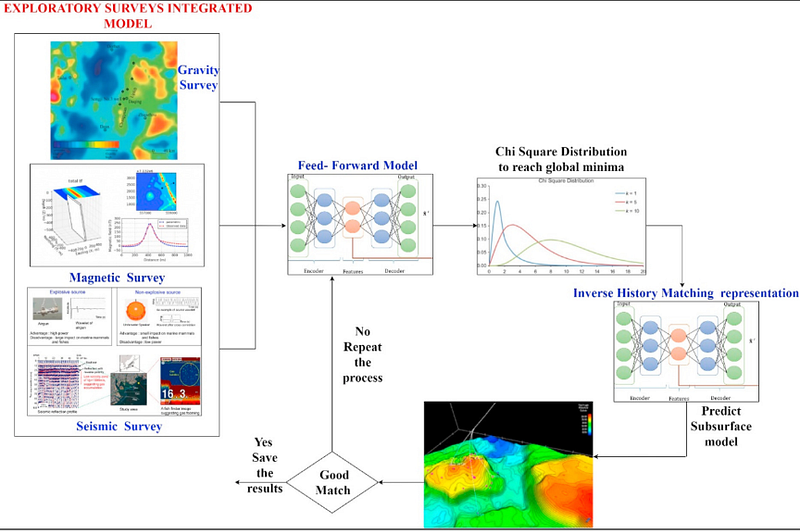
Critical success factors for an enterprise require strong strategic leadership through innovation by identifying opportunities and threats in the external environment on competitive landscape. An ingenious strategic Leader will construct a framework through which the stakeholders such as employees, customers, and suppliers can perform at peak efficiency. A strategic leader has the ability to articulate, envisage, maintain flexibility, and empowers the employees to create strategic change as necessary. The strategic leadership does not only come from the top-level management but comes from every level of the organization. When employees are empowered by the strategic leader to perform their functions as in charge of their departments, the strategic leadership is distributed across the organization. Before going public, Royal Dutch Shell developed strategic scenarios in 1972. The six scenarios built in 1972 concentrated on oil price, oil supply, and economy growth. The Arab Oil Embargo following the Yom Kippur war pushed the oil prices to unthinkable levels. The Petroleum Handbook by Royal Dutch Shell Group of Companies staff 1983 talked about the rather pessimistic scenarios of looming recession first started in 1982 with predictions about longevity of the former Soviet Union. The next wave suggested by 1986/1987 price for oil drop in USD 18/bbl. The centrally planned economies were the first attempt at focus scenarios in 1988.
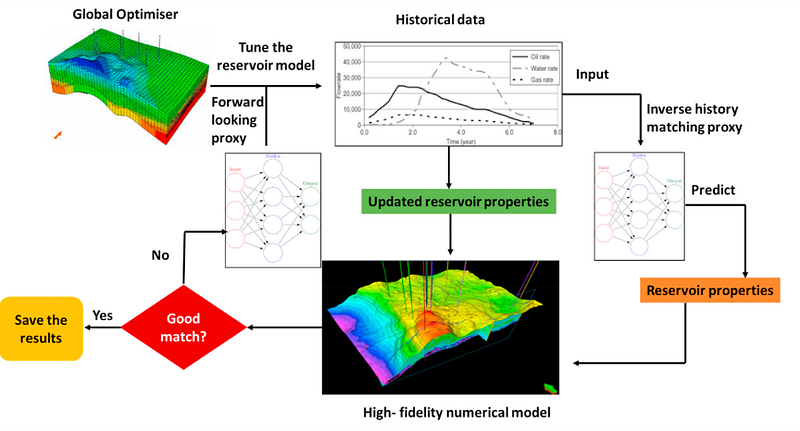
This is where the big data analytics and machine learning come to the rescue. The upstream oil and gas enterprises can analyze enormous amount of big data for amalgation of operational data and drilling rig sensor data to real-time advanced analytics by mining the in the reservoirs. The strategy involves applying logistic regression and support vector machine algorithms to increase the predictive analytics to expand the drilling and production performances. The chevron traffic sees a 1.5 terabytes big data every day for each region, including the offshore sea-beds, geographical properties, and marine life. The strategic leadership requires proactive measures by changing the leadership from just being responsive. A good example of strategic leadership is Peter Voser, since 1st July 2009 has taken over the reigns of Royal Dutch Shell plc. as a new CEO; within 1 year of taking over the CEO role, Royal Dutch Shell in 2009 has toppled global oil and gas Giant Exxon Mobil from the top list of Fortune Global 500 companies. Peter Voser 54, who is Swiss, was earlier working in number of financial and business roles in different countries including as a CFO for Shell in 2004 that left the firm in 2002 to turn around the troubled company Asea Brown Boveri (ABB) Group of companies. Peter turned around the company that posted net losses of $691 millions in 2001. By the first quarter of 2004, ABB turned its first quarterly profit in past two years. The oil and upstream is big data driven business. Leveraging data management techniques, it’s important to keep the sight of seismic waves with sensors such as geophones and hydrophones that can pick up tectonic activities. Peter reconstructed the company while sustaining sharp operational performance excellence. ExxonMobil leverages a seismic data visualization tool to presage the diffusion of fractures in tight reservoirs for streamlining and improving the placements.
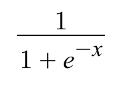
A logistic regression estimates the probabilities leveraging a logistic or sigmoid function by measuring the relationship between either a single or multiple independent variables and corresponding dependent categorical variable. The logistic regression predicts a binary outcome such as 0 or 1, -1 or 1, true or false with a set of independent variables. The logistic regression model measures the weighted sum of the input variables and predicts a real-valued output as Y. It can be computed as with the sigmoid function to derive the values between 0 and 1 with an exponential value function e = 2.71828.
2.71828 +x = positive value

The logistic cost function can be represented as:
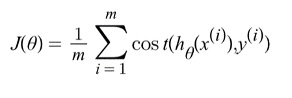

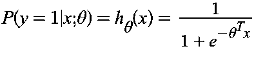
Based on the cost function, the value of the logistic regression function is computed as either Y as 0 or Y as 1. The logistic regression can be applied to any problem; it can be applied in financial industry for credit card loan payment prediction or predict the probability of the credit default based on the historical data of the payments. The logistic regression function takes the samples from the population and applies the binary classifier to predict either a predicted positive or predicted negative. The predicted probability can be measured with the dependent variable Y and to assess the value of 1 with the values of explanatory variables in X with the logistic function. Based on the earlier sigmoid logistic function, the probability can be represented as
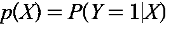
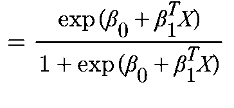
Exp → Exponential function
β0 → Intercept
β1 → Vector containing the coefficients for the explanatory variables.
Peter Voser hit the ground running from day one he was on board; he introduced strong work culture and high performance top-level management at Royal Dutch Shell. He defined productivity levels in the organization and demonstrated a transformational leadership and motivated the top-level management to exceed the expectations. His vision for the organization basically was strategic focus and operational performance of the firm with clear roadmap of priorities to build successful organization. In no time, he made Royal Dutch Shell plc. as the best global oil and gas company for 2009. He turned the things around for Royal Dutch Shell plc. as he brought Royal Dutch Shell plc. as a phoenix rising from the financial debris from the past few years running in losses. He had the vision of strategic leadership and believed in what he wanted to accomplish in the organization by setting up the targets for all the departments and following through the accomplishments and action items needed by each department in the organization. He was able to develop people to become the front-runners of the innovation and efficiency in the organization by being himself managing risk management in the volatile market and empowered all the employees to take control of the situation and perform their tasks at efficient and productive levels. He fostered innovation and fostered localized strategic leadership and entrepreneurialism thus promoting the leadership at all levels of the organization. He has shown the crystal clarity required by the leaders in terms of the quarterly targets and production levels and annual targets keeping in view of the marketing trends on the competitive landscape. He set the priorities for the resources and departments to deliver the products with precision and reduced anything that isn’t necessary to carry in the organization.
Several principles guide Peter’s work as a strategic leader. His inter-personal skills to level-set the right expectations through his strong leadership, prepared to listen — and humble in their approach, but at the same time able to make tough choices and also able to bring their people along with has made Royal Dutch Shell most successful company during his tenure.
There are several bad examples of strategic leadership the world has seen, such as MCI WorldCom and Enron. The leadership could not set realizable aspirations for the people in the organization and did not have a clear vision about the mission of the organization. The strategic leadership lacked the top down approach to empower the employees to perform their functions, ability to push the strategic change to the resources and allowing them to deliver their duties on their own resulted in collapse of the organization.
References
Sircar, A., Yadav, K., Rayavarapu, K., Bist, N., & Oza, H. (n.d.). Application of machine learning and artificial intelligence in oil and gas industry. ScienceDirect. https://doi.org/10.1016/j.ptlrs.2021.05.009