
The Cashless Effect: How eliminating the “pain of payment” can improve your experience
Disney, Amazon, and Panera Bread have seen huge returns after applying this psychological principle
Note: This article is adapted from my book “Choice Hacking: How to use psychology and behavioral science to create an experience that sings”. Click here to download the first chapter free.
“People spend money where and when they feel good.”
— Walt Disney
Have you ever heard of the Envelope Budgeting Method? It’s a simple system that relies on people putting cash into separate envelopes for different parts of their budget (groceries, rent, etc.). It can be useful for those who feel their money seems to “slip away” during the month on small purchases.
But there’s also a psychological reason why using cash makes it easier to stick to a budget. It’s down to a principle called the Cashless Effect.
What is the Cashless Effect?
The Cashless Effect states that the more tangible payments are, the more psychologically painful it is for customers to spend. The Cashless Effect is related to a concept called “pain of payment.”
It’s why people on a budget find it easier to track their spending when they use cash instead of credit cards. The more painful it feels to pay, the less people will spend.
The Cashless Effect states that the more tangible payments are, the more psychologically painful it is for customers to spend.
The Cashless Effect has been studied in many different scenarios. For example, in one study, researchers found that people spent more when apartment laundry rooms took cards instead of coins.
In another study, researchers at MIT asked people to bid for a pair of tickets to a sporting event. One group was told they’d be paying with a credit card, and the other group was told they’d be paying with cash. The subjects in the credit card group bid up to 72% more for the tickets than those who were told they’d be paying with cash.
How Brands Apply the Cashless Effect to their Experiences
1. Panera Bread: MyPanera+Coffee
Panera, the bakery-café chain, introduced an unlimited coffee subscription in 2020. Called MyPanera+Coffee, the program offers unlimited hot coffee, iced coffee, and tea at all Panera restaurants for $8.99 a month. Customers can get free refills in-store every two hours. When customers add a +Coffee subscription to their MyPanera rewards, they pay a small amount, each month, by credit card.
By adding +Coffee to the rewards redemption process, Panera removed the “pain of payment” when buying a coffee. The experience of scanning an app for a pre-paid cup of coffee is so painless, it almost feels like getting something for nothing.
Before rolling MyPanera+Coffee out to all stores, the company tested the program in 150 stores for three months. Although many were skeptical of the pilot, the bottom-line results speak for themselves:
- The frequency of visits jumped by more than 200% for customers who signed up for MyPanera+Coffee.
- There was a 70% increase in food attachment for subscribers, which Panera CEO Niren Chaudhary called “staggering.” In other words, people who came in to get their subscription coffee also bought food. Before the program, they were more likely to come in and only buy coffee.
2. Amazon: 1-Click Ordering
Amazon is the Terminator of eCommerce — it's ever-evolving, learning, and growing. Because so many people shop at Amazon, it's able to test on a massive scale, which gives them the benefit of learning on a massive scale as well. So it's no surprise that when it comes to eliminating friction and the "pain of payment" from their experience, Amazon is ahead of the curve.
The Cashless Effect is apparent in many parts of Amazon's experience, but 1-Click ordering is the primary example. Described by the company as a system that "places your order automatically and lets you skip the shopping basket."
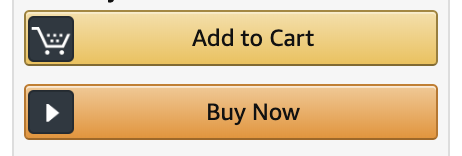
Not only that but, the first time you place an order, 1-Click ordering is automatically enabled. Any following order you make will be charged to your default payment method and delivered to your default address.
3. Disney World: MagicBands
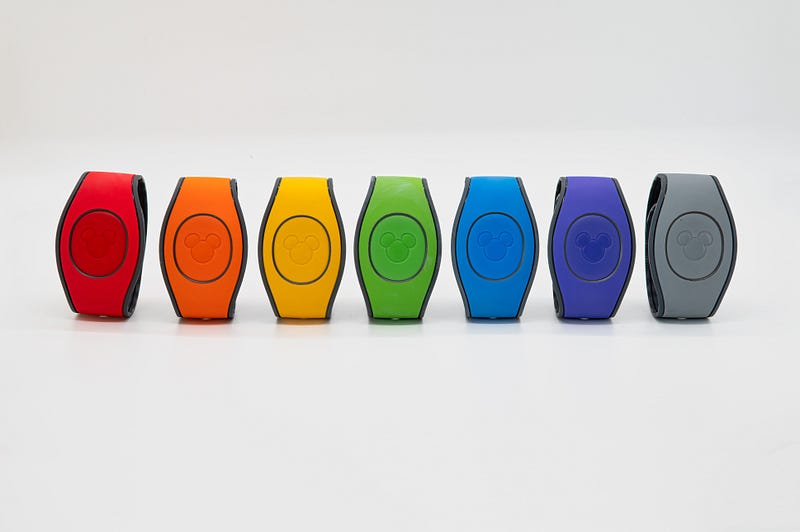
Disney’s MagicBand is an “all-in-one device that effortlessly connects you to all [your] vacation choices”.
When wearing the MagicBand, guests can charge their rooms for almost item or experience in the park. By integrating the MagicBand throughout its experience, Disney has done away with the “pain of payment” for visitors.
After spending a billion dollars to develop the MagicBand, Disney created one of the best examples of the Cashless Effect in action. Meg Crofton, president of the Walt Disney World Resort at the time, started the project with the aim of eliminating all the friction for guests. As Crofton told Wired magazine:
“We were looking for pain points. What are the barriers to getting into the experience faster?”
Not only do MagicBands reduce the pain of payment for customers, but they also reduce all friction points in the park. This makes room for a better overall customer experience. MagicBands allow employees to “move past transactions into an interactive space, where they can personalize the experience” as Crofton put it.
The Bottom Line
Using cash is a huge source of friction in any experience, as demonstrated by the Cashless Effect. But by eliminating the customer’s pain of payment, you can create an experience that is not only more pleasurable, but profitable as well.
So ask yourself:
- How much friction, or difficulty, is there for customers in our payment process now?
- How does our experience encourage the use of credit cards, prepaid cards, or credits? Is there a way for us to incentivize their use that’s both good for us and good for the customer?
- Are there ways for us to eliminate the “pain of payment” and improve our overall experience for customers as well?
🎧 Want to learn more? Check out Episode 106 of the Choice Hacking podcast where I talk more about the power of the Cashless Effect: Click here for a direct link to the episode.
👉👉 Listen and subscribe to the podcast: Apple, Spotify, Stitcher, Google Podcasts, and Simplecast.


