
The Case Of India’s Last Sati
A family claims it was a widow’s choice to follow her husband into death, but others claim it was murder.
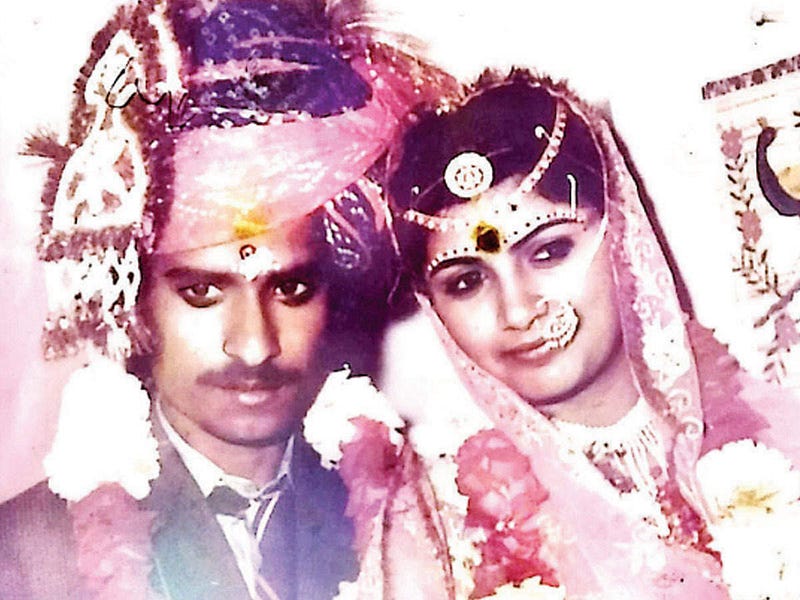
“Til death you part,” those words are part of the marriage vows. They are repeated by many couples around the world. However, there are some cultures that believe husband and wife should be together for eternity. Those societies even have practices to keep the couple together.
In India’s history, they had a practice called Sati or suttee. This was where a widow would be burned on top of her husband's funeral pyre. It was considered to be a sacrifice on the part of the wife, something that she should want to do.
Many people thought the practice was barbaric. As the debate and controversy swelled around the issue, Governor-General Lord William Bentinck banned the practice on December 4, 1829. The move also supported a widow deciding to marry another man, itself a controversial move in those days.
While the practice was mostly abandoned, there have still been cases of it continuing. Including the death and murder of Roop Kanwar.
Married Life
Kanwar married her husband, Maal Singh Shekhawat when she was just 17-years-old. Her groom was seven years her senior. Still, the pair got along and seemed to enjoy one another’s company. This was an arranged marriage between the families.
Shekhawat grew ill over the months. He had gastroenteritis. The ailment had him seek out medical care a few times over the course of his marriage. Kanwar cared for her husband to the best of her ability. She also asked her mother-in-law to assist her in helping care for the young man.
His condition continued to deteriorate. On September 3, 1987, Shekhawat succumbed to his illness. The family gathered to mourn the young man. Many lamented that he was gone too soon. How could a 24-year-old be taken from Earth? His parents and widow grieved together that night.
It was the last night that Kanwar would be alive. The next day the community gathered to mourn. And another death was witnessed.
Widow’s Death
As the family built the funeral pyre for Shekhawat, the community gathered around to support them. Condolences were passed to each of the grieving families. People asked about Kanwar, worried about her mental health.
When she appeared at the gathering, she was led to where her husband was. She was placed on top of the structure and a fire was lit. The people of Sikar District, the village where they lived, were witnessing a Sati.
After husband and wife were burned, a debate broke out among the people. Shekhawat’s family claimed that Kanwatr had come to them and said this was what she wanted to do. In their view, the young woman was suicidal and wanted to join her husband in the afterlife.
Others believed the community was witnessing a murder. The practice of Sati had been outlawed for so long, they were shocked one was happening in their own backyard. Even if Kanwar had been suicidal, as the family claimed, everyone who watched the Sati was guilty of assisting a suicide, friends of the widow charged.
Despite many people being at the ceremony, there are no eyewitness accounts. With no one coming forward, it has led many to wonder what truly happened.
Past Meet Present
As people all over India debated what happened to Roop Kanwar, authorities were split on what to do. Finally, more than a year after the widow was burned alive, 45 people were charged with murder and abetting a suicide. Kanwar’s in-laws and several politicians who attended the Sati were among those that were tried.
Each person was acquitted in a Jaipur Court. The outcry from the public was loud and ignited the Sati debate all over again. More traditional people believed that it was the right thing to do, that Kanwar should have sacrificed herself for her husband.
The less traditional people claimed that the acquittals did not prove that Kanwar wasn’t murdered. Rather, they argued, it proved the government was corrupt. They demanded justice for the murdered widow.
Hoping to quell the outrage, authorities charged 11 more people with the glorification of Sati. These people too were acquitted. And the outrage continues to engulf India.
The question is not whether Roop Kanwar loved her husband or not. The question is whether she should have died because he did.


