The Case for Hot Pot in America
America needs more hot pot
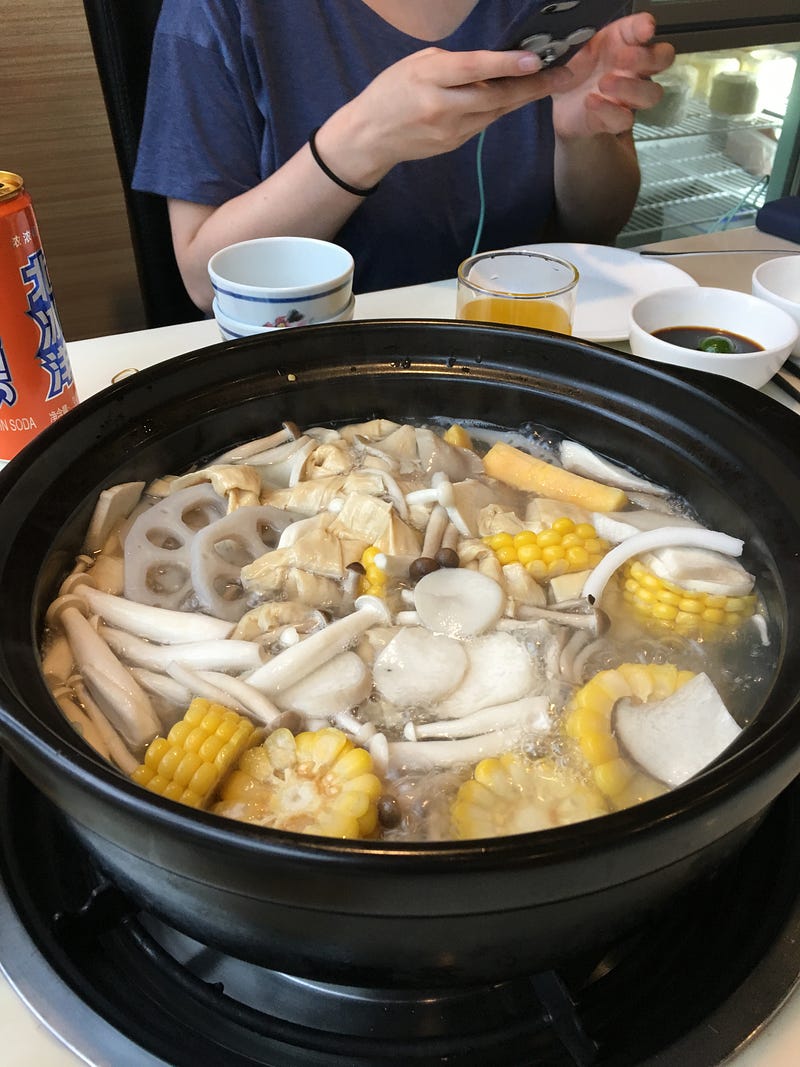
Not everyone stays in China forever. Most people reflect on the things they’ll miss when they leave. Things like the different tourist spots, or the friends they made. Others will miss how cheap it is to travel. When it comes my time, I know there’s one type of food I’ll miss. Hot pot.
What the hell is hot pot?
If you’re not currently reading this from China, you’re probably wondering, “What the hell is hot pot?” It’s an experience that needs to be brought to America as soon as possible.
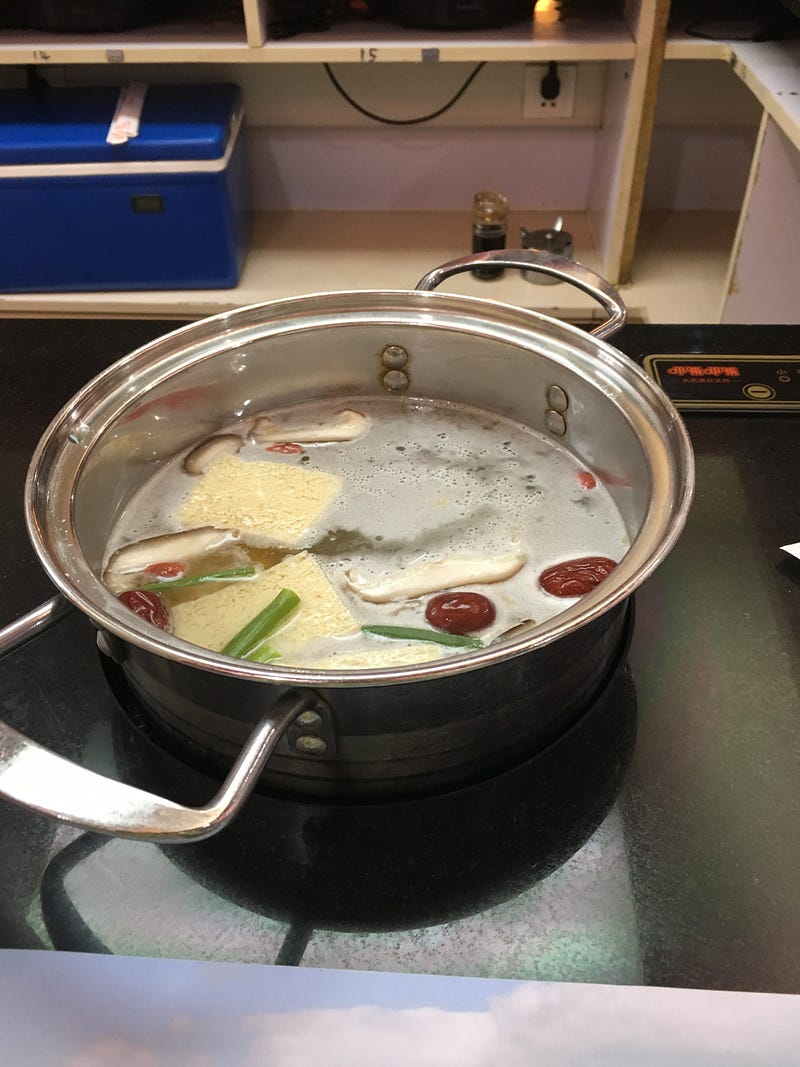
You walk into any hot pot restaurant, and you’re lead to a table. In the middle of the table is a burner. Sometimes there’s a pot on the burner. It depends on the restaurant. There’s a menu at the table so everyone can look at it and see what they want. You pick your broth, you meats, your vegetables, noodles, and drinks. Then you give it to the wait staff, and they bring it out.
They don’t bring everything out right away. First, they’ll bring out the soup and turn on the burner so it boils. Once it’s boiled, you put everything in and watch it cook. The wait staff usually handle meat for you so that no pairs of chopsticks get contaminated. If they can’t, they’ll give you an extra pair of chopsticks so you can put it in yourself. Once everything’s cooked, everyone can feast!
While the food is cooking, people can go to a snack bar/dip station. You can grab things like sunflower seeds, watermelons, and cherry tomatoes to snack on. You can make your own dipping sauce out of the things they have. In Beijing, they mainly use sesame sauce. You can add garlic, sugar, cayenne pepper, salt, and lots of oils to make your special sauce. In Chengdu, there really isn’t much sesame, but their sauces are more oil based. I walked into a Chengdu hotpot place that literally gave you a small can of oil as the base for your sauce.
When the food is cooked, you can take the stuff out of the pot and dip it in your special sauce. Then you eat it. It’s easy and fun!
Later, when it looks like everyone’s finished, you can get a spoon and drink the broth. Every pot comes with a ladle that you can scoop the broth or noodles out and put into another bowl. There’s usually small spoons for every bowl. To me, this is the best part. A lot of the flavor gets put in the broth by the end of the night.
So let’s bring it to America.
In a perfect world, I could name five American hot pot places off the top of my head. However, it’s not a big thing in America. Granted, I can see why.
People can get weird about a big, shared pot.
Some worry about food safety.
What if you have to handle raw meat?
Double-dipping
Valid worries. Especially for those with food allergies or have special dietary requirements that make them worry about cross contamination. If Hot Pot was in America, this is how to stop these worries.
Know everyone’s dietary needs.
This one sounds like common sense. If someone is allergic to seafood, don’t order seafood. If someone in your group can’t eat certain foods because of religion or culture, don’t order those foods. There are some types of cross-contamination that are unavoidable. However, what if it’s smaller things? What if half of your party doesn’t like spicy food? Or half the party doesn’t eat meat?
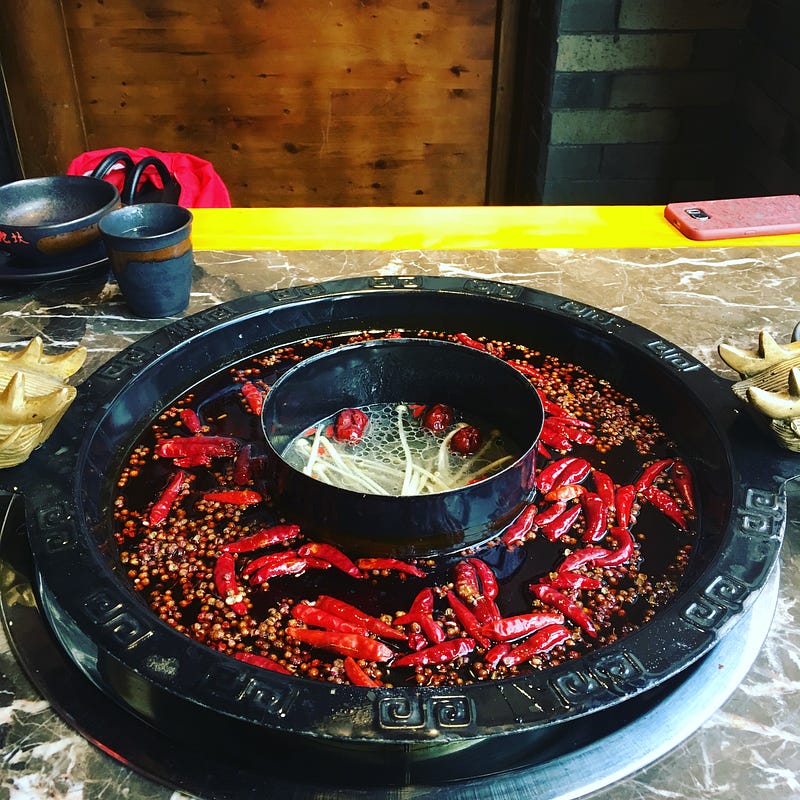
Whenever this is an issue in China, the restaurants are pretty accomadating. You can order two different broths instead of one. And when the pot comes out, there’s a divider in the middle so that one soup doesn’t mix with the other.
You don’t have to use your own chopsticks to get the food out.
For those of you afraid of cross-contamination, double-dipping, and handling raw meat. This one’s for you.
When wait staff brings out the vegetables and the meats, one of the first things he or she does is put the meat in the soup. That way, no one has to mess with it. You just have to make sure they know which section to put the meat in if you’ve got some vegetarians in the group. Once the meat is finished, you can add the vegetables.
You could do the vegetables first then meat if you’re afraid of raw meat touching the vegetables. There’s a lot of ways to get around this fear. On top of that, every table is given a slotted spoon and a ladle so that no one’s worried about double-dipping.
Dividers are your friends
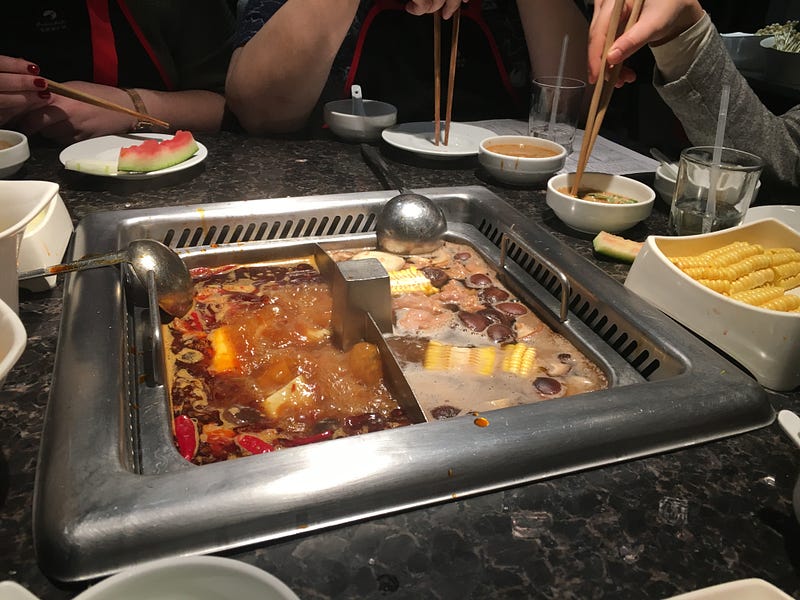
Dividers, dividers, dividers! If there’s anything you get out of this article, it’s that dividers are the key to one day getting hot pot to America. It’s how the pickiest of eaters can eat with the most adventurous foodies. It’s how vegans can eat with meat-eaters. It’s how people can eat with friends without worrying about their likes and dislikes getting in the way of a nice meal.
On top of that, if there’s enough dividers in a pot, no one has to worry about double-dipping because everyone will have one section. There wouldn’t be a need for the slotted spoon or extra chopsticks.
Beware of The Cleanse.
If there’s one thing to be careful about with hot pot, it’s what you choose to drink. In all my years of living in China and eating hot pot, the best advice I can give is never drink Coca-Cola. If you drink a coke, you’ll be on the toilet exactly a half an hour after you eat. It’s what I like to call The Cleanse.
It’s not a bad thing, really. It just sucks if you have a long way home, and it suddenly hits you.
Want some hot pot Yet?
If you’re still not convinced, then here’s a picture of individual hot pot. The power is all yours here.