
The Case Against Reopening America
As leaders across the United States unveil plans to reopen the economy, it is important to remember that all of the justifications being employed are based on myth, ignorance, propaganda, delusion, or self-interest. As a country, we are negligibly safer from coronavirus than we were when the lockdown went into effect. What really changed in that during the last two months the most toxic forces in our country gained a strong foothold.
Nearly two months ago, I published an article about how the adjustments America was making in light of COVID-19 were going to lead to significant mental health struggles for its citizens. In the article, I correctly predicted the sadness, the anxiety, the loneliness, the restlessness, and the fatigue. And even though I didn’t belabor it in that article, my prediction about how the current administration would fatally botch their response to the pandemic has also panned out. But there was one thing I didn’t predict, largely due to that pesky lingering optimism buried inside me. I didn’t predict how profoundly susceptible to propaganda people would be or how eager people would be to act in their own self-interest even if it meant incurring tens or hundreds of thousands of preventable deaths.
Before I go on, let me state something emphatically: I hate the lockdown. It has been 8 weeks since I have gone into work, 7 weeks since I have seen a family member or friend (other than my spouse) without a technological interface, and 3 weeks since I have been in a car (which is a lot for someone in Los Angeles!). I am itching (literally) for a haircut. Many of the activities I love most — travel, concerts, movie screenings, hiking — have become impossible. I don’t want to be stuck at home any more than anyone else, but I am 100% willing to if it contains the spread of a disease that is on course to ravage America to a similar degree as the Spanish Flu and the AIDS epidemic.
The Data
Let’s take a quick look at the current data. As of the moment I write this, there are 1,271,059 confirmed cases of coronavirus in the United States and 75,576 deaths. That represents 33% of the world’s confirmed cases and 28% of the world’s confirmed deaths. Currently, the deaths of well over 1,000 additional Americans per day are confirmed to be due to coronavirus. Of course, the numbers are far from perfect. Given how horrifically under-resourced our country is with regard to testing, these numbers of confirmed cases only represent a fraction of the actual cases. And the global numbers are impacted by numbers coming in from other countries that are undoubtedly inaccurate because of government propaganda, lack of centralized reporting, and widespread lack of access to sufficient tests. But no matter how you look at it, the fact that the United States is being ravaged by coronavirus is indisputable.
The current death toll in the United States is over 25 times the deaths incurred on 9/11. We have lost more Americans in the last 3 months from coronavirus than we did from the 15 year Vietnam War or the 4 year Korean War. And it’s only a matter of weeks before we top the number of American deaths from World War I. The current death toll in New York City is approximately 1 in 600 inhabitants. And for further context, the (woefully underestimated) confirmed death toll is equivalent to the entire populations of cities like Napa, CA, Rapid City, SD, Gary City, IN, Flagstaff, AZ, and New Rochelle, NY.
Yet despite these horrifying numbers, people all over America are clamoring to drastically reduce social distancing measures and reopen the economy. Certainly it’s not the majority of Americans (see here for a particularly illuminating recent poll showing just how few Americans really are clamoring for this). But it’s a very vocal minority that includes high ranking politicians (mayors, governors, and the President himself), armed militias storming government buildings, greedy CEOs, and everyone who loves a good conspiracy theory. These voices are clearly gaining traction, but what are there impassioned arguments actually based on?
The Myths Fueling the Movement to Prematurely Reopen America
There seem to be four major arguments for the reopening of America, each of which are based on a myth.
Myth #1: “The risk of coronavirus has subsided dramatically and the lockdown is no longer necessary.” By engaging in two months of social distancing, many areas of the United States appear to have prevented under-resourced hospitals from becoming overwhelmed with severely ill people they did not have the equipment or staff to treat. In other words, they made significant progress toward “flattening the curve.” But hospitals are far from operating as “business as usual.” They are still massively under-resourced and overburdened and reducing social distance measures will undoubtedly add to a surge in the cases they need to treat. Also, I hope it goes without saying that there is still no cure or vaccine and won’t be for a long time. We are also a long way off from “herd immunity” and will never have any idea how close we are to achieving it unless testing becomes more widespread. The only way we are safer than we were 8 weeks ago is that the hundreds of thousands who have yet to become seriously symptomatic will be more likely to get tests and ventilators when they do.
Myth #2: More damage will be done to Americans by keeping the economy closed than by containing the virus. I have the utmost sympathy and respect for the individuals living in poverty or paycheck to paycheck whose already difficult lives have been upended by this tragedy. But there are other solutions to helping these tens of millions of vulnerable people that don’t involve exposing them and their families unnecessarily to disease and death. For example, given that we are the richest country in the world, we could expand Medicare, unemployment benefits, and sick leave (not to mention the fact that we could provide universal health care or a universal basic income if we actually wanted to). But the fact is, a combination of the greed of the 0.1% and the indoctrination against any perception of “socialist policies” among the millions that would benefit from them ensures that the most economically vulnerable people in the United Sates will unnecessarily face a majorly heightened risk of death.
Myth #3: The mental health of Americans will suffer more from a damaged economy than they will from an increased death toll. As a mental health expert, I am uniquely positioned to address this myth. Make no mistake, the psychological consequences of the stay-at-home orders are high. I have colleagues who are already collecting fascinating data in this area and I have numerous patients who have been impacted in heartbreaking ways. But, here’s the sad reality: these adverse psychological consequences are preferable to those caused by a massive increase in the death toll. As people lose their primary support systems due to an increase in coronavirus deaths, their mental health will suffer to a degree that extraordinarily exceeds what they are experiencing due to the very real loneliness, stress, fear, and boredom that they are currently experiencing.
Myth #4: Americans cannot and will not stand for their civil liberties being denied. Of all the arguments being put forth in favor of reopening the economy, this one makes my blood boil the most (or at least my eyes roll back in my head the most). In the past century, millions of Americans gave up literally everything (including their lives) to go fight in international conflicts of varying degrees of legitimacy and they sacrificed enormous amounts of privacy and freedom to (supposedly) enhance their protection from terrorism after 9/11. These are just a few of the many examples of the sacrifices Americans are able to make when they are willing. The fact that many Americans are currently protesting calls to sacrifice their trips to restaurants, salons, cinemas, and gyms in order to save the lives of millions has nothing to do with being incapable. It’s all about being unwilling.
The Toxic Forces Fueling American Resistance
For argument’s sake, let’s say that I’m right and that the four justifications for prematurely reopening the economy are in fact myths. Why have so many Americans (or at least such an influential minority) fallen for these myths? Well, I believe that it’s because the following forces have gained a tremendous foothold in the past two months.
- Government Propaganda. President Trump’s daily coronavirus task force briefings were arguably a low point in American political history (and that’s saying something). Instead of using the platform to provide reassurance or information vital for the health and safety of the American people, he played propaganda videos for his campaign, hyped deadly pseudoscience, joked about his political rivals catching the deadly disease, and attacked journalists who asked him reasonable and important questions. Given that his approval rating among the American people remains significant, there is no doubt that the unimaginably dangerous rhetoric fueled from these briefings swayed millions of Americans into taking the virus less seriously.
- Ignorance and Mistrust Regarding Science. This administration’s anti-science propaganda hardly started with coronavirus. Since their first day in office, the administration has declared an all-out war on science by gouging research funding, rolling back environment regulations, and either leaving key policy positions unfilled or filling them with people who have no relevant experience. Of all the dangerous things they have done with regard to science, however, perhaps none are as dangerous as how they have given an air of legitimacy to anti-science conspiracy theorists. They have re-tweeted or outright echoed dangerous misinformation about everything from vaccines to reproductive health and it only emboldened what were once disregarded fringe groups. When combined with the decline of the American public education system, the emboldening of those who preach anti-science messages is particularly dangerous. I have no doubt that the ignorance and mistrust of science is fueling the calls to prematurely reopen.
- Rampant self-interest. As stated above, keeping the economy closed would require sacrifice. Particularly, it would require financial sacrifices by the richest and most powerful in the United States. The CEOs would have to take pay cuts, stock portfolios would be adversely impacted, and policies would have to be set into place that could set a precedent for greater economic equality in our country moving forward. No wonder they are resisting it. In large support, the uber-wealthy gain support for their positions by convincing the middle classes that the fact that these policies enormously benefit them is just a coincidental byproduct of their real goal of preventing our country from becoming a social welfare state. And millions of Americans buy into it.
- Utter disregard for the most vulnerable in our society. Perhaps the saddest of the many factors that contribute to a drive to prematurely reopen the economy no matter the cost is the complete and total disregard that many Americans for the most vulnerable among us. Although many high profile people have admitted to having the virus (e.g., Tom Hanks, Madonna, Boris Johnson), the vast majority of people dying are elderly people, racial and ethnic minorities, people with underlying health conditions, and people with very few economic or health care. At one level, this creates a sense that “It can’t happen to me,” which creates an unrealistic optimism bias. But at a deeper level, it underscores the devastating reality that for many people, the lives of the vulnerable are expendable. And perhaps nowhere in the modern history of our country is our collective moral failure more evident than they are in the widespread sentiment (either explicit or implied) that the lives of the marginalized and vulnerable are of inferior worth than the healthy and wealthy majority.
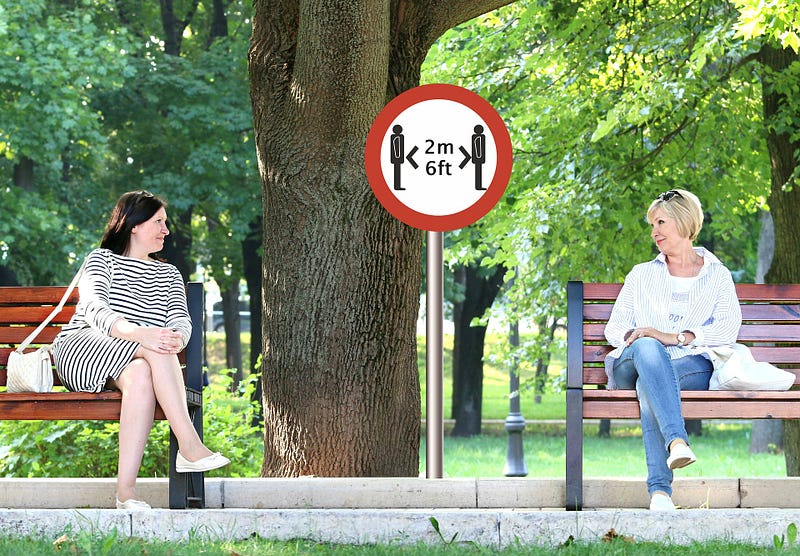
To be clear, it is not that I think the economy should remain on permanent lockdown until the final coronavirus victim has recovered or died. There are certain businesses, services, and institutions that simply cannot stay closed for the duration of this pandemic. What I am advocating for is thoughtful decisions to slowly reopen that are based on science and long-term strategy as opposed to myths, propaganda, pseudoscience, self-interest, and callousness. Thankfully, some lawmakers and politicians agree and are making sound decisions.
The United States economy, or at least large sectors of it, are clearly on a path to prematurely reopening. Only time will tell if this decision leads to a massive resurgence or prolonging of the coronavirus pandemic. But regardless of the trajectory of this unpredictable virus, I can say with certainty that the arguments being put forth to reopen the economy now not only lack sound support, but they also expose some of the darkest parts of the American psyche.
Get free mental health tips and resource lists related to COVID-19 by visiting www.ucla.edu/stand-together


