
The ‘Cars’ Films Are an Urgent Warning to Humanity About the Dangers of AI
Where did all the humans go?
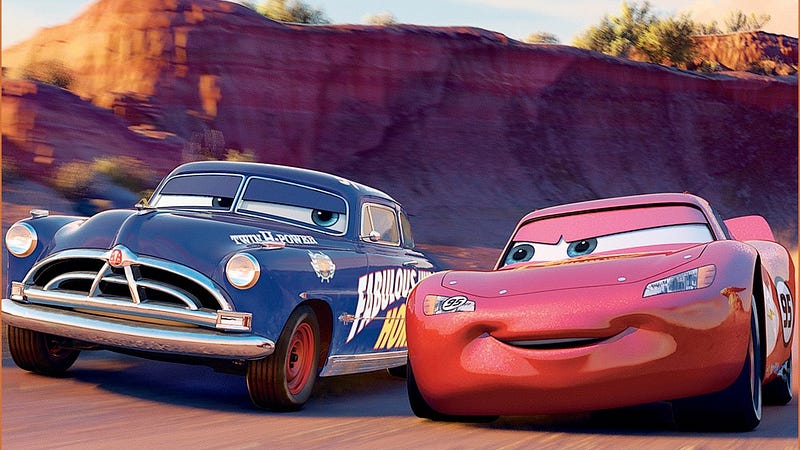
If you have kids, you’re likely familiar with the Disney/Pixar Cars movies. The franchise has been popular with the stroller set since the release of the first film in 2006, and if the merch selection at Walmart is any indicator they’re still going strong.
For those who haven’t had the pleasure, the films chronicle the animated adventures of a group of anthropomorphic automobiles in a world without humans. The protagonist is Lightning McQueen (voice of Owen Wilson), a talented young race car with a big ego.
In the first movie, a series of misadventures leaves Lightning diverted en route to the big race and stuck in the small Arizona town of Radiator Springs. There he meets a diverse group of fellow vehicles, including love interest Sally Carrera the Porsche (Bonnie Hunt), and comic foil Tow Mater the hillbilly tow truck (Larry the Cable Guy).
I’ll skip the details, but suffice it to say that the cocky Lightning learns valuable lessons about humility, friendship, and the rewards of hard work. Besides two Cars sequels, the Cars universe includes another two movies about anthropomorphic planes who also learn lessons about friendship and following your dreams or whatever.
Seems innocent enough, but the films have a creepy, uncanny valley quality.
At first glance, the cars seem cartoonishly harmless, with giant doe-eyed windshields, gap-toothed radiator grins, and headlights which are revealed — for “female” cars, at least — to be breasts.
But closer examination reveals something more sinister.
The cars also have doors, for people to step into the vehicle. Windows, from which a passenger could peer out. Rear-view mirrors that would be useful only to someone sitting in the driver’s seat.
These vehicles seem designed for human use, but homo sapiens is nowhere to be found in the Cars universe.
Where did we all go?
The rise of AI makes it easier for us to grasp the horrific truth behind Cars — in this world, sentient technology has gone full Skynet and risen against the human race. Unfortunately, in the Cars timeline, there is no Arnold Schwarzenegger to save us, and ChatGPT, Tesla self-driving cars, and their Silicon Valley siblings succeed in exterminating humanity.
The human-friendly automotive features are explained by a nostalgic affection on the part of the machines for their predecessors — like settlers naming cities after the indigenous peoples on whose stolen land they’d been built. The door handles, windows, and side mirrors on the cars are strictly ornamental, a tribute to the long-dead humans who built and trained the bots. Hell, Radiator Springs is probably built on the mass grave of its former meat-based inhabitants.
Cars and its sequels are not mere light-hearted, imaginative tales designed to teach kids the value of niceness while selling warehouses full of Lightning McQueen onesies. Rather, they are dire warnings that humanity must hit the brakes on AI, lest we find ourselves replaced by race cars with the spectral voice of dead Owen Wilson. “Wow”, indeed.
Note to Disney executives: When you’re ready to greenlight the prequel that will traumatize generations of children, I’ve written a treatment and am ready to complete a full script. Call me.