
Burdensome Things About Living in Japan that Ended Up Making Life More Fulfilling
There is joy to be found in the mundane
For the newcomer, Japan can be astonishingly archaic and analog in its ways of living. Self-checkout is still a new technology, the government has only recently moved past fax technology, and forget anyone knowing what “Venmo” is.
There can be some frustration in living in a society like this, especially when you come from a place where technology is being consistently updated, modernized, and ways of living made more efficient. But when you decide to slow down, there is a bit of joy to be found in the things that make Japan so backwards.
1. Having to walk everywhere
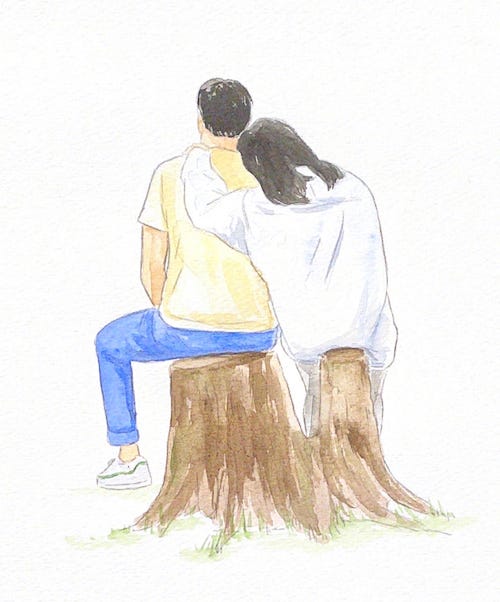
Walking everywhere! Streets in Japanese cities are narrow, convoluted, and parking is expensive — there is little reason why you would choose to take a car over public transportation especially if you are not going too far.
But these walks are one of the most underrated pleasures and joys of living in Japan. They keep me, and the rest of the Japanese population, healthy and fit, and also provide a really important space for mind-clearing and contemplation.
Even as a woman, I can do it alone at night, with headphones, with my head in the clouds. I credit the incredible public safety and effective public transportation systems in Japan for the ability to do this. When I go back to the United States, I might have Uber, but I don’t have this freedom.
2. Meaningless chores like drying laundry and doing the dishes.
Many Japanese households rarely have room for a clothing dryer or dishwasher at home, and so people will do these tasks by hand instead.
Pinning up wet clothes and sheets outside is not uncommon, and — especially in the more rural areas — neighbors will often help out and pull your laundry in for you when it starts to rain.
When having to wash up dishes by hand, it forces you to move after a big meal, wait a bit before dessert, and keeps you in the kitchen with your family where you could continue to chat, banter, and later thank each other for helping out with the clean up.
It can be a chore, but it can also be bonding.
The absence of a dishwasher or clothing dryer necessitates people staying and helping out. And while I don’t think I could trade in the daily convenience of these appliances anymore, there was some joy to be found in their absence
3. Cash as the dominant form of payment
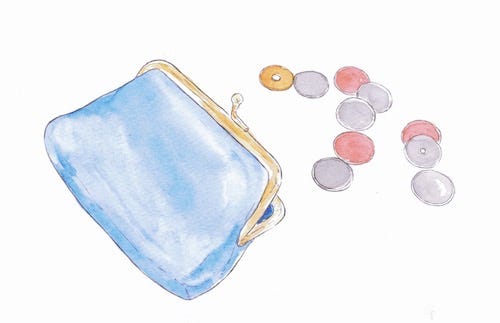
Contactless payment is still surprisingly new to even major cities like Tokyo and Osaka, and even credit cards are not ubiquitous among vendors, especially if they are small local businesses. Living in most places in Japan entails carrying cash, which becomes carrying bulky wallets, scrambling for coins, and stuffing paper receipts in pockets.
But as much as I love my credit card and the point perks it provides, cash really makes me slow down. Not just in the sense of budgeting and being more aware of how much I spend, but it can really make me appreciate the joy of spending money.
When I was young, 100 yen (roughly $1 USD) would mean a lot. Growing older, the coin means relatively less. But when I use that same cash to purchase a drink from a vending machine, and I hear that clink as it hits the bottom of the vending machine just as I would’ve when I was young, it can bring back that same sense of joy spending money on myself that a quick phone touch payment doesn’t quite replicate.
4. Sorting and taking out garbage
The rules for sorting and taking out garbage in Japan are elaborate: separating burnable from non-burnable, glass bottles from cans, bottle caps from bottles, and plastics to be rinsed and liquids to be dumped before taking them out on specific days of the week. Depending on the ward you live in, burnables may only be collected on Mondays and Wednesdays, non-burnables on Tuesdays and Thursdays, and recyclables just once a week.
If you live in an apartment, you bring your trash down to the trash room to separate it yourself in the designated piles, but if you live in a house you should be prepared to get organized about taking out your trash on a schedule lest you want to have it piling up in your home.
With such elaboration, managing trash can be a time-consuming and annoying task, but the custom reinforces a belief in everybody taking responsibility and doing their part to keep their community’s streets clean and reducing waste where possible. There are no big budgets towards public sanitation, but the cities in Japan are clean because of a willingness for most people to do their part.
It’s a very small thing, but it’s nice to live in a place like that.
I love life’s conveniences, but efficiency and productivity are not the end goals of life, they are simply the tools that we believe will help us spend more time on the things that matter to us. But if we can find the meaningful moments in the archaic, mundane, and slow, then that is worth something to us.
Learn to be healthier, inspired by life in Japan:
I teach about health inspired by simple Japanese philosophies and lifestyle practices, so you can learn to find peace, fulfillment, strength, and health in your own body. Stay in the loop and get access to free resources: Sign up here!


