
The Building of a Banana Baron: How One Man Shaped Central America
All from the humble banana
One of the most important people in the history of the banana is a man named Minor.
Now you’re thinking, wait, there’s a history of the banana?
Yes, friend, there is.
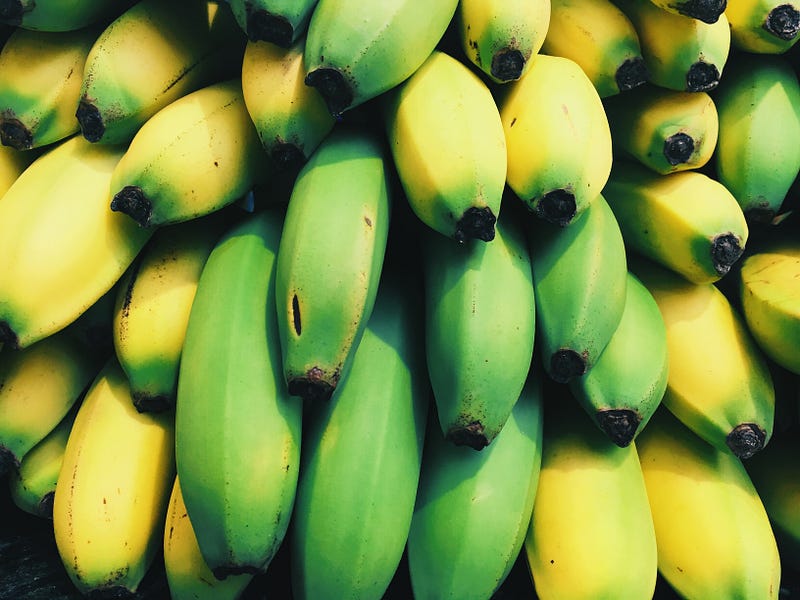
Bananas may seem uninteresting and common. They’re a boring fruit that athletes eat to fuel up, that — whether you like them green or spotty — are perfect for all of six minutes before being past their prime. A banana is also the single worst thing to listen to your dogs eat.
But countries were built on its back.
The plain banana helped shape Central America as we know it — and it took years in the jungle, deaths, disease, prison labor, and an accidental discovery to make it happen.
First, a banana primer
Bananas have been around for thousands of years, and were domesticated as far back as 8,000 BCE. Before that, wild, wooly bananas roamed the tropics.
(no, not really, but wild bananas do have tons of seeds that make them comparatively inedible)
They originated in Southeast Asia, where there are still more varieties than anywhere else. The most common banana eaten today, though, especially in Europe and the West, is one called the Cavendish that was bred to be seedless (it has tiny seeds that don’t develop).
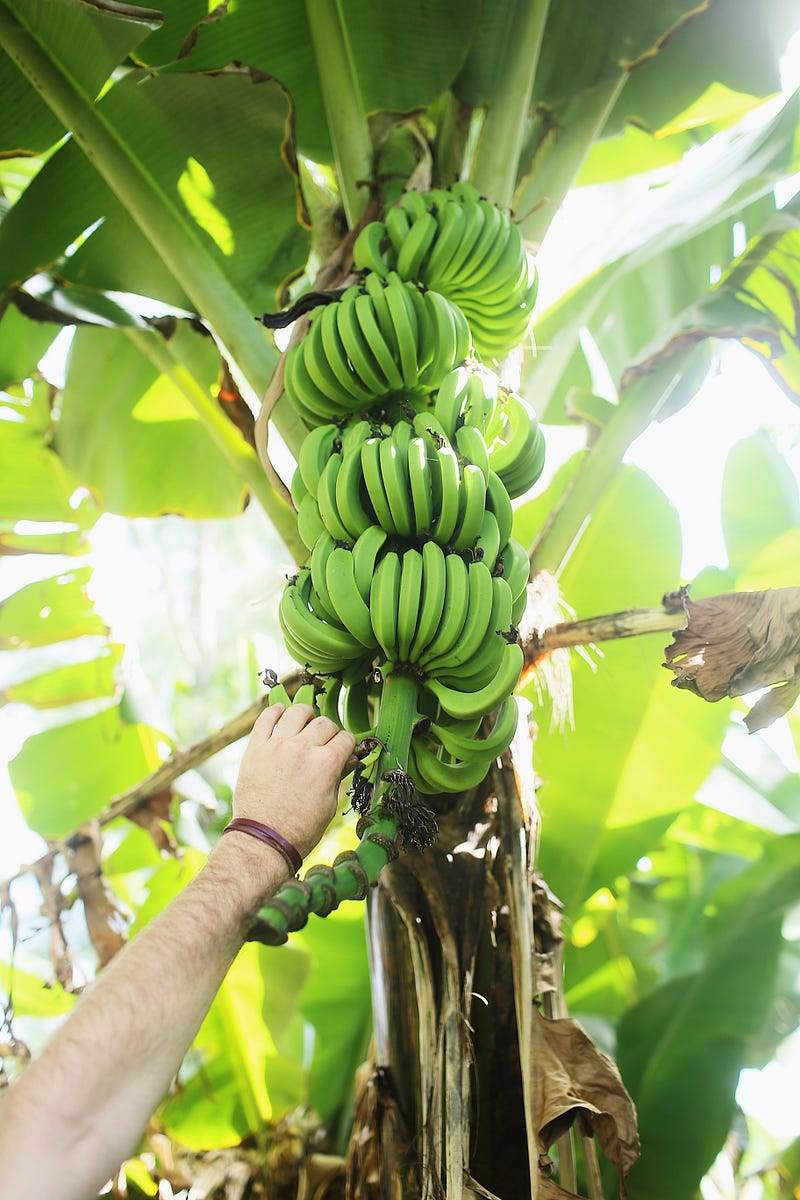
Since they grow from flowers, bananas are technically berries. A stalk of bananas is known as a “bunch,” and each smaller row of bananas is called a “hand.”
Banana hands, y’all.
Bananas were carried along ancient trade routes, and because they’re a fast-growing plant they became staples in tropics around the world. It took human history thousands of years to get bananas from Asia to Central America.
It only took a few decades to transform whole countries on the backs of the banana and the steam locomotive.
The building of a banana baron
Minor Copper Keith was born in Brooklyn, NY in 1848.
It would still be 28 years until the banana was introduced to the United States at the 1876 Centennial Exhibition in Philadelphia, which was the first World’s Fair-style event in U.S. history.
Joining the banana would be Heinz Ketchup, sugar popcorn, and soda water. Oh — and the Remington typewriter and Alexander Graham Bell’s first telephone.
You know, just the routine things. Nothing world-changing.
Keith’s uncle was in the railroad business and had built lines in Chile and Peru, and in 1871 he invited young Keith and his brothers to Costa Rica, where he’d been commissioned to build a national railroad line. It was there that Keith became a railroad and banana baron, but first it took years, lives, and huge amounts of money to carve through the jungle.
Problems plagued construction from the start.
At the time, ox-drawn carts were the main transportation. They hauled in materials, men, and supplies to the worksites, and were cumbersome and slow: prone to getting stuck in the mud, and struggling to cross swollen rivers.
Adding to the misery was disease: malaria, yellow fever, dysentery. Fresh food and water were short, and torrential rains slowed construction. Not unlike Henry Ford’s later foray into South America with Fordlandia, the plan’s difficulty had been massively misjudged.
The first 25 miles of railroad — not even the length of a marathon — cost the lives of as many as 4,000 laborers.
The casualties included Keith’s uncle and his brothers, and in 1874 Keith was left in charge. He kept pushing, despite the disease, the hunger, and the merciless jungle.
It was hard to find workers, and so he shipped in convicts from New Orleans. Italian immigrants. Chinese and Jamaican labor. Workers deserted due to the terrible conditions, and many who deserted were lost in the jungle and died there.
The smartest thing Keith did, along the way, was to plant banana trees.
Banana plantations and political power
The trees were an experiment, at first. An idea.
Keith planted them along the railroad path as the construction dragged on. He’d discovered how quickly they grew, and eventually they helped supplement his workers’ food supply.
They helped even more when the money ran out: in the 1880s the Costa Rican government defaulted. Keith found himself short on funds.
What he did have was lots of banana trees.
The solution?
The government paid him with 800,000 acres of tax-free land. He converted it into banana plantations, continued planting, and launched an empire.
The original vision had been for the railroad to move people and coffee. But between his early tree-planting discovery and the land grant, Keith’s new freight cars were soon loaded up with bananas for export. He didn’t need to carry people at all.
His plantations grew more valuable than the railroad itself, and by the end of the century Keith ruled the banana business in Central America. And then, in 1899 on the cusp of a new century, he merged his operations with a competitor out of Boston and they formed the United Fruit Company.
Later known as Chiquita Brands International.
Production expanded to neighboring countries: Guatemala, Honduras. Plantations began to wield tremendous control.
The United Fruit Company . . . acquired so much power in Guatemala and Honduras that it came to function as a state within a state, giving rise to the notion of “banana republics.”
— Banana: The Dispossession of Smallholders, University of Toronto
Starting in Costa Rica, Minor Keith and later United Fruit were the beginnings of huge changes in Central America. Political, union, and military conflicts arose out of the money and power created by their plantations.
All from the humble banana.
Which is neither as humble nor as boring as it seems.
If you’d like additional reading:
- Minor Keith and the History of Costa Rica’s Train to Limon : (ticotimes.net)
- Bananas: From the Bunch to Your Breakfast | Rainforest Alliance (rainforest-alliance.org)
- United Fruit Company — Wikipedia
Join my newsletter Quarter Turn for more like this, free every Wednesday


