
The Buddhas of Kita-in Temple
Traditional Japan in Greyscale
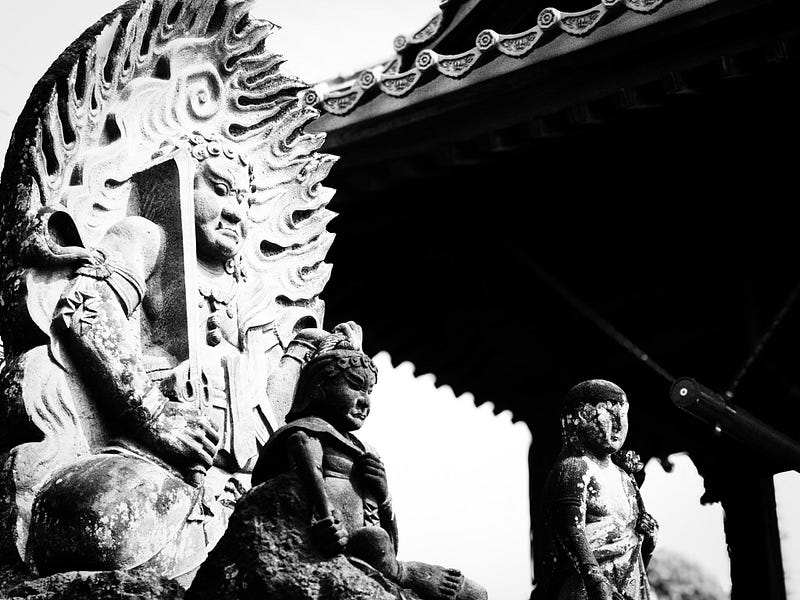
There are at least five qualities in Japan that have kept me living here for 25 years. Today, I will write about the traditional culture, which has survived for thousands of years in some cases.
Specifically, I want to tell you about Kita-in Temple, a Buddhist temple founded in the 13th century in the suburbs of modern-day Tokyo.
Kita-in is famous for its 540 Rakan statues, Edo-era stone representations of the Buddha’s disciples. The ones at Kita-in were carved between 1782 and 1825 and are considered some of the finest examples of Rakan sculpture in Japan.
Rakan statues are also known as arhats, a Sanskrit word meaning “worthy one.”
So Kita-in has a strong sense of history and an air of religious solemnity on par with visiting a famous cathedral, say, or other holy site.
At first, as I approached the site of the statues, I felt that strong sense of reverence which usually accompanies visits to sacred places.
The statues are arranged with the Buddha centre stage, so to speak, flanked by solemn-seeming rows of followers.
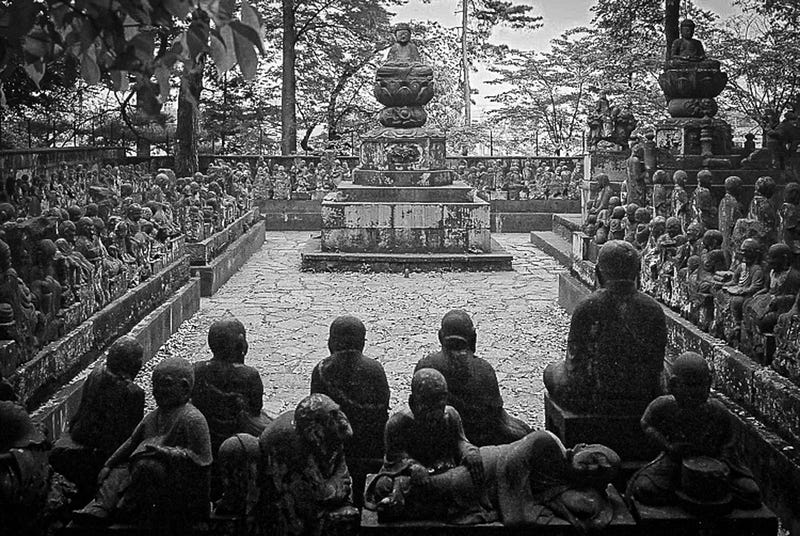
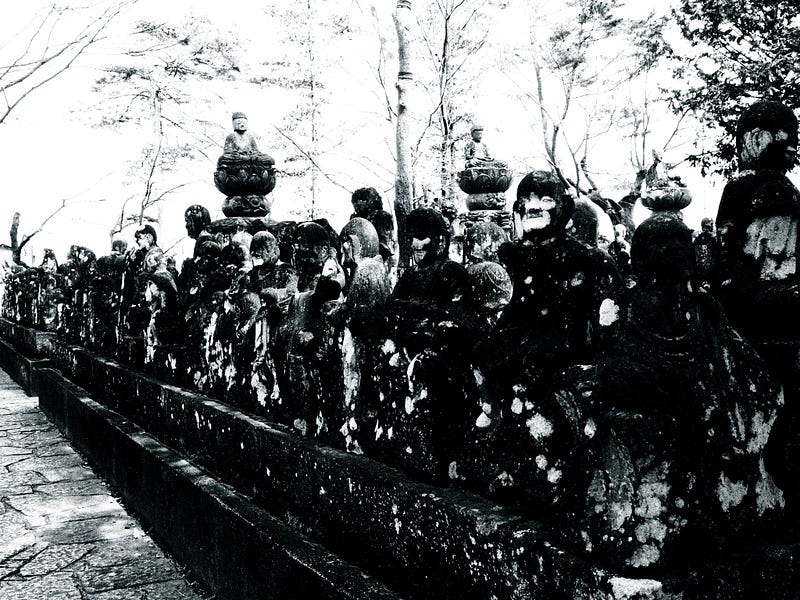
As I began to look more closely through my photographer’s viewfinder, so to speak, clusters and even individual statues started to separate from the rest of the congregation.
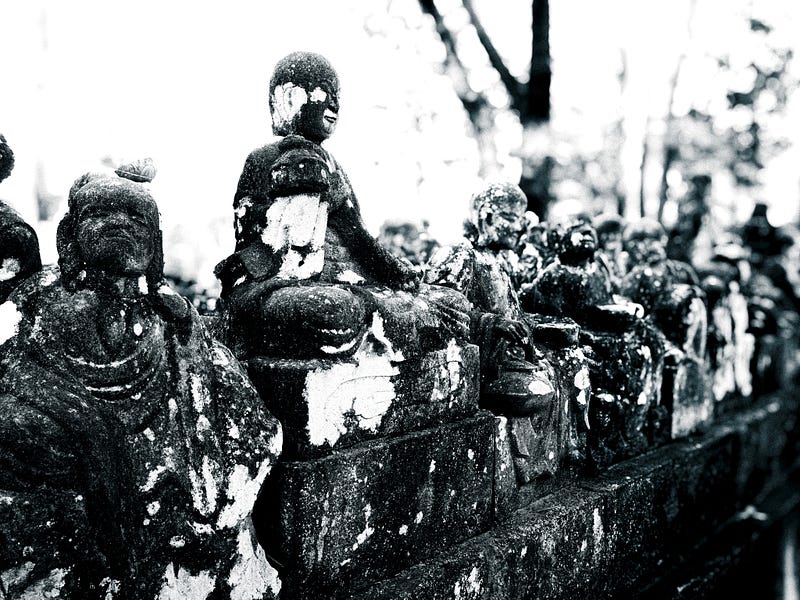
Some of the statues depicted a group of rakan interacting with each other.
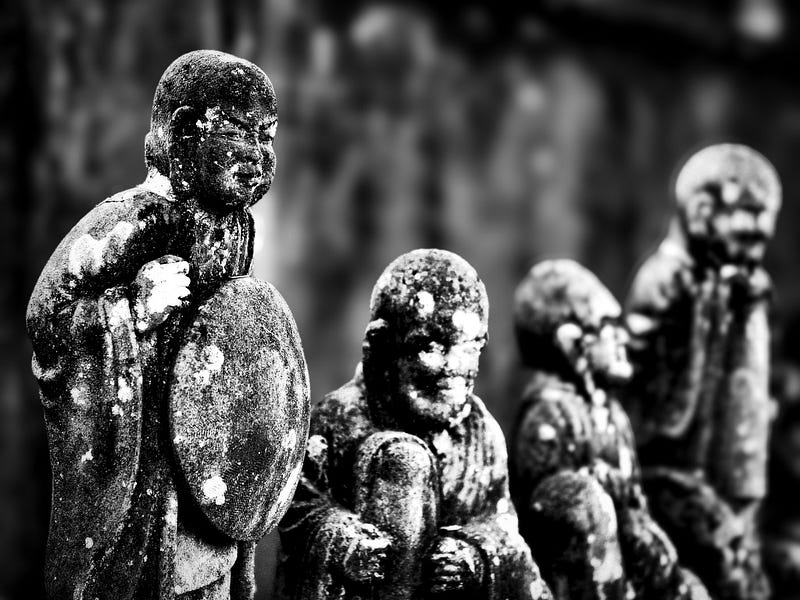
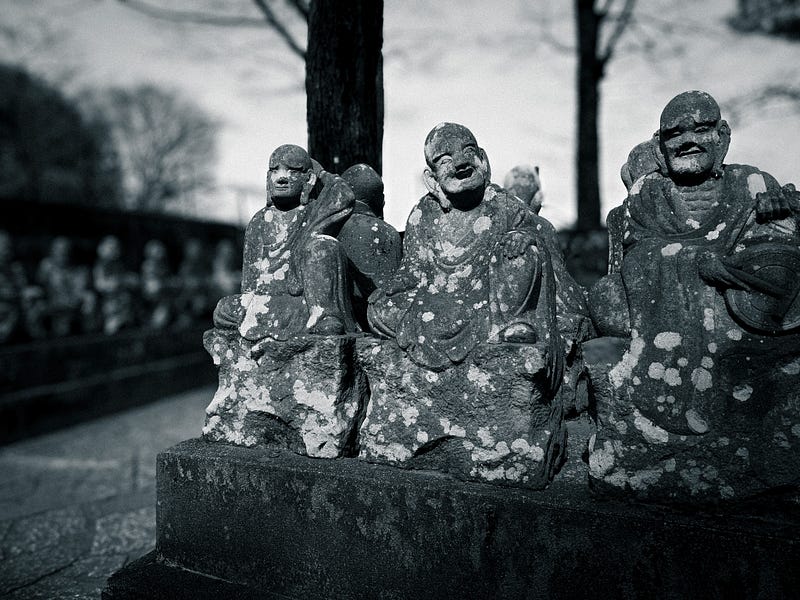
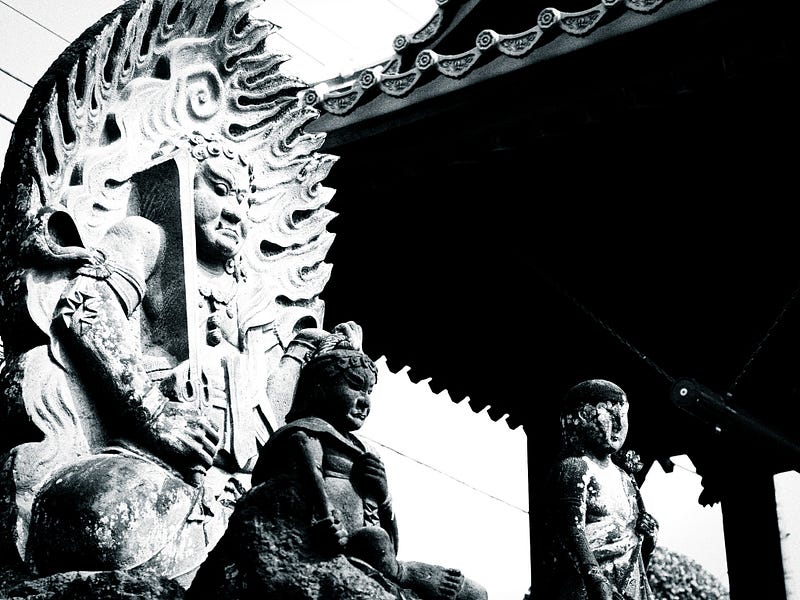
Close up, especially when viewed in monochrome to emphasize the textures and contrasts in the weathered stones, it becomes obvious that the statues are all different, each with its unique expression and pose. Some of the followers are smiling, while others are frowning. Some are sitting, while others are standing or walking.
They wear simple robes and have a variety of facial expressions, from serene to joyful to mischievous. They often hold different objects, such as books, staffs, and musical instruments.
The Rakan statues also have different personalities. Some figures are wise and compassionate, while others are mischievous or even angry.
Whatever the mood of each, the sculptors carved with great detail and realism. I think it’s this craftsmanship that draws my photographer’s eye to them. They are the perfect portrait photographer’s models, holding their poses as the stone weathers photogenically through the seasons.
You can search for your own “twin Rakan” by looking for the statue that most resembles you. Finding it, ’tis said, will bring you good luck.
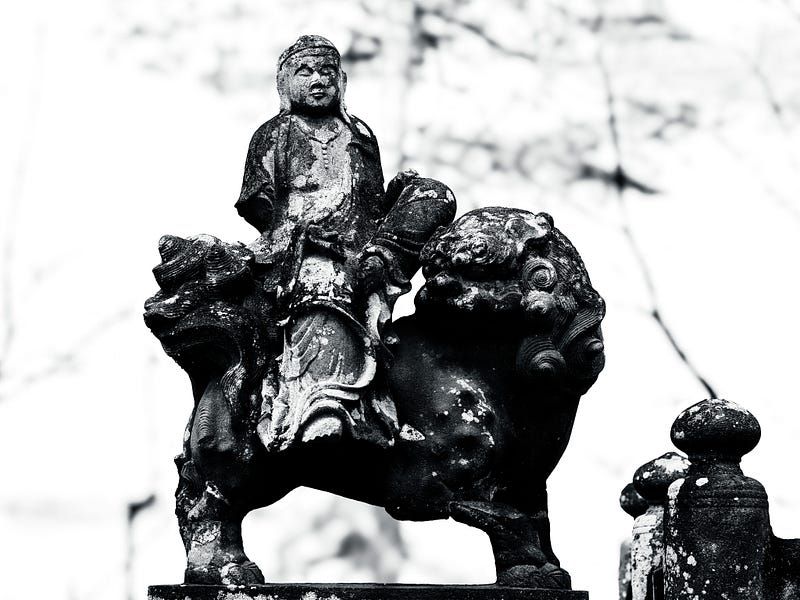
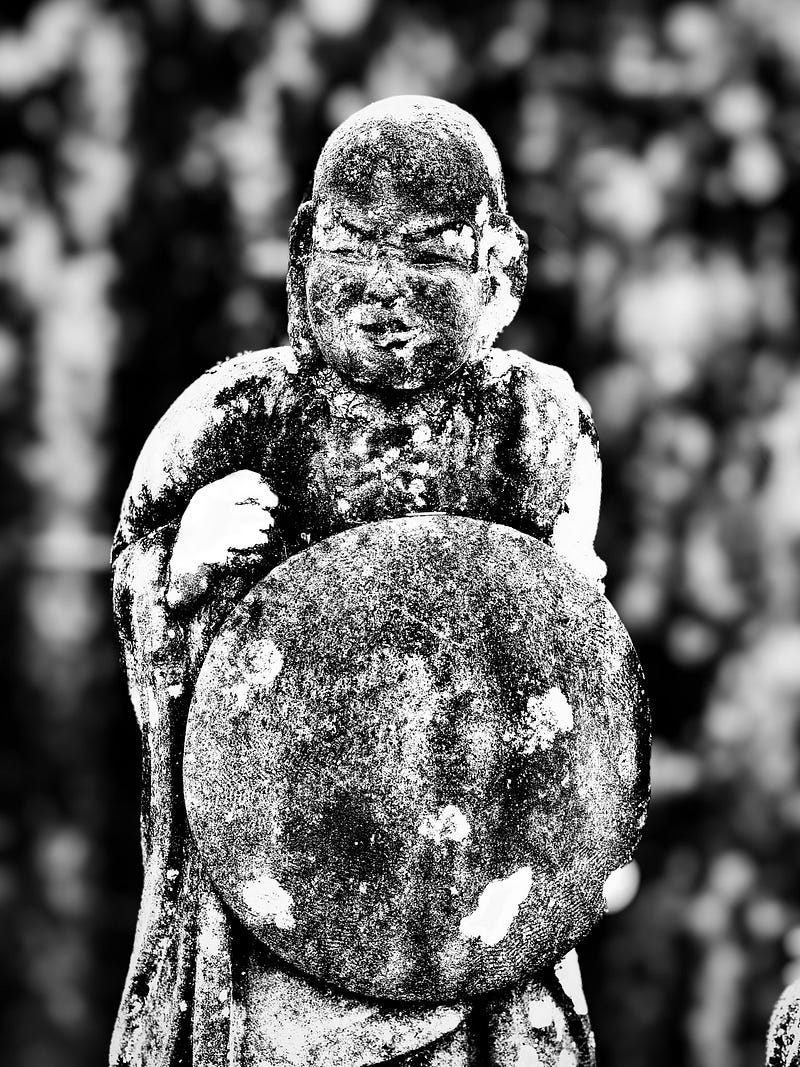
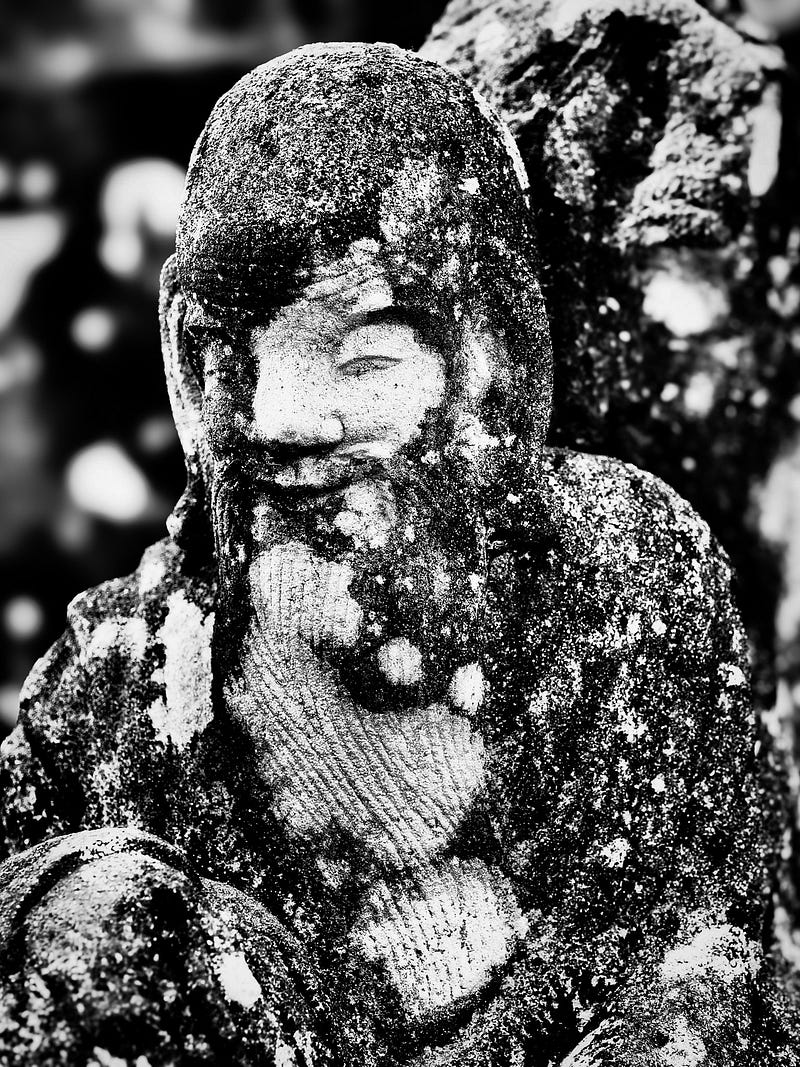
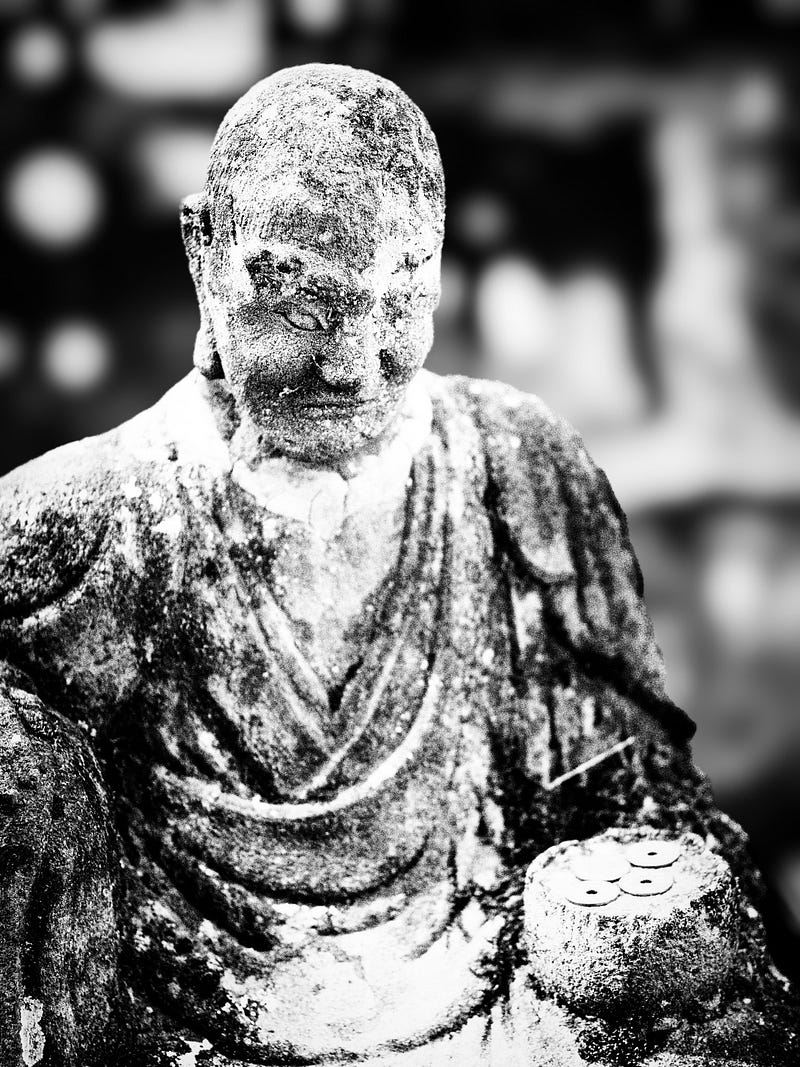
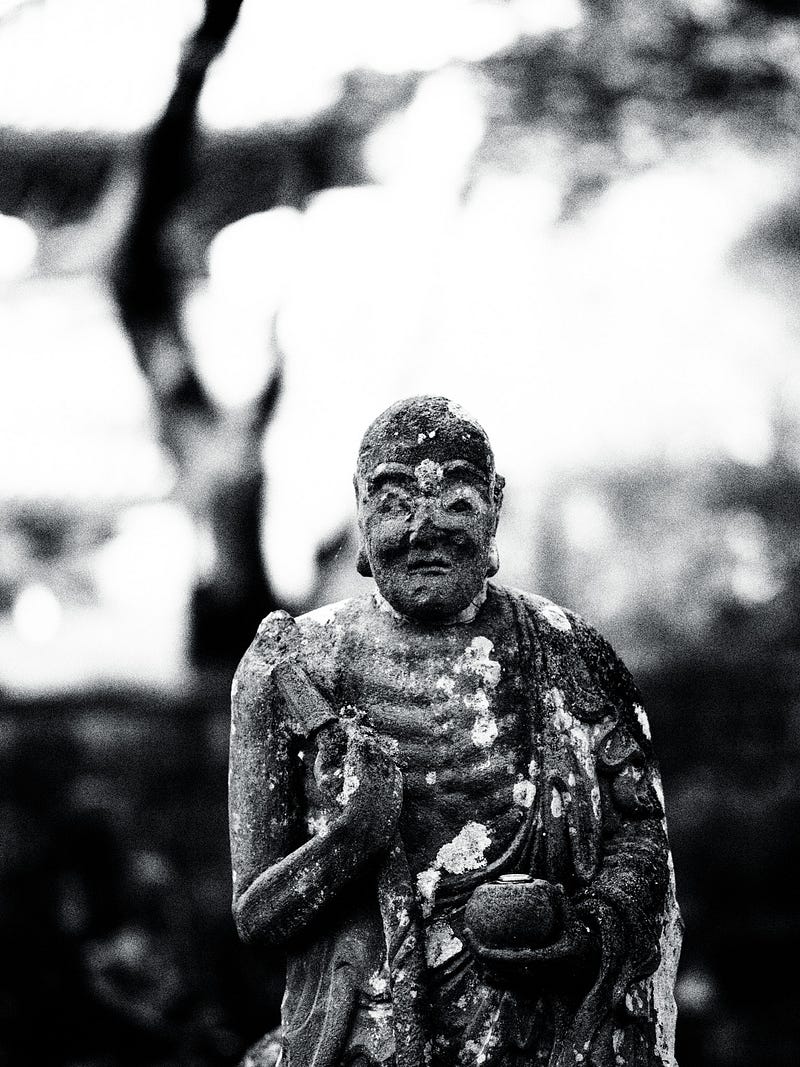
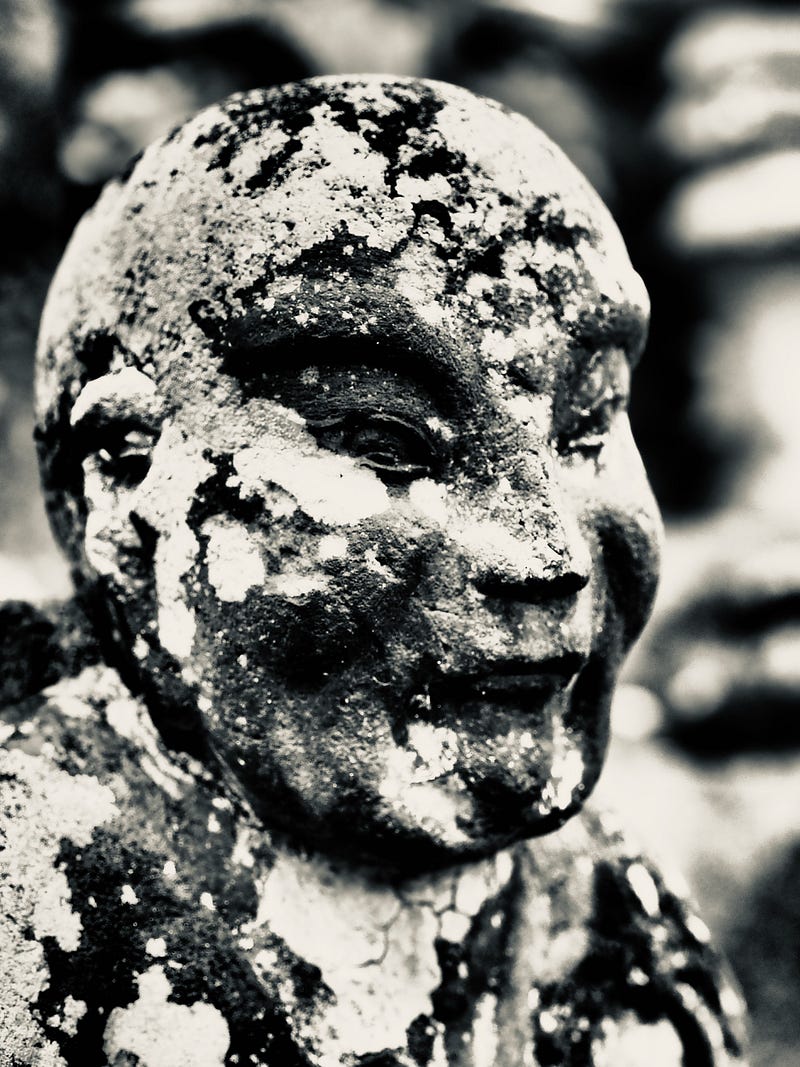
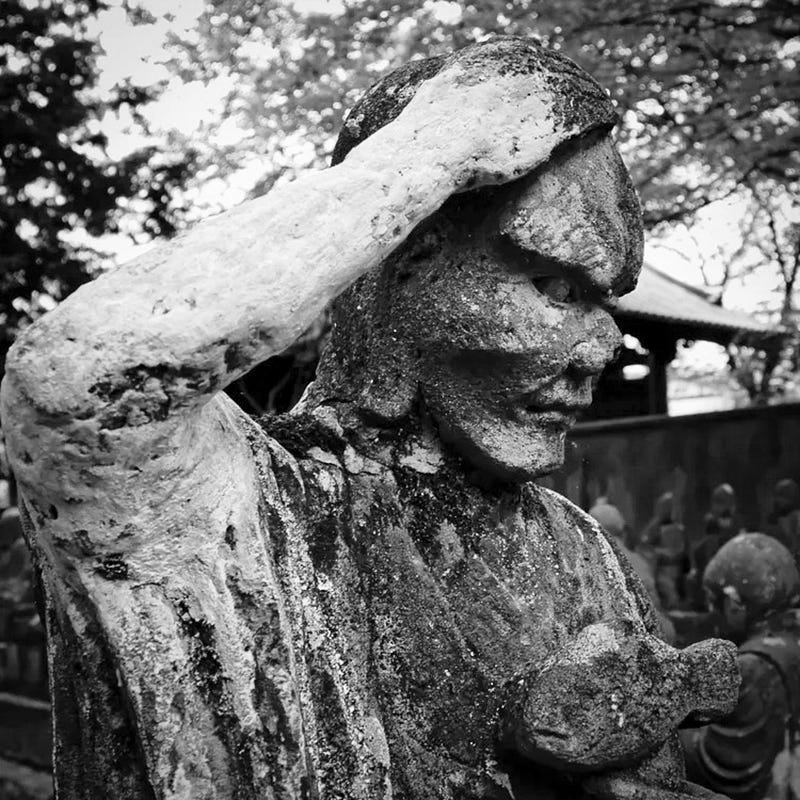
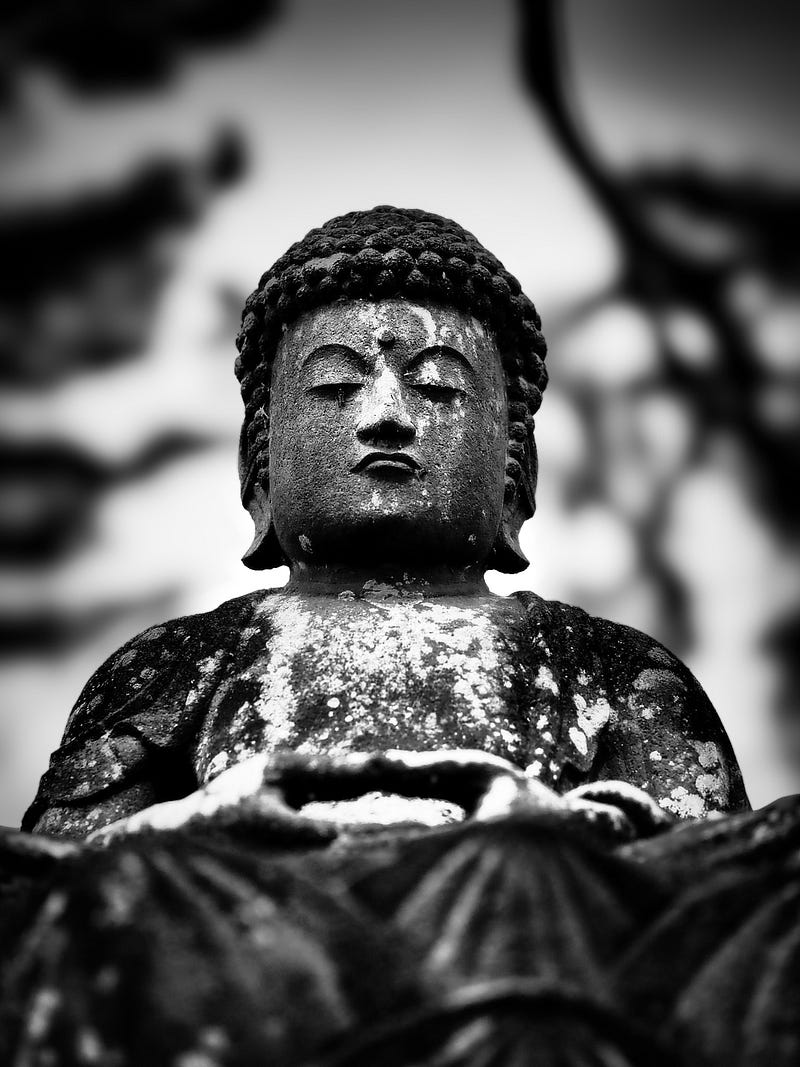
Can you guess which one is me? Which one is you?
A few other posts I want to highlight from this month’s contributions — so far:
Thanks to Anne Bonfert for the inspiring photos and prompts for this month’s challenge.
Krasi Shapkarova introduced me to a photogenic village in Bulgaria, a part of the world I’d never thought much about before.
Carol Labuzzetta, MS Natural Resources, MS Nursing asked me to consider a world without colour. Her detailed nature studies render especially well in greyscale.


