
The Brutal History of Japan's 'Comfort Women'
Tens of Thousands of Women Were Forcibly Made “Comfort Women”
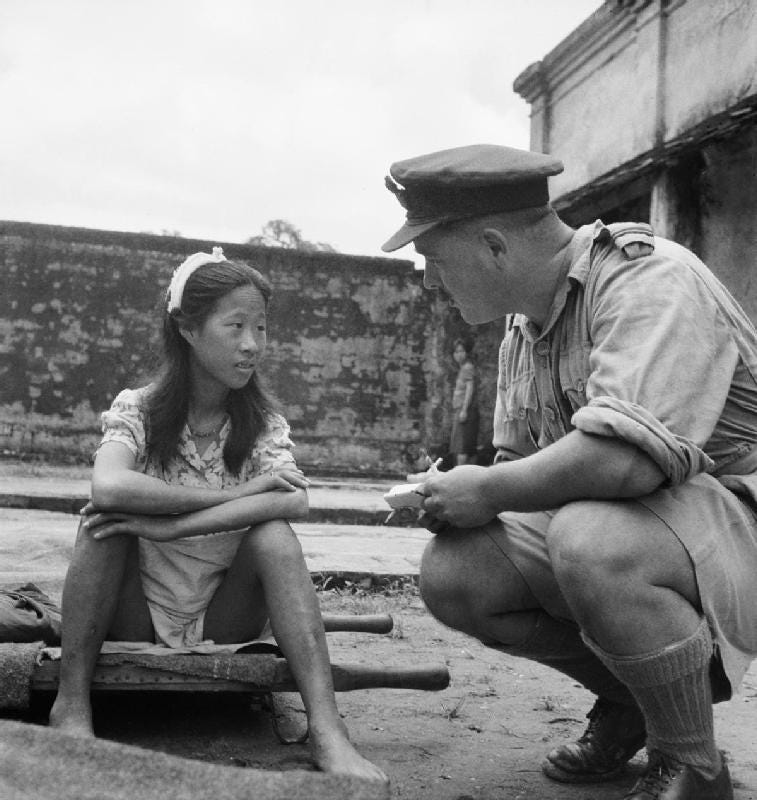
World War II is not known for destruction only.
It caused more harm to society but, specifically, the women. Even today, many women from various parts of the world are bearing the outcomes of the war.
Germany, Italy, and Japan were the axis power that fought fierce battles on many battlefields. Tanks, guns, bombs, and battleships were not the only tools for World War II.
The outcome of any war front came as sex slavery of women, and in many places for men too.
Irrespective of the country, sex slavery remained the primary way of assaulting and showing power.
Here are more articles on brutal rapes or sex slavery. If you would like to read them, you should go to read them.
Who is a Comfort Woman?
A comfort woman was a term used to refer to the system of sexual slavery that was created by the Imperial Japanese Government between 1932 and 1945.
It is regarded as the most significant case of human trafficking enforced by the Government.
A system that was government-sponsored for sexual slavery in modern history.
"Military sexual slaves" is the most accurate phrase for Comfort women.
These comfort women were more like victims of the Japanese Imperial Army's sexual slavery system during the second world war. According to most scholars, hundreds of thousands of women were victimized by this act, including as young as 12 years old girls.
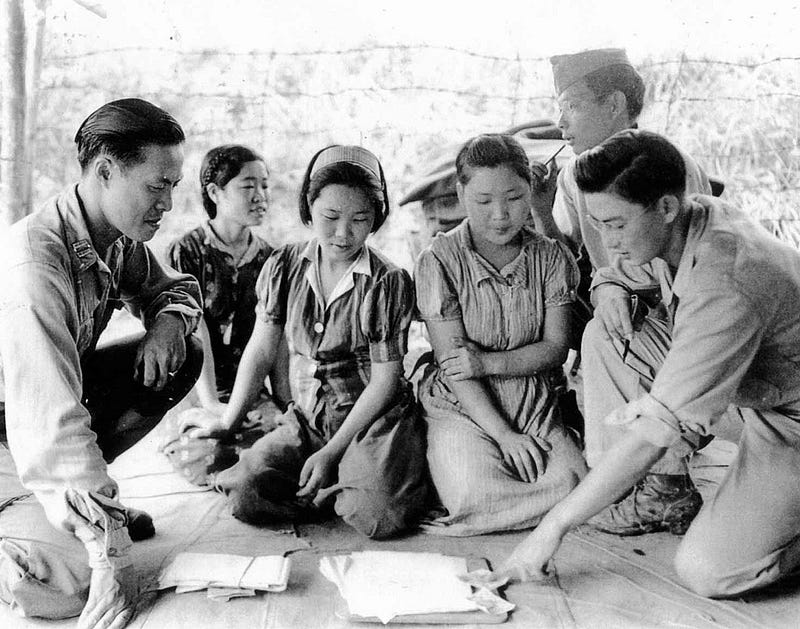
The majority of these women who were forced to become sex slaves came from Korea, China, Taiwan, the Philippines, Malaysia, Viet Nam, East Timor, Thailand, Indonesia, and Dutch East Indies countries.
Even European women were forced too from Japanese-occupied territories for sexual slavery.
Military brothels have existed in the Japanese Military since 1932. The army expanded their brothels just after the most heinous and infamous taking over China and a broad swath of Asia.
In December 1937, the Japanese Imperial Army started a six-week-long mass murder and rape in China.
Alone in Nanking city of China, according to historians, 20,000 to 80,000 women were raped. Japanese Imperial Army forced thousands of women from china into sex slavery.
These rapes, on the bigger scale, horrified the entire world.
As a legal historian, Carmen M. Agibay claims that — The Military was ordered to expand their Military brothels or so-called "comfort stations" to prevent their soldiers from sexually transmitted diseases and ensure an isolated sex woman to satisfy Japanese Soldiers' sexual desire.
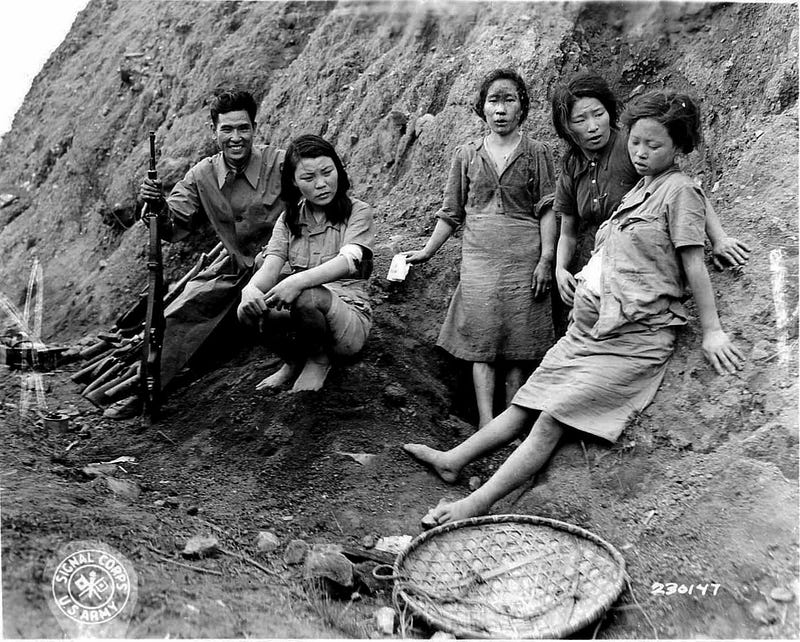
The history of comfort women is hardly taught, and in the majority, it is an unknown topic for most people.
Educators or modern historians pay attention to it as the most significant issue of human trafficking.
Lee said to Deutsche Welle in 2013 that "The comfort stations were not the place for humans," and women here are always threatened and beaten by soldiers. Maria Rosa Henson recalled a Filipina woman who was forced to become a sex slave in 1943 —
"There was no rest. They had sex with me every minute."
Kim Hak-sun, a Korean survivor, was interviewed in 1991. She stated —
“When I was 17 years old, I, along with one of my friends, was dragged into a truck. They told us we were being drafted and we could earn lots of money in a textile factory. The very first day, I was raped, and those rapes never stopped.
I was born a woman but never lived as a woman. I was raped 30–40 times a day, every day of the year, till I was a ‘comfort woman.’ Even today, I feel sick when I come close to a man.
I get shivers whenever I see a Japanese flag”.
The end of World War II did not bring an end to the military brothels system in Japan. The brutality, tortures, and rapes instilled continued.
In 2007, Associated Press reporters discovered that the United States Authorities allowed the Japanese Military to operate "comfort stations" after the war. Even tens of thousands of women in those comfort stations had sex with American men until Douglas MacArthur shut down that brothel system in 1946.
After this, somewhere, 20,000 to 410,000 women had been enslaved in those 125 "comfort stations."
In 1993, the UN's Global Tribunal on Violations of Women's Human Rights estimated that more than 90% of "Comfort women" were dead at the end of World War II.
After World War II, Japanese officials destroyed the documents and evidence where their image toiled. That's why the numbers are based on approximate.
The women who were forced to become sex slaves were outcasted from society.
Many died later because of sexually transmitted diseases or infections. Many others died because of violent treatment during sex by the hands of Japanese soldiers. And many of them committed suicide.
For an extended period, the story of "Comfort Women" remained untouched and unnoticed. Later Japanese officials denied that "comfort stations" ever existed.
When Japanese officials denied the event of "Comfort Women," some women in 1987 from South Korea started discussing their ordeals publically.
Many comfort women wanted an apology from the Japanese Government, but they condemned their request and said that this issue remains a matter of present foreign relations as history.
Still, very few women who were forced to become sexual slaves by the Japanese Army are alive.
One of them is Yong Soo Lee. She is 90 years old survivor who is a witness. Lee desired to receive an apology from the Japanese Government.
She told Washington Post that she never wanted to give comfort to those Japanese men. But now, I do not want to hate or have any grudges, but I can never forget that incident in my life.
The comfort woman is such a historical issue that did not affect many women but also taught the value of human rights. It was the same atrocities as the sexual degradation of many black women in US slave states and contemporary international sexual human trafficking.
Testimony of Some Survivors:
- Kimiko Kaneda (South Korea): When I reached, my first thought was that I would be killed. I couldn’t weep. No one talked anything. All of them were weeping. At night two soldiers came into my room. I screamed “NO,” and one of them left. The second soldier was drunk. He pulled a knife and threatened to kill me if I did not obey him.
But I didn’t care. In the end, he stabbed me into my chest.
Later, when my wound was cured, the same behavior from soldiers continued. I was in the comfort station in Shijiazhuang. When the soldiers returned from the battlefields, as many as 20 men would come to my room from early morning, that’s why I had to have a hysterectomy.
The comfort station also had little young girls. Their genitals were still underdeveloped. The soldiers had those young girls’ genitals torn and infected.
2. Maria Rosa Henson (Philippines): We were seven girls, and they were many. Due to my tender age, it was a painful experience for me.
Sometimes 12 soldiers would force me to have sex with them. There was no rest. Only when every one of them finished was I allowed some rest. But then again, about 12 other soldiers would come to rape me again.
There was sex every minute of the day. That is why we girls used to be very tired.
No one was allowed to go anywhere. If they find you escaping, the guard will shoot you down.


