
The Brilliance of the Design of IKEA Stores
The logical reasons why you couldn’t leave empty-handed. They don't leave it to pure chance.

As of April 2022, IKEA operates 466 stores in 63 countries across multiple regions. In the financial year of 2021, the gross profit of IKEA globally amounted to about 12.88 billion euros, against 11.73 billion recorded just a year ago. Lest we forget this is the pandemic year and the company is still able to improve its profit, let alone sustain the business.
To create a better everyday life for the many people — IKEA’s vision
IKEA set out to provide affordable, functional yet well-designed furnishing to customers. With globalization though, and its ensuing costs along the way, it is inevitable that in some parts of the world, IKEA’s products have become the symbol of luxury. Even then, as the financial report shows, the company and its presence are stronger than ever.
Our mission as a business is ‘to offer a wide range of well-designed, functional home furnishing products at prices so low that as many people as possible will be able to afford them’ — IKEA’s mission
I don’t know about you but I for one, am sure have not left an IKEA empty-handed. Never. Mine was for the simplest reason. IKEA subsidizes my parking ticket if I made a purchase, no matter how small. For that reason alone, I’ve always made at least a small purchase, the smallest being a mug, a mug that I have been using for close to a decade and still using to this day.
Not many can come out of the store unscathed. Not many may understand the reason behind this. The store designers behind IKEA have done a brilliant job. Perhaps these will shed some light.
1. The Maze Layout of the Store
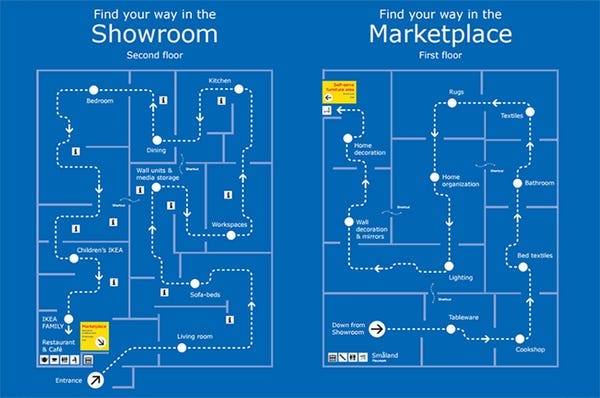
Every IKEA store is designed similarly. If only a word can be chosen to describe them, it will be maze-y. The way the floor plan is designed, it is basically an IKEA catalog, in physical form. From the showrooms to the marketplace, then to the bottom floor, warehouse, and checkout counters, it is designed to make sure that you see everything they have to offer. Sure, there are short-cut routes available for cases in which customers and more importantly staff need to use on occasions but the well-thought placement of arrows and the uni-directional customer flow means the odds are not on your side.
2. The Amazing Showrooms
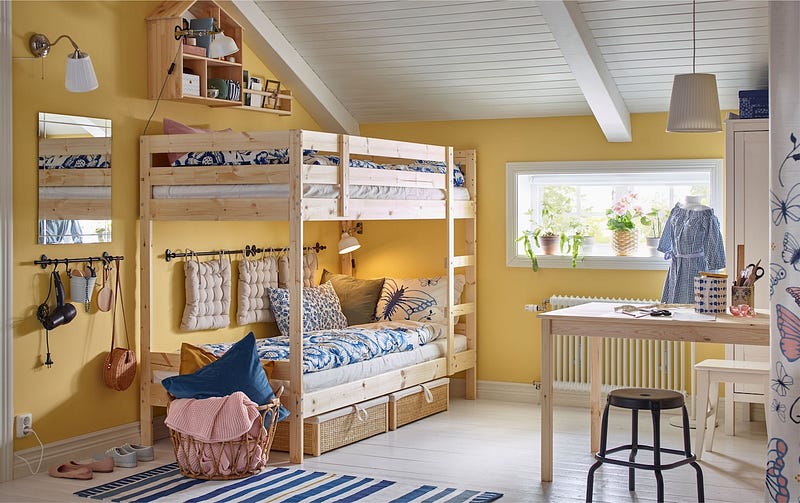
It always amazes me how marvelous the showrooms are designed. IKEA excels in showing customers that small space is not an issue. It defies the common perception that small houses (and their relatively low price) should not define the limits of imaginative space. It gives hope to homeowners that their house could be as well and nicely designed as their better-doing friends. It unlocks the emotional price limit of home decorating one may have set relative to their home.
Showrooms give the unimaginative customers an image that is hard to forget. The smart placement of smaller and more affordable furnishings all over the place further increases the chances that you will add a least an item or two to your list. Pillows on sofas, organizers on tables, bed lamps beside the bed, these are just a few clever maneuvers to name a few.
3. Courtesy Pencils and Paper
Speaking of shopping lists, no one does this better than IKEA. The general advice to consumers is to prepare a shopping list before we head out. This ensures that we keep our focus and do not wander and thus spend unnecessarily by impulse. Well, at least that’s the idea. In IKEA, the concept has been turned upside down. IKEA encourages you to make a list, even going as far as providing you with courtesy pencils and paper. You make the list, you own it. You’ll more likely fulfill the self prophecy of buying the items off the list you have made. Coupled with the maze-y floor plan, you would likely add more items to your list, just in case you forgot about the details of the item later.

4. Outskirt Store Locations
Most IKEA stores are not within the city centers. While there are obvious drawbacks to this strategy, surprisingly there is an advantage to it. Making an effort for a long drive to the store, we make mental note to ourselves to make the trip worthwhile. How? By showing up with haul at the end of the trip. No one likes a meaningless trip. You know you’d love to get something. Anything.
5. The Meatballs Effect
As the old saying says, the way to a man’s heart is through his stomach. In this case, IKEA has done well assimilating the name of IKEA with meatballs, so much so that you would be able to interchange the reasons you go to IKEA. For food or furnishing items? Why not both? That’s the reason why IKEA has so much pull. Moreover, making sure your stomach is filled ensures that you are in no hurry to leave.

Credit to: @richardker.


