
Travels in Tanzania
The Briefing
19 341 feet: Kilimanjaro Part VIII
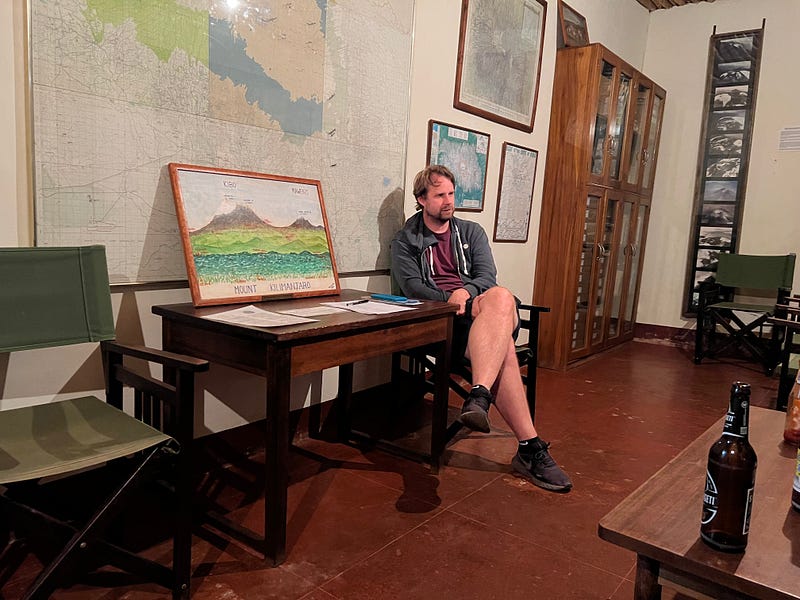
“You will notice it is hard to breathe.”
Luca is more than a hotel manager. He is our cicerone, the sage of our expedition of misfits. He is the answer to every question we have about Mount Kilimanjaro, no matter how inane or extraneous.
“On the first day, you are just going for a hike. It is quite pleasant, but it is still a rainforest. Even if it is sunny, you must always keep warm, waterproof clothing with you.”
Luca’s family have owned and operated Marangu Hotel for almost a hundred years. They took their first guest up the mountain in 1932, and now the hotel employs over six hundred guides, porters, cooks, and cleaners. Climbing for Marangu Hotel is a highly sought after position, because Luca and Amy are one of the few employers in the area who always pays what they promised to pay.
“Day Two can be a bit . . . soul destroying.”
Our mountain sage does not mince words. The point of this briefing isn’t to inflate our egos. Luca wants to make sure we know exactly how — and how badly — the next four days is going to suck.
“On Day Two there are ridges. When you get to the top of a ridge, you will think: ‘Ah. Thank God. We’ve reached the top. Now we can eat lunch.’ But no . . . on Day Two, there is always another ridge.”
“Because you will climb out of the rainforest, Day Two is usually the hottest day. Still, I don’t recommend you take off your long sleeves. You are very early in your climb. Having a sunburn on Day Two means you will still have a sunburn on Day Four. And that is not a good thing.”
“Just drink water. Lots and lots of water. You should drink until your pee is clear and copious. Remember those words: clear and copious.”
There are four of us paying for this climb. Stan, Dr. Quinn, Claire, and me. We are all swallowing a Diamox pill twice a day, hoping it will stem the tide of altitude sickness.
Diamox reduces the amount of acid you excrete when you urinate, putting your body into a state of metabolic acidosis. As a result, we are all relieving ourselves with the frequency of an eighty-two-year-old. Diamox also effects your kidneys, makes you produce less spinal fluid, and inhibits neuron function in the central nervous system.
Who needs a central nervous system anyway?
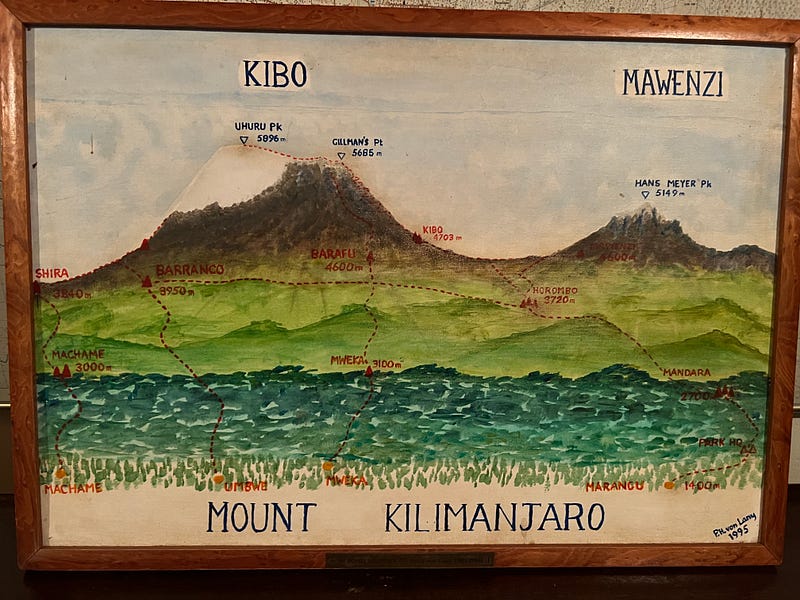
“On your second night you will sleep at Horombo. It feels like a small village halfway up the mountain. After Horombo, things begin to get interesting.”
“On Day Three most people begin to experience altitude sickness. You will probably have a headache, or feel nauseous. This is also when the weather gets cold, and you pass through an area between the peaks called The Saddle, where there is almost no protection from the wind.”
“You must wear Vaseline. You will see the faces of people coming down who did not wear Vaseline, and those faces will motivate you to put it on.”
I feel like I’m watching a movie. There is a palpable tension building in the briefing room as Luca describes everything that can go wrong. I ask myself a question I should have asked a long time ago: what the hell am I doing here?
“At 4700 meters you will reach Kibo hut. You don’t really spend the night, because you will start your final ascent at midnight. You will climb from Kibo to Gilman’s Point in about six or seven hours. This is the hardest part of climbing Kilimanjaro. It is dark, it is freezing cold, and it is by far the steepest part of your climb.”
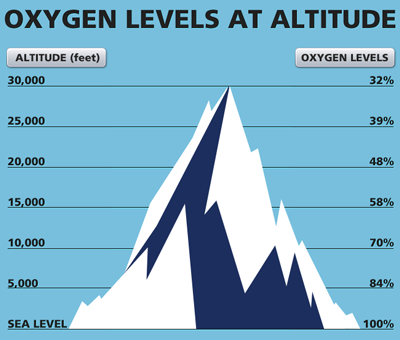
“Also, your oxygen will be very low, and the ground beneath you is mostly volcanic ash, so you will have a hard time keeping your footing. You are probably going to be sore, and nauseous, and full of blisters after climbing for so many days. Personally, every time I climb this mountain, I throw up. But you can also have diarrhea.”
“Most people who turn back, turn back on the trek to Gilman’s Point. My suggestion: don’t look up. No matter how close you are, Gilman’s Point will always look very very far away.”
“Count your steps. This seems like a stupid idea, but I’m telling you, it works. Just think ‘One . . . Two . . . Three . . . Four . . .’ over and over again, and eventually you will be there.”
Luca tells us about a gold medalist who climbed with them a few years ago. When he got back to the hotel, this Olympic athlete said, in no uncertain terms, that the climb was the hardest thing he had ever done. To boost our spirits, Luca also tells us about three overweight Germans who nearly drank the bar dry at Marangu Hotel, and then smoked a carton of cigarettes on their way to the summit. When Luca asked them how hard it was they simply shrugged their shoulders and ordered another beer.
“Altitude affects everybody differently. You only find out how it affects you when you step onto that mountain.”
“Now, the last thing I should warn you about, and this does not happen that often, but it does happen, so please pay attention.”
Oh shit . . .
“There are three things that kill people on this mountain. One is falling, but listen to your guides, and hopefully, this will not happen to you. Two is hypothermia, but we have checked your gear, so as long as you can stay dry, you will probably be okay. The third thing is pulmonary edemas.”
“A pulmonary edema which is fluid in your lungs that makes it hard to breathe and eventually drowns you. This can also happen in your brain.”
“Our guides are trained to spot this problem, so if one of them tells you ‘I’m sorry, it is time to turn around’, please do not argue. There is no place for heroes on top of Kilimanjaro. You cannot simply will yourself to overcome this mountain. The only sensible response to severe altitude sickness is rapid and immediate dissent.”
“The mountain will always be there. If you don’t listen to your guides, you might not necessarily always be there.”
Luca talked for ninety minutes. We thanked him, and then he stood up, stretched, and just as if he hadn’t just told us that the next five days will be the great test of our lives, he announced: “Supper!” before disappearing into the dining room.
We start our climb tomorrow. It feels overwhelming. I haven’t been this nervous in a very long time. I turn to Claire.
“What do you think?”
“I think we are going to make it,” she says.
Catch the last part of my Kilimanjaro Series here:
And the first part here:


