
The Brains of Black Folk
The National Football League denied insurance claims to its Black athletes by relying on a white psychologist who claims that normal brain functions in Blacks are impaired relative to normal brain functions in whites. Huh???
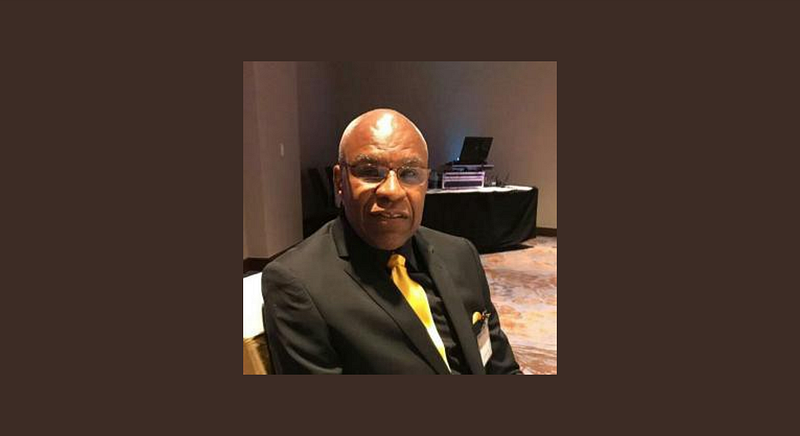
“a race homogenous paradigm assumes that Black-Americans are a monolithic group.”
This is a story four decades in the making. It is an example of how whiteness uses the tool of psychology to victimize, traumatize, and subjugate Black people in every way imaginable. It is a tale that substantiates my earlier claim that psychology is the most racist and dangerous profession on planet earth as its fundamental nature and the tools it employs are the very yardstick that measures the extent of one's whiteness. It is the one profession that can deal a harsh penalty in the court of law if you don’t measure up. Psychology is the most ardent defender of the Racial Hierarchy.
Because America’s National Football League (NFL) denied insurance claims by using a method of statistical analysis based on premature assumptions from early neuropsychological research data on Black-Americans, I need to provide pertinent information about my journey in the field of neuropsychology in order to better understand these early forays.
My journey in the field of neuropsychology began in 1979 when, as a Junior in college, I managed to observe a neuropsychologist (at that time, one of the very few in the United States) conduct an examination of a military veteran who was a patient at a local VA hospital. I was fascinated by the clinician’s ability to describe and pinpoint the exact area of brain damage using this specialized form of assessment. I had never seen anything like it and I was hooked.
I had difficulty finding a graduate program to satiate my appetite for, what at the time, was a new emerging, and exciting field. Most graduate programs offered something called “animal neuropsychology” but I wanted to study the human brain and there were very few graduate programs devoted to this field of specialization. As luck would have it, I attended a conference of the Eastern Psychological Association being held at the New York Hilton in Manhattan. It was 1981 and I was a senior in my final year at Texas Southern University, an HBCU in Houston, Texas (notable alumni include Barbara Jordan, Mickey Leland, Hubert Laws, Joe Sample, Wilton Felder {Jazz Crusaders}, Kirk Whalum, Michael Strahan, Yolanda Adams, Megan Thee Stallion, and many others) and I knew what I wanted but didn’t know where I could find it.
At the conference, I stepped on an elevator and there were several psychology graduate students on the same elevator from Howard University in Washington DC. As we rode up, the conversation started and I explained my situation. That’s when the students told me about a young professor that had been at Howard for a year and was looking for a student to start a program in neuropsychology and that I should get in contact with him as he had yet to find a suitable candidate to mentor. I nearly passed out by the time we exited the elevator. My heart raced to my brain and my stomach dropped to my feet! I was looking in all the wrong places for something that was sitting in the extension to my academic home; from HBCU Texas Southern to HBCU Howard. The young professor at Howard, whom I called as soon as I could get my hands on a telephone (there were no I-phones in 1981), was a tall 6’7" 32-year-old genius of a man named Alfonso L. Campbell Jr.
Dr. Campbell, a Morehouse Man, had earned his doctoral degree at Penn State in neurophysiology and was fresh off a graduate externship completed at the University of Michigan under the guise of one Dr. Aaron Smith where Alfonso was Smith’s most prized student. If you know anything about right brain vs. left brain dichotomy then you are referencing knowledge from the hemispherectomy (i.e., split-brain) studies originating in 1966 and 1969 by Bogen, Sperry, and Smith. Bogen and Sperry were neurosurgeons that split the brains of patients with intractable epileptic seizures, by severing the large band of white fibers that connect the two hemispheres. The rationale for doing this was to stop the electrical discharge from spreading throughout the cortex. Smith, the third participant in this seminal work, was the neuropsychologist (one of the first in the United States) who described the post-surgical effects upon language, memory, and cognition in the now split-brained patients. Smith sent Alfonso out in the field to follow up and examine these very same patients.
Practically everything you know about the right brain vs. left brain dichotomy hails from these studies and Alfonso L. Campbell Jr., the world's first Black research neuropsychologist, was right there in the mix. Now, he was prepared for his next phase, he was set up at Howard University searching for his first student to mentor in order to start a program and research tradition in the field of human neuropsychology; as luck would have it, that turned out to be me.
I met Dr. Campbell for the first time in New York City’s Manhattan several weeks following the Eastern Psychological Association conference. Perhaps ironically, he had a trip to the city planned prior to my eventful phone call to follow up on several patients in the split-brain study. We immediately connected. I was bedazzled by his brilliance and he seemed bowled over by my excitement at having found exactly what I was looking for. I think I was what he had been searching for too. I could barely contain my enthusiasm! I instantly became his little brother and he became my mentor.
Under Dr. Campbell’s guidance and direction, a program began to take shape in clinical neuropsychology at Howard University. By the mid-1980’s the program began to publish research on the neuropsychological performances of Black patients at Howard University Hospital with the support of two Black-American physicians; Don L. Wood M.D., Chief of Neurology, and a young Chief of Neurosurgery by the name of Gary Dennis M.D.
This research is the first of its kind in the world.
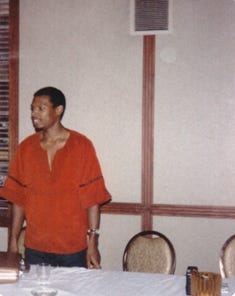
For my Masters thesis, Dr. Campbell arranged for me to examine Black victims recovering from a stroke at the Howard University Hospital. Data were collected for four years before I wrote my thesis and presented the data at the International Neuropsychological Society in San Diego, California in February 1985.
Also at that convention in San Diego was a white neuropsychologist whose name will not see the light of day in this article. He made the claim that Black people scored lower and that it was a product of race. I challenged him directly when he completed his presentation before a packed audience. Dr. Campbell and I were the only two in the room if you know what I mean. I asked this white neuropsychologist how he could make such claims on such a small sample size let alone how could he conclude that performance on his tests had anything to do with skin color. I also argued that a race homogenous paradigm assumes that Black-Americans are a monolithic group. I remember him turning red (I was relentless and assertive in my questioning) before he abruptly dismissed that I was a mere graduate student and therefore what could I possibly know. He then turned and quickly stormed out of the room before further questions could be asked from the small crowd that had gathered. I looked to my side and caught a glimpse of Dr. Campbell smiling with pleasure at the development of his “little brother.” This was 1985.
In August 2021, when I finally examined the lawsuit, I saw this same doctor’s name in the mix and discovered that the NFL brought into his spurious preposterous claims, relied on his data interpretation, and consulted with him which led to the design and implementation of a system, based in “empirical neuropsychological research” that served to deny insurance claims for their Black professional athletes.
It seemed to me that the foundational data obtained over the years on small samples of Black-Americans had been misconstrued and used to support white-supremacist ideology as a benefit to white corporate interest. I couldn’t help but think; after 400 plus years of rich white people capitalizing off skin color, what’s changed?
My thesis observes that Black victims with strokes lateralized to either right or left hemispheres of the brain do not demonstrate discrepant language over non-language operations. This finding contrasts with the standard finding reported in the experimental literature of impaired language in whites with left hemisphere lesions and more impaired nonverbal operations in whites with right hemisphere lesions.
But in no way does the data suggests that the baseline performance of Black people are somehow impaired or functioning at a lower level relative to whites.
The First Amended Class Action Complaint filed against the NFL by palintiffs Brian Flores, Steve Wilks and Ray Horton (filed 04/07/22) is the action initiated by Black NFL Coach Brian Flores. This Complaint illuminates a history of racism in the NFL and provides a detailed description of the race-norming procedure implemented by the league as follows:
The NFL’s Concussion Settlement Discriminated Against Black Players
93. In 2011, retired NFL players began filing personal injury actions in courts around the country seeking damages or relief in the form of medical monitoring. Some of these actions were filed on behalf of a class, some for small groups of former players and others for individuals (collectively, the “Concussion Lawsuits”).
94. As alleged in the Concussion Lawsuits, the NFL for decades was aware of the evidence and the risks associated with repetitive traumatic brain injuries, but nevertheless “ignored, minimized, disputed, and actively suppressed broader awareness of the link between subconcussive and concussive injuries in football and the chronic neuro-cognitive damage, illnesses, and decline suffered by former players.”
95. The NFL was also alleged to have “failed to warn [players] and/or impose safety regulations governing this health and safety problem” and “produced industry-funded, biased, and falsified research that claimed that concussive and sub-concussive head impacts in football do not present serious, life-altering risks.”
96. The Concussion Lawsuits identified a number of retired NFL players who were diagnosed with traumatic brain injury (“TBI”) following their playing career and sought money damages for injury and death, as well as medical treatment for retired players diagnosed with TBI.
97. Ultimately, the claims were consolidated and settled in 2014. Under the the settlement agreement, a former player who has a “Qualifying Diagnosis” is eligible for monetary benefits. A diagnosis is “Qualifying” primarily — but not exclusively — if rendered by physicians approved by the NFL or in conjunction with the NFL’s Baseline Assessment Program (“BAP”). The BAP is intended both to identify symptoms of eligible conditions and to collect data for comparison to later testing, to establish any subsequent decline in a retired player’s cognitive functioning.
98. Claims for monetary awards are first reviewed by a Claims Administrator. In the first instance, any appeals of the Claims Administrator’s determinations are heard by an Appeals Advisory Panel. Any appeals from the Appeals Advisory Panel are brought to the court that entered the settlement agreement.
99. According to a lawsuit filed by former Black NFL players Kevin Henry and Najeh Davenport, as well as media reports, the NFL began regularly insisting that physicians use “race-norms” in determining whether a retiree had suffered cognitive impairment (the “Race-Norming Lawsuit”). When Black retirees were deemed to be cognitively impaired, the NFL regularly appealed such determinations if race-norming was not used.
100. As alleged in the Race-Norming Lawsuit, “the National Football League . . . [has]been avoiding paying head-injury claims under the Settlement Agreement based on a formula for identifying qualifying diagnoses that explicitly and deliberately discriminate on the basis of race. When being evaluated for the Qualifying Diagnoses of Neurocognitive Impairment, Black former players are automatically assumed (through a statistical manipulation called ‘race-norming’)to have started with worse cognitive functioning than white former players. As a result, if a Black former player and a white former player receive the exact same raw scores on a battery of tests designed to measure their current cognitive functioning, the Black player is presumed to have suffered less impairment, and he is therefore less likely to qualify for compensation.”
101. Put another way, the NFL insisted that white people simply have better cognitive function than Black people. Thus, if a Black person was found to be cognitively impaired, the NFL would often not accept that diagnosis unless the physician gave adequate consideration to the possibility that Black people simply do not function cognitively as well as white people. This is the very definition of racism — the assumption that someone is not as smart as another person because of the color of his or her skin.
In July 2002, Dr. Campbell published work of paramount importance to the field: “Caveats in the Neuropsychological Assessment of African Americans.” I am proud to be cited as one of the co-authors on this work. The study’s conclusion warned:
“ Ideally, clinicians should have tools that are sensitive to ethnicity, cultural variation, age, education, gender, regional variation in behavior, primary language, urban versus rural setting, and influences that occur when testor and testee are mismatched on the above factors. One way to construct this “clinical guidebook” will be to continue to encourage research on neuropsychological performance with diverse participants as subjects.”
Dr. Campbell eventually rose to the prestigious position as Chairman of the historically significant Department of Psychology at Howard University.
In June 2021, Dr. Campbell sent a brief communication to me in response to the misuse of neuropsychological data on Black American athletes. He advised:
“Without careful reading, our position in the Caveats paper could be mis-interpreted as favoring race-norming. The race-homogenous paradigm recognized the inherent biases in neuropsychological measures and proposed a short-term solution. The long-term solution, which was more radical and called for the development of assessment procedures that were more culturally sensitive, has not been realized.”
As part of the class-action concussion/insurance-claims settlement, the NFL will no longer employ the method of race-norming, and of note, in October 2021, the American Psychological Association issued a document of a formal apology to People of Color “for their role in promoting, perpetuating, and failing to challenge racism, racial discrimination, and human hierarchy in the United States.”
REFERENCES:
Brown, A., Campbell, A., Ford, P., Armstrong, K., & Prieto, K. Neuropsychological performances of Black patients with cerebrovascular lesions. Proceedings of the 13th Annual Meeting of International Neuropsychological Society (1985).
Brown, A., and Campbell, A. (1986). The relationship between neuropsychological measures and self-care skills. Journal of Clinical and Experimental Neuropsychology. 7, 615.
Brown, A., and Campbell, A. (1990). Analysis of raven coloured progressive matrices performance in patients with the unilateral lesions. Journal of Clinical and Experimental Neuropsychology. 12, 58.
Brown, A., Campbell, A., Wood, D., Hastings, A., Lewis-Jack, O., Dennis, G., Ford-Booker, P., Hicks, L., Adeshoye, A., Weir, R., & Davis, T. (1991). Neuropsychological studies of blacks with cerebrovascular disorders: A preliminary investigation. Journal of the National Medical Association, 83, 217–224.
Campbell, A., Brown, A., and Schildroth, C. (1991). The relationship between neuropsychological measures and self-care skills in patients with cerebral vascular lesions. Journal of the National Medical Association 83:321–324.
Ford Booker, P., Campbell, A., Combs, S., Lewis, S., Ocampo, C., Brown, A., Lewis, O., and Rorie, K. (1993). The predictive accuracy of neuropsychological tests in a normal population of African-Americans Journal of Clinical and Experimental Neuropsychology 15, 1.
Campbell, A., Ford — Booker, P. Ocampo, C., Dennis, G., Brown, A., and Lewis — Jack, O. (1994). Design Copying Skills in Brain Injured African-Americans. In Sloan, L. R. (Ed.), Pathways to Success. Washington, DC: Howard University press.
Campbell, A., Rorie, K., Dennis, G., Wood, D., Combs, S., Hearn, L., Davis, H., Brown, A., and Weir, R. Neuropsychological assessment of African Americans: conceptual and methodological considerations. In R. Jones (Ed.), Handbook of Test and Measurement for Black Populations. Berkeley: Cobb and Henry 1996.
Lewis, S., Campbell, A., Takushi-Chinen., R., Brown, A., Dennis, G., Wood, D., and Weir, R. (1997). Visual Organization test performance in an African American population with acute unilateral lesions. International Journal of Neuroscience. October (3–4):295–302.
Lewis-Jack, O., Campbell, A., Ridley, S., Ocampo, C., Brown, A., Dennis, G., Wood, D., and Weir, R. (1997). Unilateral brain lesions and performance on Russell’s version of the Wechsler Memory Scale in an African American population. International Journal of Neuroscience. October (3–4):229–40.
Campbell, A., Ocampo, C., Rorie, K., Lewis, S., Combs, S., Ford-Booker, P., Briscoe, J., Lewis-Jack, O., Brown, A., Wood, D., Dennis, G., Weir, R., and Hastings, A. (2002). Caveats in the neuropsychological assessment of African Americans. Journal of the National Medical Association 94:591–601.
Hopkins, R., Ross, S., & Hicks, L. H. (1992). A History of the Department of Psychology at Howard University. Journal of the Washington Academy of Sciences, 82(3), 161–167. http://www.jstor.org/stable/24531076