
Flint & Steel Full Circle Writing Challenge | Life lessons |
The Boy Under The Tree
Questions about life — coming full circle by learning to accept yourself and living life.
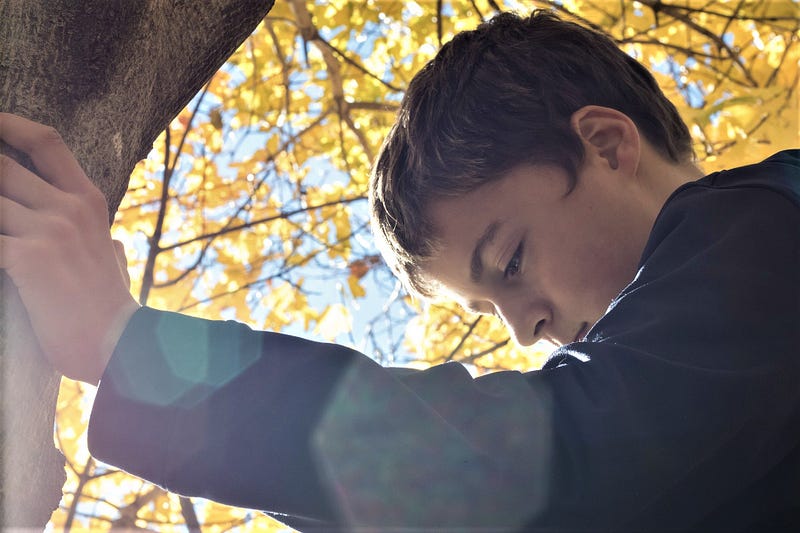
The sound of a dog barking in the distance disturbs the old, grey man’s reading. He hears the wind rustling in the tree he sits under and it brings back memories from a time long ago to this secluded spot in the park.
Memories of a childhood growing up alone on a farm, connecting with nature, and contemplating the meaning of his life.
Rewind forty years.
The wind rustles the leaves of an Acacia tree. A boy sits under the tree reading a book and listening to the songs of nature. Spot, his dog is doing his dog thing running free in the veld.
The dog got bored lying next to the boy and is looking for some interesting action to brighten up his doggy life. The loud startled squawking sound of geese on the farm fills the air.
“Ah,” the boy thinks. “Spot is up to mischief while I’m contemplating the meaning of my life. Why can’t I just be a dog running free with no worries?”
The twelve-year-old boy sighs deeply. He knows he is different from his peers. He doesn’t like to do the things they do such as playing rugby, mocking the girls, and always looking for a fight.
The bullying on the playground and the derogatory names they call him let him know that he doesn’t fit into their world.
“Why am I different? How am I different? Why can’t I make friends? Why don’t they enjoy spending time with me?” the boy wonders. These are questions that pop into his mind regularly. It’s his daily struggle — heavy stuff for a 12-year-old boy to handle.
The high-pitch singing sound of the cicadas in the warm summer sun seems to echo his cries for help from the universe. He knows his family loves him. He knows they care about him. But, he also knows they don’t understand him. He is not like his older brothers. Big, burly, rough, and tough rugby players.
He is the sickly sensitive one that suffers from asthma. His dad always tells him how his older brothers were great sportsmen. Manly and strong. This doesn’t help the boy because he compares himself to others and he doesn’t seem to measure up to everyone’s expectations.
Too fragile, too unsure. Different, not like them. Haunted, hunted. Why me?
Asking questions, a swirling hazy mist answers evaporating in the sunshine heat! Why does he love cooking so much and reading quietly under a tree?
Why is he not rough and tough like the other lads and his brothers? Why does he like helping people so much? Why does he prefer girls’ company?
Are the bullies correct? Is he a sissy and a mommy’s boy?
More worrisome to the boy are disturbing questions that occupy his mind a lot. Really too much. “Is he a useless lad? What is his purpose in life?”
The sudden loud noise of a car honking next to the park plucks the old man back from his reverie. The dog is still barking in the distance. The wind is still rustling the tree’s leaves. The only thing that is absent is the cicadas singing. The man rests the book on his knees and smiles contently.
Over the years those questions dominated his life. It was the same old refrain playing in his mind continuously. He wrestled with those questions for a long time.
It determined the way he interacted with other people around him. He always tried to please everyone and dance according to the music society played. When the man turned forty, he seemed to find the answers that his younger self asked under the tree.
He can now answer that 12-year-old boy sitting under the tree’s questions.
“It’s ok to be the different kid on the block, son. It’s ok to be the sensitive one. It’s ok to not fit into what society expects of you because you are a unique human being with your rightful place in the sun.”
The man learned that he had an emotional and intuitive intelligence and could sense others’ fears, needs, and problems. He realized that those teenage lads could see their own weaknesses and struggles in his teenage angst eyes.
It was scary to them, so he became the outcast. The bullied one. The one they picked on to hide their insecurities.
Having struggled with himself as a teenage boy and a young adult the man learned that his purpose in life was to serve. He can connect with other people, sense their pain, and is willing to help them to understand and love themselves.
“You came full circle by accepting yourself and embracing your differences,” the wind whispered to the old man rustling the leaves of the tree. The dog’s insistent barking in the distance confirms that it was a meaningful, albeit long and lonely, yet painful path to walk, to accepting and loving himself.
This article is in response to prompt 2 “Full circle” in Freewriting Friday Connecting the Dots, published by Flint and Steel. Thanks, Ellie Jacobson for the inspiration.