
THE NARRATIVE ARC
The Boy Should Have Drowned
But was saved by an angel
Possibly, I should not be here. With us, among living humans on this planet, I mean. More like probably should not be here.
This story is true, I promise.
The year was 1961. The month was February. The winter was cold and laden with snow.
At the far end of an uncultivated field ran a narrow, though deep stream, so deep we thought of it as a river and called it that, which debouched into several acres of marshland — a shallow lake in the spring, mostly drier and drier bog as the summer aged until the fall rains swelled the river back to health to re-lake the marsh by the end of October, by mid-November the latest.
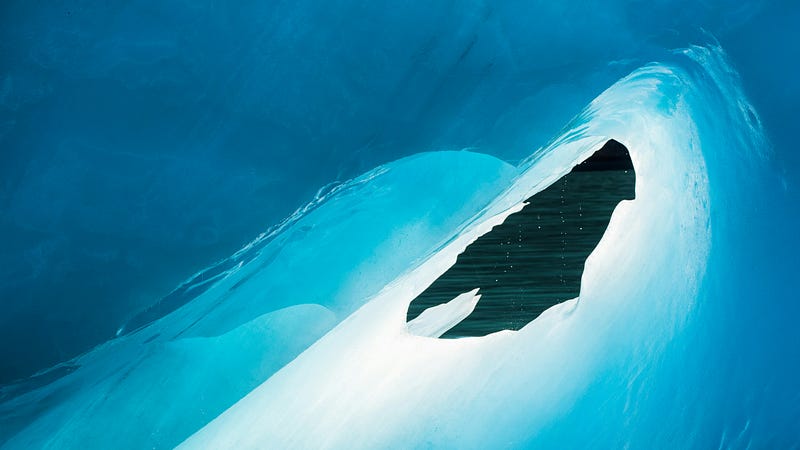
By February this was all a frozen ice field, the river included, all hidden by snow.
Growing up in rural Sweden, with its many lakes and rivers, like all other children in my part of the country, I had been well and often taught to respect, if not fear frozen rivers. For should the ice be even a foot thick by river’s edge, currents might well have sculpted the ice to leaf-thin in the middle of the stream.
In other (serious) words: Never set foot (or skate) on it, unless you are very, very certain the ice is thick throughout, and unless others — preferably grownups — have come along, just in case.
And always, always, always (feel free to add several more of those) wear icepicks. That way, should you — despite all warnings and careful treading or skating — fall through the ice and into the water, you can claw your way out of the water and back onto the ice, or at the least remain safely above the water surface until help can pull you out.
Yes, I knew all this — at least to the point where my lips could pay good service to it. But this February day was a very cold one, making for very thick and safe ice, and me and my new hockey stick, and my freshly sharpened skates, knew precisely what to do: Go down to the river and play some self-on-self hockey.
I don’t remember whether I told Mom where I was going. Chances are I did not for she would probably have said no: nixed my hockey plan and we couldn’t have that now, could we?
So, keeping the noise down to a minimum, I donned my skates, fitted the rubber blade covers that’d allow me to walk on my skates all the way down to the ice, gathered my gear — stick and puck, and a shovel to clear the ice from snow — and trekked the two or so hundred yards down the snowy field to the frozen water.
Here I removed the blade covers, hefted the shovel and began clearing a very small hockey rink on the frozen river/marsh.
Once done, I tossed the shovel aside and instead grabbed the stick and the puck and began dribbling (unstoppably) and scoring (brilliantly), and scoring again (and again and again, brilliantly). I was amazingly good and would probably play for Sweden’s national team as the youngest player ever — so the dream went.
Once or twice (by mistake) I shot the puck into the deeper snow and it took a while and some swearing to find it again, but find it I did (amazingly, in retrospect), and the superlative skating and dribbling and goal-scoring resumed.
One moment I’m executing a marvelous feint (that fools two or three Soviet defenders and freezes them in their tracks) — the next moment I’m in the water.
There must have been warning signs, reason says so. But when you are playing solo against the best USSR hockey team ever, you need to focus on the task at hand: fooling them all and crushing them with an embarrassing score line — I’m up something like 8–0 by this time.
So, had there been warning signs, none reached me or just didn’t dare disturb me. One moment I’m on top of the ice, the next I’m through it and submerged in freezing water.
The river is deep here in the middle of the stream. Too deep for a boy’s feet to reach bottom, which even if they had I’m sure would have been all mud and slime for several additional feet before firming up.
I surface and manage to place my arms on the ice over the edge of the break. The edge holds. I keep myself from sinking this way.
I try to feel the bottom, something firm to push off from, but no luck. It is too deep. All my feet can see is water.
Ice being ice and by definition slippery leaves me nothing to seize. Just smooth ice and useless snow though I am glad that the edge is strong enough and still holds as I hang on to keep my head above water. But there is where the good news ends.
I cannot heave myself out of the hole. Nothing to grasp, nothing to push off from, no leverage. I place my lower arms and elbows on the ice and try to heave myself up this way: once, futile, I’m slipping, and again, just as futile, just as slipping. I don’t try a third time.
My clothes absorb more and more water now and grow increasingly heavy with every second, making getting out of the water harder and harder and soon literally impossible. Even keeping my head above water is turning into a real effort, approaching a staying-alive battle.
This is why you always (always, always) wear ice picks. Always wear ice picks. Always wear ice picks. That way you can — if you and the ice are both strong enough — drive the two gripped picks into the ice and so drag yourself out of the water. I have no ice picks. Ice picks are for sissies.
Neither am I by now near strong enough.
I am now in shock or something close to it, for now I realize, with a dreadful finality, that I am not getting out of this water. I also realize that I can scream all I want, I’m too far from anyone who might hear and help.
As I cling to the edge, my dangling legs drift slowly with the current toward the marsh, under the edge away from the hole. And now I realize that were I to lose my grip — and it is slipping — I would submerge and drift with the river and under the unbroken ice into certain death.
No, I don’t think this, but I know this. Strangely, though, I don’t feel cold at all. I should, but I don’t. That’s shock for you.
And now I know there’s a good possibility — if not a certainty — that I will soon be dead. I don’t think this, but I know this.
Neither do I think, “But I’m too young. It’s too soon. I haven’t lived yet, hardly at all.” But my body knows this, screams this, refuses to accept death this way, this really stupid and far-too-soon way.
This simply cannot happen. I cannot drown here. I cannot. I cannot.
I must not. I must not.
I must not.
Here is where things grow unrecallable, for I’m not aware of precisely what happens next. But something does happen next, for next, the very next moment, the very next eye-blink, I am out of the water and lying prone on the ice, fully stretched, my weight distributed so as not to break it further.
Then I roll to the edge of the river, clamber onto the snowy bank, and stand up. Then I walk, as fast as I can, blade covers forgotten, hockey stick and shovel forgotten, through the snow back to our house.
Even though my clothes are now turning to ice and begin to creak a little as I walk, I am still not cold, although I should be freezing by now.
I reach the house, enter our little antechamber, sit down on the floor, and work at untying my skate laces, hard to do since they’re all ice too.
My mom heard me and steps out of the kitchen, wonders what on earth…?
I don’t remember what I tell her. And I don’t remember going back to the river to pick up the shovel and puck and stick and skate covers. I’m sure I did at some point, but no memory of that either.
And no memory of stepping into the warm kitchen and drying myself on towels I am sure my mom would have handed to me. She’s not happy about my soaking clothes, puddling her kitchen floor, I’m pretty sure.
I am not telling her that I should be dead, just that the ice broke, no big deal.
I never told my dad I had gone through the ice (he would have been furious with me). Mom, I’m sure, didn’t tell him either, steering clear of fatherly eruption. In the name of domestic harmony. Diplomatic silence.
It is strange that my memory does not serve at all concerning these first few post-drowning moments. Just as if there aren’t any.
And where it serves the very least is about how I made it out of the watery and deadly hole and onto the ice.
Looking back, there really is no way I should have been able to do that, growing heavier and heavier with the waterlogged clothes, risking to be sucked under the ice by the current, nothing but slick ice for my hands to hold onto had my arms been strong enough to heave me out of the water, and my arms along with the rest of me tiring fast.
I have examined this a hundred times: there is no way I should have, could have, managed this — without help.
Ergo: I was helped. There is no getting around this.
Somehow, by someone or something. Guardian Angel does come to mind. Something or someone like that. Must have been. Was.
Without a doubt.
For here I am, at this keyboard writing this, when (had logic had some say in the matter) I should not even be here.
Epilogue:
At times I am afraid to think back on this, to recall in detail what happened that freezing February afternoon of should-have drowned.
And what I am most afraid of is that on closer inspection I might discover that, in fact, I did drown. And then, where would I be?
© Wolfstuff


