
Why The Most Expensive Book In The World Costs $23 Million
Plus shipping

Let me tell you about a man called Peter Lawrence. He wrote a book about genetics and is a professor at the University of Cambridge. In 2011, his book was accidentally priced at $23,698,655.93 (plus $3.99 shipping) on Amazon.
Why? To understand, we first need to understand a few things…
Amazon Is A Major Source Of Revenue For Authors
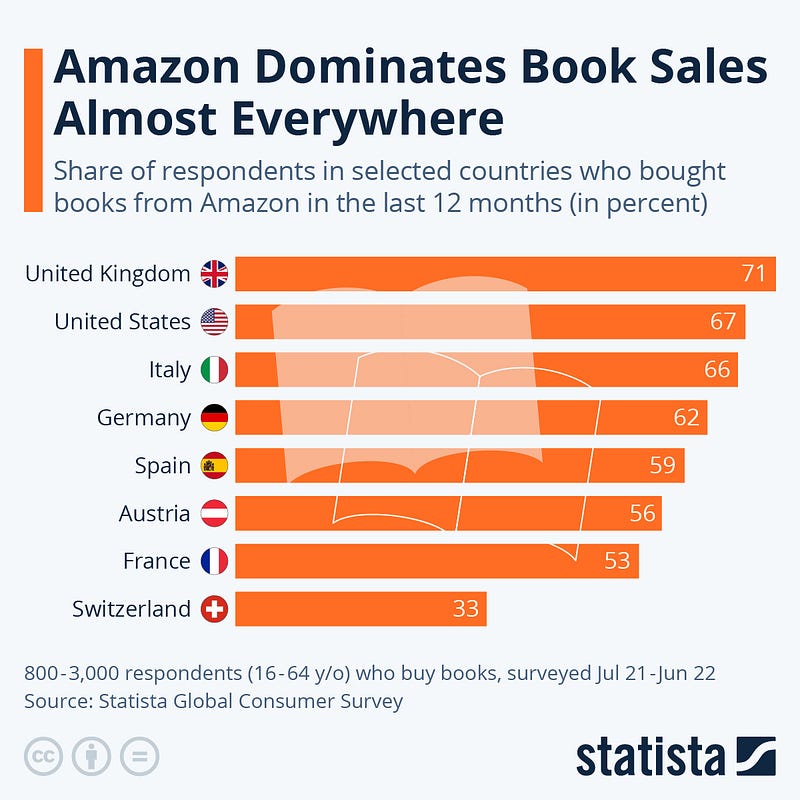
When it comes to physical book sales for major publishers, Amazon represents over 50% of sales. And according to Statista, roughly 67 percent of Americans use Amazon to buy books.
It doesn’t matter if you want to read Harry Potter or a book about rocket science. There’s a high probability you can buy anything you want on Amazon at a low price.
But the cost of items can sometimes spiral out of control thanks to robots fighting each other. Thankfully, it’s not a battle of good vs evil because one robot wants to dominate the world and kill all humans. Give that another decade.
But we need to talk about something really important…
The Basics Of Algorithmic Pricing
According to the Brookings Institution, “a computer program can quickly monitor market conditions, including behavior of rival retailers, and autonomously adjust prices in near real-time.”
This happens pretty frequently on Amazon. “Individual booksellers pay third-party companies for algorithm services that automatically update prices,” per CNN. “Some of these computer programs purportedly work very well, getting sellers up to 60% more sales because they underbid the competition automatically and repeatedly.”
Hey… that sounds surprisingly similar to what Jeff Bezos does with family businesses. Anyway, let’s look at an example of algorithmic pricing in action. If one bookseller is selling Joe Biden’s biography for $11.99, another bookseller might increase their price to $12.50. Or, they might decrease the price to $11.50 to gain a competitive advantage.
Here Are The Parameters That Caused Algorithmic Pricing To Spiral Out Of Control…
When trying to purchase a copy of Peter Lawrence’s book, a post-doctoral researcher working in a lab at UC Berkeley noticed the pricing error.
There were 17 copies available on Amazon, with 15 used copies starting at $35.54 and two new copies. One was from a seller called Profnath (costing $1,730,045.91 and the latter was from Bordeebook at $2,198,177.95.
The student originally thought the price was an error. But it was actually algorithmic pricing robots battling against each other. When the student checked the page again the next day, the price of Peter Lawrence’s book cost $2.8 million.
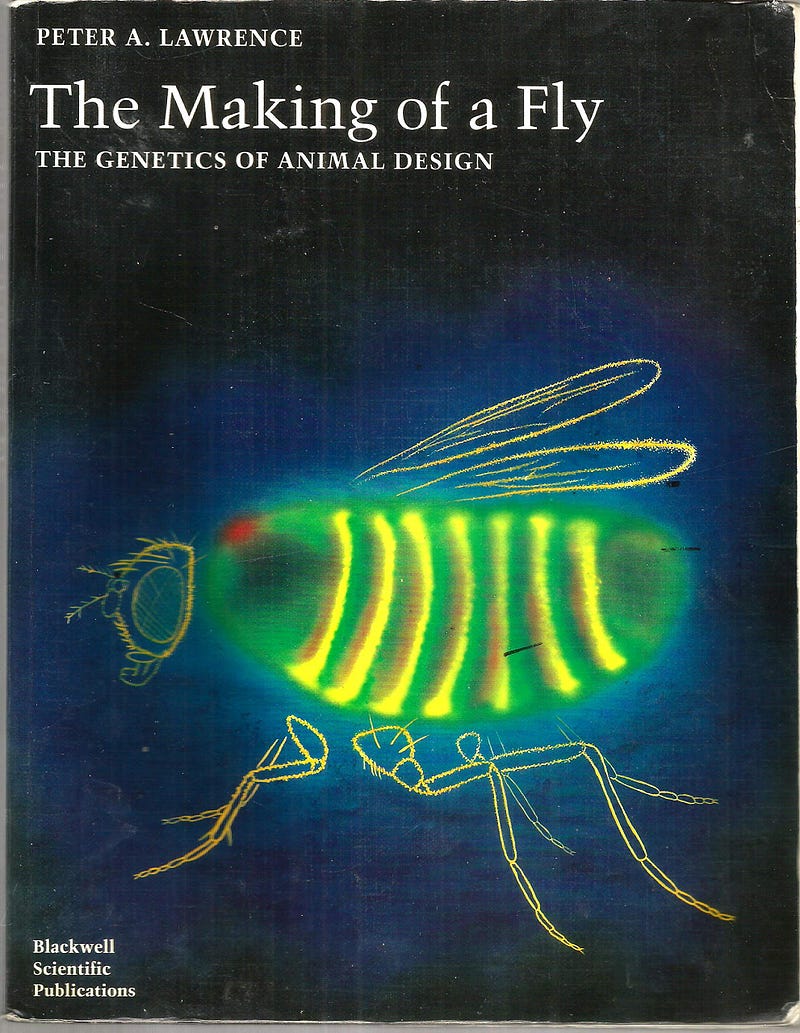
The UC Berkeley student calculated that Profnath set its pricing to be 0.9983 times that of the copy given by Bordeebook. Meanwhile, Bordeebook used algorithmic pricing to set the price at 1.270589 times whatever Profnath charged for the book.
Obviously, it doesn’t take a genius to guess that the price continued to skyrocket exponentially. By April 18, 2011, the book cost $23,698,655.93 (plus shipping). But once the sellers realized something was wrong, they dropped the price of Peter Lawrence’s book to approximately $100.
Of course, an informative book costing $23 million is expensive. But if you want to learn new things for free, click here to get notified whenever I publish a new article. And if you enjoyed this post, show your appreciation by giving it lots of claps.


