
The Book of Genesis
Seen Through New Testament Gospel Eyes
Genesis: Book 1 of the Old Testament
This message on Genesis is longer than most books in this series of Old Testament messages. This is because Genesis sets the stage for many things in the books that follow after it. If we miss things that happen in Genesis, we may miss things that happen after Genesis.
Why God Created the World and Mankind
The reason God created the world and us was for relationship. God created human beings to have fellowship with, even though he knew we would be rebellious, sinful, and everything else imaginable.
This first book of the Old Testament starts out by telling us that God made all things GOOD, and that includes mankind. This is important.
There was nothing BAD in the world (except for a snake, that is). It was perfect fellowship and relationship between God, man and the animals, and mankind even had authority over ALL things.
We are also told several times: everything produced and generated ‘after its kind.’ This is also important. Mankind was made in the likeness of God, and was meant to think and live God’s thoughts, which were all GOOD.
Then There Was Trouble In River City
Then Adam and Eve got the unction that they wanted their own thoughts and ways, and Satan (the snake) tempted them to believe ‘they could be like God.’

They wanted to be independent of God, and to live their own lives by being able to determine and decide what they thought was GOOD or BAD. They didn’t want to have to depend on God’s judgment alone.
God only gave Adam and Eve ONE rule: “Don’t eat from the Tree of the Knowledge of Good and Evil.” Everything else was theirs except this one forbidden tree. Can you imagine only have ONE rule to live by?
Adam and Eve chose to go their own way, rejecting relationship and fellowship with God, and trusting his goodness toward them. This is called ‘The fall of man.’
But God still wanted to relate to his fallen creation. He went looking for Adam: “Adam, where are you? — Where are you, Adam?” God hadn’t lost Adam. He knew where he was. But God wanted Adam to discover where he was in his new, fallen human condition.
God had to give us a choice: to believe and trust him, or to go our own way. We also choose to go our own way at times and to break relationship with God, thus choosing self over God. In Romans, Paul calls this ‘worshiping and serving the creature (us), rather than the Creator.’
But the truth is: God doesn’t break relationship and fellowship with us, even when we sin. This is true even though, in Colossians 1 Paul says we feel like enemies — in our minds — because of bad things we do. But this is only in our minds. It’s not gospel reality.
Cain and Abel
After Adam and Eve fell away from God, their son Cain murdered his brother Abel, and things just continued to go downhill from there. But even here, God continued to relate to Cain, even in his fallen, sinful nature. God even ‘marked’ him so people would not harm or kill him for being a murderer.
We lawyers call this ‘aiding and abetting a criminal,’ which is against the law. But God did it for Cain — thus again God was showing his desire for relationship with us. He was revealing his grace.
The Flood
Things got really bad. We’re told there was ‘only evil in the world,’ and so God destroyed all living things and all people by the FLOOD. Only Noah and his family were saved by God telling Noah how to build an Ark to survive the flood.
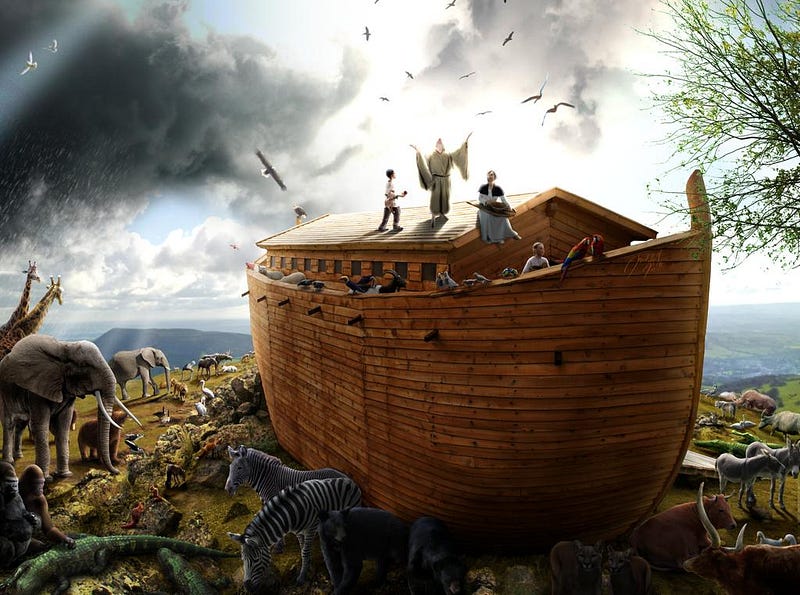
God kept relating the Noah and his three sons after the flood. A bad line of people came forth from Ham, and a good, godly line of people came forth from Shem. The line that came from Jepheth was sort of in the middle, and continued to be blessed in it was like they were in Shem’s shadow.
The Tower of Babel
The people chose to go their own way. They all wanted independence from God like Adam and Eve. They built ‘The Tower of Babel’ to show their goal to have their independence and to ‘be like God.’ They all spoke the same language. So God gave them lots of languages, to break them up. This caused them to separate and move to different places.

But the reason God did this was not so much to punish them, but to have relationship with them. By speaking different languages they couldn’t all group together, and collectively challenge him, fight him and deny him. They would have the choice of relating to him more personally.
Without living in relationship with God and trusting him and being guided by his influence, we all tend to go off in different directions and live independently of God until life goes wrong. Isaiah refers to us as ‘sheep who go astray.’
Abraham, Isaac, Jacob and Joseph
Abraham was chosen to lead God’s people as an obedient family. But he failed too, even though he was largely a good man, and is called ‘the father of faith.’ But he shows us that all of us fail. None of us is totally good by God’s standards.
Isaac and Jacob follow suit and show their weaknesses and failures, in addition to strengths God develops in them. Joseph flows out of Jacob. His brothers sell him into slavery. He is a bright light in God’s family. He’s a type of ‘preview’ of Jesus the way he thinks and lives.
He became a world-renown figure in Egypt, which was the world’s greatest power. He even forgives his brothers and gives his family a home in Egypt.
Joseph was a man truly connected to God, living for him.
Joseph shows the forgiveness of Jesus to us. Jesus says he won’t refuse anyone who comes to him. As Joseph drew his own family to him, God wants to draw all of us to him, again because of his desire to have relationship with us. God is always relating to us and drawing us to him, thus getting us to know his goodness and to trust his faithfulness to us.
But we are sometimes slow to learn. Maybe we belong in a slower group.
Like Adam and Eve, and everyone after them, we all want to govern our own lives. Of course we want God’s help, but we don’t want to have to submit to him, listen to him and live his way.
Instead, we want him to listen to us and empower us in what we want out of life. In ways, Genesis is a picture of us today. Our human condition hasn’t changed much in 6,000 years. We often only give God LIP service, not LIFE service.
Moses Wrote About Jesus
Moses wrote the book of Genesis, and Jesus tells us that Moses even wrote about him (John 5:45–46). So we see that Jesus is very much a part of the Old Testament. Of course, Moses didn’t have all the details about Jesus, and didn’t even know his name, but he knew about the coming of a Messiah Savior that God would send to his people.
Genesis 4–11 shows the obvious need for God’s grace and salvation.
Paul may have been speaking about most people in Genesis when he wrote: “Having their understanding darkened, being alienated from the life of God through the ignorance that is in them, because of the blindness of their heart” (Eph 4:18).
In John, Jesus says Satan is the Father of lies. Adam and Eve bought into his lies in the Garden. Today, we have received the GOSPEL truth, and it is God’s mystery and the means by which he confronts and defeats any lies. Thus Jesus says to forsake and repent of all other beliefs, and to only believe the gospel truth of the Kingdom of God (Mark 1:14–15)
Paul says the secrets of our minds are judged by the gospel (Rom 2:16).
He says Jesus will return to judge any of us who aren’t obeying and living gospel truth (II Thes 1:7–8).
So many think we will be judged for sin. But this can’t be true if Jesus became sin for us believers and gave us his righteousness (II Cor 5:21).
He came to do away with sin by the sacrifice of himself (Heb 9:26).
“As Jesus is, so are we in this world.” If we are in Jesus, believing his gospel, we should not even have fear of judgment (I John 4:17).
Any judgment we may face will be concerning our beliefs, not our sin. And the gospel has been given to us as the foundation for our beliefs.
God has made us to be new creations in him (II Cor 5:17). Believers are no longer only human. We are a new creation or a new species, just like God created us in the very beginning of Genesis. I call this being a ‘GodMan.’