
The Book of Exodus
Seen Through New Testament Gospel Eyes
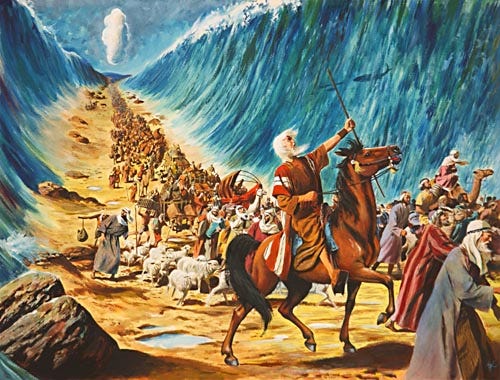
The Jews Leave Egypt
Years and years later, the new Pharaoh no longer knew of Joseph or of his family of Jews that he had provided for in Egypt. The Jews had grown into a huge number of people, and the Egyptians became fearful of them and made them slaves so they could control them.
God uses Moses to set them free and destroys Egypt’s army in the Red Sea when they refused to let the Jews go.
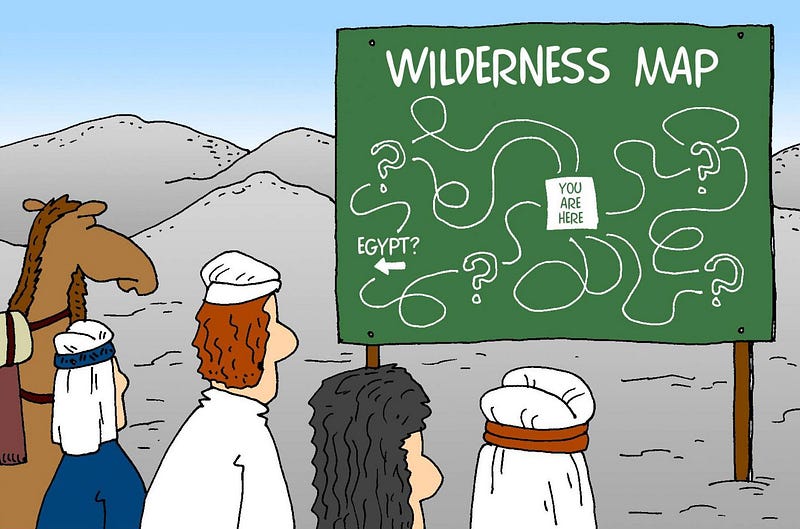
The Jews were still resistant to God, and in unbelief of God’s power and faithfulness to them. They wouldn’t listen to God’s spokesmen, and so they were forced to wander 40 years in the Wilderness, going round and round in circles covering a distance that should have only taken them 10–14 days.
Then God Gave Moses the Ten Commandments
Then God gave them his law through Moses to show the detail he expects people to live by to please him. God also gave them details to construct the Tabernacle after the design Moses saw in heaven, so God could live among them. The Tabernacle was like a portable Temple.
The message here, and throughout the Bible, is God is a God of covenant. If we live by his covenant, he views us as his family — his kids that he blesses with his love, grace, peace, guidance, prosperity, health. Everything good.
But if we don’t live by his covenant, we experience a different, lesser type of life (like wandering in the desert of life not sure where we are going).
Here was the Old Covenant LAW. Now we have the New Covenant GOSPEL.
Just like he delivered the Jews in Egypt, God delivers us who are in bondage and captivity to the world (Gal 1:4). Too many people, including Christians, have a type of love-affair with the world, and if we do, then we can’t know the love of God for us (I John 2:15–16).
If we don’t know his love, we have a hard time accepting his absolute, total salvation, or his many other gifts that he gives us in his gospel today. If we don’t live trusting God, in faith in his GOSPEL, and in the revelation of our righteousness in Jesus, then we live at odds with God (Rom 1:1, 1:16–17).
Successful life begins by us knowing God, and relating to him. We are called his children, his friends, his daughters and sons, and his family.
Old Covenant LAW revealed the nature of God. The New Covenant GOSPEL is even more dynamic and experiential in revealing God to us through Jesus, and also by God’s Holy Spirit revealing truth to us.
The writings of Moses and the LAW show the old ways of relating to God. The writings of Paul and the GOSPEL show the new ways of relating to God.
The book of Hebrews tells us that Jesus came to do the will of God by accomplishing two things: (1) He took away the first: the Old Covenant law, and (2) He established the second: the New Covenant Gospel.
Paul says we are to only live and minister the New Covenant. This does not mean we should throw the Old Covenant away. We see the Old Covenant in these messages, and we are expected to be familiar with them. There is a lot of GOOD things to know in these books.
But we are NOT meant to live by Old Covenant ways. These ways are harmful to us and even put a veil over our hearts so we can’t understand the NEW ways of God in his gospel (II Cor 3:6, 3:14–17).
In the Gospel, We Relate to God in His Ways

The gospel reveals to us the thoughts and ways of God (Isa 55:8–9). The gospel lets us know Jesus as our wisdom (I Cor 1:30). This means living the gospel truth of God’s new Kingdom on earth (Mark 1:14–15).
The gospel gives us the mind of Christ (I Cor 2:16). It transforms our minds, thoughts and world view (Rom 12:2). In the gospel, God gives us his entire Kingdom (Luke 12:32). We have more prosperity and health than any other way (3 John 2–3). Even now, we’re seen as part of God’s family in heaven (Eph 2:6, 3:15).
The Old Testament gave people the OLD law of God. We’re told everyone failed trying to live by this law (Acts 15:10). But we now have a new gospel revelation of God’s ways (Rom 1:16–17).
But now in the gospel we have a NEW law of faith (Rom 3:22, 25, 27–28). It is ‘a new and living way’ that we have been given (Heb 10:20).


