avatarBronwen Scott

Free AI web copilot to create summaries, insights and extended knowledge, download it at here

1585

Abstract

hotspot, the product of ancient geology and a long evolutionary history.</p><p id="f8fa">On the other side the Indian Ocean, 8,500 kilometres to the west, the Cape Region of South Africa is another hyperdiverse area. There are strong similarities between the Western Australian kwongan heath and the South African fynbos. Both experience dry summers and wet winters, are adapted to fire, and survive on low nutrient soils. But the connection is more than ecological. It is also historical.</p><figure id="b216"><img src="https://cdn-images-1.readmedium.com/v2/resize:fit:800/1*lyctGoufQ7uRwsQv-2KY3g.jpeg"><figcaption>Wedge-leaved Dryandra (Banksia obovata), Waychinicup, Western Australia. © Bronwen Scott.</figcaption></figure><p id="cd29">Many of the plant families found in Western Australia are also found in South Africa. The most prominent are Proteaceae (named after the South African genus <i>Protea</i>, and the family to which <i>Banksia</i> belongs), Ericaceae (heaths), Fabaceae (peas), and Restionaceae (southern sedges). The relationship extends back in time to the Mesozoic Era, when the southern land masses were connected to one another to form the supercontinent Gondwana. The ancestors of the modern forms were spread across Gondwana from South America to New Zealand. After the masses separated and drifted away from each other, their floras diversified in isolation. The species might be young, but their roots are ancient.</p><figure id="b1a0"><img src="https://cdn-images-1.readmedium.com/v2/resize:fit:800/1*n1Q1glqh1ag6TVCO4FyEhw.jpeg"><figcaption>Banksia ca

Options

leyi, Fitzgerald River National Park, Western Australia. © Bronwen Scott.</figcaption></figure><p id="3f9c">Birds and insects rely on Banksias for nectar, and in turn the plants rely on them for pollination. But Banksias are unusual in also being pollinated by a mammal. Not a bat, like some tropical plants, but a tiny possum.</p><p id="f862">The <a href="https://www.bushheritage.org.au/species/honey-possum">Honey Possum or Noolbenger</a> (<i>Tarsipes rostratus</i>) is a prehensile-tailed, long-nosed, tree-dwelling marsupial restricted to south-western Australia. Weighing less than 10 grams, the possum feeds almost exclusively on nectar, which it laps up with a long fringed tongue. At any time throughout the year, at least one species of Banksia is in flower, providing a reliable source of food for the little animals.</p><figure id="9030"><img src="https://cdn-images-1.readmedium.com/v2/resize:fit:800/1*lBtu523bpfufrzPDBfp1JQ.jpeg"><figcaption>Seedpods of Baxter’s Banksia (Banksia baxteri), Waychinicup, Western Australia. © Bronwen Scott.</figcaption></figure><p id="e219">I have only seen a few species of Banksia in their natural habitat. When things settle down, I would love to take my camera — and a plant guide! — back to Western Australia to explore this incredibly diverse part of the country. And maybe see a Honey Possum too.</p><figure id="2a58"><img src="https://cdn-images-1.readmedium.com/v2/resize:fit:800/1*A6pRYruGkEPNwXP34hPOkA.jpeg"><figcaption>Coastal heathland, Waychinicup, Western Australia. © Bronwen Scott.</figcaption></figure></article></body>

The Bold and the Beautiful: Banksia Biodiversity

Stunning flowers with an ancient history
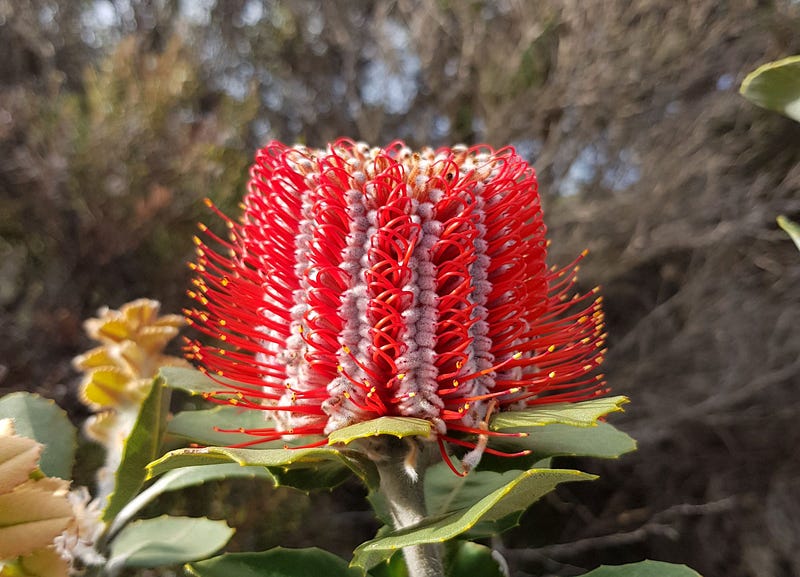
Scarlet Banksia (Banksia coccinea), Waychinicup, Western Australia. © Bronwen Scott.

Western Australia was where I fell in love with Banksias. I had seen Scarlet Banksia (Banksia coccinea) in bouquets and floral arrangements, but there was something not quite real about these spectacular flowers when they were snipped off their stems and stripped of their leaves and presented in a neat and artificial setting. But at Waychinicup, in the south-west of the state, I saw Scarlet Banksias in their wild, wind-blown, insect-nibbled glory.

Only a handful of Banksia species grow along the east coast — and even fewer in the Wet Tropics, where I live — but the south-west of the continent is home to more than 100 species of these bold and beautiful plants. Every one of them is a winner.
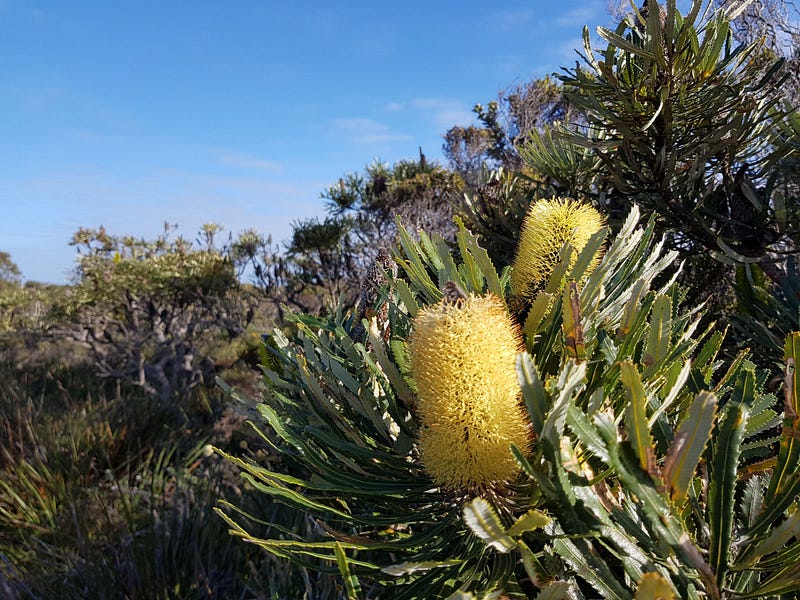
Swamp Banksia (Banksia littoralis)? Waychinicup, Western Australia. © Bronwen Scott.

This high diversity of Banksias is reflected in the rest of the regional flora. More than 7,200 species of vascular plants have been recorded from the south-west, of which about 80% are found nowhere else. The area is a biological hotspot, the product of ancient geology and a long evolutionary history.

On the other side the Indian Ocean, 8,500 kilometres to the west, the Cape Region of South Africa is another hyperdiverse area. There are strong similarities between the Western Australian kwongan heath and the South African fynbos. Both experience dry summers and wet winters, are adapted to fire, and survive on low nutrient soils. But the connection is more than ecological. It is also historical.
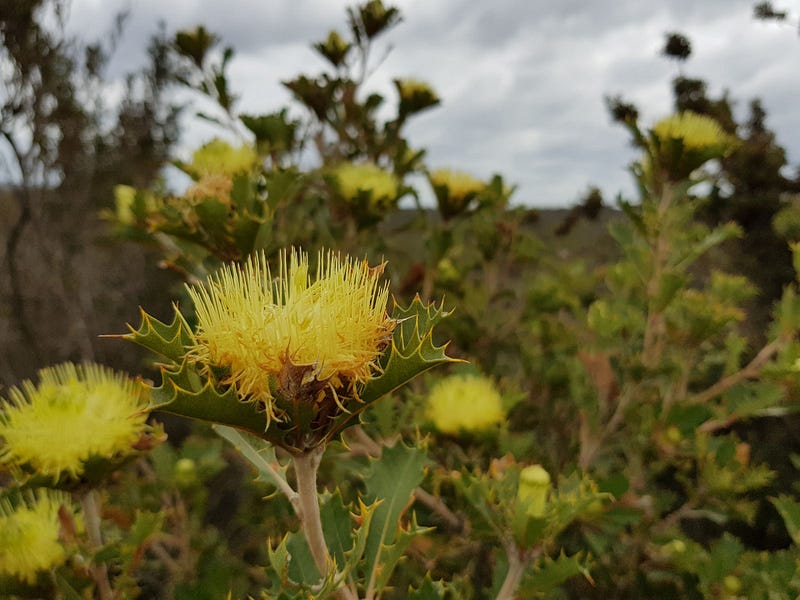
Wedge-leaved Dryandra (Banksia obovata), Waychinicup, Western Australia. © Bronwen Scott.

Many of the plant families found in Western Australia are also found in South Africa. The most prominent are Proteaceae (named after the South African genus Protea, and the family to which Banksia belongs), Ericaceae (heaths), Fabaceae (peas), and Restionaceae (southern sedges). The relationship extends back in time to the Mesozoic Era, when the southern land masses were connected to one another to form the supercontinent Gondwana. The ancestors of the modern forms were spread across Gondwana from South America to New Zealand. After the masses separated and drifted away from each other, their floras diversified in isolation. The species might be young, but their roots are ancient.
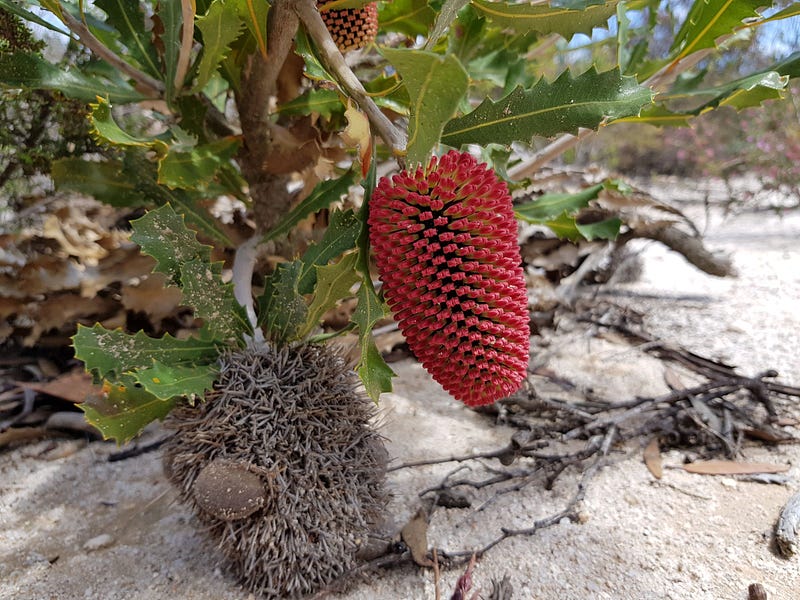
Banksia caleyi, Fitzgerald River National Park, Western Australia. © Bronwen Scott.

Birds and insects rely on Banksias for nectar, and in turn the plants rely on them for pollination. But Banksias are unusual in also being pollinated by a mammal. Not a bat, like some tropical plants, but a tiny possum.

The Honey Possum or Noolbenger (Tarsipes rostratus) is a prehensile-tailed, long-nosed, tree-dwelling marsupial restricted to south-western Australia. Weighing less than 10 grams, the possum feeds almost exclusively on nectar, which it laps up with a long fringed tongue. At any time throughout the year, at least one species of Banksia is in flower, providing a reliable source of food for the little animals.
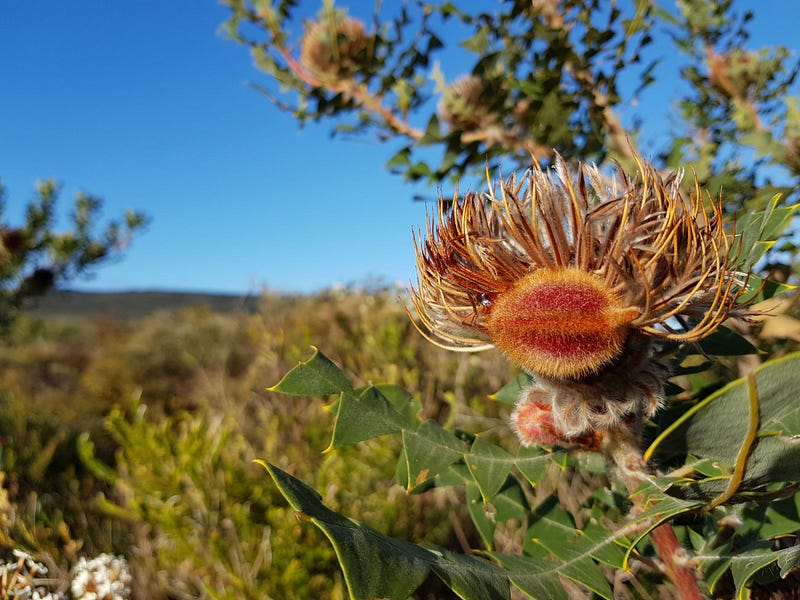
Seedpods of Baxter’s Banksia (Banksia baxteri), Waychinicup, Western Australia. © Bronwen Scott.

I have only seen a few species of Banksia in their natural habitat. When things settle down, I would love to take my camera — and a plant guide! — back to Western Australia to explore this incredibly diverse part of the country. And maybe see a Honey Possum too.
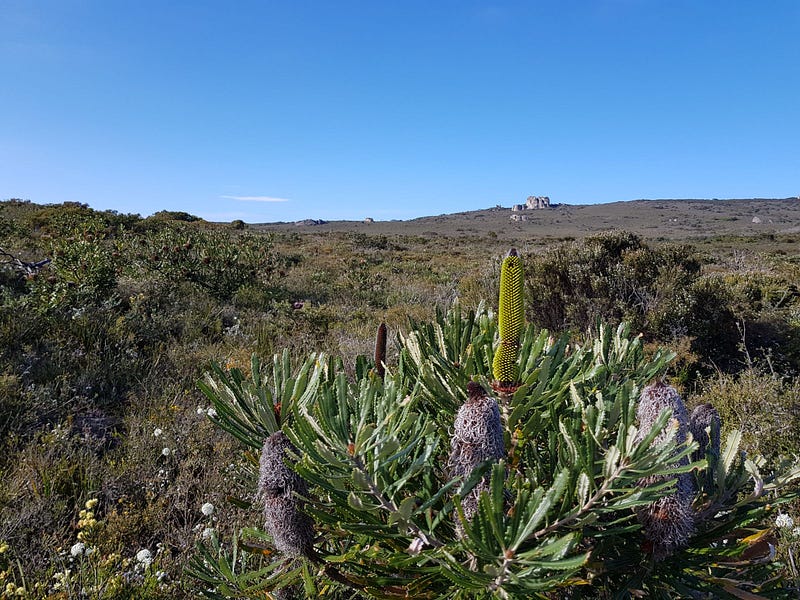
Coastal heathland, Waychinicup, Western Australia. © Bronwen Scott.
Photography
Nature
Travel
Plants
Australia
Recommended from ReadMedium