
The Boat That Washed Up In Libya
How the Libyan Red Crescent documented a salvage operation that maybe — just maybe — related to the Ghost Boat’s disappearance.
My name is Magda Mughrabi, and as North Africa researcher for AmnestyInternational, I’ve been documenting human rights abuses against migrants, asylum-seekers and refugees in Libya since 2013. These include not only abduction, extortion and sexual violence along the smuggling route from sub-Saharan Africa towards the Libyan coast, but also arbitrary detention and torture in the country’s many immigration detention centers. Since learning about the Ghost Boat, reading the story online and talking to members of the team, I’ve been looking into the case to see what I can uncover.
I recently spoke to the Head of the Dead Body Management Team of the Libyan Red Crescent Society (LRCS) in Tripoli — he is in charge of operations between Janzur and Garabulli — about the investigation. He was only aware of the incidents that took place in early July 2014, which Mohamed Lagha heard about from the LRCS (Tripoli) Head of Communication in his interview on January 18. But I did get some more details on burial and investigation procedures.
According to him, LRCS volunteers have retrieved 22 bodies on the shores of Tajoura between July 7 and 12, 2014. These bodies were transferred to the morgue at the Tripoli Medical Centre, where — he assumes — DNA samples would have been taken from them, as per usual procedure. The Criminal Investigations Department, under the Ministry of Interior, usually takes pictures of the dead bodies and writes an official record before permitting burial, and he assumed that this is what would have happened in the July 7 case as well.
The dead bodies would have been buried at the Bir al-Usta Milad graveyard for unknown people, and the graves would have been numbered in order to allow for body identification.
Authorization to review the photos — if indeed they were taken — or the personal belongings — if any were found on the bodies — needs to be sought from the General Prosecutor’s office. When I inquired about press reports concerning 150 bodies washing up on Khoms’ shores at the end of July 2014, he said he knew nothing about it, but explained that the LRCS does not have a central database until now, so his branch wouldn’t be aware of any bodies washing up east of Garabulli. Importantly though, he told me that the search operations are documented on the LRCS Tripoli Facebook site.
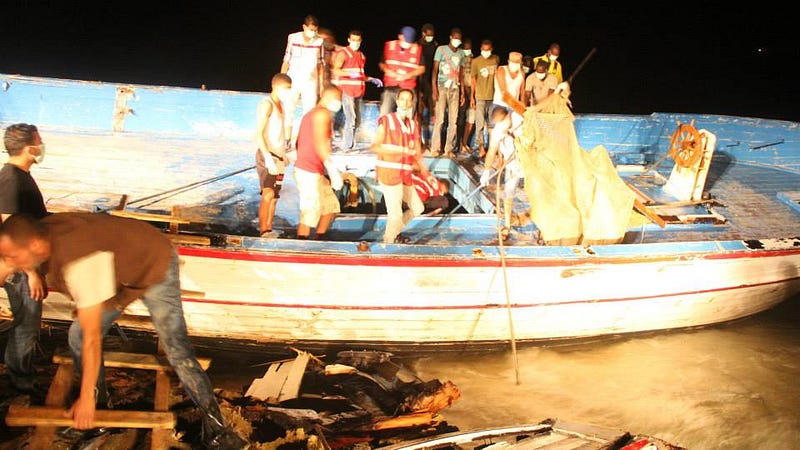
I looked through their various posts and found photos of two searches. In the photos of the first operation which took place on July 7 2014, you can actually see a boat.
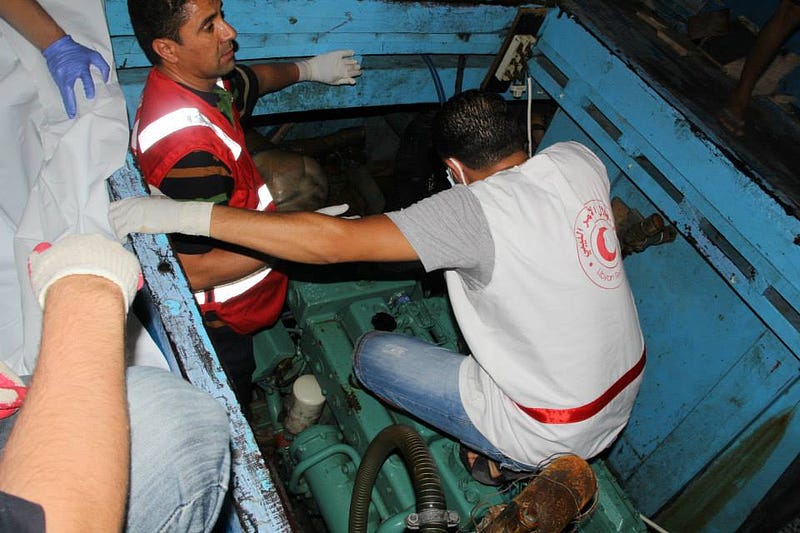
According to the post, the boat washed up on the shores of Tajoura, near the local military base. Thirteen bodies were found below deck and transferred to the Tripoli Medical Centre. The boat looks like those that are usually used by smugglers in the Central Mediterranean, and from our experience documenting deaths at sea, it seems possible that it could have fit 243 people. Obviously, we don’t know if this is the Ghost Boat. But these photos could be critical evidence.
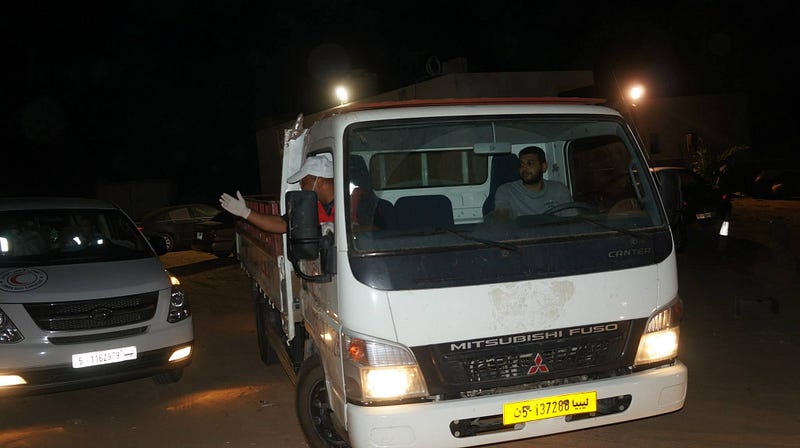
The second operation documented by the LRCS took place on July 11, 2014. The post mentions that they found three bodies which they believe were on the same boat found on 7 July.
I still think that speaking to other LRCS branches is essential, and I would probably try to get more information from the Public Prosecution and Criminal Investigations Department in charge — although I doubt that they did actually document anything given that the bodies were found just days before the start of clashes in Tripoli which effectively triggered the current conflict. One of the reasons why this incident might have been under-reported could actually be the fact that it occurred around the start of conflict in Tripoli. Central authority, which was already undermined by the presence of a myriad of militias, has effectively collapsed in Libya since then. Despite UN efforts to address the violence and ongoing political crisis, Libya remains deeply divided. Two parliaments and two governments continue to fight for legitimacy and power, and a Government of National Accord backed by the UN Security Council is yet to be formed.
Amid the chaos, there appears to be no end in sight to human rights abuses and possible war crimes which are committed by all armed groups and military formations with complete impunity. Since mid-2014, all sides have fired artillery, mortars, rockets and anti-aircraft weapons, even at residential areas — and sometimes from them, too. They have abducted and tortured civilians just because of their name, place of birth or tribe, and killed detainees after they were captured. Without any social or tribal networks and protection in the country, asylum-seekers, refugees and migrants, are among the most vulnerable to abuse. They’re also the most likely to be forgotten.
The justice system in Libya is broken, with many courts closed or operating sporadically due to threats and intimidation faced by judges and prosecutors. The police are unable to conduct criminal investigations, and thousands of victims of human rights abuses are left without remedy. Many human rights defenders and international organizations have left Libya for safety reasons.
I keep thinking how unbelievable it seems that 243 people can go missing without a trace, but then I remember that anything is possible in the Libyan chaos.
Onward.
Sent to our 1,811 followers


