
The Bloody Origins Of Valentine’s Day
A violent backstory to a romantic holiday

It’s that time of the year again. For all the lovebirds out there, the 14th of February is a date that is marked and planned for days, weeks and if you’re that elaborate, months in advance. It is a time where happy couples exchange gifts, go out on dates and do whatever it is they feel they can to romantically affirm their love for one another.
That’s right, it’s Valentine’s Day, a day that for as far as all of us can remember, is spent in the company of that special someone in our lives. It is a day where love grows and romance blossoms. Whether you’re taken or single, you have to admit, it makes for a sweet and wholesome time all around.
However, what lies behind the heart shapes and cute gifts is a tale of blood, death and love that would rival even the most riveting Shakespearean tragedies. Let us look at the bloody origins of Valentine’s Day and dive into the deeper and more poignant aspects of what is now a generally lighthearted holiday.
Valentine The Martyrs
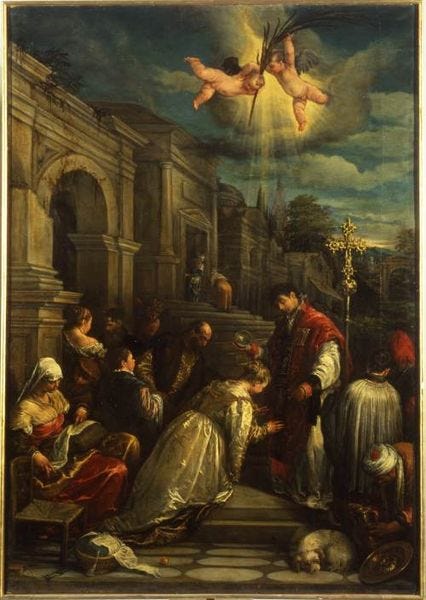

While many are correct to presume that Valentine’s Day is named after St. Valentine, fewer people are aware that there is actually more than one such person. In early Christianity, there were a number of martyrs named Valentine. The Catholic Church itself recognizes at least three such Valentines as having been canonised into Saints after their deaths.
As martyrs, they all died for their causes and often met their end at the behest of tyrannical rulers through brutal means such as beheading and other more violent forms of execution. Generally, their deaths or burials often take place on or around the 14th of February.
A popular possible origin behind Valentine’s Day would have to be about St. Valentine of Rome. A Catholic Priest who served during the reign of the tyrannical Roman Emperor Claudius II, Valentine of Rome defied the Emperor’s wishes by continuing to perform the marriages of many younger Catholic couples.
At the time, Claudius believed that younger men would be better suited for strengthening the Roman army and in order to ensure he had as many soldiers as possible, the Emperor forbade young men from marrying and starting families until they reached their middle age.
Valentine of Rome continued in secret to officiate the weddings of these younger couples until word of his activities reached the Emperor who later ordered his beheading. This made him a martyr who died in the name of love and preserving the sanctity of marriage.
Another possible St. Valentine, is St. Valentine of Tenri. Also a Catholic priest who lived in Rome during the reign of Claudius, Valentine of Tenri was taken to prison for attempting to spread the word of Christianity throughout Ancient Rome. Given the choice to convert to Roman Paganism himself or face execution, Valentine of Tenri chose the latter and waited in jail for his imminent death.
During this time, he developed a strong bond (some argue it was a romantic love) with his jailer’s daughter. After performing a miracle and curing her of her blindness, the girl’s family converted to Christianity. However, this did not spare Valentine from his execution.
During his time in prison Valentine often signed off his letters with the phrase”your Valentine”. This possible origin story continues to be felt in today’s day and age where the term “your, or (my) Valentine” is used to refer to one’s partner on the day.
While these two are often the most well-known and no pun intended, romanticised Valentines Day inspirations there have been accounts of other martyred St. Valentines. For example, there is a St. Valentine who was said to have been martyred in Africa on February 14th as well as a more recent example in 1861 with St. Valentine Berrio-Ochoa who was beheaded in Vietnam.
Regardless of who the actual St. Valentine in question is, it is apparent that this cute, romantic holiday has stemmed from poignant and even tragic circumstances. These martyrs are said to have died in the service of God and gave their lives to spread love to others. A bloody origin story for sure but one can’t argue that it is not heartfelt.
Other Possible Origins
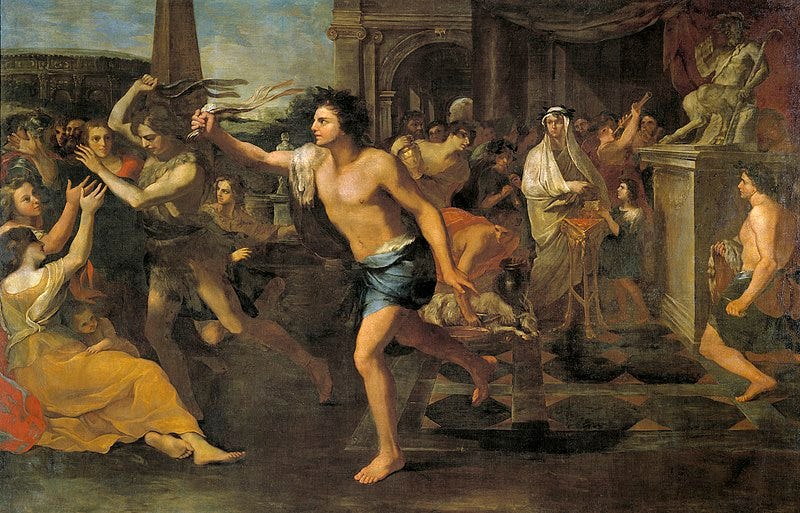

While the most commonly believed Valentine’s Day origin story is that it is marked as a day to honour the martyrdom of St. Valentine, there have also been other accounts as to how Valentine’s Day came about and why it falls on the 14th of February.
Like the tales of the many St. Valentines the martyrs, this lies in Roman Catholic history. With the growing emergence of Catholicism in Rome, the Church sought to do away with Pagan Roman customs and festivals. One such example was Lupercalia.
Celebrated on the 13th to the 15th of February Lupercalia was a festival dedicated to the Roman Gods Pan and Juno as well as to the founders of Ancient Rome, Romulus and Remus. A fertility festival, priests would sacrifice a goat on the day and the women of Rome would touch its hide in hopes of becoming more fertile. At the end of the day they would be matched with eligible bachelors and more often than not, these unions would lead to marriage.
This romantic undertone, reminiscent of the Valentine’s Day we see today, was said to have been abolished by the Catholic priests of the time and replaced by a more Christian occasion. However, it has to be noted that unlike the more well-established stories of St. Valentine, this possible origin story has been written off as coincidence to some and completely unrelated to others.
The Birth Of Valentine’s Day As We Know It Today


Lying deep in Roman Catholic history dating all the way back to the 1st Century, it raises the question as to the turning point of when this once solely Christian occasion with its origins firmly rooted in death and religion evolved into the secular, often overly commercialised occasion celebrated by happy couples all around the world today.
Historians tend to point to the works of Geoffrey Chaucer. A renowned 14th century poet, Chaucer was the first recorded person to connect romance with Valentine’s Day while also not including any religious undertones to the occasion. His poem Parliament of Foules, mentions Valentine’s Day as a romantic occasion as it coincides with the mating season of birds.
From then on, it became popular for men to write Valentine’s Day poems for the women that they loved and this soon grew to include the exchanging of gifts, going out on dates and the celebration of love that we know today. As the years went on, the holiday became far more romantic and far less religious.
Today, people of all faiths and from all around the world celebrate Valentine’s Day solely as a celebration of love and it is often not widely recognised as a religious occasion or an actual public holiday in the same vein as Halloween.
Regardless of how it started, it’s nice to see the evolution of a tragic and poignant day of memorial to a happy day of celebration of love all around the world.
In keeping with the spirit of St. Valentine himself, it goes to show that at the end of the day, love truly does win. So if you have that special someone in your life, keep the date free to celebrate your bond and if you don’t, well you can always read up on articles like this before your turn comes.