
The Bloody Founding of Cambridge
How rowdy students created one of the world’s most renowned universities
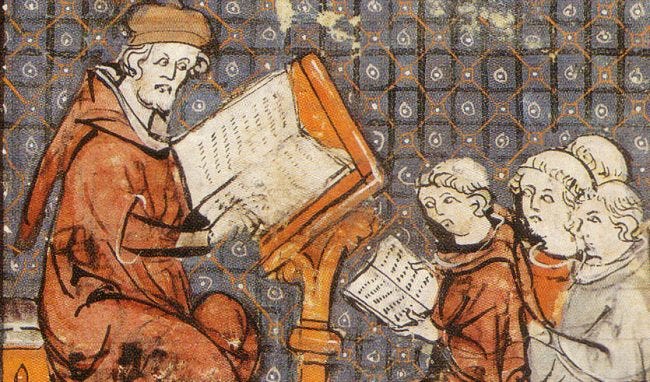
If you asked someone to produce a list of universities considered most prestigious, Oxford and Cambridge would almost certainly be mentioned. Too many, these universities are interchangeable. Both incredibly prestigious, both English, both founded in the Middle Ages, and both have been the intellectual breeding ground for various innovative thinkers and figures since their foundings.
It would be no surprise that a longstanding rivalry occurs between the two, which in modern times culminates in the annual “Boat Race”, between the two universities. However, the rivalry today is much more temperate than the violent history that the two institutions originated from.
The Development of Medieval Universities
Before diving into the incident that spawned the schism between these two universities, it is important to understand how universities functioned during the Middle Ages. Before the development of universities, higher education in Christian Europe during the Middle Ages was achieved in grand monasteries and cathedrals. These schools aptly called cathedral schools and monastic schools devoted themselves to understanding the world through a Christian lens and sought to develop students of nobility into members of the clergy. Subjects such as history, astronomy, logic, among others were taught. The development of these schools contributed to the urbanization of these university towns, which reciprocally allowed the monasteries and clergy to gain more importance while developing the universities into larger institutions.
However, the increasing influence of these universities was not met with unanimous approval. These institutions essentially functioned as an extension of the church and had much influence on the local legislative and legal affairs. Students and teachers were considered members of the clergy, so they were given the same legal protection and could only be tried in an ecclesiastic court by other members of the clergy. This led to many students abusing their clerical status. Many students got drunk and disorderly, some even raped and murdered with little punishment. This contributed to a tense atmosphere between members of the university and the local population, which eventually led to an event that created one of the world's most-known universities.
The Founding of Cambridge
Oxford has the honor of being the oldest operating university in England and the second oldest in the World after the University of Bologna. The exact founding of the school is unknown, but the first academic recordings date to 1096. During the early Middle Ages, Oxford had been a city ravaged by wars between Anglo-Saxons and various Viking clans. Being situated on the River Thames made it an easy target for Norse attacks. Oxford as a city had changed hands from Norse to Saxon often and witnessed much violence. Yet, Oxford always remained a heavily ecclesiastic city, and soon its community of monasteries and cathedral schools merged into the University of Oxford. However, the formation of the university did not prevent violence and in 1209 a conflict arose between town members and the university which led to the deaths of three clergy members. The event is best described some twenty years after it occurred in a text called The Flores Historiarum (Flowers of History) by Roger of Wendover, a monk and historian. In the document, the monk writes:
“About this time, a certain clerk engaged in the liberal arts at Oxford killed a certain woman by accident and when he found that she was dead he decided to flee.
“But when the mayor of the city and many others who had gathered found the dead woman they began to search for the killer in his house which he had rented together with three of his fellow clerks.
“Not finding the man accused of the deed they seized his three fellow clerks who said they were wholly ignorant of the murder and threw them into prison; then a few days later they were, by order of the King of the English [King John], in contempt of the rights of the church, taken outside the city and hanged.
“When the deed had been done, both masters and pupils, to the number of three thousand clerks, left Oxford so that not one remained out of the whole university; they left Oxford empty, some engaging in liberal studies at Cambridge and some at Reading.”
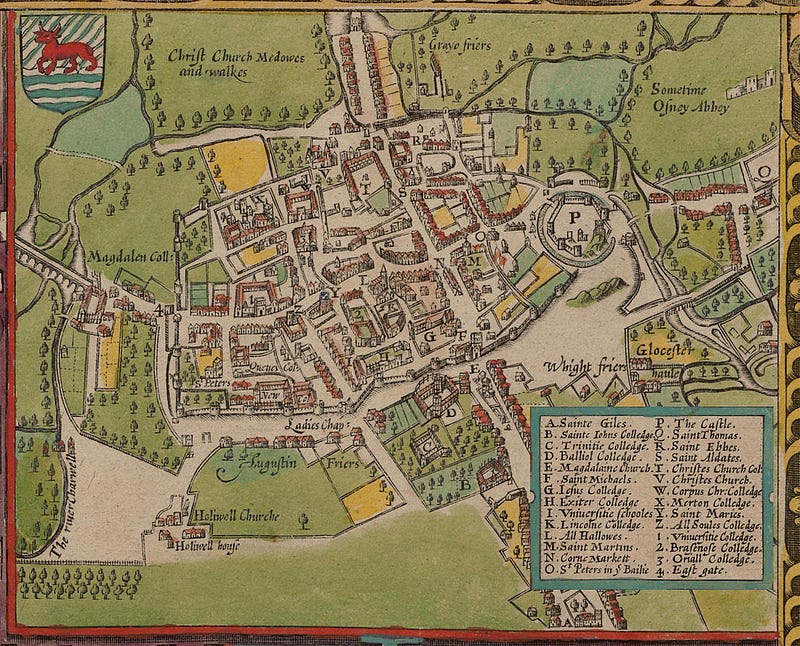
So, just as always, it’s these liberal arts students who have nothing to do that are causing all the trouble. But all jokes aside from this extract we see not only how tense relationships between locals and the university populations were at this time but also that university and clergy by extension typically had much impunity in local affairs and this loss of impunity and control was distressing enough to cause a mass exodus of students and faculty to flee 100 kilometers away towards Cambridge a city that itself was beginning to develop an ecclesiastic reputation.
The Town and the Gown
This event was the first of many serious disputes between local town folk and the university community. The distinction between these two communities has been referred to as the Town and the Gown as it was commonplace for students and teachers to wear clerical gowns. Disputes between these two factions further manifested in medieval universities throughout Europe the most famous of which happened in Oxford as well, leading to the Scholastic Riots of 1355. The riot arose from Oxford students who were angry by the quality of wine that was served in a local tavern, a brawl ensued which led to a full-scale riot resulting in 65 deaths.
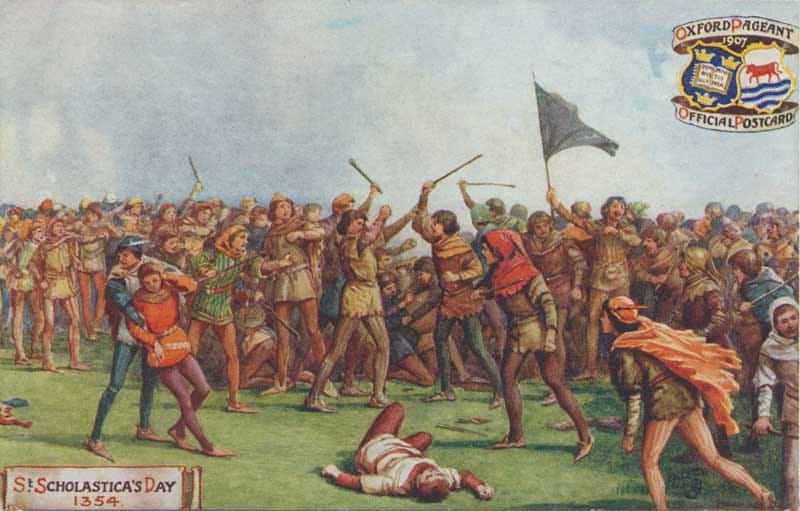
Further, conflicts occurred in medieval universities during this time and to some extent still exist today not just in noisy street parties and disorderly students but also through a political and social frontier as seen through segments of the population who may feel disconnected from academic institutions and may feel that these institutions are against their best interests, whether it be the research that they are engaging in or the facilities they build. However, today for the most part the relationship between the two groups is positive and symbiotic.
Reference list and Additional Reading
“Early Records.” University of Cambridge, 28 Jan. 2013, https://www.cam.ac.uk/about-the-university/history/early-records.
“Introduction and History.” University of Oxford, https://www.ox.ac.uk/about/organisation/history.
Jenkins, Scott. “Medieval Student Violence.” Medievalists.net, 7 Aug. 2014, https://www.medievalists.net/2011/11/medieval-student-violence/.
Rashdall, Hastings. “Student Life in the Middle Ages.” The Universities of Europe in the Middle Ages, pp. 591–716., https://doi.org/10.1017/cbo9780511722325.003.
Rogerus, et al. Roger of Wendover’s Flowers of History: Comprising the History of England from the Descent of the Saxons to A.D. 1235. Llanerch, 1993.


