
The Bloody 8th Century Conflict That Wiped Out One-Sixth of the Human Population
The An Lushan rebellion is one of the most brutal wars in history
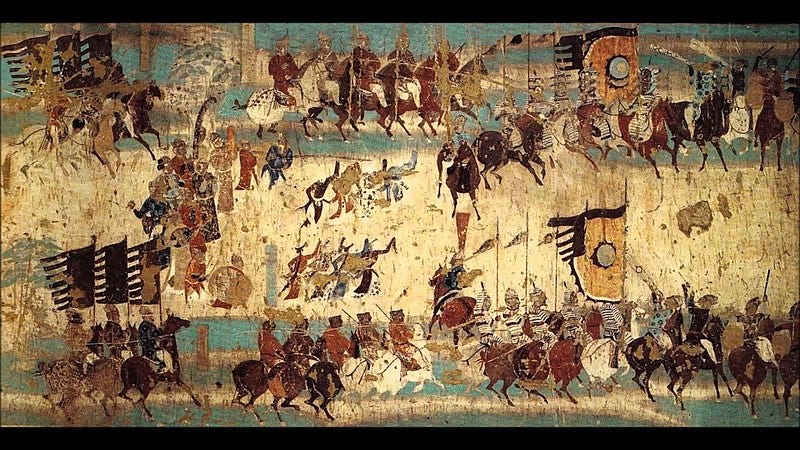
Few historical events have caused as much death and destruction as the World Wars. The An Lushan rebellion was one of them. The An Lushan revolt, also called the An-Shi rebellion, occurred in China from 755 to 763 AD. It was one of the bloodiest wars in human history. In 754, 52 million people lived in China, but after the war, that number dropped to 16.3 million in 764.
Almost 36 million people died during the conflict years, which was one-sixth of the world’s population. To put it in perspective, the death toll was like that of World War I. You can only imagine how horrific the war was in the 8th century to have losses similar to the Great War.
Though historians debate whether two-thirds of China’s population could vanish within ten years, there is little doubt the An Lushan rebellion was a brutal episode of human tragedy.
The An Lushan rebellion broke up the multi-ethnic society of the Tang empire and made the Chinese suspicious of foreigners. We come across one of the earliest documented evidence of ethnic cleansing during the revolt.
Who was An Lushan and why did he rebel? What were some of the long-term effects of the war?
Let us find out.
Background
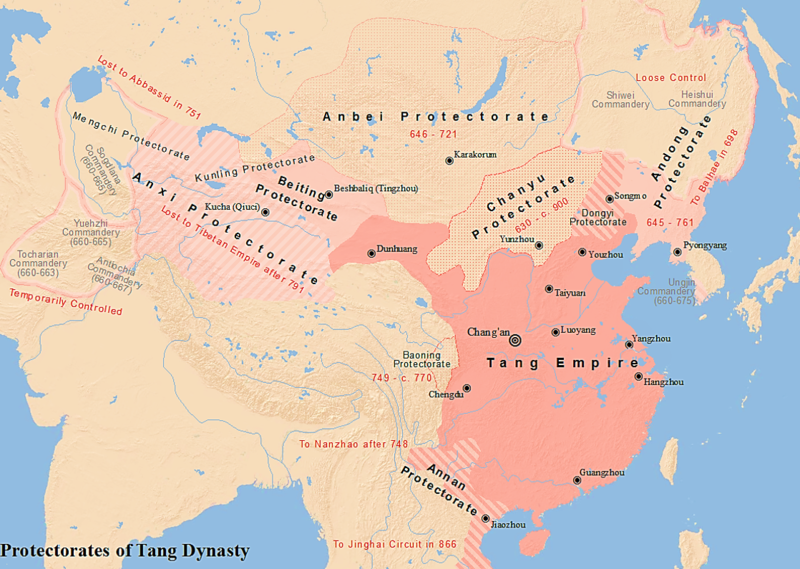
The Tang dynasty seized control of China in 618, with Gaozu of Tang as the first emperor. Unlike other Chinese dynasties, the Tangs subdued the warring Turkic tribes in the north and brought them into Chinese society.
The Chinese called Tang Taizong, the second ruler of the dynasty, the Son of Heaven, a title common among the emperors of China. He was also known as the Khan of Heaven, making him the first Chinese emperor accepted as the Khan by the Turks.
Turkic tribes integrated into the mainstream Chinese civilization and became the second biggest ethnic group after the Han Chinese. Along with the Turks, Persians, Arabs, Sogdians, Koreans, and Japanese, lived in China and held important positions.
The Tang emperors were proud of their multi-cultural civilization, but not everyone agreed. The Orkhon inscriptions, which were written by Turks at the beginning of the 8th century, a few years before the An Lushan rebellion, lamented how Tang wealth ruined the lives of nomadic people.
Many Han authorities were similarly wary of Turks. But some Han officials, like the chancellor, Li Linfu, suspected other Han people. Linfu was a shrewd politician who knew ins and outs of court politics. He persuaded Emperor Xuanzong in 751 to promote an influential general named An Lushan to the post of Jiedushi or regional commander. As the Jiedushi of the Northern region, An Lushan headed an army of over 164,000 troops.
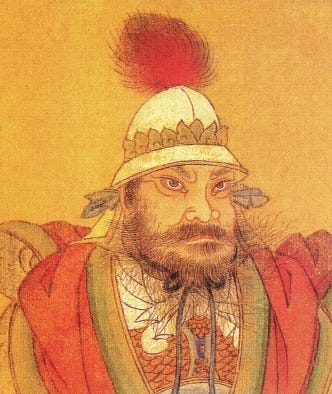
Chinese records show An Lushan was born to a Sogdian father and a Turkic shaman mother. He was caught stealing cattle, so he joined the army to avoid being put to death. He was fluent in six languages and rose to power.
An Lushan was not just a brilliant general. He was a cunning politician. At the Tang court, he not only won over the chancellor but also Yang Guifei, the emperor’s favorite concubine. Guifei was one of the four famous beauties of ancient China. Even though Guifei was about 16 years younger than An Lushan, he called her his adopted mother.
The move paid off as An Lushan became wealthy thanks to the generosity of the emperor, who was easily influenced by Guifei.
Unfortunately, An Lushan’s luck ran out. When Chancellor Li Linfu died in 753, Yang Guozhong, who was related to Guifei replaced him. Guozhong started filling the emperor’s ears that An Lushan wanted to revolt, and got rid of An Lushan’s supporters in the palace one by one.
The result: An Lushan became angry and revolted.
The rebellion
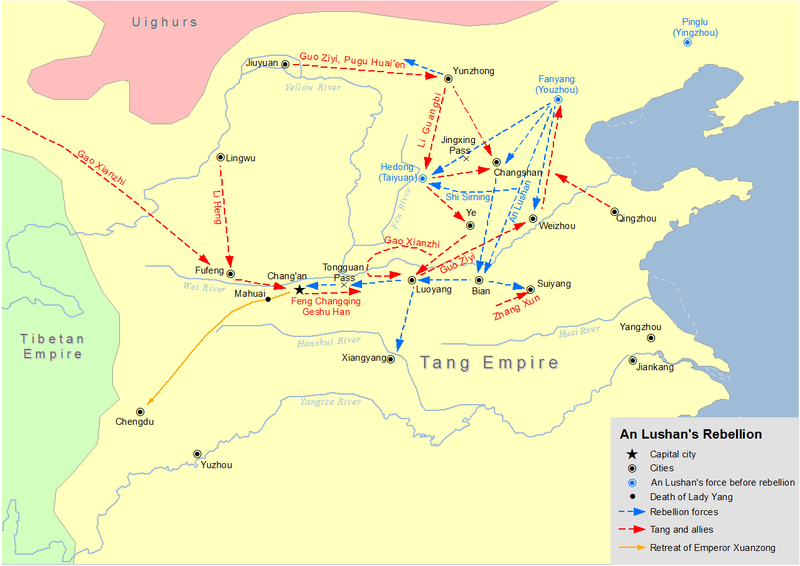
During the Tang dynasty, they sent most troops on campaigns or to guard the borders. The capital, Chang’an, was poorly defended. An Lushan was well-liked by the troops and declared his independence in 755. He started a new dynasty called the Yan dynasty and moved to take over the imperial capital.
An Lushan and his soldiers took Luoyang, the Tang Empire’s “Eastern” capital, in January 756.
The rebels were only a few weeks away from taking Chang’an. The emperor sent two of his strongest generals, Giao Xianzhi and Feng Changqing, to halt the rebels at the Tong pass. But, because of court politics, the two generals were executed before the combat.
A powerful eunuch named Bian Lingcheng accused the generals of insulting him. Lingcheng then convinced the emperor that the decorated warriors committed treason and must be put to death.
Guozhong, the chancellor, sent the Turkic general Han Genshu to defend the Tong pass, but that was a bad idea. The battle-hardened warriors of An Lushan crushed Genshu’s men.
The emperor and the crown prince fled the capital in different directions. A second mutiny broke out in the Tang army. The Tang soldiers held Yang Guozhong and the emperor’s consort Yang Guifei, responsible for the loss of the capital. The troops demanded the execution of Guifei and Guozhong.
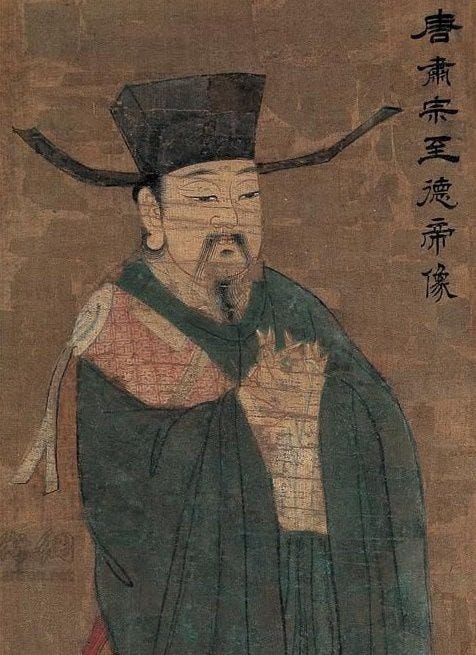
Xuanzong agreed to their demands and abdicated the throne in favor of his son, Li Heng. Heng was crowned Emperor Suzong of Tang, and took charge of the military command.
Suzong was an astute diplomat who was well-liked across Asia. For support, he enlisted the help of the Uighur Khaganate, China’s powerful northern neighbor. He promised the Uighurs a huge amount of wealth, including silk, gold, and the right to raid the border towns.
Besides the Uighurs, the Abbasid Caliph dispatched four thousand Arab mercenaries to fight for the Tangs. With foreign help and new leadership, the tide of the war began turning.
In 757, An Lushan’s son, An Qingxu, assassinated him. The murder changed the course of the uprising.
In 759, Shi Siming, who was An Lushan’s second-in-command, killed An Qingxu. Remember how I said the An-Lushan revolt was also known as the An-Shi Rebellion? The Shi in the revolt’s name comes from Shi Siming.
In 761, Shi Chaoyi, the son of Shi Siming, killed his father. Shi Chaoyi got little help from the generals loyal to An Lushan and Shi Siming. After losing to a Tang and Uighur army, Shi Chaoyi committed suicide in 763.
By 764, the brutal An Lushan rebellion ended.
Ethnic cleansing and the death toll
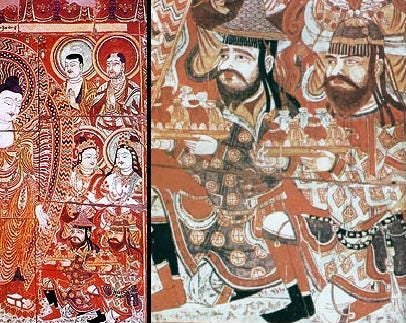
You may wonder if a fight in the eighth century killed as many people as the First World War.
If Chinese censuses are to be trusted, the answer is yes. Steven Pinker, a rationalist thinker, called the disaster “the biggest atrocity in history,” since it wiped away one-sixth of humanity.
Historians are divided about the death toll. Many of the deaths happened during the period because the empire was in chaos. Some experts suggest people leaving Tang China and taking refuge in neighboring regions caused the drop in population.
Because An Lushan was of Sogdian descent, there was a suspicion of foreigners in the Chinese society. During the revolt, the multi-ethnic high Tang culture crumbled like a house of cards.
At Fanyangn, the Tang general Gao Jure killed all the Sogdians, even the children. He distinguished them by recognizing them by their eyes and noses. This is one of the earliest documented cases of ethnic cleansing in history, in which the rulers targeted citizens based on their ethnicity.
Tang forces slaughtered thousands of Persian and Arab merchants during the Yangzhou massacre (760) on the suspicion of assisting the rebels.
In Chinese society, the trust had completely broken down.
One of the worst tragedies happened in the city of Suiyang. After a brutal siege by the Yan forces, the Tang defenders ran out of food. The Tang soldiers, however, refused to submit. Zhang Xun, the general defending the city, murdered his concubine in front of his men and fed her to them. The troops cried, but when commanded by the general, they ate the poor woman.
Cannibalism was rampant during the siege of Suiyang. People began devouring the dead, and families began exchanging their children for food. The soldiers soon started eating the old women and then turned on young women and men of all age groups. Estimates suggest that 20,000 to 30,000 people were eaten. Yet, the Tang army refused to submit.
The number of people who died during the An Lushan rebellion could have been anywhere from 13 million to 36 million. It is easy to argue that the civil war was one of the most catastrophic disasters in human history.
Wars bring out the worst behavior among humans. Politics and power are the main reasons for war, but ordinary citizens are the worst sufferers. The An Lushan rebellion is a classic example of the same. A general who felt sidelined by court politics started the war. But the conflict changed Chinese society.
There was an increase in xenophobia and racism, and the tolerant Tang civilization changed. The Tang dynasty continued till 907, but after the An Lushan rebellion became more isolationist.
A civilization that was ahead of its time in terms of ethnic tolerance would no longer be the same.
The Tang empire was a global power during the 7th and 8th centuries. One of its conflicts with the Abbasid Caliphate led to the accidental spread of papermaking throughout Western Asia and Europe. If you are interested to know more, read the story below.
Enjoy this? Subscribe to my posts and never miss a story. Not a Medium member? Unlock complete access to thousands of stories by joining Medium today using this referral link!
Sources
- E. G. Pulleyblank (1976), The An Lu-Shan Rebellion and the Origins of Chronic Militarism in Late T’ang China, in Perry & Smith, Essays on T’ang Society.
- Beckwith, Christopher I. (2009): Empires of the Silk Road: A History of Central Eurasia from the Bronze Age to the Present. Princeton, NJ: Princeton University Press.
- http://www.chinaknowledge.org/History/Tang/tang-event.html


