
The Blindingly Obvious Solution to Inflated Costs is to Keep Calm and Eat Cake
Reflections inspired by a tank of fuel
I walked into the kiosk at a the fuel station and the cashier laughed…
The other day, I refilled my car’s fuel tank when it reached a little below a quarter.
As I was walking into the kiosk to pay, my mind, in its usual way, was having a conversation with itself.
“Don’t you just love the price of fuel these days?” My mind said to itself.
“Haha, yes, indeed!” It replied.
Meanwhile, I presumed that the fuel bill I was about to pay was just everyday normality for the cashiers in the place these days.
“Pump number 2?” The cashier enquired, as I walked up to her. “That’s…”
She paused as she pressed the correct buttons on her till…
“…ninety-six pounds and forty-seven pence!” She announced in a ‘you’ve won the jackpot’ kind of a way, and then laughed. Whether out of awkwardness or surprise that such a small person could have such a big fuel bill, I am not sure.
Whatever it was, the topic of conversation in the entire kiosk moved to the poor people with big cars (and hence big fuel tanks) and the amount it was costing them to fill up with the crazy rise in fuel prices.
Just for clarity: my car isn’t massive but is a decent enough-sized seven-seater (necessary when you have too many kids). It is also probably more economical on fuel than many others on the road because I choose cars sensibly like that!
But yes, spending nearly £100 on filling my tank hurts. Indeed, had my tank been closer to empty it would easily have crossed the £100 threshold.
And, calculating my weekly driving, even if I stick with the bare minimum, give or take an extra trip in the region to do something fun with the kids, it will just get me through three weeks before I have to fill up again. That’s around £135 for a month’s regular drives to school, to the supermarket, and to make a couple of visits to my dad.
Ugh. It’s enough to make me want to give up driving altogether.
And so, I am currently considering my options…
Option #1 — Buy a horse and cart
Yes, I have researched the logistics of selling the car and buying a horse and cart instead.
No, it’s not in the slightest bit less expensive than owning and running a car, including the price of filling the tank…yet! But who knows what we will be facing in the coming year?
However, it would make me feel like I am on moral high ground for my lessened carbon footprint. And the emotional connection that I would have with a horse definitely vastly outweighs the emotional connection I have with my car.
You might have given your car a name. And you may talk affectionately to her as you and she are cruising along the highway, but I don’t. My car is a lump of metal, okay? Albeit a very well-designed and useful one.
Option #2 — Sell the car and walk, cycle or take public transport everywhere
To begin with, public transport in my area is extremely limited. At best, I could probably get to my dad’s house in a little under two hours, even though he only lives 16 miles away.
On foot or by bicycle? Possible…but it would require some life changes.
For one, my son’s school is a drive away and would not be walkable or cyclable at all. And public transport doesn’t even go there.
Note: I do already lift-share and only do the drive four times per week. Still four times, at the current cost of fuel, is a lot.
But, when we moved to our current home, I made the decision to keep my son where he is because I know, from experience, the difference it makes to a parent’s life to have a settled child, as compared to having an unsettled child. Some things are just worth the extra cost… a peaceful and happy life being one of those.
Option #3 — Buy an electric vehicle
I am still waiting for my writing career to make me enough money to afford one of them, so let’s pass on this one for now.
Option #4 — Grit my teeth and carry on
Essentially, if I was to start travelling by horse and cart, by bicycle, or on foot, I would have to have a complete mindset and lifestyle shift.
We get used to a way of life and the conveniences that come with it, and it is hard to see how we could change everything we have gotten used to; where we shop, how we shop, what we do for entertainment, and the kinds of distractions that have become normal.
We take for granted that we can drive down the road for an afternoon at the beach without batting an eyelid. And not being able to do so would feel like a huge wrench.
First-world problems? Absolutely! But that’s how we have ended up in this predicament in the first place!
- Our local grocery shops have been replaced by big, out-of-town supermarkets.
- Many of our local producers have been put out of business due to global trade and easily transported goods.
- Our lifestyles have upgraded considerably due to fairly universal ownership of private vehicles. So, to give up luxuries such as weekend beach trips, a trip to the city to watch a movie, or lunch in a country pub would feel like a serious downgrade and deprivation.
But, there is a silver lining to this all
If like me, you are lucky enough to live in an area where artisans and growers are still producing and supplying local businesses, you may have noticed something.
Most of these goods are not rising in price like everything else is.
In essence, if it doesn’t require greater initial investment by the producer, the cost of production isn’t increasing. This means that they can keep their prices fairly steady.
Here in Britain, at least, rain still falls in plentiful quantities most of the year. And is free. Rainwater collection systems are easy to construct and free to maintain.
Sourcing ingredients locally for premade goods keeps the cost of baked and other foods low. And, although the temptation may be there to raise prices in line with general inflation, local producers are choosing not to raise their prices because they would rather have guaranteed sales.
Meanwhile, I am noticing some of my usual purchases in the supermarkets increasing by as much as 50%.
And there is another side to this; psychologically, we compare prices of everything and judge “cheap” goods against “expensive” goods. So, when prices are rising everywhere, those that don’t suddenly seem cheap in comparison.
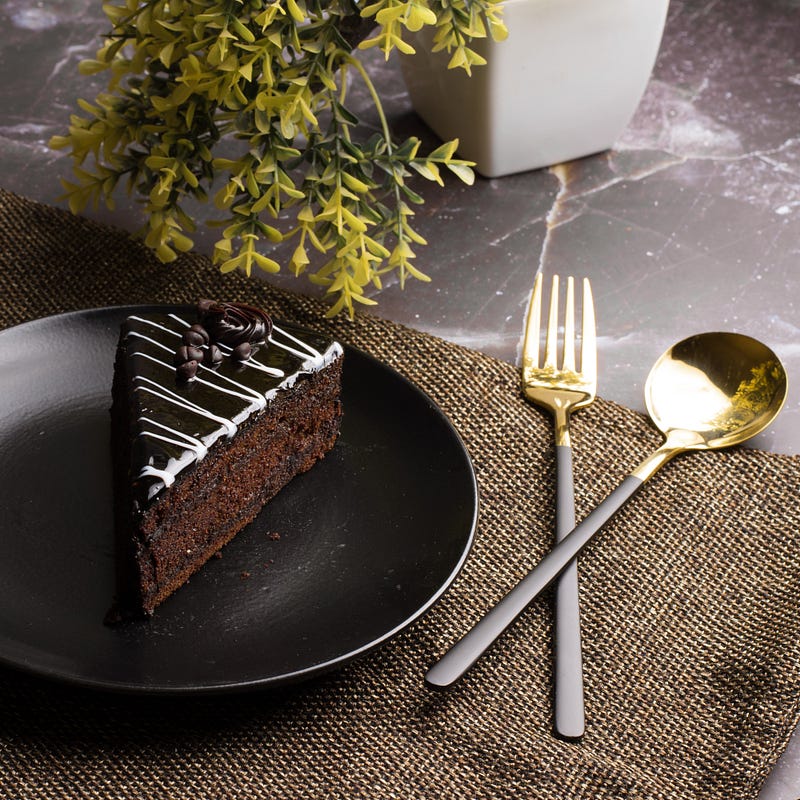
For example, for a weekend “afternoon tea” treat, I would sometimes pop down to our local mini-supermarket to buy a cake. I would then go and buy a single small piece of raw, vegan cake for my eldest daughter, because she i̶n̶s̶i̶s̶t̶e̶d̶ ̶o̶n̶ ̶b̶e̶i̶n̶g̶ ̶a̶w̶k̶w̶a̶r̶d̶ is vegan, for nearly the same price as the whole non-vegan, completely unhealthy cake.
It seemed like a very expensive luxury to indulge her in while we shared the very unwholesome option.
However, while the unhealthy, supermarket cake has nearly doubled in price, the same raw, vegan cakes have remained at the same price. And, in today’s economical environment, my mind perceives them as cheap, relative to the speed at which everything else is going up in price.
Rather than bypassing them as an expensive luxury, I stopped into the health food shop on my morning dog the other day and bought myself one for breakfast.
And it was gooooood!
Moreover, I have noticed that the general prices of basics in these local businesses no longer appear as expensive to me, as they once did. In reality, going to the out-of-town supermarket and burning extortionately-priced diesel to get there, to buy transported goods at 50% higher prices, no longer seems either as attractive or as economical.
I would rather leave the car at home and walk into town to visit a local business for my basic food needs.
It’s a more pleasant way to shop, slower-paced and calm, and gentler on the environment.
Bonus option — Adapt to live more economically without compromising quality
I know, it’s easier said than done, but there are a few small changes we can make.
1. Drive more economically
Keep your pace gentle on the fast roads and choose the shortest routes to get from A to B. I found that choosing the smaller, more windy roads to reach my son’s school, rather than taking the faster and wider roads has resulted in me using significantly less fuel each week.
2. Avoid unnecessary trips
One thing I try to do as much as possible is to combine tasks with necessary trips out. It usually requires a little more forethought and organisation, but taking the car to have new tyres when I will be driving to collect my daughter from her exam will save both time and fuel.
3. Work from home, if possible
I know I am fortunate that I, mostly, don’t go out of my home to work, and that it’s not so easy for everyone. However, if your job can be done remotely, try to do so from home as much as you can. We should have all learnt to adapt to working from home now, so it shouldn’t be difficult to manage.
4. Lift share where possible
If your job requires you to travel to a specific location, is it possible that you can share lifts with others? The same goes for getting kids to school or after-school activities too.
5. Turn off lights, gadgets, and heating
One very annoying first-world problem is the modern convenience of leaving everything on. If the TV doesn’t need to be on, don’t leave it on. Shut the computer down rather than putting it to sleep, and don’t leave the landing lights on all the time.
6. Shop locally
Supporting local businesses and finding the goods that are locally produced will help everyone. The business owner, the food producer, the environment and, if you walk or cycle, your fitness level.
And, finally, keep calm and eat (locally-produced) cake!
Thanks for reading. Please check out this great story by my amazing friend, Ira Robinson:
If you enjoyed this piece, you may also enjoy this one:
Why not get access to every story I and others write by becoming a member! Disclaimer: I will earn a small referral commission if you join through my link.


