
The Black Pigeon
Opalene Lewis stared out the window of the bus through the sleet. She ached with homesickness even as she recognized her own narrow escape. Then she caught sight of that huddled man asleep out there on the steam grate. Setting her jaw, she reached for the conviction that she’d made the right choice.
Mama had been having babies since she was seventeen and, for most of her life, Opal had been a little mommie. Washing diapers, soothing colicky fussing and wiping snot just reinforced Opal’s decision to get the hell out of Kentucky before she wound up pregnant. By the eleventh grade, she was seeing her classmates begin to marry off and start their own families. Not Opalene, by God! Even Daddy had been on her side. No one read her stories with the attention that he did.
When she graduated from high school, Opal set her sights on the community college up in Lexington and tried to ignore the increasing attention from Carl Andrew Kaiser. Carl Andrew was just desperate to get her to marry him, kept going on about how incredible her blue eyes were and what pretty babies they’d have. He’d twist a lock of her dark, curly hair around his finger and just smile and smile. Now Carl Andrew was a fine young man with sandy-colored hair and a real nice way about him but Opal was determined not to fall into the same trap her mama had. Daddy and Mrs. Pettigrew over at the high school both told her to keep up with her writing and to make sure her grades stayed good and high and she worked hard to do that.
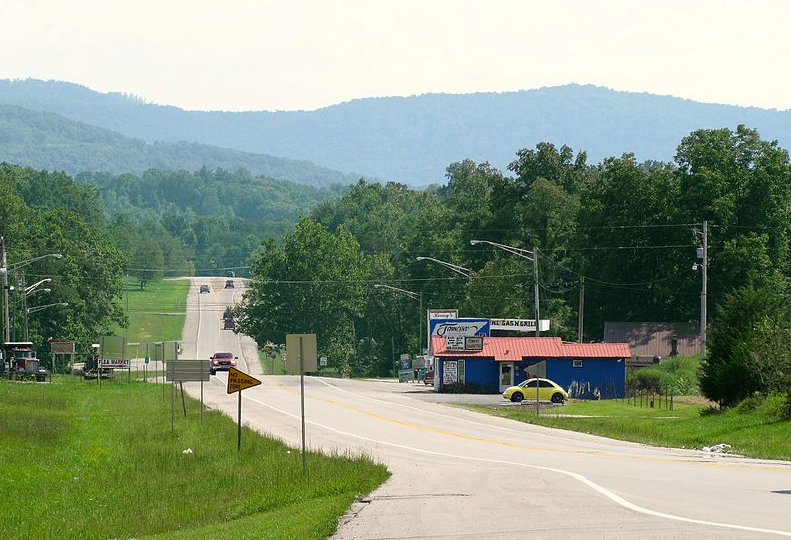
Her first semester at the college was exciting, but it was getting harder and harder to concentrate on her work. Carl Andrew was over nearly every night and finally even Daddy was talking about how she’d be a fool to let him get away. Redoubling her efforts, Opal began refusing to see Carl Andrew when he’d come over, ignoring the stab under her heart when she saw him driving down from Indian River with that Rebecca Hollins sitting there next to him, looking all smug and pleased with herself.
More determined than ever, she took on two more classes the next semester and began sending out applications to regular four-year schools. She had plans. Her stories had been published in The Mountain Eagle and even in The Herald up in Democrat, the next town over. But she was pretty sure she wasn’t going to amount to anything as a writer if she stayed down here in these hills; she had to get out into the world and do some living so she’d have something for real to write about, not just stuff about these people she knew up in the hollers and down along the blacktop.
She received her acceptance letter from Cleveland State University the same week that Carl Andrew and Rebecca’s wedding announcement appeared in The Herald. She threw the paper in the trash and ran with the acceptance letter all the way to Mrs. Pettigrew’s. She thought they’d both start crying, so they both just laughed all the harder and hugged and had ginger snaps. Screw that Carl Andrew, she thought, all the way home down through the short cut to Dutchman’s Holler from Indian River. And screw Rebecca Hollins, too, for that matter! In five years Rebecca’d be fat and bitchy, chasing four or five snotty little kids around that big, double-wide Carl Andrew’s daddy bought for them. And Opalene Lewis would be on her way to being a real writer.
Opal was not some hick who’d never been out of the hills; Daddy had taken all of them up to Cincinnati a couple of times to see ballgames and stuff. But when she got on the Greyhound in Hazard and was waving to her folks and all she began to panic just a little bit. She didn’t know a soul up there in Cleveland, but sitting up a little straighter, she smiled and waved and set her mind to it that she’d be just fine.
As the day wore on and the bus wove back and forth across the Ohio River, the hills receded and got less steep. She began seeing less and less of the little family burial plots up behind of houses and pretty soon the land evened out and got flat. When they stopped in Columbus for a lunch break, she felt creepily exposed without any hills around and ate her burrito quickly. Before getting back on the bus, she stopped by the gift shop and bought a little refrigerator magnet shaped like Kentucky.
The first couple of weeks in Cleveland were so hectic that she didn’t have much time to feel anything but worn out. She’d be living on campus in what they called Viking Hall but it was really just an old Holiday Inn. She wrinkled her nose at that cheap hotel smell and the threadbare turquoise carpeting in the halls the first time she walked in. She’d be real glad when the semester started and she’d begin meeting people but for now, she just stayed in her room a lot; the city seemed so big and frantic. A couple of times she tried to write but gave up. Nothing was there. But she’d be ok once the semester began; she just was real firm about that.
Then in the third week, the homesickness that had been slinking around the edge of her thoughts pounced in the middle of the night and plopped down, heavy as a tomcat laying there on her chest. She woke up from a dream about being up at the mouth of Dutchman’s Holler in the springtime, with the dogwood out and the white trillium glowing underfoot, and gave up trying not to cry. Lying there in the smell of a chain hotel, in a strange bed with the constant swoosh of traffic outside, she cried and cried until she fell asleep.
The work was harder than what she was used to and her grades suffered some. As the fall stretched out, she took to riding the buses around the city to check out her new surroundings and maybe get some ideas for stories. She bought herself a little Walkman and listened to Patsy Cline, Iris Dement and Jeanne Ritchie while gazing around this new home of hers. Fall was a lot longer here than back home and, even though the homesickness and loneliness didn’t disappear, riding around and seeing how the trees blazed with color helped to ease that near-constant pain in her chest.
It didn’t help a bit that the moment she opened her mouth to speak, people got that look on their faces. Actually there were two looks. Sometimes people close to her age would just kind of smirk and turn away, but often professors would get that big anthropological grin and want to talk about Appalachia. She hated that worse than anything.
The weather finally began to get colder towards the middle of December and, when she returned from Christmas back home, it got downright brutal. She’d never felt such bitter cold. The wind cut right through a body. But the city took on a stark beauty in the winter that she’d never seen in the enfolding, vertical spaces of home.
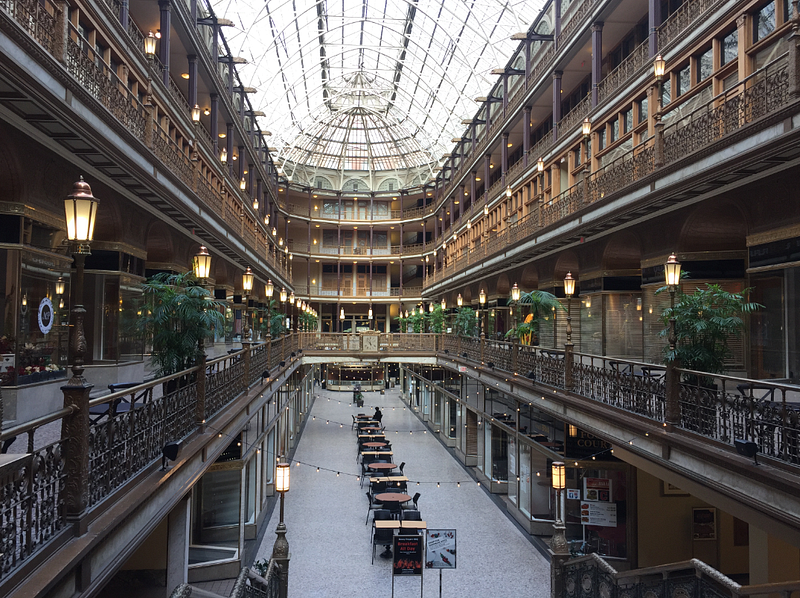
Even though she couldn’t seem to come up with any stories, she kept on riding around the city. She loved the art museum and went there often. There were all kinds of interesting places right downtown, too. The Old Arcade with its soaring open space and polished brass lions’-head supports was her favorite. She’d take a book, some cookies or a tea biscuit and a cappuccino up to the third floor to read and watch the little sparrows dart around. The sight of birds flying freely indoors delighted her no end. They were real bold, too, and she’d scatter crumbs on her table so she could watch them hop closer and closer. They’d get right up on the table, pause and tilt their tiny heads before snatching up the crumbs.
It was around the middle of February that she first noticed the man sleeping on the steam grate right out on the street over by the big hotel on the square. Her eyes widened and she stared from the bus window as it turned the corner onto Superior Avenue. He was there the next day and the one after that. On the third day, she saw him upright for the first time. He was huge! Standing there by the corner of the hotel with his outstretched McDonald’s cup, he was totally unfazed by the way people brushed past him as if he was invisible. She pushed a dollar bill into the cup and looked up into his big, bristly face. He nodded down to her and she noticed that his left eye looked off in another direction than his right one did.
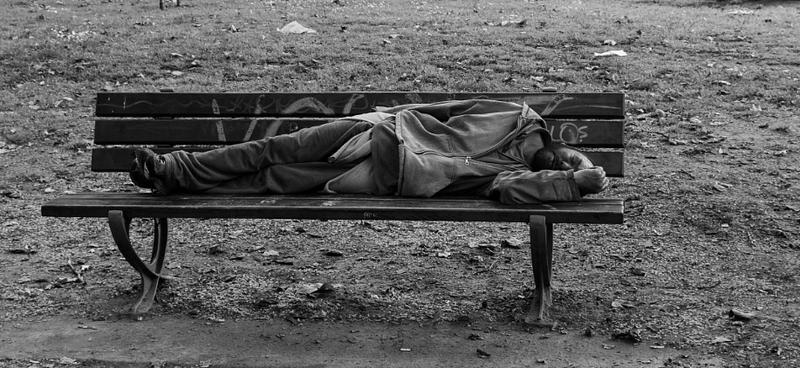
She began seeing him more often and started saying hello, howya doing, terrible weather today, you take care and such. He sure wasn’t the only person out there with a cup and a pile of dirty blankets, it was just that he was so calm about it. Opal knew she wouldn’t be calm at all. Sleeping out on the street in below-freezing weather! What was wrong with this city? Or this world for that matter? She began to keep an eye out for him in his raggedy, filthy mechanic’s overalls. If she saw him as she was coming out of the Terminal Tower, she’d backtrack and get him a cup of coffee and some pastry. One day she got her nerve up and told him her name, asked him what his was.
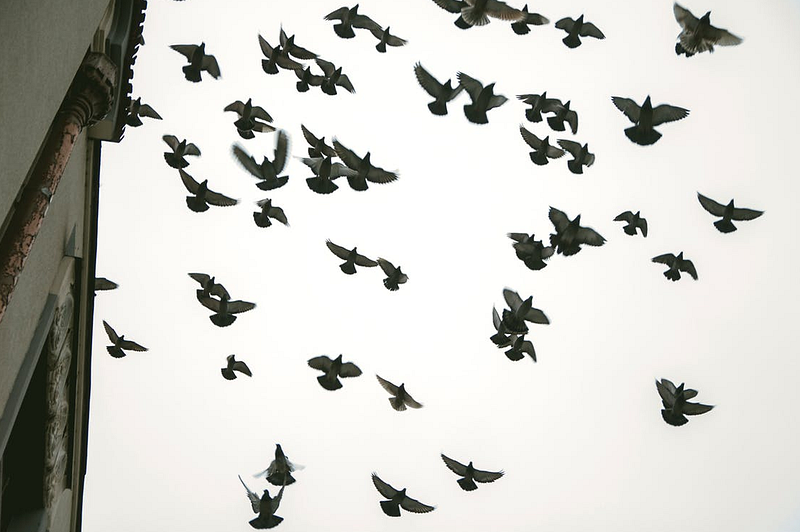
After that Opalene and Joe were buds. If he saw her across the square, he’d nod and she’d wave back, tickled to have someone acknowledge her presence in this loud, confusing place. Sometimes on Saturdays when the sun came out, she’d sit with him over by the bare trees surrounding the dry, silent fountain on the northeast quadrant of the square and they’d feed the pigeons. There was nothing funnier to watch than some fat-bottomed two-year-old trying to catch one of those silly, strutting birds; they’d laugh and laugh and the baby’s mama would laugh, too. Then when the pigeons had had enough, the whole flock would rise and begin to swing around the square, wheeling and coming around in unison. There was one big, black pigeon in the flock that was amazing to see in flight, it was so big that it looked like a small owl.
Every couple of days, she’d get a letter from Mama. Those letters were like little double-edged swords; she’d grab them in delight from her mailbox and dash up to her room, opening them on the way. They were always pretty much the same, Mama’d write them early in the morning from the table by the back door where she could see the rusted thermometer outside on the porch. There’d be something about the weather, always some stuff about family. How cousin Raymond was doing in medical school up in Louisville, about the latest crisis in Uncle Delmar’s little convenience store and, of course, who’d got married and who was pregnant. (It wasn’t lost on Opal that there never was a word about Carl Andrew and Rebecca.) Mama’d also usually include what she was baking that day and who she was going to walk up the holler with later on. Opal’s mama wasn’t much of a writer, but inevitably as she finished the letter, Opal’d be in tears. Lord, she missed home. She sure never expected that; she’d been in such a hurry to get away.
Then one day in March, on her way to meet up with some friends to study at the library, Opal realized abruptly that she had friends. It so surprised her that she stopped in the middle of Euclid Avenue and really pissed off a couple of bus drivers. It had happened without her even really being aware of it. She remembered being lonely and sad back in January, but couldn’t really pinpoint when that had changed. Suddenly light and happy, she ran the rest of the way to Rhodes Tower.
It was the end of March when a couple of days passed and she didn’t see anything of Joe. Not a big deal, but when it stretched to two weeks she began to worry. She didn’t know his last name and had no way of finding out if he was all right. More and more, she hung out alone the square, looking for him and watching the pigeons swoop and swirl around.
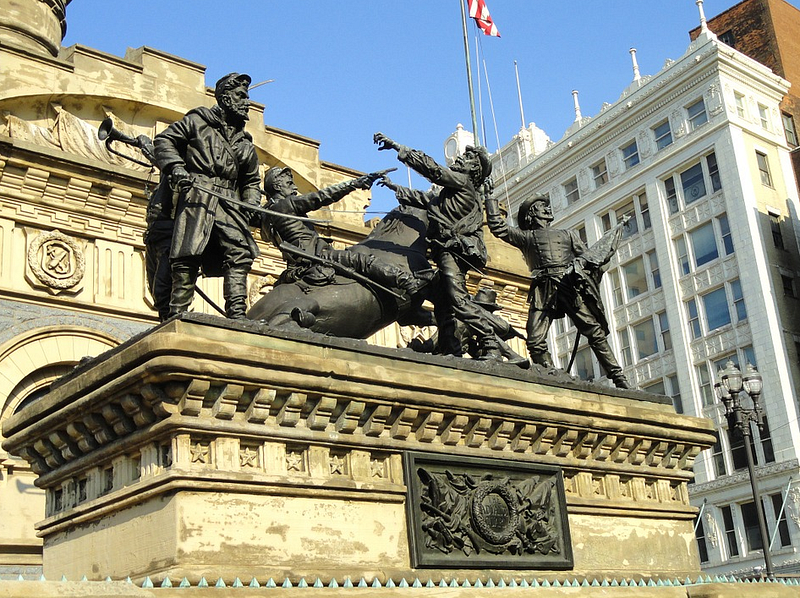
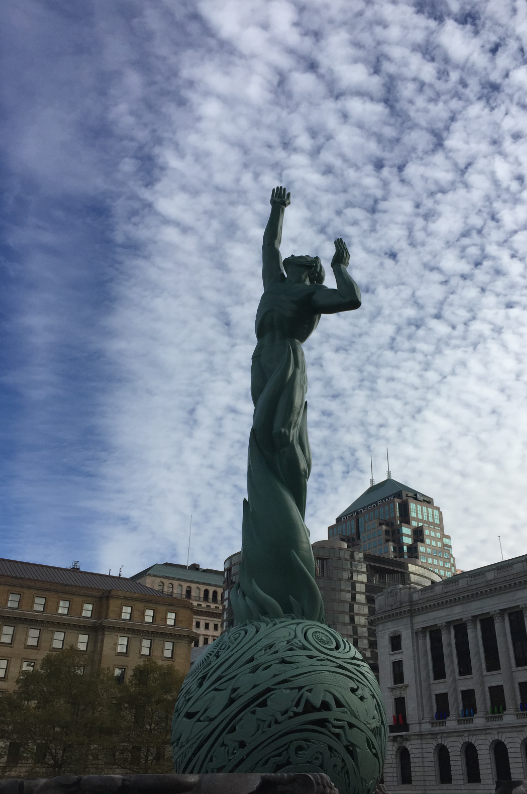
Spring here along the winter-cold lake was wet and unpleasantly chilly, but she kept her vigil day after day. One night on the news she saw a story about some peregrine falcons that were nesting up on the Terminal Tower and she began to bring binoculars along. Sure enough, there they were! Wow, they sure are small, she thought. Her breath stopped in her throat to see the bullet-shaped raptors circle up above the city and disappear into the sky. Each day after class, she’d come down to sit on the low walls around the Civil War monument and watch the birds and the people. And watch for Joe.
Spring finally broke in mid-May and still there was no sign of him. Nothing for it, but she kept coming down to the square anyway with her binoculars. She was gazing idly up into the blue spring sky one Tuesday afternoon when, for the first time, she watched as one of the falcons fell into a dive. Holding her breath, she watched the small streak rip down through the sky and, wham!, nail one of the pigeons right out of the flock in mid-air! Shocked, she lowered the glasses and watched a couple of black feathers drift down from where the flock had been just a minute ago. For no good reason, she felt sad and let down and missed Joe something awful. He was the only one she could tell this to and he’d get it. He’d know that it meant something even if Opal herself didn’t know exactly what that was.
For two weeks she avoided the square and focused on getting ready to go back on down home for the summer. She was deciding what to pack and what to throw away. She’d pretty much given up on seeing Joe again, but sure hoped he was ok. She put some Ella Fitzgerald on the little tape player by the bed and focused on organizing the mess she’d managed to accumulate over the past year. After awhile she got sleepy and decided to lie down for a nap.
It was one of those dreams where you know you’re dreaming and decide to go with it just because it’s so much better than being awake. Opal was gliding gently in the clear, blue sky way above the city and, even though she felt relaxed and calm, she was keeping a sharp eye on everything going on down there. One last easy turn and she saw what she was looking for. Coming out of the turn, she pulled her wings in tight to her side and let gravity take her.
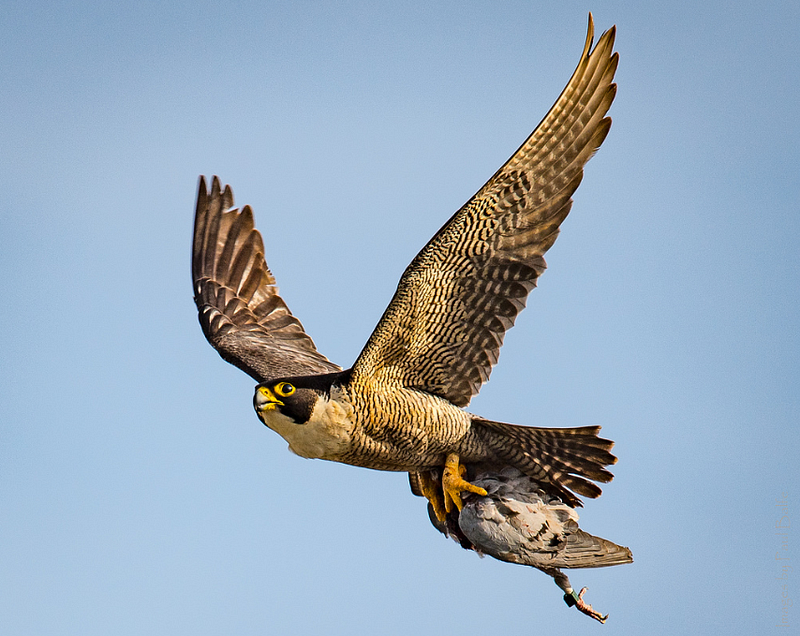
Even as she was hitting terminal velocity, she was in control and focused precisely on her target. Wind screamed as it parted before her, the earth began to loom and she leaned into her dive. The slow, graceful arc of the flock below her was putting her target exactly where she would be in less than eight seconds and she flexed her muscles. With complete ease, she pulled up at the absolute last moment, thrust her talons out and tore the black pigeon out of the midst of the flock. One fleeting image of a terrified, orange eye stayed in Opal’s mind as she woke up in the dim room.
She lay there for long minutes, reliving the dream as if it was the memory of an actual event. Pulling her arms in close to her sides, she could feel the rush of the wind tearing past her. Curling her fingers, she felt the give of the flesh as she ripped the bird out of the air. She felt like screaming.
Instead, she swung her legs out of the bed and sat up to scratch her head and see what time it was. Just past seven. Suddenly she needed to get out of the room, off the campus, away from packing and decisions. Pulling on her jeans and a fairly clean t-shirt, she ran out to catch a bus down to Tower City. There were a couple of movies playing down there that she’d wanted to see. Sitting on the bus, she watched the crowds of people milling around the theaters along Playhouse Square. They were dressed to the nines, laughing and waving to each other. She thought of pigeons, lifting and turning in unison without realizing that there was a falcon watching from above.
Later, after the movie, the dream began to lose its hold on her and she laughed at how silly it was to think of people as being like pigeons. But the image held. She sat by the fountain in the main concourse with a big, soft pretzel and a Coke and watched the people mill and flow and wheel around the wide-open space. She began to play with the metaphor in her head. Who was the predator? She gazed up along the upper levels of the concourse and saw a couple of off-duty cops, standing along the railings, just watching. Them? No, they were there to protect the pigeons. Then an odd thought occurred to her: she was the falcon.
Leaning forward slightly, she smiled to herself and stretched the idea a bit. She’d been circling above this flock ever since she’d arrived, watching them, scribbling down this interesting mannerism or that bit of overheard conversation, not necessarily diving in for the literal kill, but still reaching for something they had that she wanted. Their hopes and fears and frustrations and obstacles and loves and hates, that’s what she was preparing to seize from their midst. Excited, she pulled out her beat-up little spiral notebook and began to write quickly. She was so totally focused on her writing that it wasn’t until something blocked her light that she looked up.
It was Joe! Delighted, she dropped the notebook and flung her arms around his dirty neck. He laughed and hugged her back briefly but, with a glance to the official presence above, backed up just a little. She tugged at his big, leathery hand and pulled him down beside her.
“Where’ve you been, Joe? I was just so worried!”
She was about to rush on and tell him about the diving falcon, the end of the black pigeon and the story she thought she found there, but then he began to grin and she stopped talking. He reached down into the frayed neck of his sweatshirt and pulled out two keys on a length of dirty shoestring.
“I got a place to stay at.”
He grinned so big that she could see the gaps where there used to be teeth and that left eye beamed off at its odd angle. For a beat she was speechless. All she could do was grin back at him with tears in her eyes and all she could think of was that he wouldn’t be out there huddled under filthy blankets in the snow this winter with people pretending they didn’t see him.
“Oh man, Joe, that’s so great!”
“Yep, it’s all right.”

Then they just sat there. The crowds of people flowed around them. There were couples pushing strollers and gangs of teenagers laughing and punching each other and stooped old people forcing paths to open for them by their dogged refusal to keep pace. Opal was perfectly happy to just sit there with Joe and let any story ideas percolate on their own for awhile.
Suddenly the background muzak cut off in mid-note and people began to gather to watch the hourly display of the fountain waters choreographed to an over-loud rendition of “Music of the Night”. Opal and Joe stood back and watched the colored jets of water and rising dry ice vapors. Smiling, Opal realized that sometimes she was a pigeon, too, and reached for Joe’s hand.
Three days later, it was time to hand over the key to her room and lug her bags down to the Greyhound station. It sure would be sweet to get in among the secure folds of her Kentucky hills for the summer, but she’d be back up in the fall. She joked with Bonnie at the desk, handed her the key and saw her cab arrive out front. So what if it was all of a seven-minute walk to the station? She didn’t feel like lugging her over-stuffed bags down the hill in the already stifling heat of early June. As she told the driver where she was going and let him load her stuff into the trunk, she felt the ease and calm of a circling falcon. Her target was arcing around to arrive exactly where she’d be in eight seconds.
© Remington Write 2019. All Rights Reserved.


