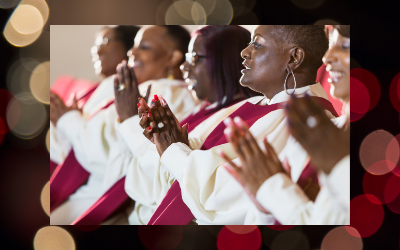
The Black Church: Here’s What We Need to Remember and Never Forget
Let’s put some respect on that name
In recent years, the Black Church and Black Christianity have both received a lot of criticism. And, yes, I specify “Black Christianity” because our embrace of the faith has its own history and comes with its own set of baggage. Perhaps we’ll unpack some of this at a later date, but for now just understand there’s a reason for the modifier.
Most of the grumblings against the Church, have centered around money particularly when it comes to funds collected from congregations, how those funds are spent and who they are spent on. Pastors in shiny suits and even shinier cars have long attracted very loud criticisms. The proliferation of megachurches has done nothing to reduce the volume on these grumblings.
While financial concerns are completely justified, I’ve also witnessed many take issue with how race and racism are both so thinly addressed in many Black churches throughout the nation. Old school biblical advice to turn the other cheek, love everyone as one’s self and forgiving seven times seventy times isn’t the easiest to do when people are tired of dealing with White supremacy day in and out for entire lifetimes. It’s understandable that people desire a stronger rebuke of evil and it’s human to feel disappointed when church leaders continue to advise Black people to love those who despitefully use us. Loving our enemies is not the message we’re looking for, yet it’s the only one Black churches can offer if remaining true to the Christian faith.
That’s got to be tough not just on parishioners, but also on Black church leaders. This article isn’t about any of that, but since I was the one to bring it up, let me take a moment to introduce you to the Jude 3 Project and to Bishop Talbert Swan. Along with a few other Black Christian leaders and influencers, both address problems of White supremacy head on proving that not everyone is willing to spiritually bypass the toughest issues facing Black people today.
Let’s Not Forget
While I understand the frustrations many have with the Church and why some would even question its relevance today, it’s important to remember what the church has already done for Black people. Not in terms of religion (I’m not here to discuss or dissect anyone’s faith or lack of), but in terms of its social value. In years past, the Black Church served to consistently empower Black people in ways no other American organization would or could.
For example:
At a time when Black people were routinely called ‘boy’ or ‘gal’ (or worse) despite being fully grown and often older than the person speaking, the Black Church offered titles like Bishop, Pastor, Minister, Evangelist, Deacon and Missionary.
Where else could Black people get dressed in their fanciest clothes and show up in public without being called uppity?
In what other organization were Black people allowed to lead, sit on boards or even receive an honored seat and someone’s table?
Where else could Black women be honored as ‘sisters’ and ‘mothers’ and be allowed to organize grand social events?
Where else could a Black man’s word be taken as law in an organization?
Released from bondage without any mental health assistance, the Black Church gave our ancestors hope, emotional release and the encouragement needed to press on. Sundays were like group therapy for a wounded collective.
And let’s not forget what the Black Church contributed to the Civil Rights Movement. From organizing, providing meeting space, broadcasting mass protests and other events, the Black Church was at the center of all of this. Before becoming a household name, Dr. King was first a Baptist preacher.
Looking Back, I Understand Better
These are but a few of the ways in which the Black Church empowered people who were beaten down at every opportunity within broader society. These souls found a measure of respect, honor and love within the Church organization. I didn’t understand this until looking at my great-grandfather’s life and his and my great-grandmother’s history with the Church of God in Christ. As one of the organization’s founding members, “Papa” was given a respectful status. Church was the one place where he, my great-grandmother and others like them were not looked down upon because of the color of their skin. They had a meaningful place they could look forward to going to after a hard week of laboring for people who hated them and never acknowledged their worth as human beings.
Today, the Church may have lost some of its relevancy in this regard. Black people still benefit from empowering messages and environments the Church may provide, but folk don’t suffer the same types or levels of degradation our forebears had to endure. The Church is no longer relied upon for its therapeutic benefit. It is no longer the first in line to assist a Black person in feeling a sense of worth or value. In fact, these days, many complain that the Church often has the opposite effect on people who come as they are, yet are consistently made to feel as though who they are isn’t acceptable by the Church or the God it represents. Again, we’re not going there today, but I’m just saying.
Regardless of what the Church has become or what it needs to become in order to maintain relevancy in our communities, I do think a certain level of respect is due. This, for the role these institutions have played in society and in our development as a people. Aside from feel-good messages which inspired the masses to keep reaching higher and trusting in a greater purpose, the Black Church gave its members community and a place where everyone mattered within its walls even if they didn’t matter beyond them.
Treating it as we would an elder, I believe even those Black folk who’ve fallen away from the faith or who have adopted another faith or who come from other faiths or who never had any faith at all should still reserve a little respect for the Black Church simply for what it used to be and the great purpose it once served.
Agree or disagree? Let me know in the comments.