The Black Art of Abstraction
A Renaissance in Abstract Art and Social Justice
“Abstraction may be modernism’s greatest innovation.” — MoMA.org, Inventing Abstraction
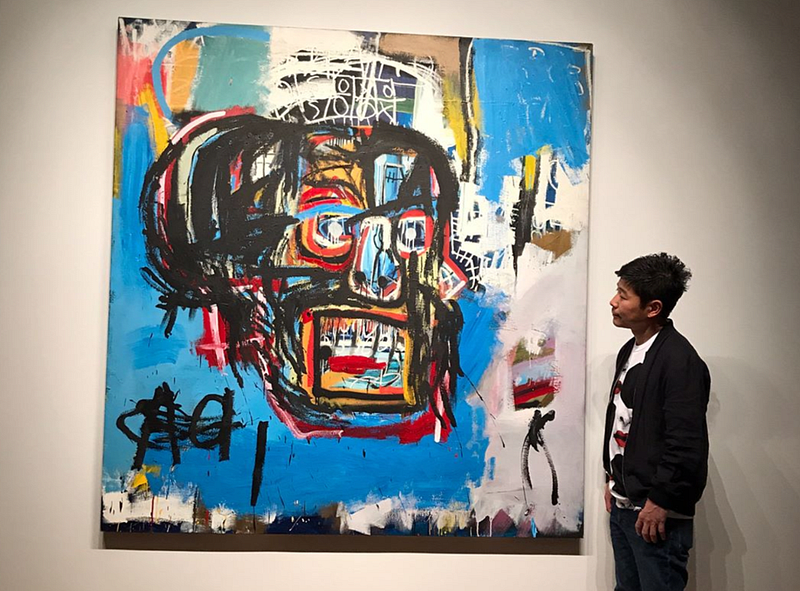
Abstract art is all the rage. You can’t afford to ignore it. There is an article in The Chronicle of Higher Education titled Why Abstract Painting Still Matters (1999). In 2007, the Guardian noted The Revival of Abstract Art, based on Artnews reporting, who wrote at length about The Golden Age of Abstraction: Right Now. The Brooklyn Museum hosted a lecture in 2014 titled “The Oldness of Abstraction (or Can Abstract Art Be New?)”. Later in 2014, The BBC presented Abstract Artists In Their Own Words. Netflix featured a documentary show titled Abstract: The Art of Design in 2017. And also this year, the most expensive US painting ever sold is an abstract (by Basquiat), at $110.5 million, to own a piece of black history, rather than for the aesthetic merits. Abstraction is in vogue, in the art world at least.
“That sense that abstraction could be the saviour of art seems almost inconcievable now. If anything needs saving, or even just salvaging, it seems to be that project of abstraction.” — Briony Fer, The Oldness of Abstraction (or Can Abstract Art Be New?)
“The threats to art… haven’t changed that much, or have only been exacerbated under the contemporary conditions of late capital of our own neoliberal age.” — Briony Fer, The Oldness of Abstraction (or Can Abstract Art Be New?)
But who really cares? And what does it mean? For most, abstract art comes off as a typically elitist and pretentious exercise. Many people are rightly turned off at the enormous sums of money flowing through the art world, and disgusted when public treasures like the works of Banksy get turned into auction items for the upper crust of society. While claiming to prompt transformative ways of thinking, a solid colour canvas, perhaps a few shapes, or even a chaotic technicolour mess, can hardly live up to its promise — and yet many people believe it does or exceeds it. An abstract may occassionally match the rigour of explicit imagery, it may even indirectly prompt sort of connection in the viewer, but by definition abstract art is too open for interpretation to spawn any objective thesis statements, unless it is vivid abstraction (a la Banksy).
“For a long time people struggled with how to read abstraction: ‘What is it about? How do I understand it?’ Today I’ve been told, and it seems true, that it is easier to sell this kind of abstraction because people like the fetishized story of the artist’s process — what actually amounts to a lot of banal stuff…” — Alex Bacon, Who’s Afraid of the New Abstraction?
My shallow critiques aside, abstract art can speak for itself through its work, its artists, its patrons, its critics, and its subjects. But who speaks for abstraction in the abstract? The Abs-Tract Organization wouldn’t be worth its name if it didn’t have a take on abstract art as well. So, in this article I hope to spark an interest in abstraction in art and across boundaries. As you will see, it cuts right to the heart of racial conflict. Regardless of your tastes for art or abstraction, these are powerful messages that demand your attention.
Perhaps it is coincidence that abstraction is actually experiencing a resurgence in art at the same time we are pushing for its philosophical renewel. Perhaps it is synchronicity, but only if we seize it. I propose that lovers of abstract art and abstract knowledge can cross paths here. It is not easy, but we have a duty to face the truth.
White on White vs. Black Lives Matter
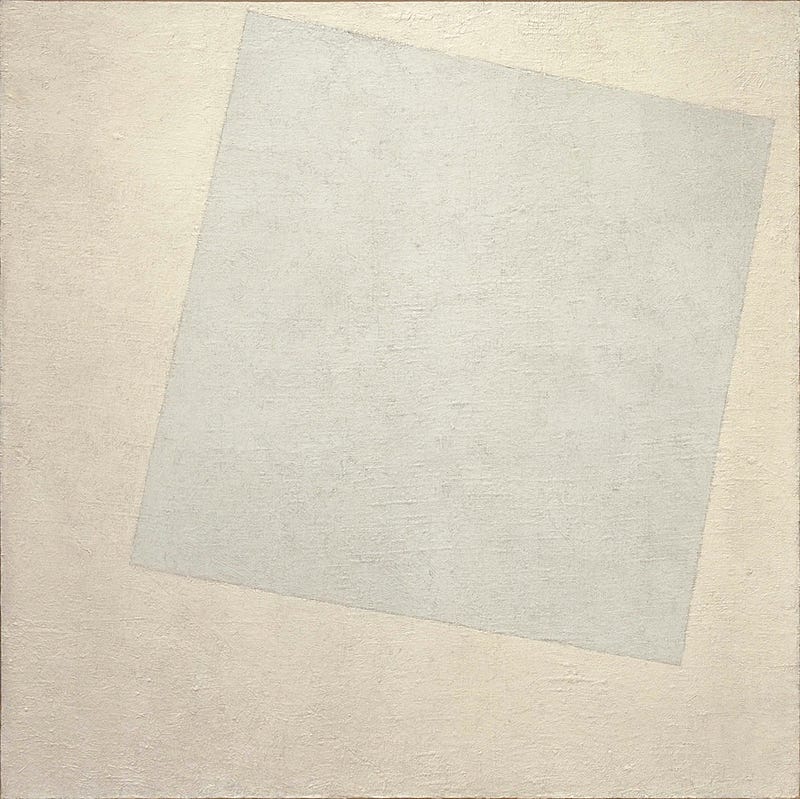
The above painting is the famous “Suprematist Composition: White on White.” Artist Wolfgang Laib describes how in his house growing up, they “talked endlessly about this painting.” Remarkable that something so bland could generate so much interest. This is the power of the purest forms of abstract art: to make so vague a gesture, as to be able to fill it with one’s entire imagination. The painter himself contributed the discussions about the sociopolitical implications of his work:
“Malevich expressed his exhilaration in a manifesto published in conjuction with the first public exhibition of the series, in Moscow in 1919:” — MoMA.org
“I have overcome the lining of the colored sky… Swim in the white free abyss, infinity is before you.” — Kazamir Malevich
In today’s political climate, it would not be a stretch to imagine a white-nationalist neonazi unironically standing before this painting and proclaiming: “This speaks to me, I get it.” The title even seems to encourage a supremacist interpretation. That would be a vicious abstraction of an abstraction, to be sure. Without context and additional information, it is as absurd to state the painting is making any statement about race one way or the other. But it is also unavoidable. Although a painting may try to inspire the imagination of its patron, the artist has little control over this when dealing in abstraction. It is a testament to the potential emptiness of abstract art when one can make up their own meaning. This painting and the meaning behind it are a historical curiousity now rather than some crucible of truth.
Along these lines of subjectivity there is tension over interpretation and legitimacy. Al Jazeera covered a site of conflict in Abstracting the savaged body of Emmett Till. One claim of critics was that white painters have no right or enough experience to represent black suffering. Another was that the painting simply did not do the brutality of the attack justice. One might also see Open Casket as an offer of solidarity. My own questions strive for higher abstraction, such as why is this controversy subsuming the truth about the ever-present black struggle? Are we constantly missing the point? Why, in 2017, is there still even debates when there should be consensus, change, and reconciliation?
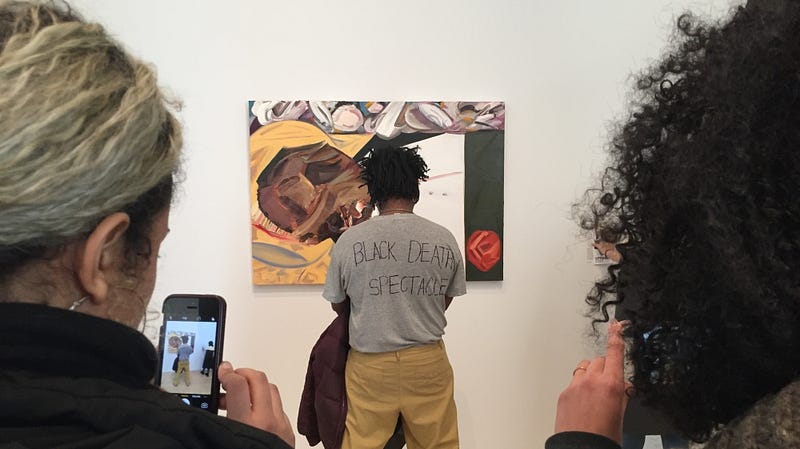
There is strong confluence of abstraction and black activism as of late. In 2016, The Washington Post published The most powerful art from the #BlackLivesMatter movement, three years in.
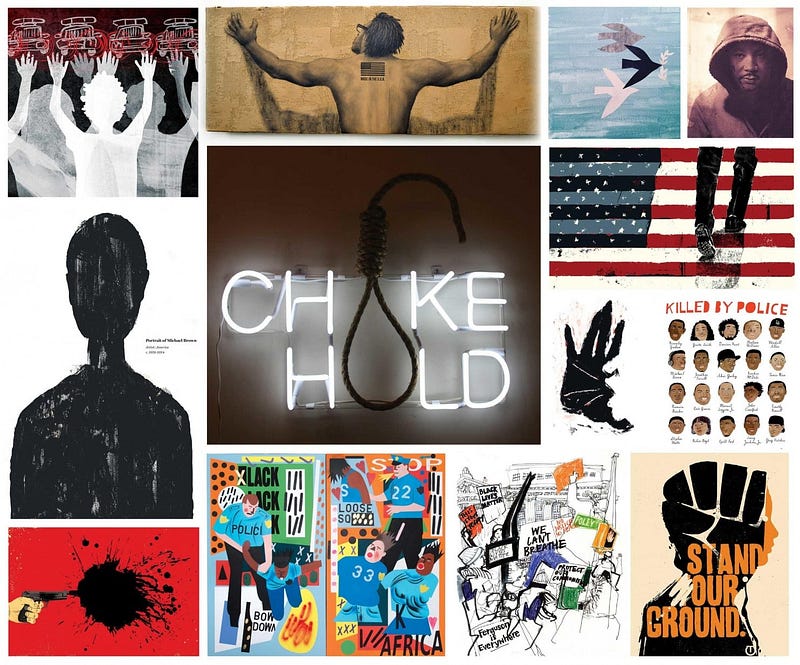
Hyperallergic.com asks Can Abstraction Help Us Understand the Value of Black Lives? The author, Chloe Bass, cites her “central worry: is abstraction a luxury?” leading her to the more specific question, “is metaphor a privilege we get only when we have certain knowledge of being heard in the first place?” The impenetrable nature of abstract art does not do it any favours in getting noticed. With regards to a particular abstraction of black activisism by Mark Bradford, she writes:
“in the same room as “Receive Calls on Your Cell Phone from Jail” (2013), the Contemporary Art Museum held the sold-out Internet Cat Video Festival. It was a coincidental placement — this was the only room in the museum big enough to host such a screening — but the irony of highly literal, adorable pop culture drowning out the message of the piece on the wall was not lost on me. Of more concern was my realization that I live in a world where such juxtapositions are perfectly normal. No wonder, then, that we feel we must yell.” — Can Abstraction Help Us Understand the Value of Black Lives?
The compulsion to scream is made clearer the more you know. Abstract thinking allows privileged individuals to perceive invisible power structures they are apart of, and more importantly how to relate to those who experience it negatively and to stand with them. But the normalization of ignoring abstraction, of ignoring the juxtaposition of contradictions, is almost as disturbing as the crimes they reflect. Bass relays the message of a friend who said that ‘our complete inability to act in service of marginalized lives is’
“related to the way in which we devalue humanities — without that kind of abstract and figurative thinking it’s hard to have a grasp on the reality of being afraid of a system of power that’s intangible.” — Mollie Eisenberg, via Can Abstraction Help Us Understand the Value of Black Lives?
“To quote some recent powerful words from Adrienne Maree Brown, “Things are not getting worse, they are getting uncovered. We must hold each other tight & continue to pull back the veil.” This message is not abstract. The skills we need to understand it are.” — Can Abstraction Help Us Understand the Value of Black Lives?
Dazed Digital shows How Basquiat challenged police brutality through his art. The article cites Chaédria LaBouvier, an activist committed to exploring Basquiat’s “work in which the artist addressed the issue of police brutality — around 30 years before Black Lives Matter and Ferguson.” Through her efforts, Williams College Museum of Art hosted a roundtable discussion on Basquiat and Black Lives Matter, with a particular focus on his piece Defacement.
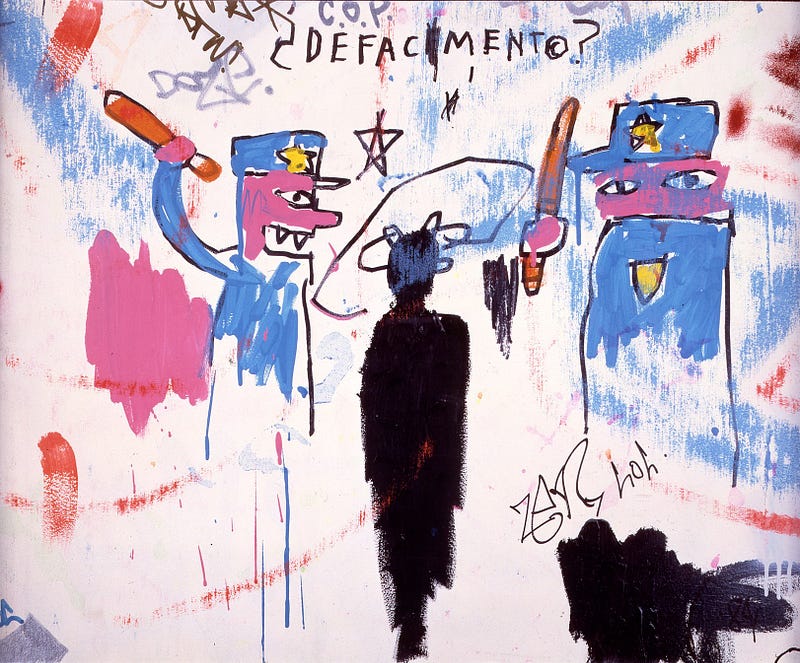
“as a Black American artist, one central question keeps coming into my mind: is abstraction or directness more likely to afford us the understanding we need to move forward?” — Chloe Bass, Can Abstraction Help Us Understand the Value of Black Lives?
For what its worth, the only answer I can offer to Chloe — abstraction or directness? — is both. On reflection of Malevich’s absurdly plain White on White, perhaps the golden rule for abstract art appreciation is to never let the fetishization of art become more important than the truth and social justice it is supposed to represent.
Black Comedy in The Abs•Tract
There are connections between abstract art and abstract thought in general, but it is scarcely explicit. Philosophy and art have a discourse, but they are usually practiced wholly independent of each other. My own abstract art initiative (The Abs•Tract: Core Philosophy, 2014, introduced in a separate blog post here) is in part motivated by that connection, and by these trends in art, with the intention of giving more meaning to the very concept underpinning both. Throughout the film there are several abstract art pieces shown, many of the visuals and aesthetics apply the principles of abstraction, and of course the theme of the film is abstraction itself. The film is as much an artistic expression of philosophy as it is a philosophical expression of art.
But there is a deeper message hinted at explicitly. One of the most important characters fulfills only a very subtle role. Will Power only appears onscreen twice, for a manner of seconds each time, and only speaks one word in the entire film: “Word” — which is shorthand for “my word is my bond” but also means “I understand” or “I agree.” Moreover, in his absence, he is referenced and described in admirable terms several times throughout the film, but we don’t really know who he is or why he matters. There are clues throughout the film — “he’s our secret weapon”, “head of our skunkworks division, black projects”, etc. — but its never laid out entirely.
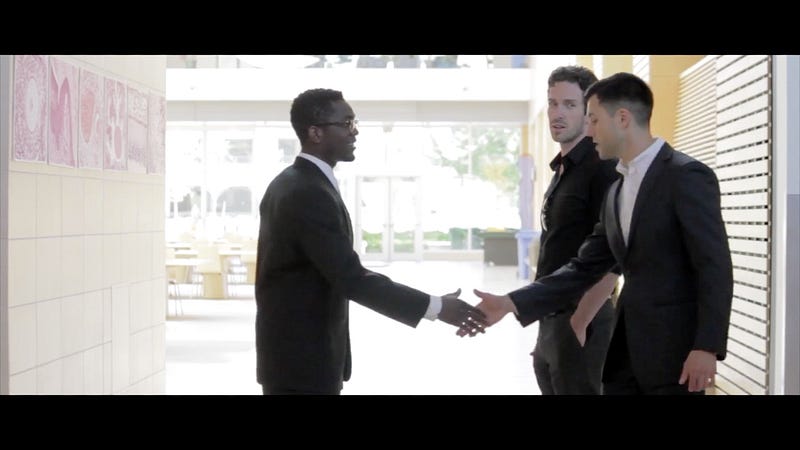
The mystery and prestige around Will Power is not for nothing. It is an abstract homage to the background influence of black culture behind the otherwise white aesthetic of The Abs•Tract. That influence has a lot to do with the rebellious nature of hip hop (and drug subculture), formed under conditions of structural oppression. Will Power stands in for an abstracted sort of ‘black power’; anti-racist militancy in (black) sheep’s clothing. White racism uses abstraction to empower itself, and through the film it is confronted by black ‘abstractivism.’ One can work out the details of Will Power’s exact role, but only if they’re willing to read between the lines.
The main plot of the film is for the protagonist to achieve ripped abs and a poetic epiphany, but the subplot is how cannabis facilitates his athletic, philosophical, and moral transformation, and how we can’t have a honest scientific discussion about cannabis without recourse to the war-on-drugs, prohibition, mass incarceration, black lives matter, racial profiling, and police brutality. It’s the ultimate intersectionality. This is how a spoof on ab-gimmicks becomes a call for truth and reconciliation. Point being, if weed was never criminalized, America would have probably solved systemic racism by now.
On the face of it, Will’s relative absence from the film makes him seem like a ‘token black guy,’ but this is an intentional parody on the concept. Rather than portray a stereotype, Will has a mystique and dignity, while his role is alluded to by the other characters as very critical to the operations and goals of The Abs•Tract mystery school. He is the proverbial tip of the iceberg, the depths of which are out of reach for the typical audience.
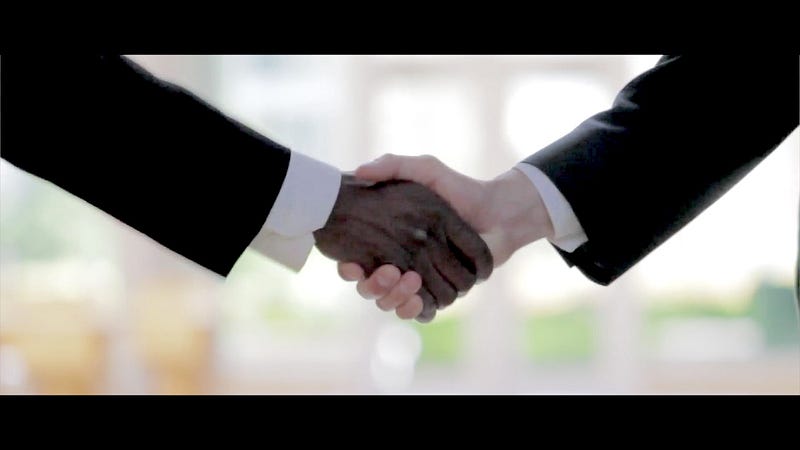
Given that racism is still a problem to the extent that it is denied in America, the resilience of black culture is much stronger than white culture. I would go so far as to say that black history has more dignity in a month than white history does in a year (or more). White enslaved black, and black people built the country, only ever asking for equality in return. In this way, The Abs•Tract pays homage and reverence to the dignity and contributions of black culture in spite of white culture that has kept it down. After Luc and Will shake hands, the subplot recedes into the viewer’s blindspot. This is not to whitewash the details away, but rather to plant ‘easter eggs’ for the discerning mind to follow, and to starkly frame the trope that the most people will not interested in, nor can they handle, the truth.
The second time we see Will Power, he emerges from the forest followed by a large cloud of smoke; metaphorically and literally carried by the winds of change. To be perfectly blunt, the cloud is meant to signify cannabis smoke. Offscreen, true to form, Will just had a huge session with Adam Kadmon in the forest, where they hashed out more half-baked ideas about how to emancipate the world with critical thinking.
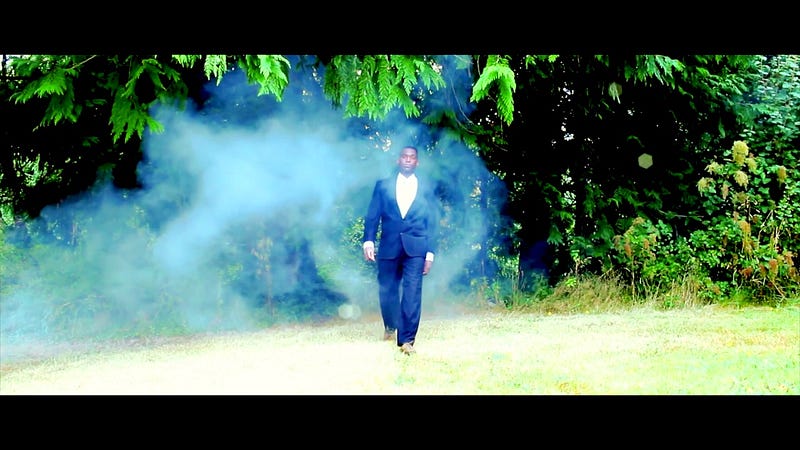
Spoiler alert: The Abs•Tract ends (to be continued…) on a down note, which unfortunately would prove to foreshadow the era of Trump to come. In the second to last scene of the film, Will Power is set to arrive to give a climactic lecture, but instead we are notified he was arrested for (marijuana) possession, which was in the glove box of the car he was driving, and in fact belonged to David Vitruvius.
The implied joke here is that Will was stopped for ‘driving while black’, a common occurrence in the United States, and that this apparently banal act of profiling and inconvenience can and usually does have hugely negative consequences — sometimes incarceration or death. The film attempts to make clear that Will is not only innocent — though he would not be ‘guilty’ if the weed was his anyways — but that he’s an upstanding citizen on the verge of contributing profound scientific and sociological insights to the world. Namely, he’d been working on the simultaneous cure for American obesity and illiteracy. Meta-solutions to meta-problems. ‘The world’, with all its absurd ideology, paranoia, and irrationality, stops progress in its tracks for no good reason, and with no culpability.
Meanwhile, back in reality(-TV), instead of America unifying behind a common cause across socially constructed racial boundaries, we’ve gone backwards. Rather than ending the war-on-drugs and systemic-racism together (because they are essentially the same thing), Jeff Sessions has decided to turn up the heat and make things worse. Rather than learning about social issues and acknowledging the legitimacy of Black Lives Matter, complacent masses and the Republican establishment have paved the way for a reactionary white-supremacist movement (scarily reminiscent of American History X). Moreover, they’ve all been given a voice by a fashy-chic pseudo-intellectual Richard Spencer, a bloated media baron in Steve Bannon, a mob-patsy and white-apologist in President Trump, and hordes other proud white ethno-centrists and conservatives, #altright or otherwise.
It doesn’t matter how smart you are, there is nothing intellectual or redeeming about fascism or racism. Marginalized whites did not end up where they are because they are victims of racism; the same can not be said about people of color. Racists believe Black Lives Matter is akin to a terrorist organization, and this could not be further from the truth of the matter. Black Lives Matter is nothing more (or less) than the most recent branding of an ongoing legitimate struggle for social and racial justice.
Art by Bart: Food for Thought
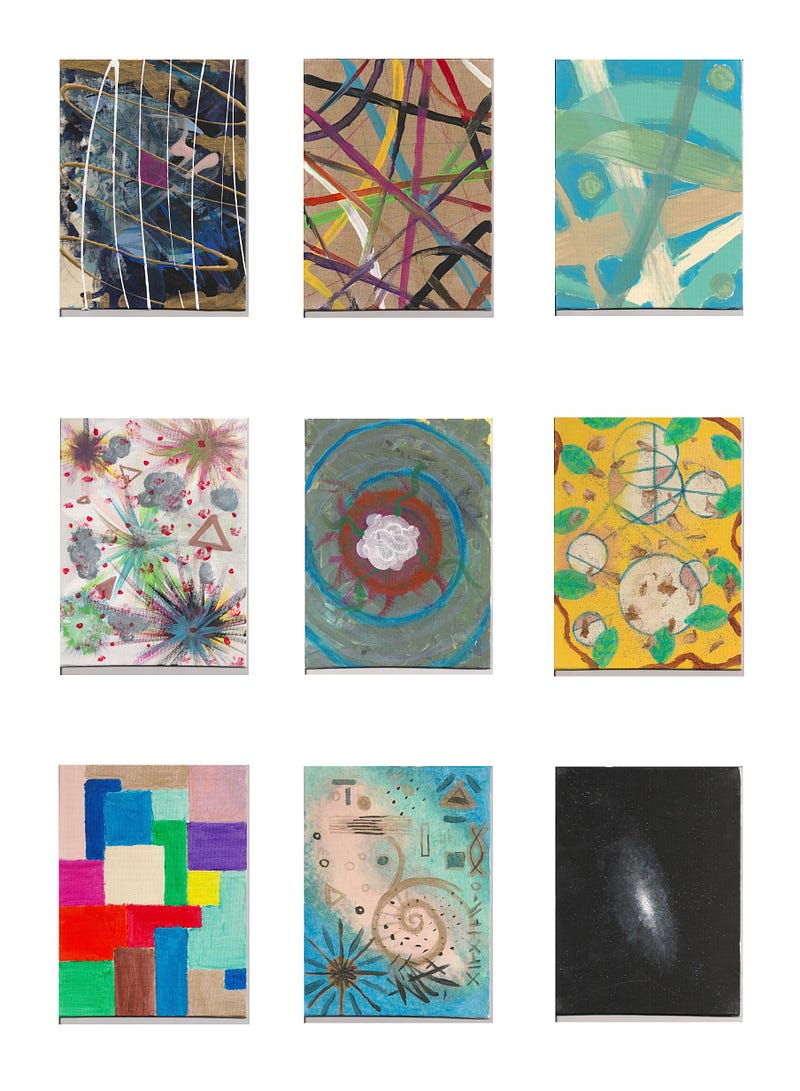
Enough with the heavy stuff for now. To practice what we preach and demonstrate our commitment to abstract art, The Abs-Tract Organization (TATO) sponsors a resident abstract artist, Bart. TATO is investing in all kinds of abstraction in order to concentrate resources on this single point of interest. The proceeds of art sales go to fund our operations as well as more art and abstractivism.
Appendices of Abstraction
I was going to make this post more generally about abstract art, but got seduced by the dark side, pun intended. I have arranged my leftover content below instead of creating another post about abstract art. Before abstraction can be about social issues, it must be about the geometric and aesthetic deconstruction of the world around us into simple forms. It is a reminder that the same goes for thinking; except instead of images we deal with words — even more abstract. The better we understand the schematization of abstraction, the more we can apply it to critical thinking, and then in sociological analysis and public policy.
For more discussion of abstract art, I suggest the MoMA exhibit linked below, which is supplemented with tons of images, bios, commentary, and audio.
“Must we not then renounce the object altogether, throw it to the winds and instead lay bare the purely abstract?” — Kandinsky
“We are all hungry and thirsty for concrete images. Abstract art will have been good for one thing: to restore its exact virginity to figurative art.” — Salvador Dali
“We read in the letterpress of the book that it is providential that birds, like all creatures, are composed of simple Euclidian forms. One might see in this confidence an echo of Plato’s Timaeus, the idea that regular bodies are the ultimate constitutients of the world. The regular schema which we call an abstraction was therefore “found” by the artist in nature. It belongs to the laws of its being.” — E.H. Gombrich, Art and Illusion: A Study in the Psychology of Pictorial Representation, 1956
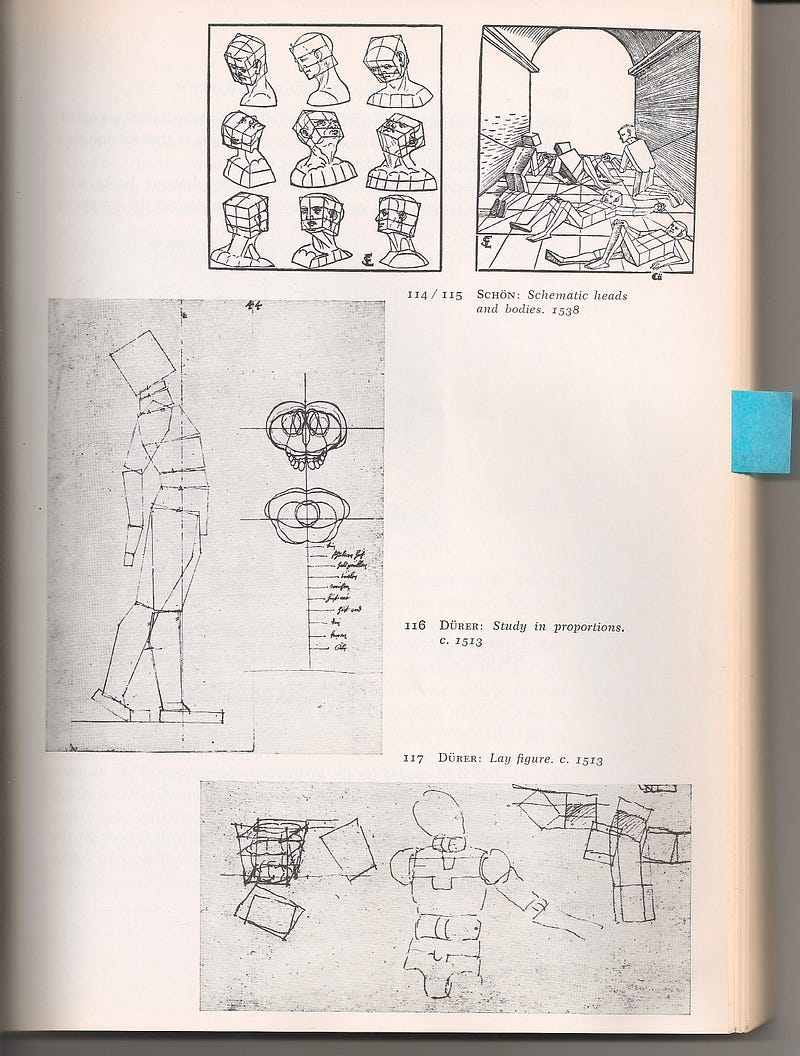
“The whole idea of the “imitation of nature,” of “idealization,” or of “abstraction” rests on the assumption that what comes first are “sense impressions” that are subsequently elaborated, distorted, or generalized.” — E.H. Gombrich, Art and Illusion: A Study in the Psychology of Pictorial Representation, 1956
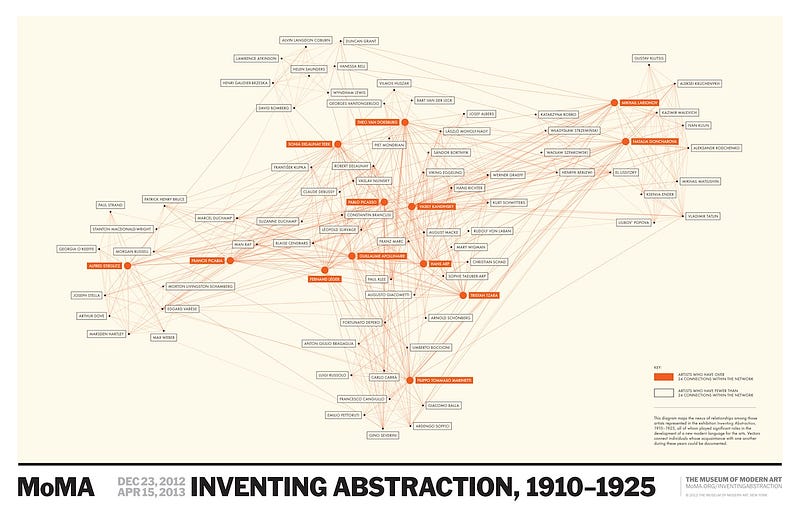
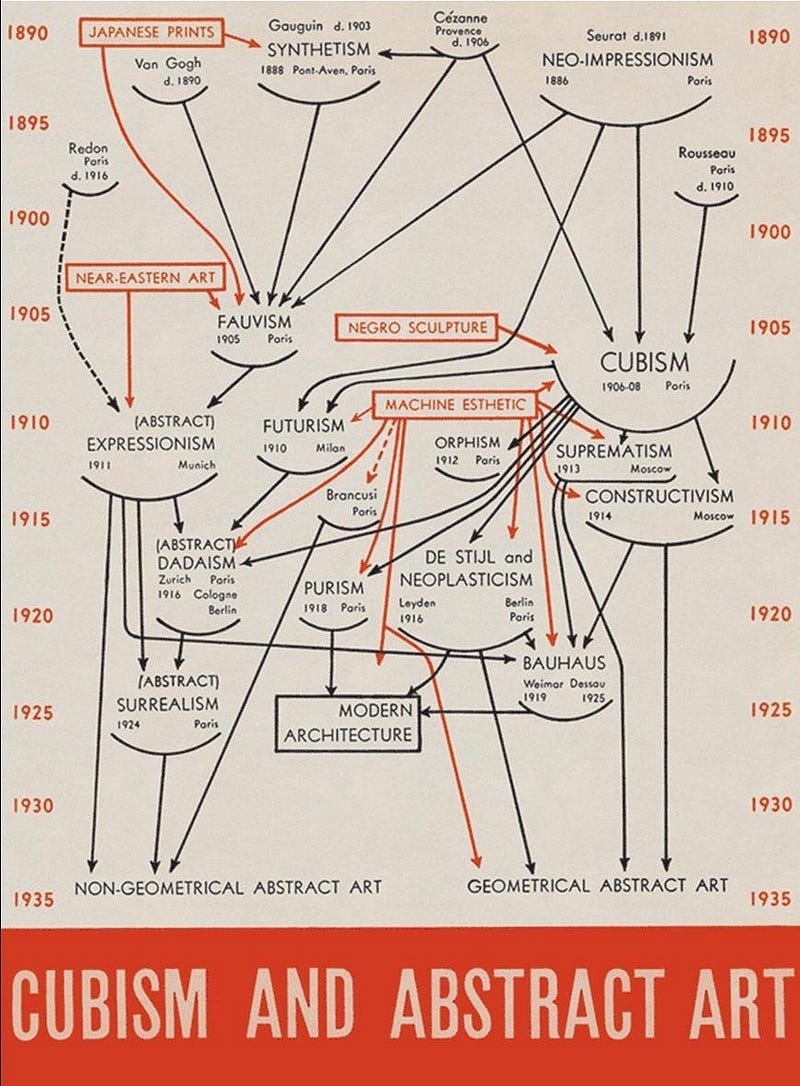
The Musuem of Modern Art website has an interactive map of the connections between abstract artists from 1910–1925. It shows that the most successful artists were the ones most networked in the abstract art community.
This abstract timeline (below), also from MoMA, shows the flows between aesthetic schools of thought. I’d like to point out the fact that the map above and diagram below are abstractions themselves. They simplify large datasets and narratives, compressing all inessential information into the background. As we can see, abstraction has a rich and complex history, but it is approaching a new singularity today.
Epilogue
I suspect one reason that abstract art is popular again is not because people understand it, but because people don’t understand the world. This may be a facile explanation, but the world is more complicated than ever, and metamodernism is re-envisioning the great aspects of modernism and postmodernism together.
Indeed, there are few good sources for truth. And politics is nonrepresentative, as I wrote in The Abstract Empire of Global Capital. The world presents facades, and maintains control through narrative dominance. Perhaps we retreat into abstraction for solace, or clarity.
The saturation, commercialization, fetishization of mainstream art (movies, ie. the “Transformers” franchise) is the opposite of abstract art: a visual effects orgy with no meaning. In theory, abstract art strives for the opposite; simple aesthetics with complex meaning (perhaps).
To the untrained eye, a piece of abstract art is going to communicate no more profound conversation than a dog could to its owner — which could certainly be profound it its own right, but in a very exclusive way. To ‘get it’ might require a lot of knowledge about various contextual frames; the painting, the painter, history, certain ideas, etc.
Feelings are another matter, as an abstract art patron recently told me. Abstract art can evoke feelings which are independent from ideas that may or may not be in the painting. So, it can go both ways, abstract art can be explicit or implicit, resulting in very different outcomes. Either way, abstraction has cemented its position in art history, and our job is to keep the process alive.
If you open yours eyes, you’ll see that abstraction is all around us. The writing’s on the wall. Racism is abstract. Abstract art can give commentary to it. We live in an abstract society that alienates us from community. Abstract perspective can bring us back together. Don’t ever stand in front of a canvas without reflecting on your own power to create or to do whats right, as well as your own ignorance thereof. If you value art, be willing to go the dark places it wants to take us.
Beyond the brush, never forget what (abstract) art really is and stands for. The dictionary defines art as ‘the expression or application of human creative skill and imagination, typically in a visual form such as painting or sculpture, producing works to be appreciated primarily for their beauty or emotional power.’ But a more abstract definition carries more weight: Art is the act of creation, and the product of it. Art is both a process and product of being. You are art. Thou art art.
The return of abstract art is also a renaissance of black culture. In the wake of Obama’s presidency, art and marginalized people have to unite and speak up more than ever. The coalescence of black criticism, art, and abstraction is necessarily a new force for social justice, civil rights, and system change.
The Abs-Tract Organization (TATO) is a boutique research and media think tank, centered around the broad concept of “abstraction” and five other vital research streams.
If you appreciate the work we do, please support us on Patreon for $1.
Please like and share this article. Join and support our growing metamodern project at http://www.abs-tract.org and on twitter @TATO_tweets.