The Birth of Experimental Psychology
A Deep Dive into the Psychological Roots of Humanity (Article №9)
The idea that animals have a mind and are capable of a certain form of thought dates back to ancient Greece. Aristotle, in particular, distinguished three kinds of mind: vegetative, animal, and human.

The vegetative mind is concerned only with nutrition and growth. The animal mind possesses, in addition, the ability to experience sensations — pain, pleasure, desire — as well as motor function. As for the human mind, it has, in addition to these functions, the capacity for reasoning. According to Aristotle, only humans are self-aware and capable of acquiring high-level knowledge.
While the similarity between humans and animals was a crucial point for philosophers, it became even more significant for psychologists. In the 15th century, René Descartes claimed that animals were merely complex machines driven by reflexes. If he had been correct, observing animals would not have taught us anything about our own behavior.

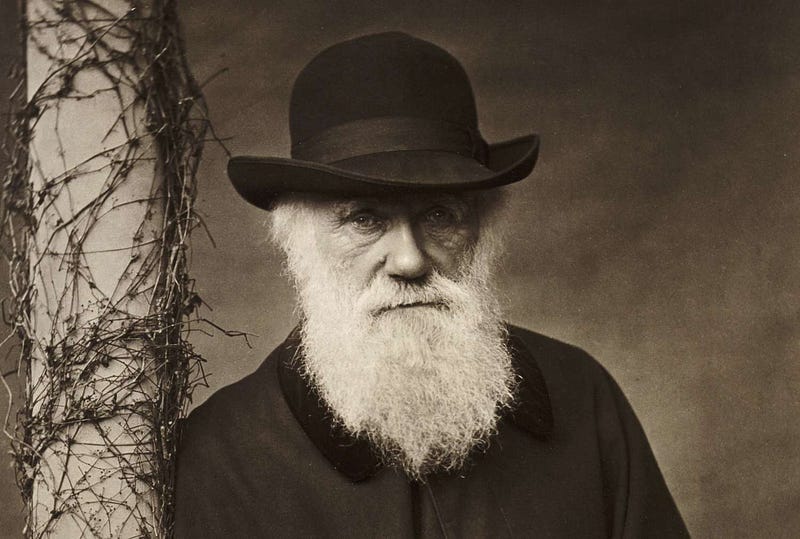
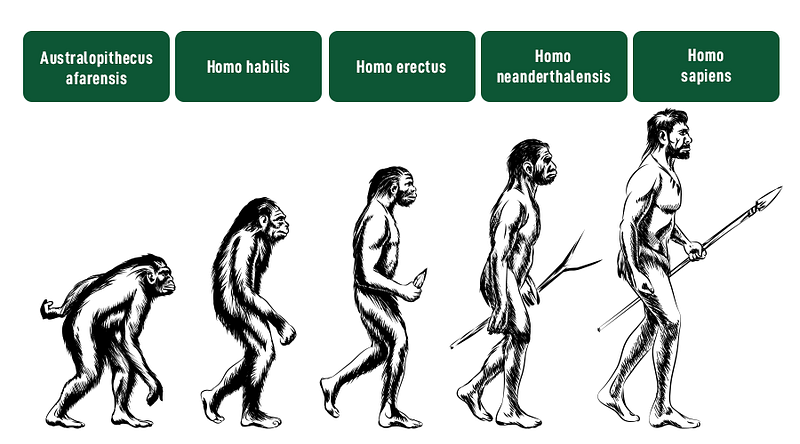
However, when Charles Darwin asserted some 200 years later that humans were genetically linked to animals and that consciousness manifested in all creatures, from the lowest levels of evolution to us, it became evident that experimentation on animals would be rich in insights.
This was the position advocated by physician, philosopher, and psychologist Wilhelm Wundt (1832–1920). He described the continuum of life from microscopic animals to humans, asserting in his work Elements of Physiological Psychology that consciousness is a universal attribute for all living beings since the beginning of the evolutionary process.
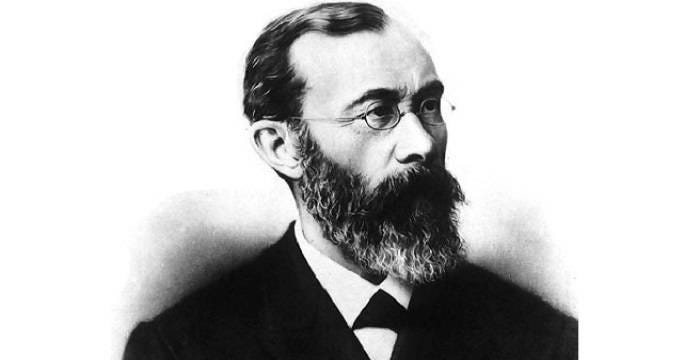
For Wundt, the very definition of life implies a form of mind. “From the point of view of observation,” he said, “we must consider as a strongly probable hypothesis the fact that the beginnings of psychic life coincide with the beginnings of life itself. The question of the origin of psychic development is thus resolved into the question of the origin of life.”
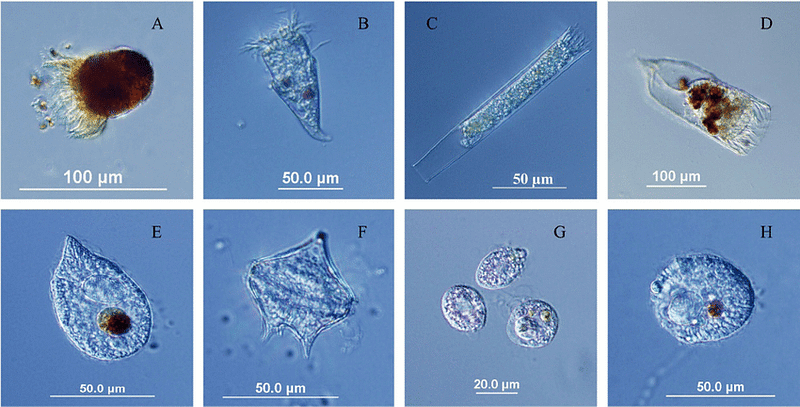
Wundt went so far as to claim that even the simplest organisms, such as protozoa, have a form of mind. While this may surprise us today, as few people are likely to attribute any mental capacity, even limited, to a unicellular being, imagine the effect of this assertion over a century ago!
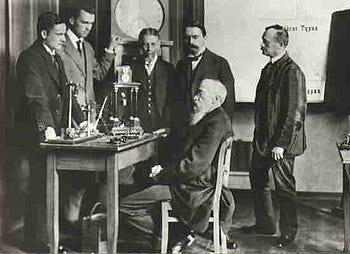
Wundt wanted to test his theories and earned the nickname the “father of experimental psychology” for establishing the world’s first formal laboratory for experimental psychology at the University of Leipzig in 1879. He intended to systematically research human psyche and behavior by first subjecting basic sensory functions to thorough examination.
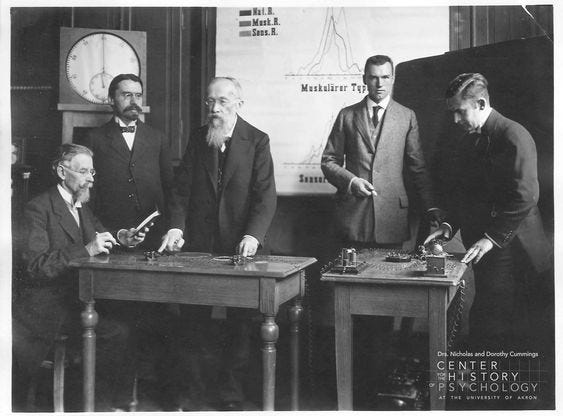
His laboratory inspired other universities in Europe and the United States to establish psychology departments, mostly influenced by his own laboratory and often led by his former students, including Edward Titchener and James Cattell.
Observing Behavior
Wundt believed that “experimental psychology has no other goal than to precisely describe consciousness.” While considering consciousness as an “inner experience,” he focused on the “immediately real” form, which is apparent, of this experience. This led him to study behavior, which could be observed and quantified through “direct observation.”
Wundt distinguished two types of observation: external observation and internal observation. External observation is used to study visible events in the external world and evaluate cause-and-effect relationships on physical bodies — especially in stimulus-response experiments. For instance, applying an electric shock to the leg nerve of a dead frog causes muscles to contract in a reflexive flexion movement.
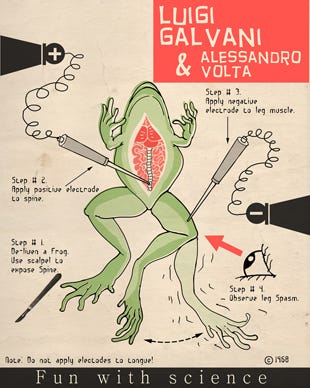
Observing these movements in a dead animal proves that they occur independently of consciousness. In living beings, these actions form the basis of involuntary gestures known as reflexes — such as swiftly withdrawing your hand when touching a hot object.
Internal observation, which Wundt called “introspection” or “self-observation,” involves noting and recording invisible events such as thoughts and feelings. This observation is crucial as it informs us about the functioning of the mind. Wundt was interested in the relationship between the inner world, the “psychic,” and the external world, the “physical,” which he did not see as two contradictory but complementary entities.
He began by focusing on the study of human sensations, particularly the visual perception of light, as he believed these sensations connect the external physical world to the internal psychic world.
In his light perception experiment, Wundt asked participants to report their sensations upon seeing a light signal of the same intensity and duration each time. He ensured that each participant received exactly the same stimulus, allowing for comparison of responses and the repetition of the experiment if necessary. By emphasizing this replicability, Wundt set the standard for all future psychological experiments.
In his sensory experiments, Wundt sought to explore human consciousness in a quantifiable manner. He refused to see it as a subjective experience unique to each individual and therefore impossible to evaluate.
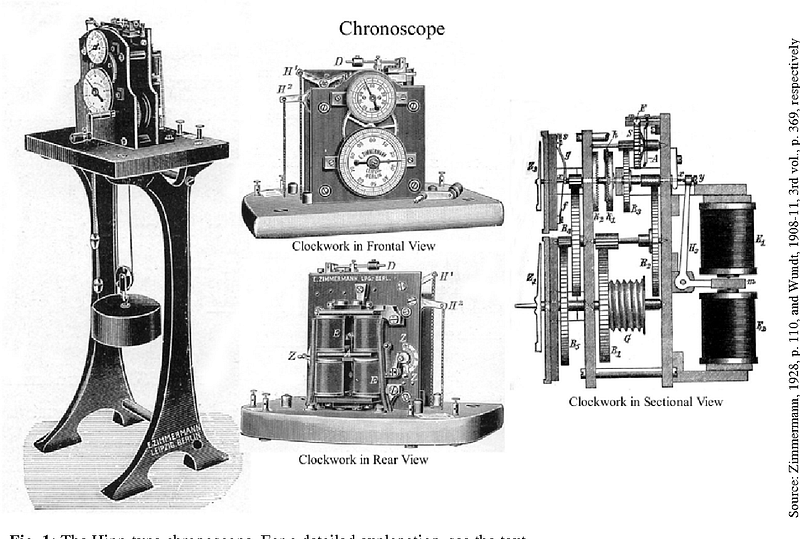
For example, in the light experiment, he focused on the time elapsed between the reception of the stimulus and the voluntary response — not the reflexive reaction — of each participant, measuring it as precisely as possible with various instruments. He was equally interested in common responses reported by participants as well as those showing individual differences.
Wundt suggested breaking down a pure sensation into three elements: quality, intensity, and “affective tone.” For instance, a fragrance can distinctly exhibit a sweet note (quality), light intensity (intensity), and a pleasant scent (affective tone), while emanating from a dead rat is a strong (intensity) and unpleasant (quality) odor.
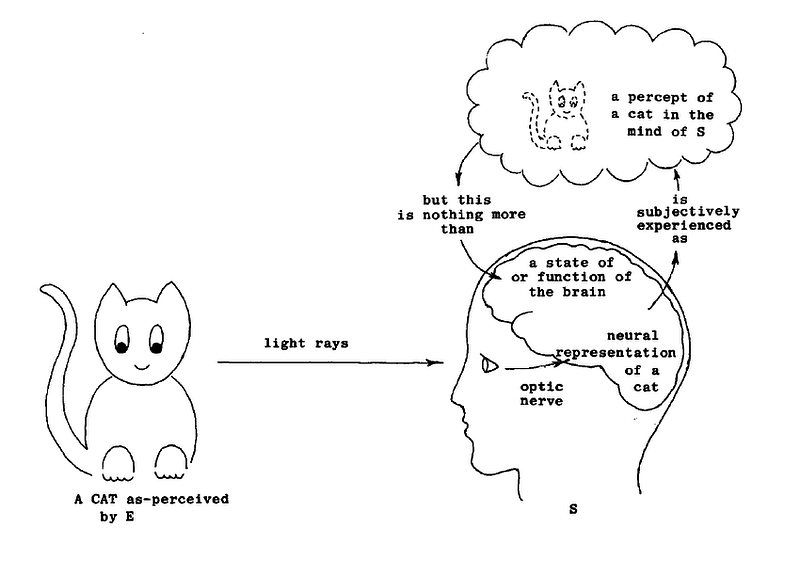
He asserted that all consciousness originates in sensations, but these are not internalized as “pure” sensory data; they are perceived as if already grouped to form a representation — such as the image of a dead rat — which Wundt called the “image of a process in the physical world.” Thus, recognizing a person we know happens when we see a face with certain features — mouth shape, eye color, nose size, etc.
Three Categories of Consciousness
Based on sensory experiments, Wundt proposed breaking down consciousness into three broad categories of action — representation, will, and feeling — which together give the impression of a homogeneous flow of events.
Representation further divides into “perception” if it refers to the brain image of an object perceived in the physical environment — for example, a tree in the field of vision — and “intuition” if it relates to subjective activity — such as remembering a tree or imagining a unicorn.
The process by which a perception or intuition clearly manifests in consciousness is called “apperception.” This occurs when we perceive a sudden noise and become aware that it is a danger signal, indicating the risk of being hit by a car if we don’t move quickly enough.
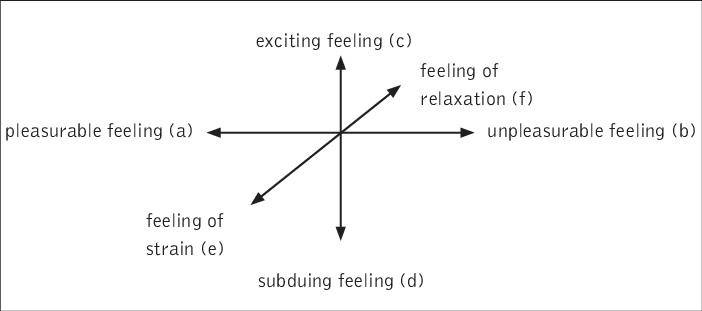
The second category of consciousness, will, is characterized by how it intervenes in the physical world: it expresses our free will, whether choosing to raise an arm or wear a particular garment. This form of consciousness escapes all experimental control and measurement. The third category, feeling, is quantifiable through participant reports or the measurement of certain behavioral levels — tension and relaxation or excitement, for example.
Cultural Psychology
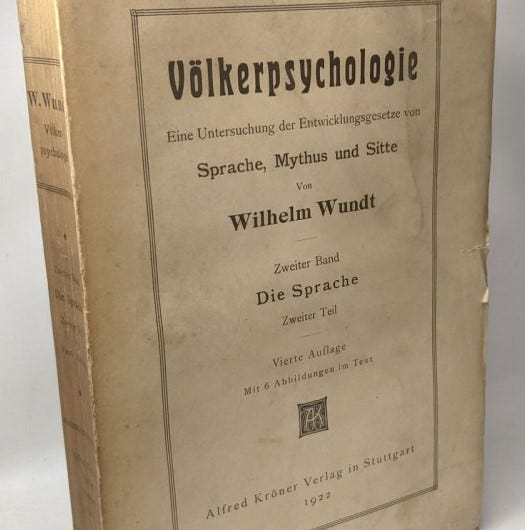
For Wundt, an individual’s psychic development is determined not only by sensations but also by complex socio-cultural influences that cannot be replicated or controlled in an experimental setting. He devoted a ten-volume treatise, Völkerpsychologie (The Psychology of Peoples), written during the last twenty years of his life, to these influences — religion, language, myths, history, art, laws, and customs, etc.
Wundt considered language a particularly important element of the cultural aspect of our consciousness. All verbal communication begins with a “general impression” — an idea of what we are trying to say. Having had the “apperception” of this general starting point, we choose words and phrases to express it, and while speaking, we monitor the accuracy of the transmitted message.
For example, we might say, “No, that’s not it, I mean…” and choose another term or expression. The listener must grasp the meaning of what we are trying to convey, but often the words themselves matter less than the overall impression, especially when conveying strong emotions.
As Wundt noted, we often remember the general sense of what someone told us long after forgetting the precise words used to do so.
The ability to use real language, as opposed to a limited exchange of signs and signals, is considered by many psychologists today as one of the key traits distinguishing humans from the rest of the animal kingdom. There are some exceptions, notably in primates such as chimpanzees, but language is generally regarded as a distinctly human aptitude, essential for consciousness.
Animal Consciousness
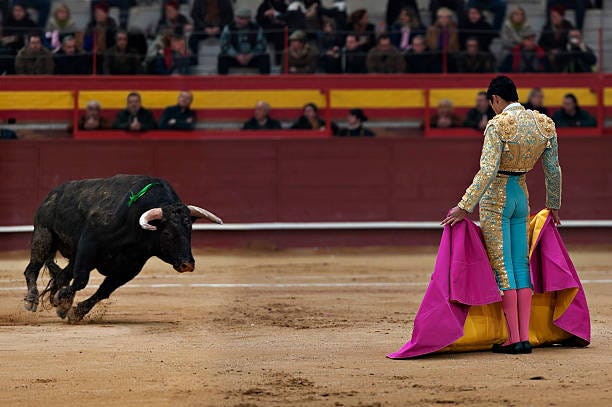
The definition of consciousness continues to be debated but has not fundamentally changed since Wundt. The level of consciousness in animals has still not been clearly established, although we have established codes of ethics supposed to regulate animal experimentation, intensive farming, hunting, or the corrida.
Do animals feel discomfort, fear, and pain in a way resembling ours? More fundamentally, do animals have consciousness or are they self-aware? The question remains unanswered, but today there are psychologists willing to attribute consciousness to animals as tiny as protozoa, echoing Wundt’s views.
Who Was Wilhelm Wundt?
Born in Baden (now Mannheim, Germany), Wilhelm Wundt was the fourth child of a renowned intellectual family. He received a strict education from his father, a rather stern Lutheran pastor, leaving little room for play. At thirteen, he attended a very strict school. He studied at the universities of Berlin, Tübingen, and Heidelberg, graduating as a medical doctor in 1856.
Two years later, Wundt became the assistant to Hermann von Helmholtz, famous for his work on visual perception. He gave the first courses on empirical psychology in Heidelberg and, in 1879, founded the first laboratory for experimental psychology at Leipzig, contributing to making psychology a separate science. With over 490 works, Wundt is among the world’s most prolific scientific authors.

Summary of the Article
Consciousness is an “inner experience.” Every living being knows this inner experience. Every living being must have always known this inner experience. Conclusion: The beginnings of psychic life coincide with the beginnings of life.
All psychology, through inner experience, must begin with self-preservation studied through experimentation designed to detect involuntary reactions. This yields quantitative data on consciousness. Conclusion: Psychology is the scientific study of psychic life.
“Experimental psychology has no other goal than to precisely describe consciousness.” Wilhelm Wundt