
The Biggest threat to Europe’s economy is not the Lockdown
Raw Material shortages are causing bigger headaches
European citizens have been patiently waiting for our Economies to re-open. One year of Covid has taken its toll. Unemployment is at an all-time high. Hundreds of thousands of businesses throughout the continent have either been forced to shut or are working far below capacity. Tourism, which has been such an important source of income for many European countries, has been decimated.
We can see the end of the tunnel. We know Spring is coming where the transmission of the virus will drop significantly. We also know that vaccinations are moving along. Once you’ve got the most sensitive populations vaccinated, the strain on the health system will slowly be relieved. (For example, the Greek Ministry of Health is already reporting a drop in hospitalizations and covid related deaths among the 80+ year olds — these were the first groups vaccinated in Greece)
But as we emerge from this crisis, Europe is facing a bigger economic threat that, so far, only people at the top of the supply chain are noticing: There is a massive shortage of raw materials and supplies.
How will these shortages affect us?
Factories in Europe need raw materials and semi-finished goods to produce their final goods. If they can’t get these materials on time, then they can’t produce their goods. This means production needs to be scaled back, and in some cases, manufacturing plants will be closed. This will leave an impact on employment and wages for people working in the manufacturing sector.
A shortage of raw materials also leads to an increase in prices for these commodities. Eventually, manufacturers need to pass these increases down the supply chain to wholesalers, retailers, and consumers.
So the European retail sector will be facing a dual-threat: Increased prices of finished goods and a shortage of many in-demand goods.
Why do we have shortages?
There are many reasons why we have shortages. After the 1st wave of Covid in the spring of 2020, demand for raw materials crashed as economies all over the world contracted. That left us with a massive supply glut with companies unable to get rid of their stock.
Remember that day last April, when the future price of oil went negative? That’s what I’m talking about. Prices of raw materials and commodities went through the floor as companies scrambled to offload their stock.
As a manufacturer, I was elated to get raw materials at such a low cost. But guess what happened next? Prices had dropped by so much that many factories were producing below cost. So they shut down their production.
While the availability of raw materials fluctuated wildly, another problem emerged with global trade. Shipping companies started re-adjusting their routes because of the global economic contraction. Also, many seaports were congested because of Covid related delays.
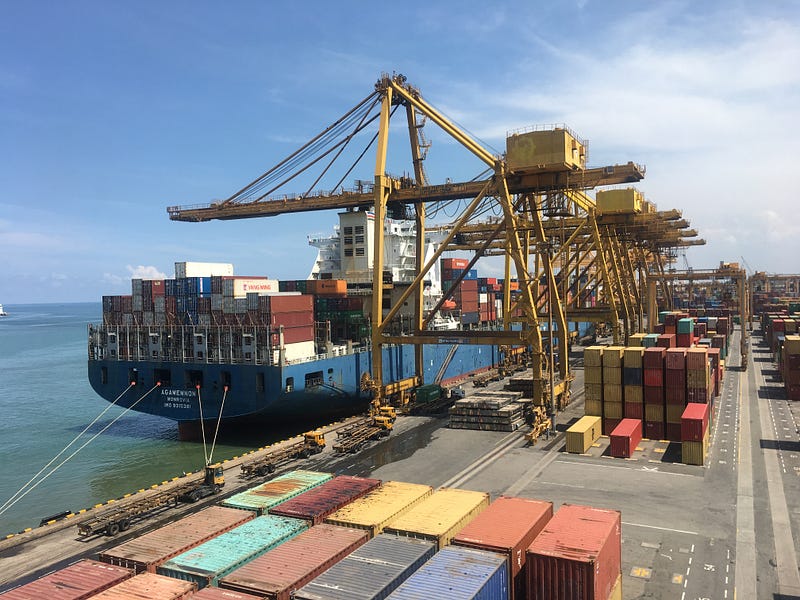
And the biggest problem was that Chinese exporters were struggling to find empty shipping containers to load their goods. To put it bluntly, Chinese manufacturers were unable to ship their goods to Europe because there was a shortage of containers to put the goods in! Containers have been traveling to Europe packed with goods, and they go back to China empty since Europe is not exporting as much due to the continued lockdown.
This mayhem led to prices of freight rates quadrupling and delivery times heavily delayed. A 20ft container from a major Chinese port to a major European port went from $1000 to $4000. For companies importing bulky and cheap consumer goods, such a rate increase will impact the final price of the product.
If that was not enough, delivery times of goods have been significantly delayed. In the past, you could place an order on Monday, and the Chinese manufacturers could have the goods loaded in the container and ready to ship by the end of the week. Now, suppliers need to wait for several weeks to find an empty container.
So what happens when we re-open?
For the first few months, Europe will be suffering from delays and increased prices. I run a manufacturing business in construction chemicals. I expect that in April, business will pick up because of seasonality and an increased optimism of the economy re-opening.
However, several of my suppliers have informed me that the raw materials I ordered in February will not be delivered on time.
One friend of mine, who runs a plastics company, has been given delivery dates in late April. This guy has orders in hand, customers are begging to deliver the product, and he cannot produce. Until he can produce, he will need to keep his staff employment to an absolute minimum
How much longer will this last?
Eventually, everything returns to an equilibrium. If there is a shortage of containers, someone in China will start making more containers to profit. (Although he will need to deal with ever-increasing steel prices)
Shipping companies will also start re-introducing more ship routes from China to Europe. At the $4000 rates (see above), they want to swoop in and claim some of those profits.
Raw material factories that manufacturers shut down will also eventually re-open now that prices have become more attractive. However, all these adjustments take time. Getting a factory to re-open is not just pulling a switch. It is actually a complex process that could take months. The same goes for taking a ship out of the shipyard and putting it back on a route.
I do not see this shortage problem being fixed before the 2nd half of 2021. We all agreed that Q1 was lost for Europe. We hoped that Q2 would drive recovery as we re-open our economies. I still expect Q2 to be a positive quarter, but unfortunately, the economic boost will be nowhere near the momentum that we really need to get millions of people back to work.


