The Biggest Problem Behind GPT Has Been Solved
So this is a little late because I didn’t know if I was going to write anything about it. Because I was developing my RSS reader Echo which did not have any GPT integration planned. I thought about having it summarise articles for you but that seemed unnecessary. But then I went back to my app Litany which does use the GPT API. And I knew I had to talk about this.
I am of course talking about this press release
It talks about how ChatGPT has an API now. This isn’t too exciting by itself. GPT-3 can do almost everything ChatGPT can do. But there is something else in this post that I’d like to highlight.
90% Cost Reduction
So the new model OpenAI is rolling out is called ‘gpt-3.5-turbo’ and it’s priced at 0.2 cents per 1000 tokens (about 750 words). This represents a 90% decrease in cost from the previous best model ‘davinci’ which costs 2 cents per 1000 tokens.
And I think this is a really great opportunity for developers to get into the AI game. The biggest problem with GPT previously was the cost: 2 cents per 1000 tokens. And it’s not too uncommon for a single query to use 500 tokens. So you could end up spending one cent per API request.
So a 90% reduction is a very welcome change. It’s not going to set the world on fire, it’s definitely still more than using a database, but it’s not that unreasonable. I’d say it moved from ‘absurdly overpriced’ to just ‘extremely expensive’.
I wonder if some of the rumoured competitors to GPT are bringing down the cost. It seems like everyone wants their own GPT now.
Now Is The Time To Get Started
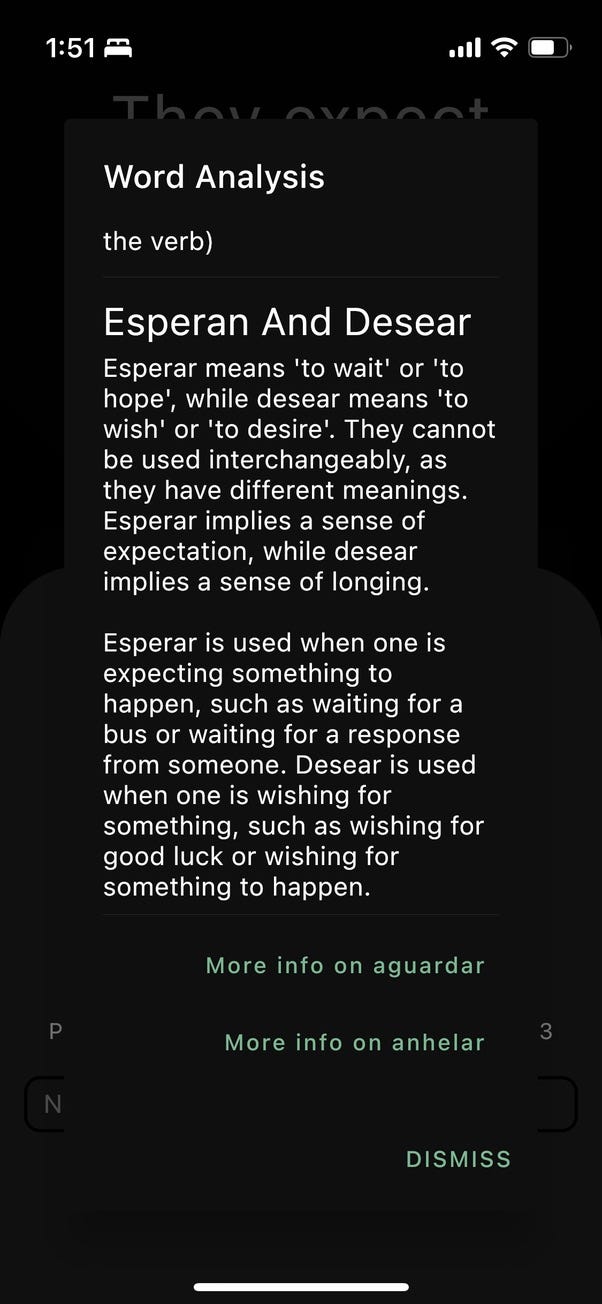
GPT, when it works, is a magical tool. So I’m integrating a tool into my app Litany which allows you to ask it about various synonyms. I’d often confuse myself with various synonyms during reviews so I built a way to ask GPT about them. And this is how it turned out:
Very impressive. Although it’s not perfect yet. Sometimes it doesn’t pick the best synonyms. Although if there is a very obvious synonym it’ll find it. And it doesn’t really understand context yet. So a single word can have multiple meanings and it’s not great at finding them.
But for simple things it’s really great. And it’s really useful.
And this is in addition to the other use of AI: breaking down phrases:
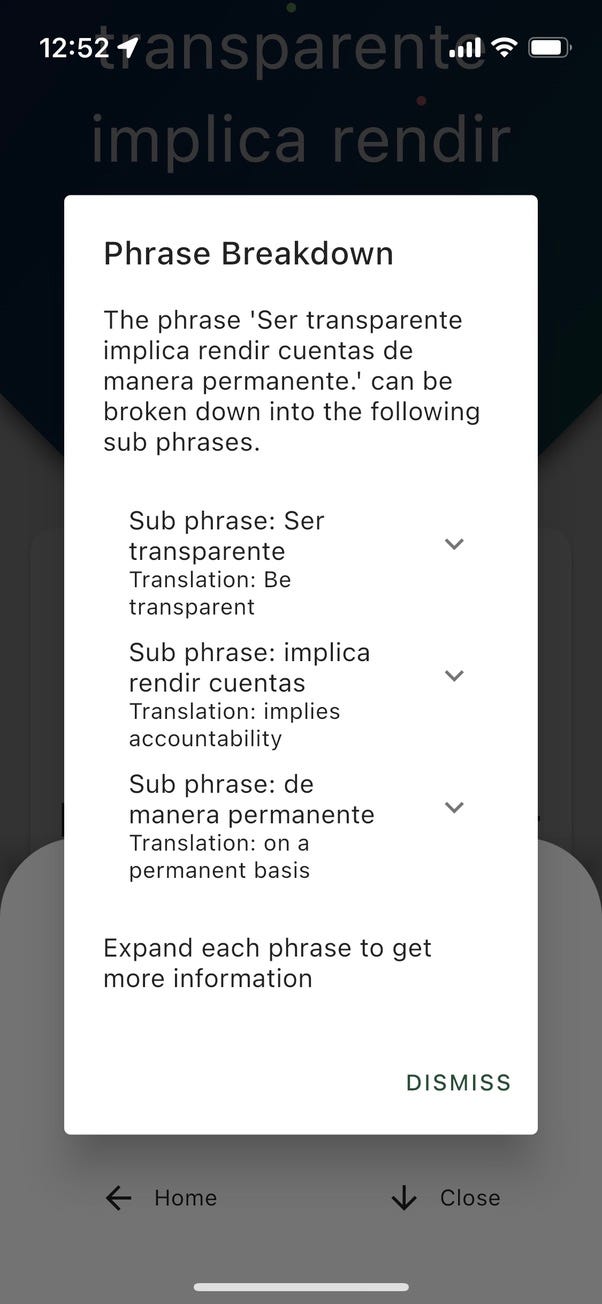
This is really impressive too.
This is all done with GPT-3. I plan to move to GPT-3.5-Turbo soon, but not right now. When you create an account you actually get some credit for free and I still haven’t exhausted the free credits yet. But soon I’ll look into it.
Conclusion
It’s really easy to integrate GPT into anything learning related. Other things, not so much. But now I am incredibly tempted to try integrating AI into more things. Maybe I’ll experiment with that article summarizer. It can be quite useful to have an article summarised for you.
If you liked this article be sure to give it a few claps. It helps out a lot with the algorithm. Also consider subscribing, I made an RSS reader that makes it very easy to do. It’s available on iOS and Android.