
Deglobalization For Dummies
The Biggest Loser Could Be China
The effects of Deglobalization will hit China the hardest
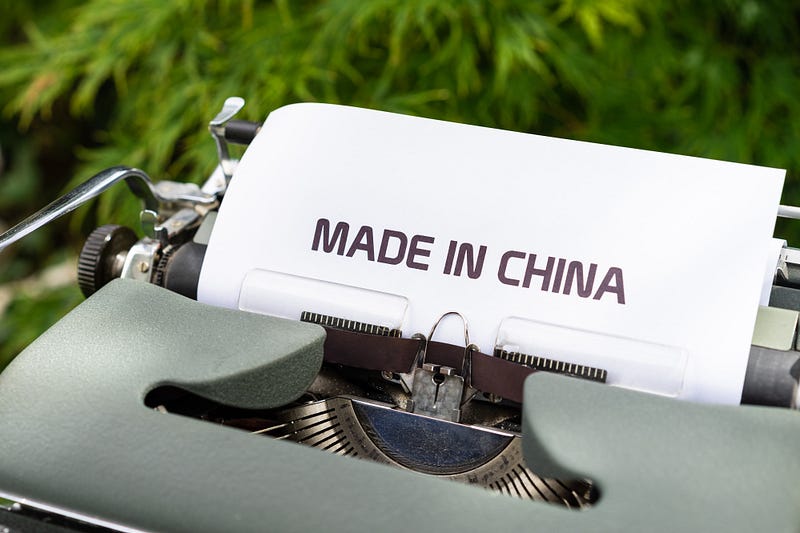
Russia’s groundless war against Ukraine has accelerated the division of the world into two blocs: democracies and autocracies. This, in turn, has highlighted the dangers of economic interdependence between countries with opposing ideologies and security interests. And while the forthcoming deglobalization process hurts everyone, China will lose out the most.
Of course, even before the Russian invasion of Ukraine, China had already partially decoupled from the United States. And it has sought to reduce its dependence on US markets and technology, thereby ensuring that this process takes place on its own terms. To this end, the state presented its “two-cycle strategy” in 2020, with which it intends to promote its domestic demand and technological independence.
But China was still the world’s largest exporter of late: Last year, the country shipped $3.3 trillion worth of goods around the world, with the United States leading the way. Trade volume with the European Union rose to $828 billion, although a controversial EU-China investment deal fell through over human rights disagreements.
This would make the country less sensitive to economic and financial weapons used by the West against Russia, says political scientist Minxin Pei in an op-ed.
Stronger decoupling
The prerequisite for the negotiations on this agreement was that Europe would maintain its strategic neutrality in the Sino-American Cold War in order to be able to use the economic advantages of its engagement with China. But if human rights concerns were enough to keep the EU Parliament from reaching a deal, Russia’s war on Ukraine — which China has been silently backing and which has brought the US and the EU closer together — is likely to prompt the EU to become more economically decoupled from China.
You can’t blame them for putting security above economic prosperity in Western democracies and their autocratic opponents. But they must also accept the consequences. And for a middle-income autocracy like China, this will be much more expensive than for rich democracies like the US and its European allies.
First of all, China will suffer from having less access to the major western markets. In 2021, the value of exports of Chinese products to the US, EU, and Japan — which account for 38 percent of total exports — was nearly US$1.3 trillion. Should China’s access to these three economies halve over the next decade — which is a likely scenario — the country will need other markets.
China doesn’t seem to have good cards here. Its two-front strategy suggests that not even the country’s top management expects to be able to offset these losses through other external markets. But China’s apparent belief that domestic demand can fill that gap also seems pretty far off.
High levels of debt, rapid population aging, and an imploding real estate sector will continue to hold back GDP growth, while consumer demand is hampered by severe income inequality, skyrocketing housing costs, and a lack of social protection. This problem will be exacerbated by the fact that factories for export goods will be closed and that jobs will be lost as a result. A significant part of China’s infrastructure — especially the energy and transport networks — will be underutilized or even become redundant.
In addition to the problem of shrinking export markets, China will also lose access to the technologies it needs to build a knowledge economy. US sanctions are already crippling telecom giant Huawei — and blocking semiconductor maker SMIC from accessing cutting-edge technologies.
If the US can persuade the EU and Japan to revive the export control committee CoCom to choke off technology flows to China — which the Ukraine war may make more likely — China would have little chance of winning the technology race against the US.
The third key disadvantage of deglobalization for China is more difficult to measure but could prove to be the most serious: declining efficiency gains from dynamic competition. Goods made and sold in China are of much higher quality today than they were two decades ago — especially as Chinese companies have to compete with their Western rivals. If this pressure is removed, they no longer have to deliver higher quality at lower prices. This will hamper innovation and hurt consumers.
All of these downsides might be tolerable if economic decoupling actually made China safer. And on the face of it, that might even appear to be the case, as it makes the country less vulnerable to the kind of economic and financial weapons the West has used against Russia.
However, as the country’s economic power wanes, so will its position on the global stage — and the domestic political status of the Communist Party.
Several coffees a day keep the writer at play. Consider shouting me a cup.