
HOUSING CRISIS
The Big Secret City People Don’t Know About Small Towns
I should probably keep this to myself
You city slickers think you know all about small-town folks. We are unsophisticated hicks. We have no sense of style. We think Red Lobster is a fancy place to eat. We ain’t got no education.
I definitely know people like that. But you know what else is true of small-town folks? We can afford to buy a damned house.
Whenever somebody online moans about having to pay thousands of dollars a month to rent a small apartment, I often pop in and mention that they could buy an enormous luxury home for the same amount of money here in central Illinois. And the answer is always some variation of “But who would want to live there?”
And then they go on to say that despite the obvious advantage of affordable housing, there are no jobs, no culture and nothing to do in small towns.
None of these things are true.
Nearly everyone of working age in my town of about 35,000 has a job. I’ve been working for myself for a while, but the previous traditional jobs I’ve had while living here were editor of the daily newspaper and copywriter at an ad agency.
Both were an easy commute. I could walk to the old newspaper office from my house, and driving to the agency took less than 10 minutes.
Living close to your work is nice. You can come home midday and let out your dog or start a load of laundry. (Working from home is even better, of course).
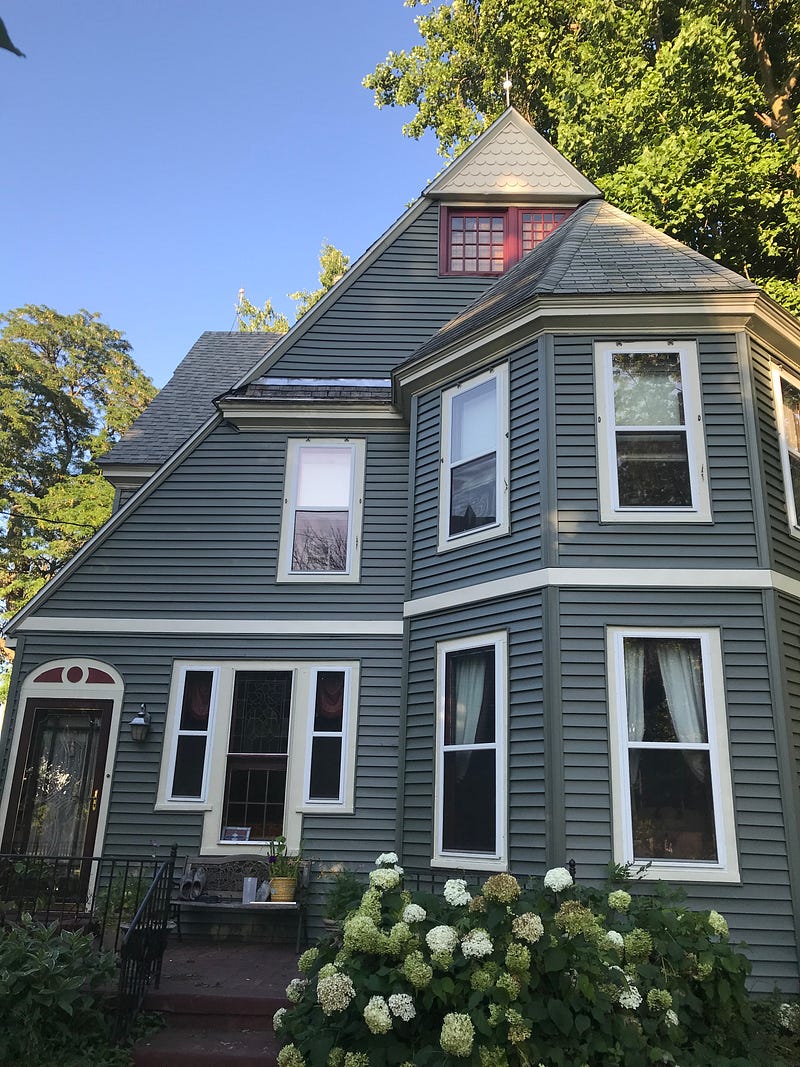
In 2008, my husband and I purchased a fixer-upper Victorian for under $100K. It’s in a safe (every part of my town is safe) and walkable neighborhood.
Having previously lived in a rural subdivision that required me to drive for every errand, I knew I wanted to live where I could walk to obtain basic services. Both my current house and the previous house where I lived and still own (my adult son rents it from us) are in walkable neighborhoods. I’m a big fan of being able to walk to the grocery store.
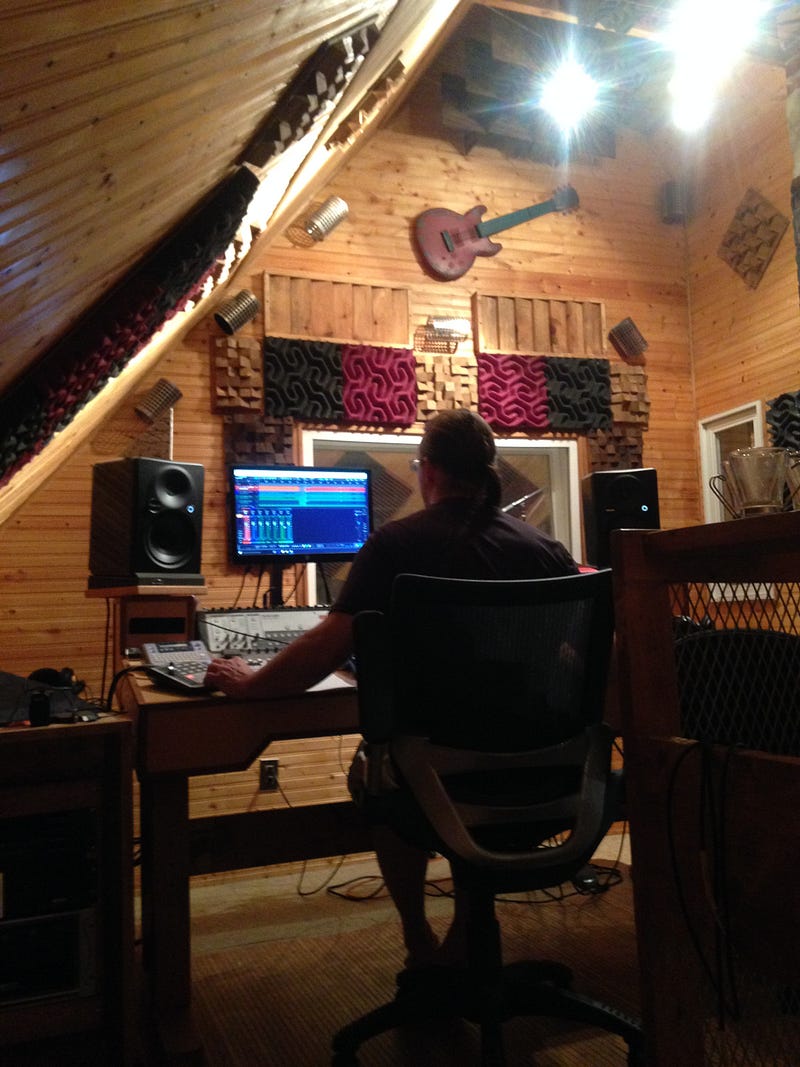
Here’s what we got: Two main stories and an attic, which is now a recording studio.
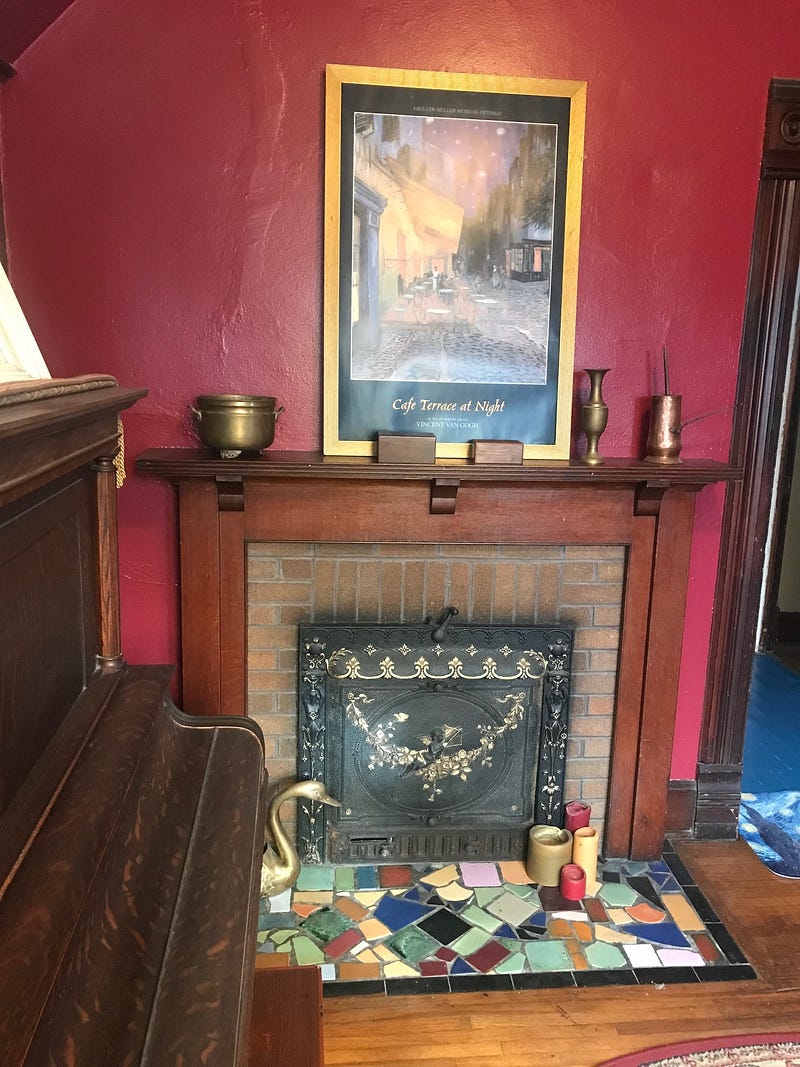
The house has hardwood floors and woodwork and vintage charm out the wazoo. It was listed as a four-bedroom, but in my mind it’s actually three. The master bedroom is a double room, each with a closet, so it’s counted as two bedrooms even though it’s not really.
Another room, a knotty pine former sleeping porch with seven windows, serves as my office. There’s a parlor, living room, dining room, huge kitchen and full bath downstairs. Upstairs are the bedrooms, a second full bath and an odd space that serves as a small library with a miniature antique desk for the grandchildren.

There’s a fenced yard with a deck, a two-stall carriage house and a goldfish pond I dug myself. There’s a big creepy basement where we do laundry and store stuff. The house was livable when we moved in, but we’ve done a fair amount of work to it and plan to do more.
Best of all, we are very close to having it paid off. Rent goes on forever. Mortgages, thank goodness, do not. Honestly, the very thought of having no mortgage payment soon makes me downright giddy with anticipation.
Not everyone loves period houses as much as we do, but there are plenty of more modern houses available in this price range. The other house we own here, built in the mid-1950s, is a small three-bedroom, one-bath ranch on a slab. It has an enormous fenced yard and is close to everything.
I paid about $80K for it in 2004.
It was in great shape, not a fixer-upper, and is located in a nice neighborhood.
A few years ago, my son dated an east coast girl from a wealthy family. When she flew here to meet us she honestly was surprised to learn not everyone in downstate Illinois is a farmer. She sheepishly admitted she assumed there would be nothing but corn.
(Don’t get me wrong; there is a lot of corn.)
But we are a short walk away from a cute coffee shop and multiple bars/restaurants. When people talk about the charms of an urban neighborhood, they’re usually talking about stuff like that, right?
But we are also near city hall, most of the county offices, the charming old downtown square that surrounds the courthouse, a grocery store, two drug stores and the post office. There are two parks and both private and public schools a block or two away.
Half an hour away is a larger city.
It has all the things we don’t have in this town. There are museums, many more restaurants and a civic center that brings in national entertainment. You can see the symphony or a play. It takes us about half an hour to get to the civic center — so in other words, it may well be closer to us than such amenities are for many who live in larger cities.
If we want even more, we can be on Chicago’s Magnificent Mile in two and a half hours. With the money you save by living in a small town, you just might be able to afford some nightlife and a posh hotel.
There are, of course, downsides to living in a small town. It’s absolutely true that a lower cost of living goes along with lower pay. However, there are so many remote jobs available now that if you have one, it makes little sense to pay big-city rental costs for a small space when you could have all the room you want for practically nothing (in comparison).
There is a downside.
You can’t expect to have amazing appreciation in value. Neither of my houses would sell for much more than they cost me when I bought them.
That’s OK. The day is in sight when we will have two fully paid-off houses. We may move back into the other one when we’re older because it has no stairs.
If you live in a big city and make significantly less than average, as I always have, you are never going to own two houses, regardless of how thrifty and careful you are.
Should you find yourself having to start a whole new career later in life, as I did when the newspaper industry imploded, well, you’ll be glad that it doesn’t cost you a lot to live. You’ll appreciate the breathing room that comes from not needing to immediately land a job with a big salary just to hang onto everything you’ve got.
A couple of years ago, I was flown out to Los Angeles to help direct a video. Writing scripts for TV and radio advertising, which I learned while at an ad agency, is something I absolutely love to do.
And I had an epiphany on that trip. Every adult I ran into, including the Uber driver who picked us up at the airport, presented himself as in the business in some way. Everyone was an actor or producer or a screenwriter or something. And I realized that if I had grown up in such a place, I might well have had better contacts that could have provided me an entry into writing for television.
Maybe.
But more likely, I’d end up unable to make rent.
That’s just not a problem when you live in a small town.
I shouldn’t be giving away the secret, of course. The very last thing I want is a lot of people with deep pockets coming here to buy up all the affordable real estate and price locals out of it.
Forget what I said.
It’s mostly corn here.


