
The Bible came alive in a lost city in Syria
The amazing story of Dura-Europos
In 1920, British soldiers were digging a trench in Syria, and saw fragments of paintings. Archaeologists came, and realized they stood on top of an ancient city.
Around 256 A.D., it had been under siege. The citizens were gassed to death in an early use of chemical warfare, and buried. Seventeen hundred years later, the ruins were being raised in the sand.
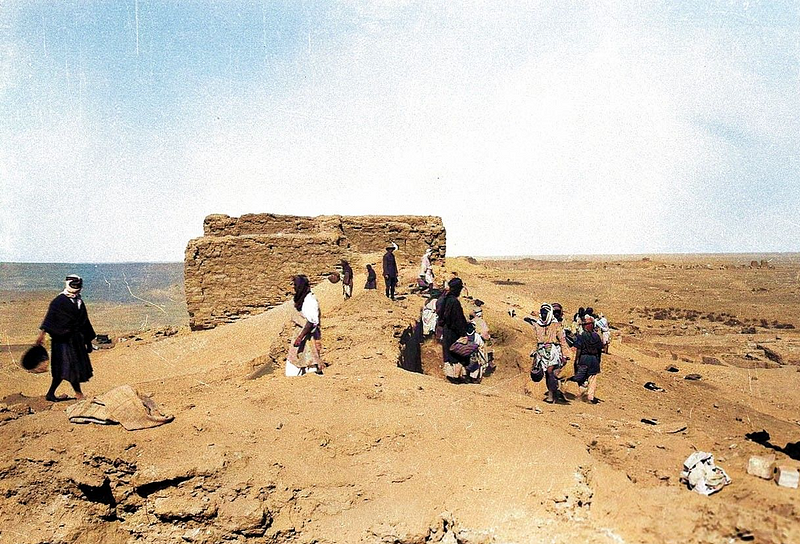
Persians called it ‘Dura’, as to Romans it was ‘Europos’.
To learn about ‘Dura-Europos’, as the ruins came to be called, is to be consulting mostly scholarly literature. It seems fascinating? A whole ancient city had been preserved like a museum.
But the public, for the most part, has never heard of it.
I look through photos taken by archaeologists during the excavations that occurred between 1928 and 1937.
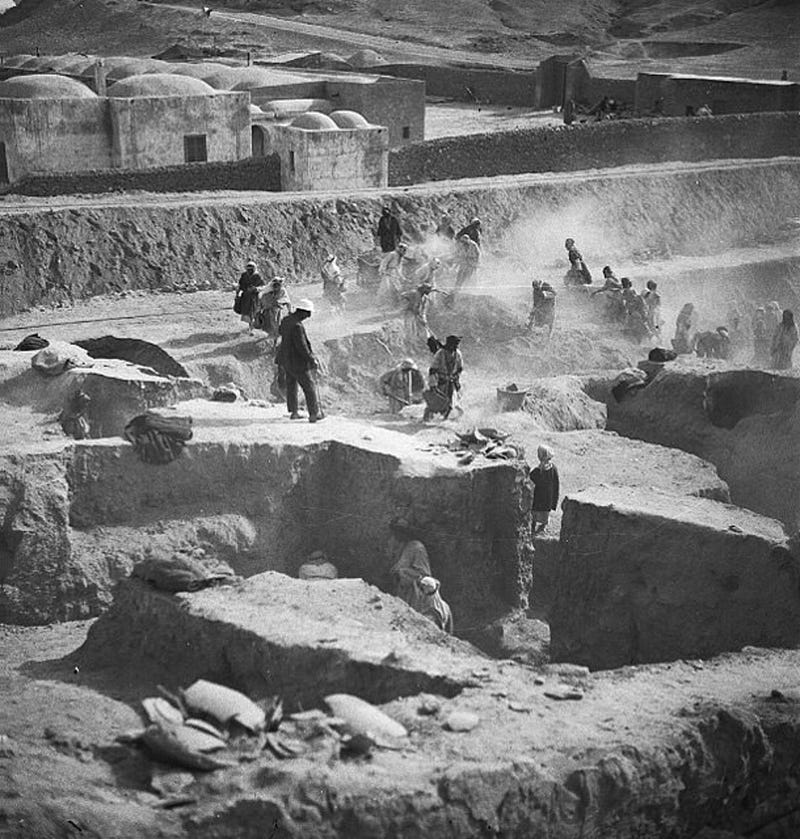
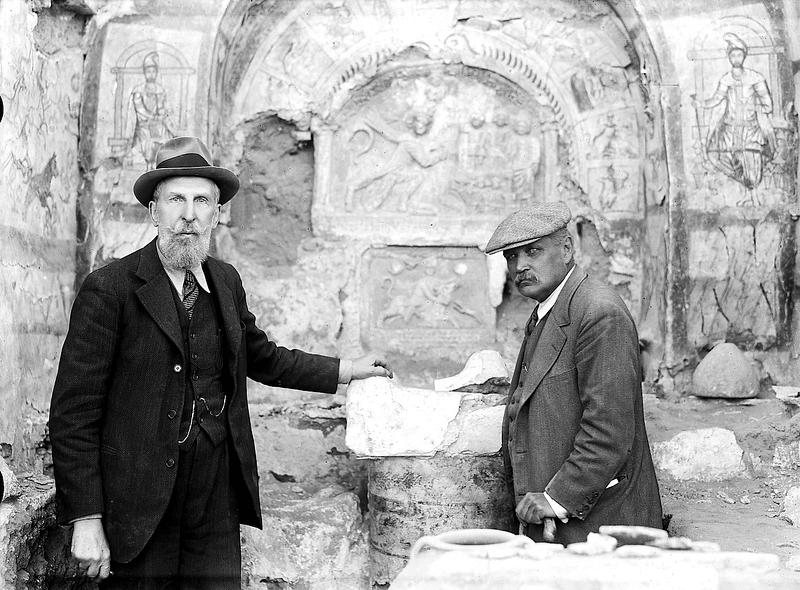
Temples to many deities were found.
One could only imagine the prayers and appeals made as the citizens had been dying. Their gods would not help them.
A Jewish synagogue was found. As walls were cleared of dirt, oddly, archaeologists saw murals.
The archaeologist Clark Hopkins recalls the discovery:
“All I can remember is the sudden shock and then the astonishment, the disbelief, as painting after painting came into view. The west wall faced the morning sun which had risen triumphantly behind us, revealing a strange phenomenon: in spite of having been encased in dry dust for centuries, the murals retained a vivid brightness that was little short of the miraculous.”
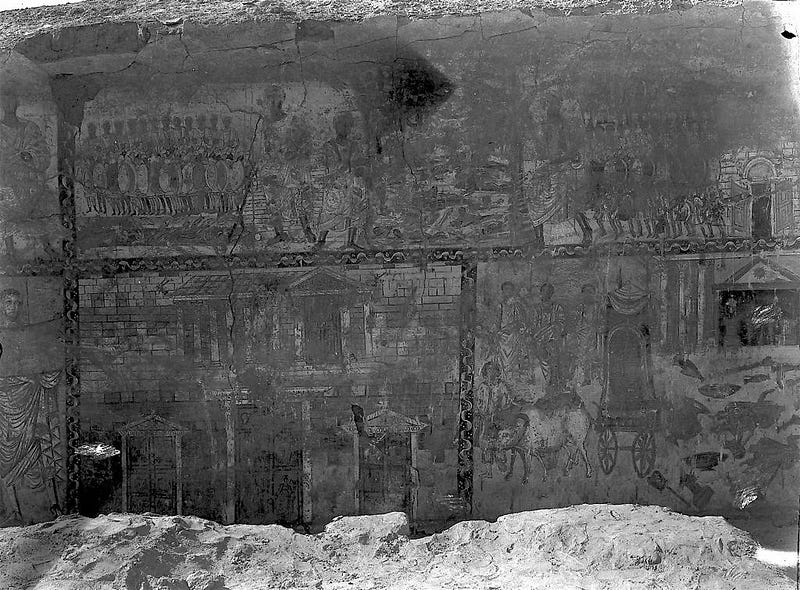
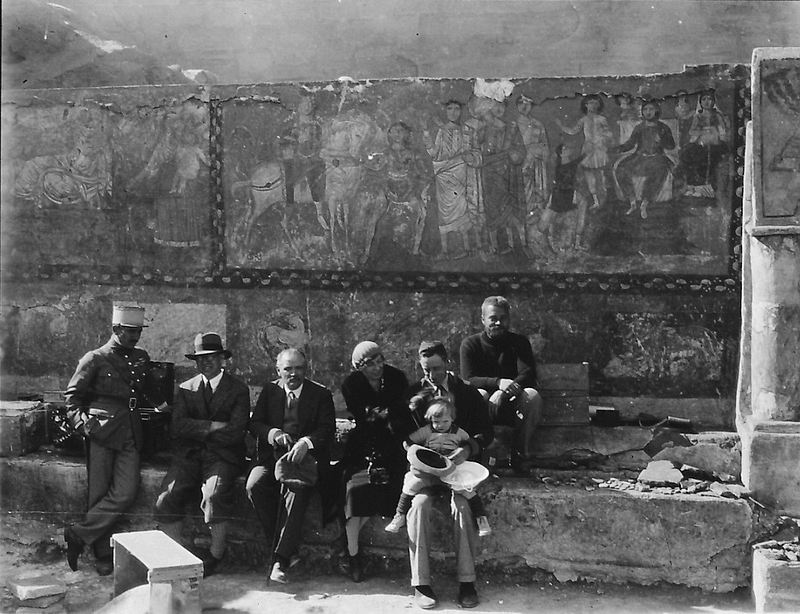
Could this be illustrations of the Bible?
It was shocking. Jews didn’t make sacred images. To do so would’ve been seen as a violation of the Second Commandment.
But here, on walls some twenty-two feet tall, the Old Testament was laid out like a graphic novel. In some sixty panels—just a part of what once existed—there was Moses, David, Elijah, on and on.
Clark Hopkins continues:
“It was a scene like a dream! In the infinite space of clear blue sky and bare gray desert, there was a miracle taking place, an oasis of painting springing up from the dull earth. The size of the room was dwarfed by the limitless horizons, but no one could deny the extraordinary array of figures, the brilliant scenes, the astounding colors.”
Exposed to sunlight, the murals began to fade.
A top layer of the painting was disappearing, the archaeologists realized, leaving just the undercoat. The result, as one wrote, was an image that was “hopelessly confused” in comparison to the original.
The murals had survived nearly two millennia—and lasted two hours.
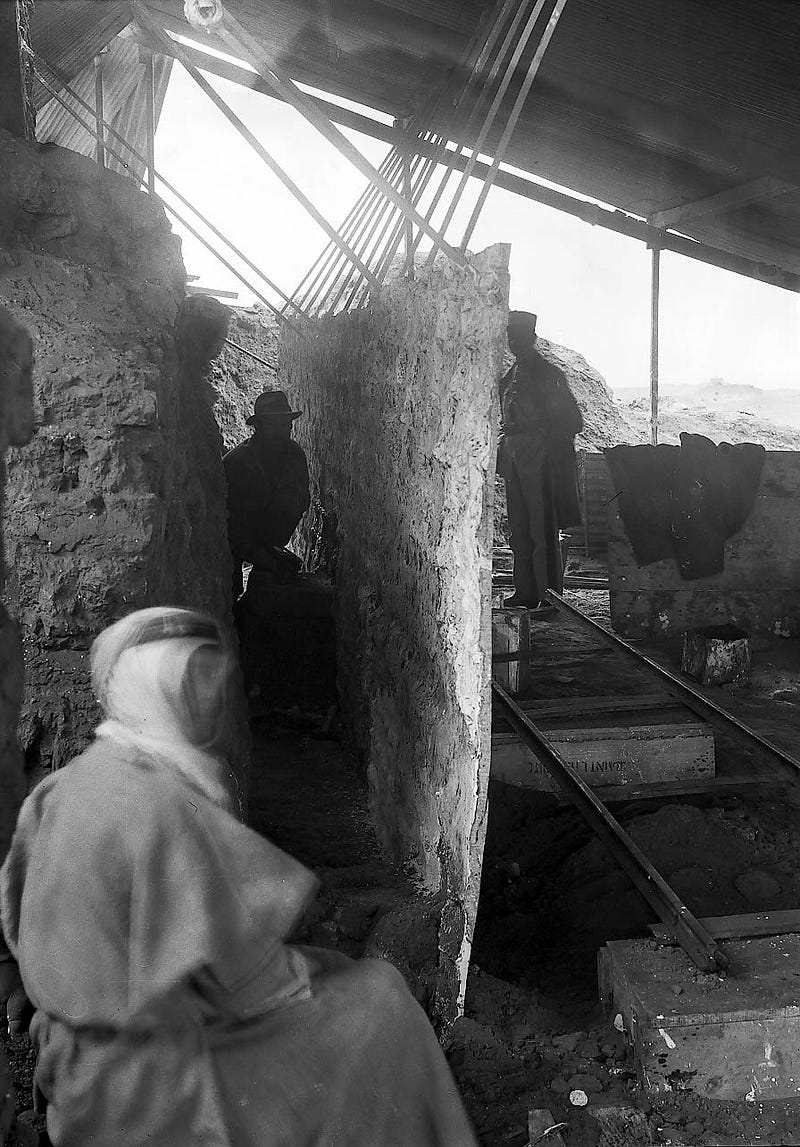
The murals were cut off the wall and taken to Damascus.
These were Jewish works in a Muslim country. To this day, the National Museum of Damascus doesn’t advertise the murals, and guidebooks of the city don’t mention them.
If you know where to look — they are there.
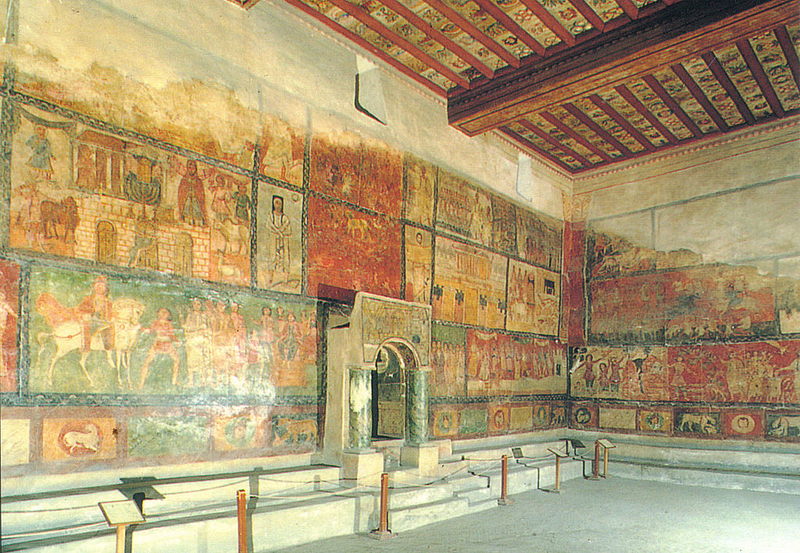
The museum does not make available images of the murals.
It prohibits photos by patrons. A few photos circulate. One taken covertly by a tourist in 2009 can be seen on Flickr.
We get an idea, at least, of what the murals actually look like in person—under a glossy varnish.
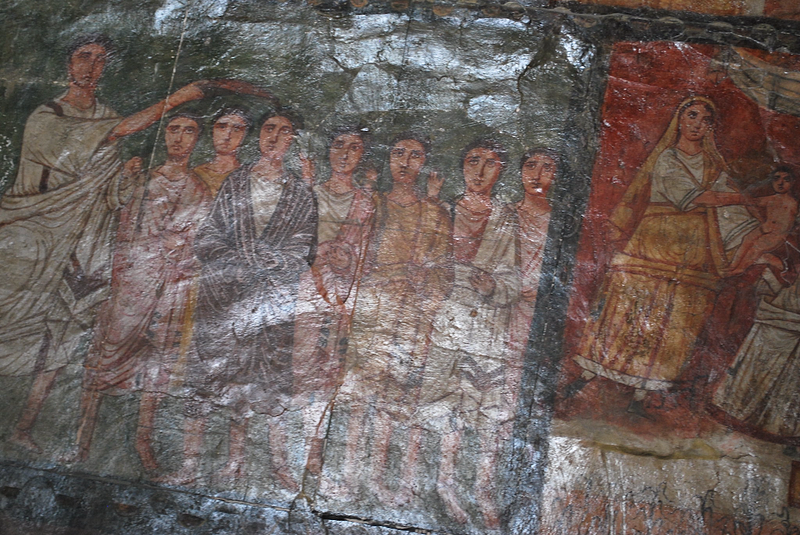
Otherwise, all color images are from old, published sources—faded or oddly re-colored.
A range of efforts were made over time to do re-creations of the murals. It’s sometimes unclear which images are originals and which are copies.
But any reproduction is still displaying a miracle. This is an effort by Jewish artists, around 249 A.D., to imagine what the Bible looked like.
We see baby Moses being found in the river by the Pharaoh’s daughter.
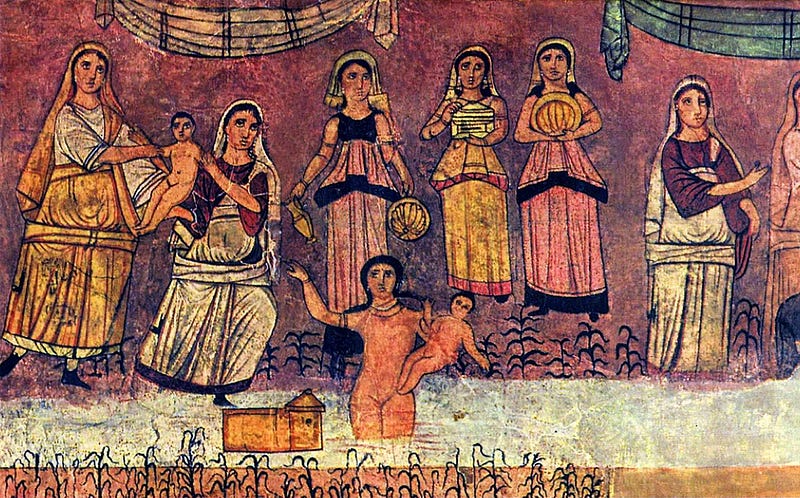
A lot of biblical interpretation is involved.
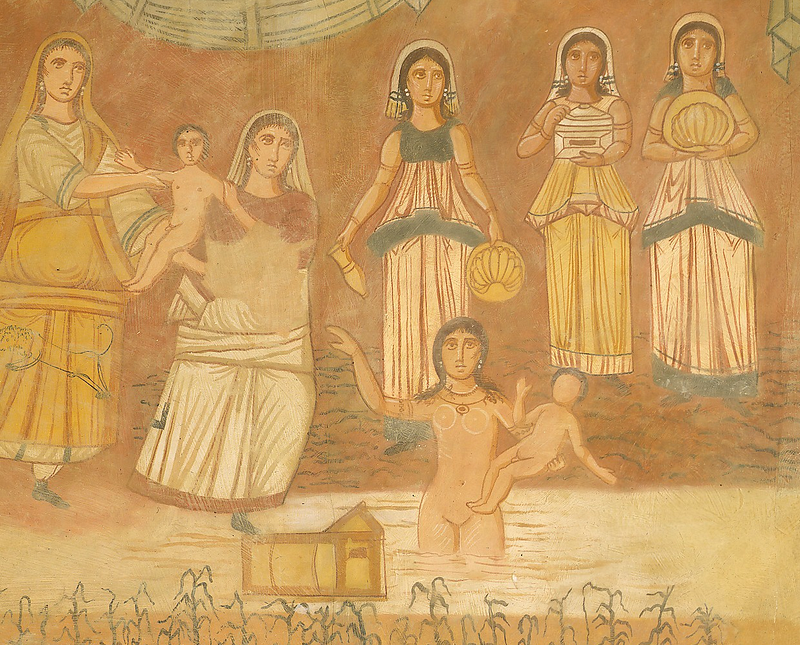
I was interested in the nudity of the Pharoah’s daughter, which suggests a status almost of a goddess.
In the degraded reproduction, her breasts seem blank, but a painted reproduction from the original by the artist Herbert Gute has them visible.
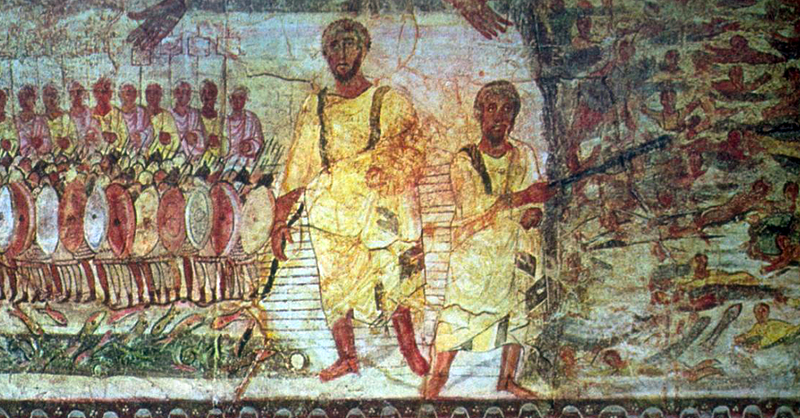
We see Moses leading the Exodus out of Egypt.
In interconnected scenes, the Egyptian army marches toward the fleeing Israelites—then drowns in the Red Sea.
Note that Moses is carrying a ‘rod’ or ‘staff’—the tool of directing divine power that Christians think, from Proverbs 23:13, is used to hit children.
But Christians had little idea what the Bible looked like.
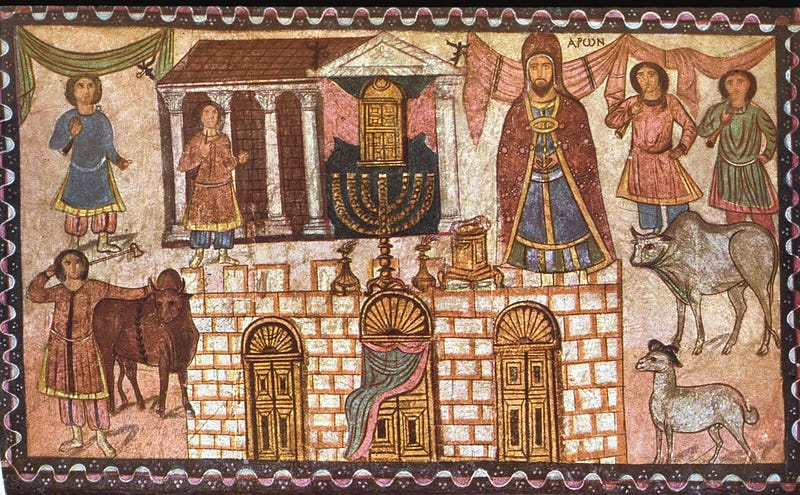
We see the Tabernacle, and the high priest Aaron.
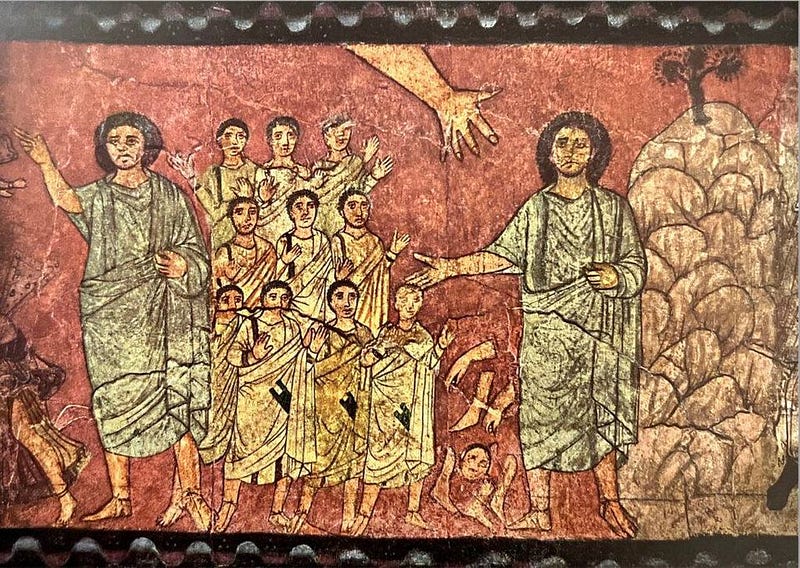
On the trek through the wilderness, the Israelites are out of water. As per Numbers 20, Moses strikes a rock with his staff and water pours out.
It’s imagined here looking more like a well.
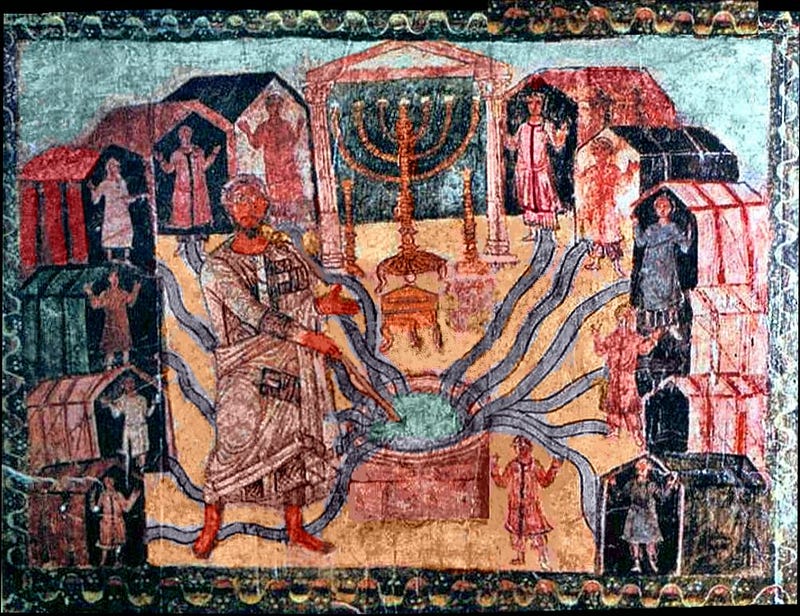
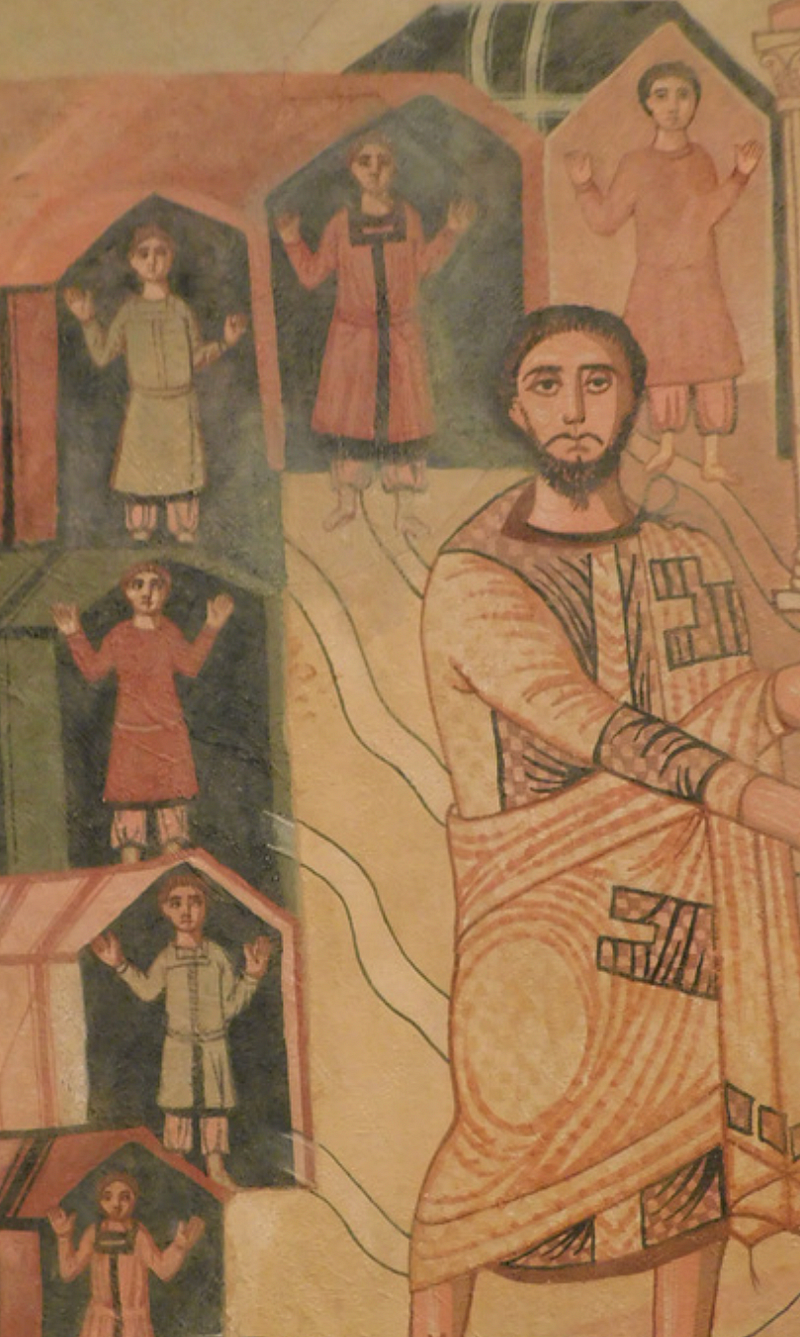
As I study the garish reproduction, I’m struck by the Israelites behind Moses having their arms upraised in the orans position.
The Gute copy is is more detailed. They’re praying. It’s a Jewish practice, after all, on view throughout the Old Testament.
But there’s so few images of the Old Testament, the orans position became known as an early Christian practice.
The stories continue—to David being chosen by the prophet Samuel.
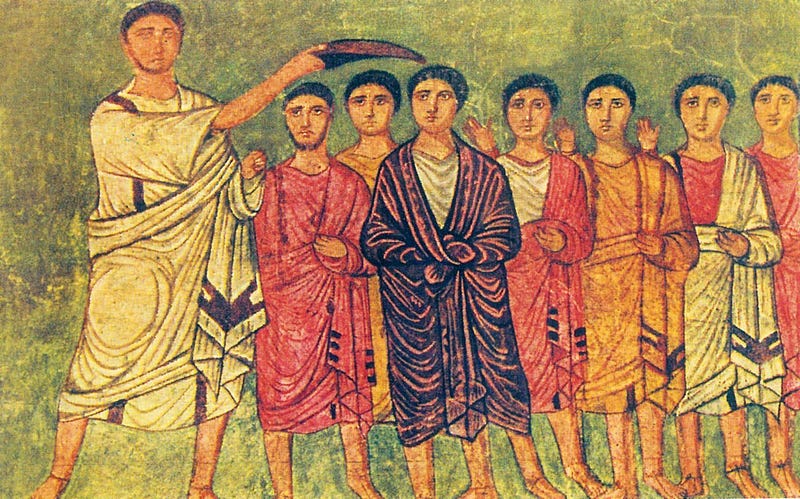
I compare the tourist photo, thinking about the challenge of portraying this scene, which in the biblical story is about seeing beneath the surface.
As the prophet Samuel is told: “Humans look at outward appearances, but the Lord looks into the heart” (1 Sam 16:7b).
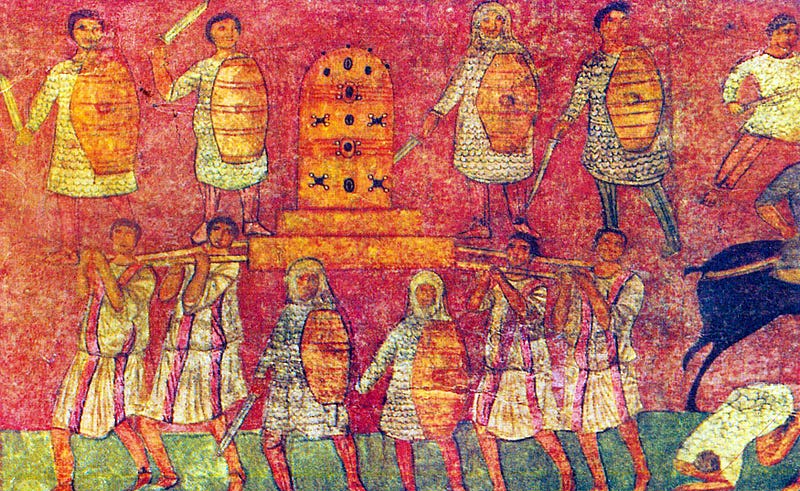
The story moves on. David’s men transport the Ark of the Covenant.
Note the artists don’t pick the moment, in 2 Samuel 6, when the Ark is unstable and about to topple over. The artists choose scenes that emphasize repose, stability and victory.
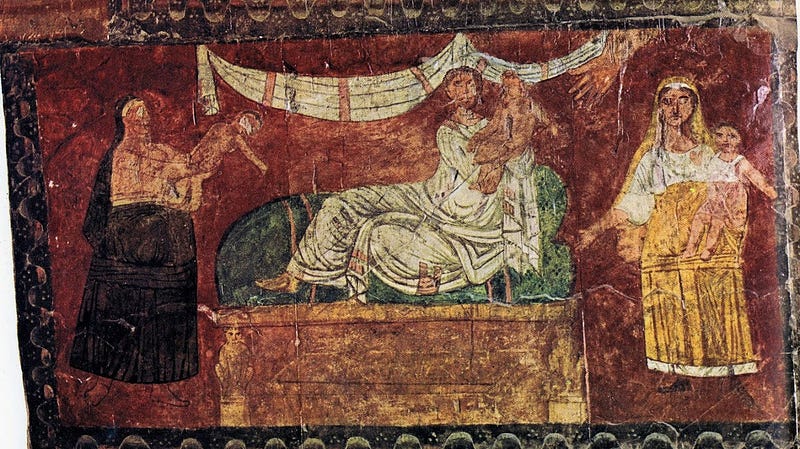
Here’s the prophet Elijah, in the story of the widow of Zarephath.
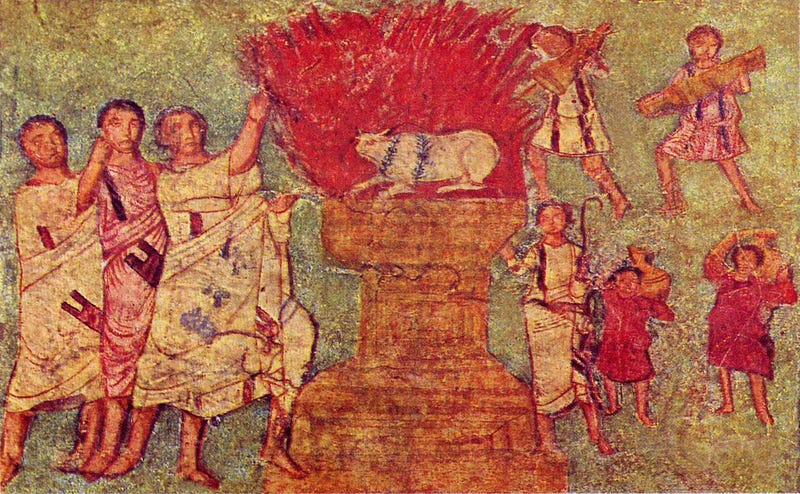
The miracle performed by Elijah with the burning altar soaked in water.
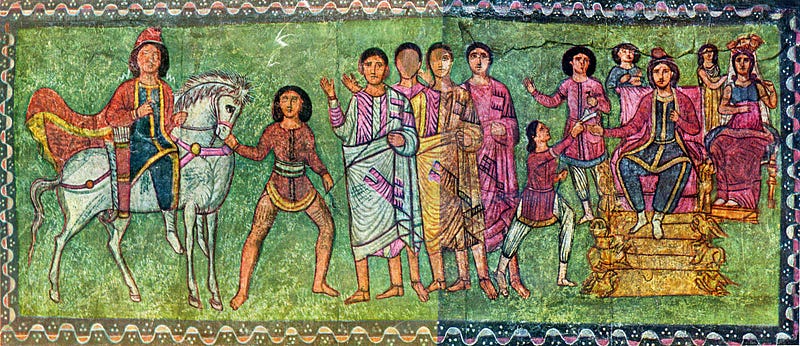
At times the stories are hazily defined. This seems to be Mordecai on horseback, so the woman at right would be Queen Esther.
She’s tucked into the corner—but the story is about her.
God is sometimes reaching down from Heaven, lending a hand. But mostly, the deity just watches.
About a block from the synagogue was a Christian church.
This was as remarkable a find as the synagogue. A converted house, it seems to have become a church around 240 A.D. It was the only functioning early Christian church to survive in any recognizable form.
A room for baptisms, the baptistery, was amazingly well-preserved. There were murals here too, though far more primitive and very faded. It’s fascinating to see the images from the Bible that these Christians associated with baptism.
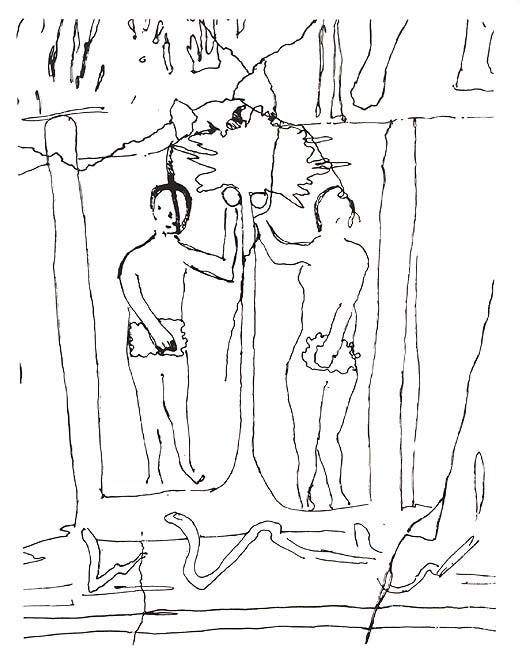
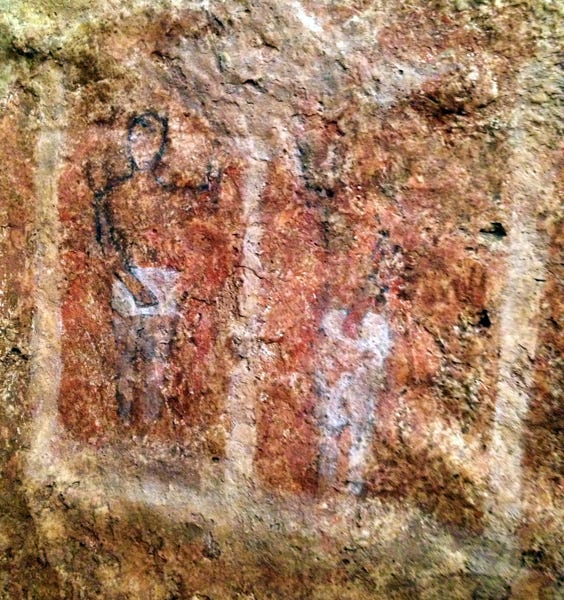
There was Adam and Eve with the humans and the Tree of Knowledge. A drawing by an archeologist seems to have the fruit and the snake.
There was David and Goliath.
This was interesting, as David and Goliath isn’t a scene found in the synagogue murals. The Christian image captures the moment after David had felled the giant with his slingshot, and now holds the giant’s sword, ready to cut off the head.
As the scholar Michael Peppard writes in a 2016 study: “Why this particular scene, displayed so prominently in a baptistery?”
It seems a baptism was understood, in Dura-Europos, to prepare Christians for a battle in which God would be on their side.
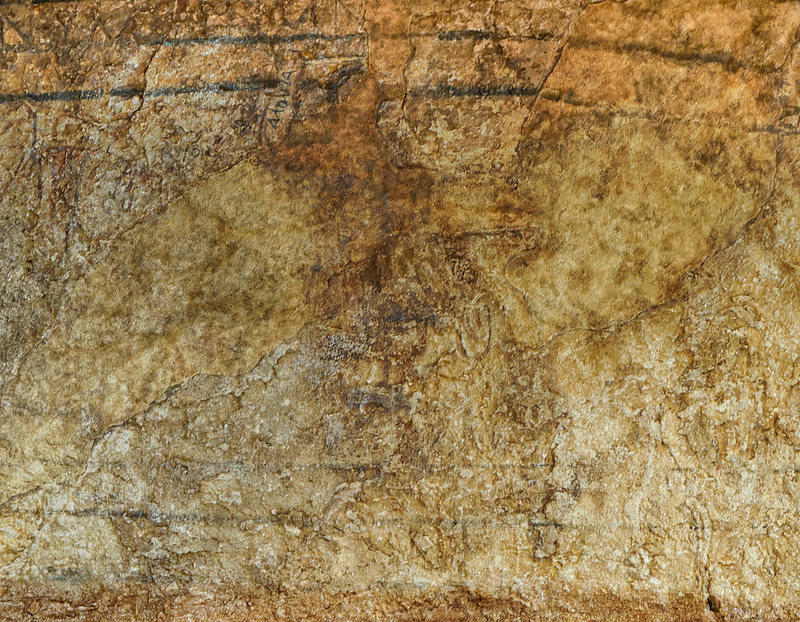
The archaeologist tracing has more clearly David’s upraised arm, the sword ready to strike.
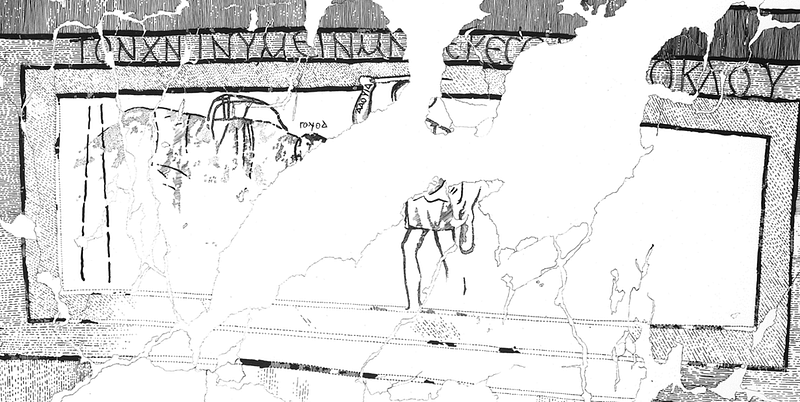
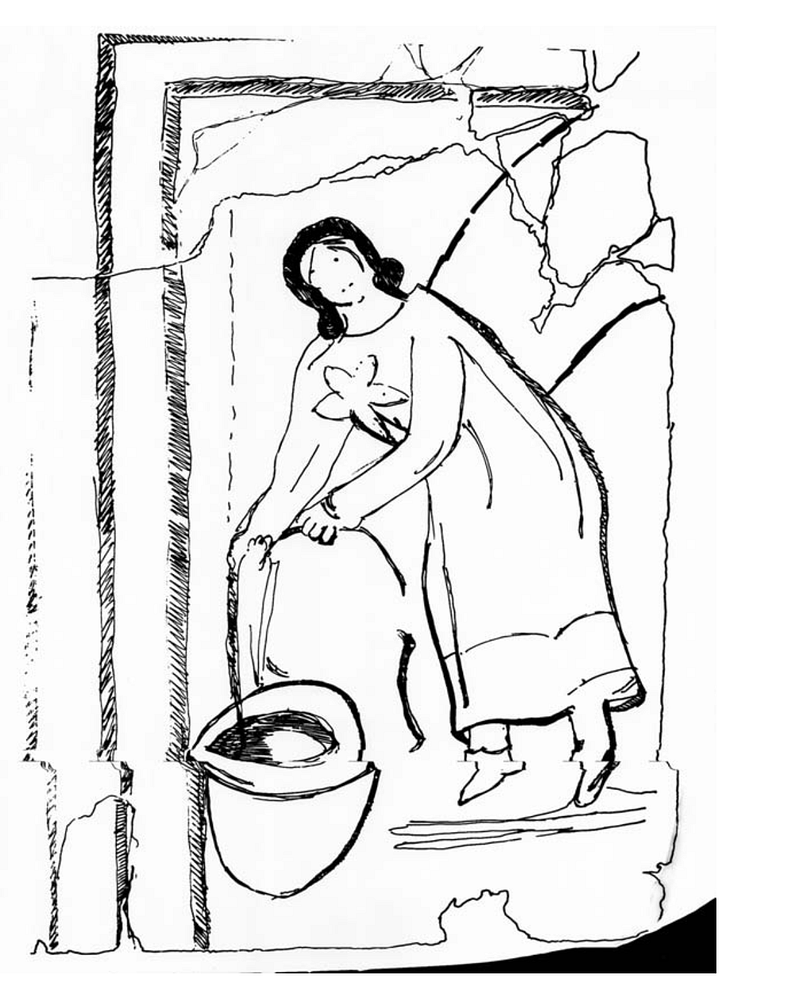
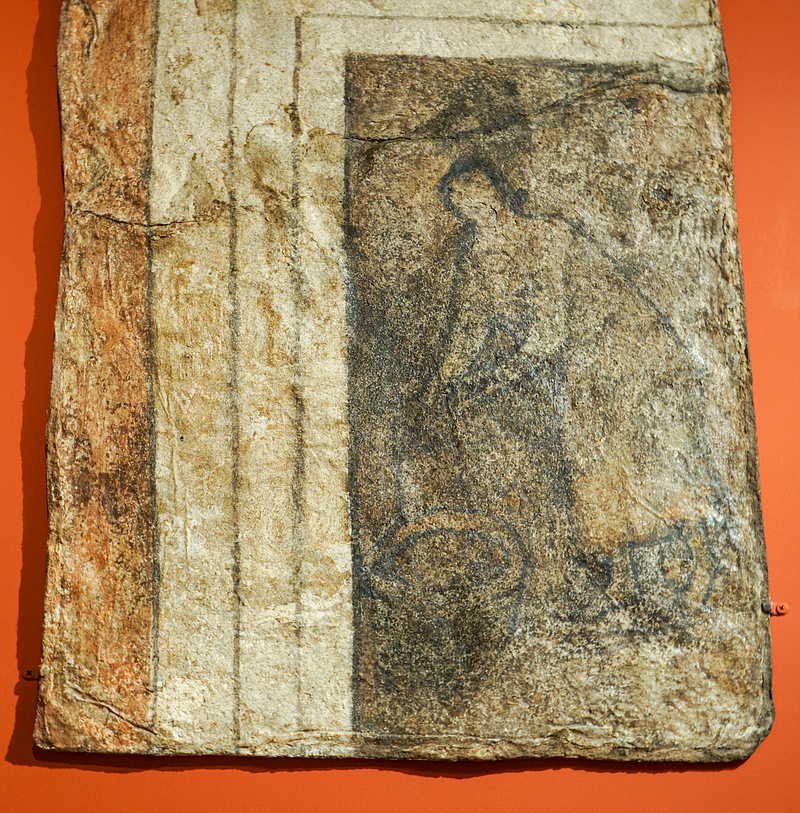
There was a sketch of Mary, Jesus’ mother.
It’s a scene that might surprise ordinary Christian readers: a moment when she’s the young woman drawing water, first hearing the angel’s voice. It’s told in an early text called the Infancy Gospel of James, but is not in the four gospels.
The archaeologist copy better preserves a key detail of the star at Mary’s breast, indicating the messianic presence.
There were more murals in the baptistery.
In a room apparently reserved for baptisms, the walls had sketches of scenes, some from the Old Testament, with imagery of fruit and stars.
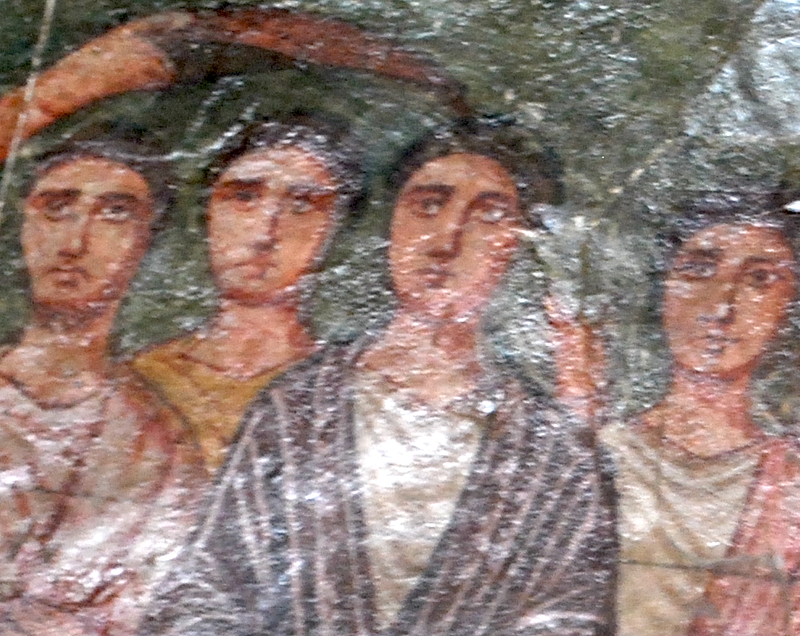
But there was a more detailed mural of a procession of women. They carry torches, marching toward a white structure. The first assumption was that these were the ‘holy women’ going to see the body in Jesus in his tomb.
So this would be Mary Magdalene, Mary the mother of James and Salome—a third woman seen only in a fragment.
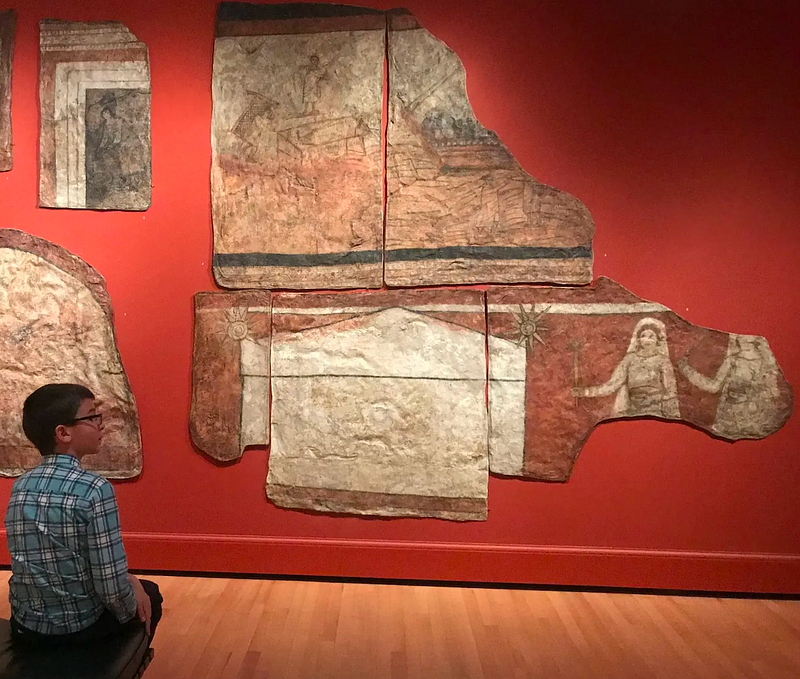
But then, another reading surfaced.
Scholars began to re-think the theology of the baptistery. In Christianity lately, a baptism meant that one has entered the religion. It is a badge of membership, essentially, in the ‘church’.
In original Christian sources, however—as in orthodox Judaism to this day—a woman about to be married did a ritual bath. She is purifying the body for sex with her husband.
In Dura-Europos, the marriage had been to Jesus.
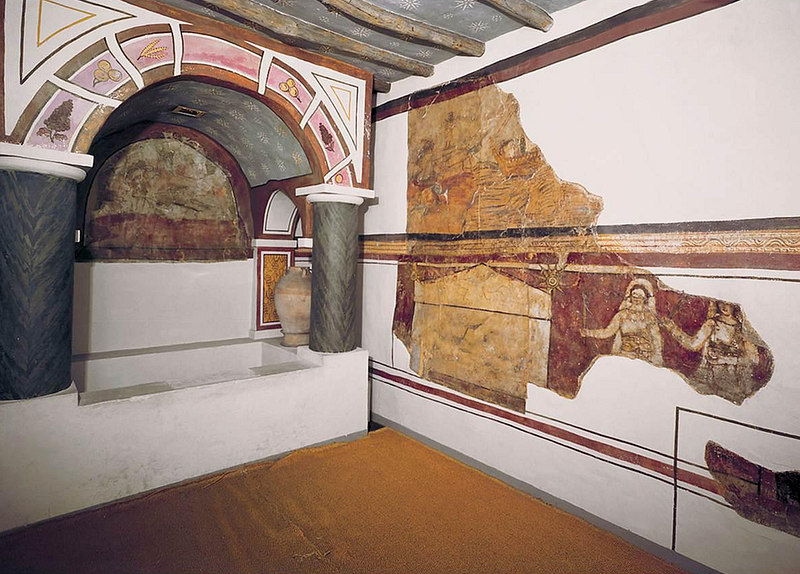
This kind of “baptism” is unfamiliar to Christians.
It’s overt in a range of early Christian texts. But even in the canonical New Testament there are references to converts being viewed as ‘virgins’ whose ‘sexual purity’ was a key concern.
There it is in 2 Corinthians 11:2, where the apostle Paul writes:
“I promised you to one husband, to Christ, so that I might present you as a pure virgin to him.”
This is probably not saying that all Christian converts have to be women who haven’t had sex. Rather, some kind of spiritual suggestion is involved.
The key was the identity of the women in the mural.
As scholars realized, they probably weren’t the ‘holy women’ of the gospel story. There had been problems with that identification. These women are carrying torches, though the gospel scene does not occur at night.
Also, there was suggestion of the mural having originally portrayed ten women. And they seem to carry little pots or jars in their hands.
So this may be another story: the Wise and Foolish Virgins from the Gospel of Matthew (25:1–13). These women are carrying oil—intent on lasting the long night, and meeting the ‘bridegroom’.
The white structure would then be a tent—imagined in reference to the Tabernacle. But in this context it is called a ‘bridal chamber’. This is where the marital sex will happen.
As the scholar Sanne Klaver explains:
“The bridal chamber is where the epiphany of Christ takes place. It is in this chamber that Christ will marry his brides, and that the unification between Christ and man will take place.”
The artist does not show us the interior of the tent. We see the women as they approach.
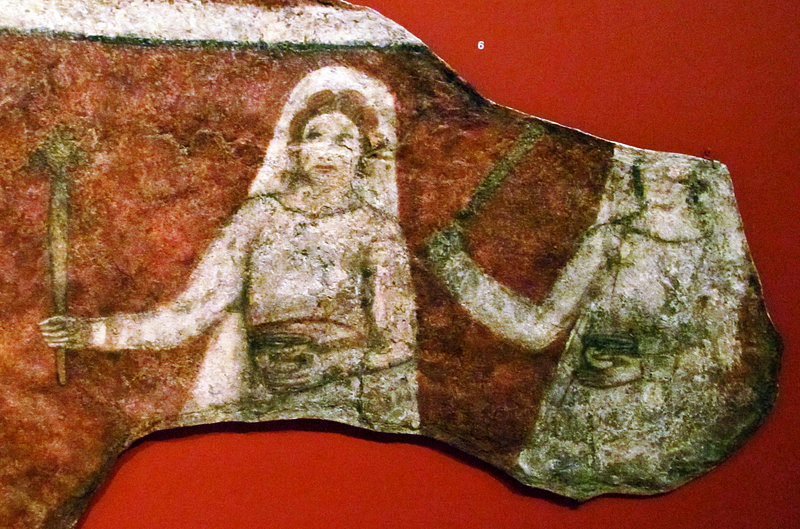
The baptistery had Jesus images too.
These were just sketches—doodles even. There Jesus was as his ‘Good Shepherd’ character. He is the shepherd carrying a lost sheep.
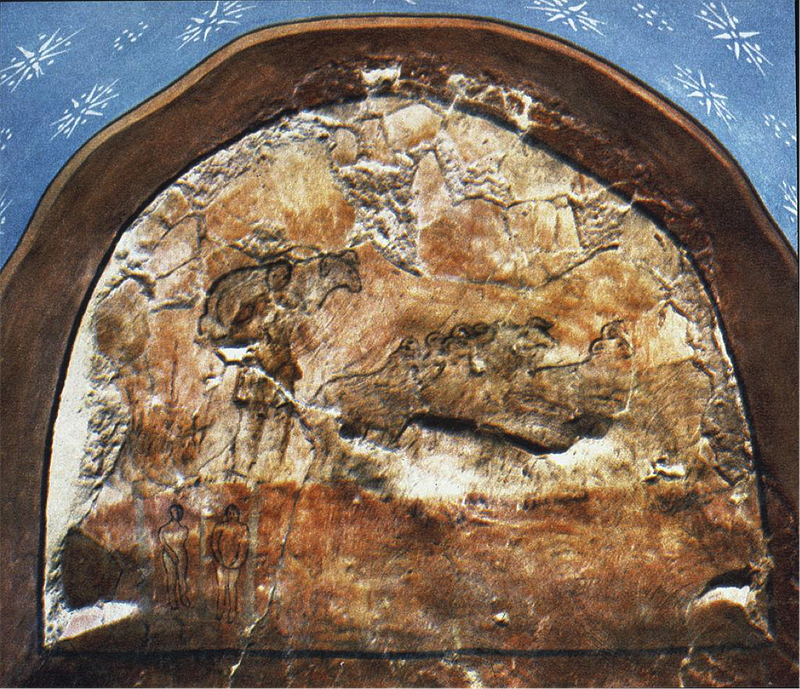
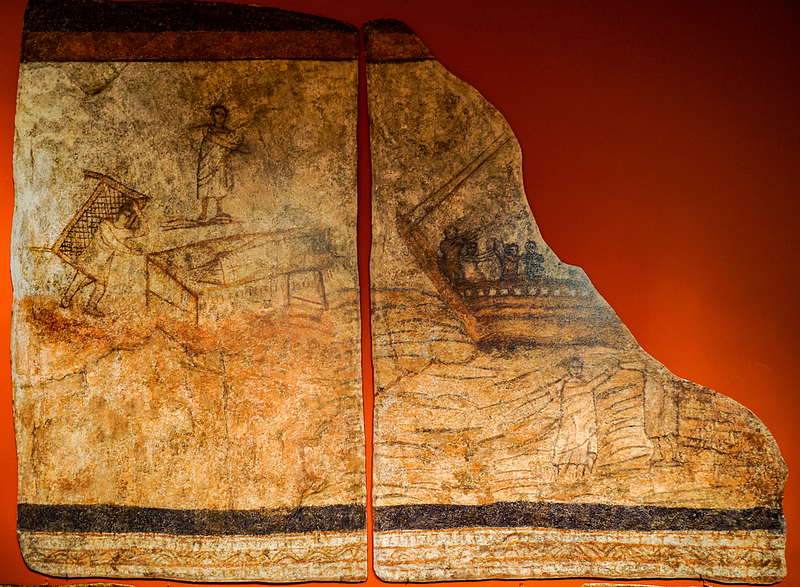
In two murals, Jesus was performing miracles.
These are scenes from the gospels. On the left he is healing the paralytic man, and on the right he is walking on water with Peter. Behind them we see a row of the disciples in a ship.
How fascinating to see Jesus as the Christians of Dura Europos had seen the deity. A waiflike being. A pixie—extending his hand.
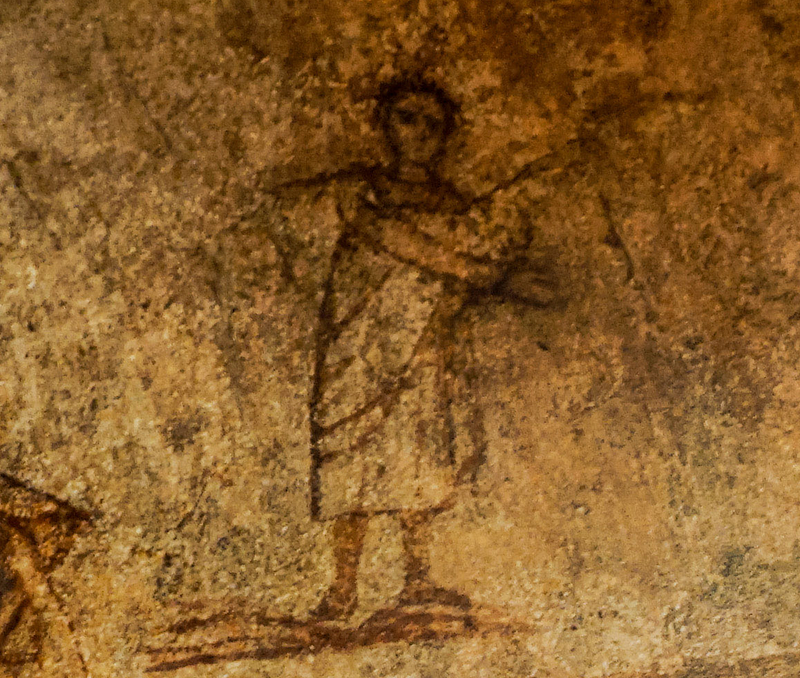
Then Jesus is calming the sea.
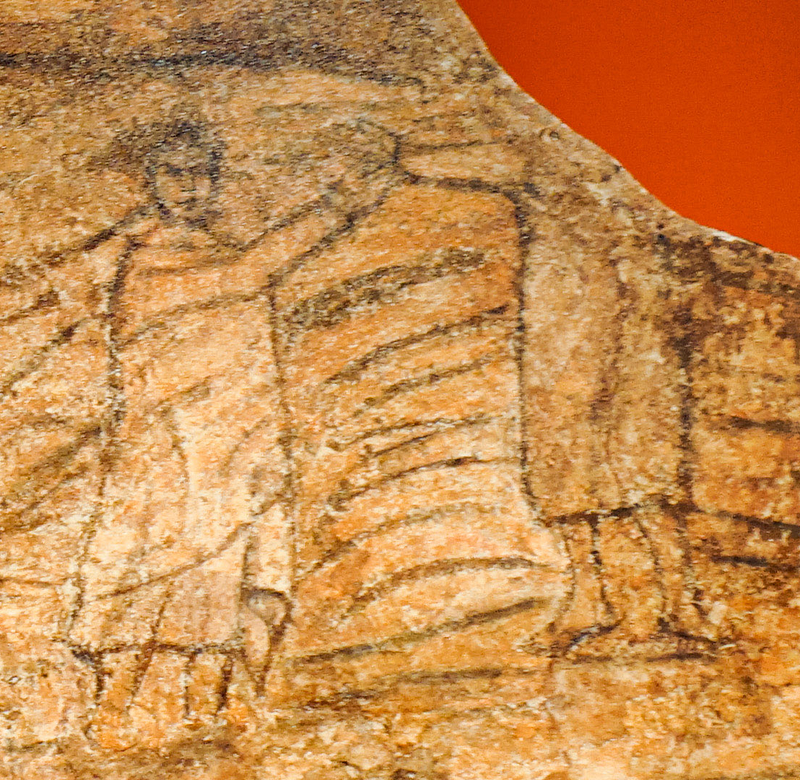
He stands beside Peter, inviting him to walk on the water as well.
But…which is which?
What we don’t see? Jesus crucified.
The critical scene in ‘Christianity’ is not found at Dura Europos. Mulling this omission, Michael Peppard explains:
“…these Christians emphasized salvation as victory, empowerment, healing, refreshment, marriage, illumination, and incarnation more than participation in a ritualized death.”
It was another Christianity — a religion of life.
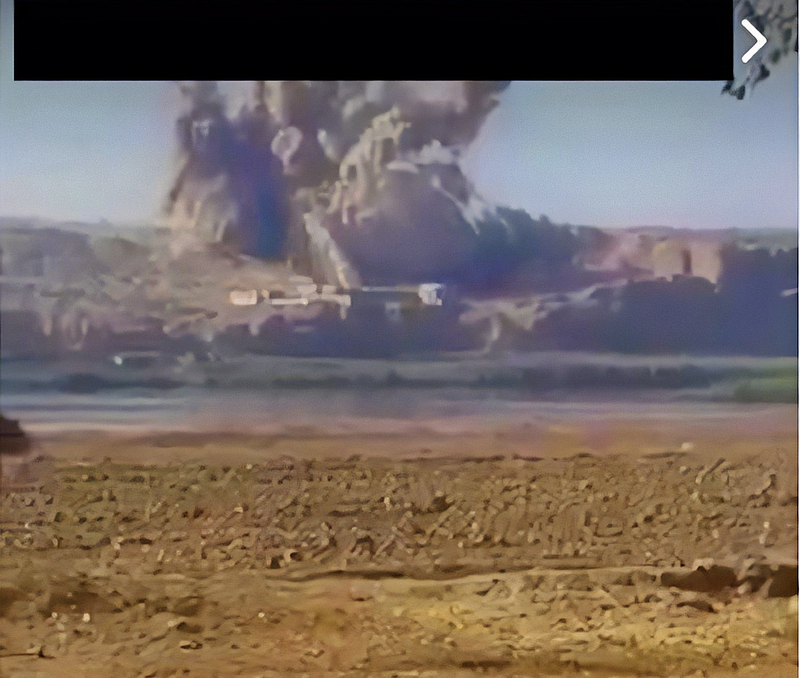
As of 2011, Dura-Europos became inaccessible to Westerners.
Satellite images showed ISIS looting the ruins. A 2020 paper by the scholar J.A. Baird surveys the damage, and includes an image of a bombing she was sent in 2017, via Twitter.
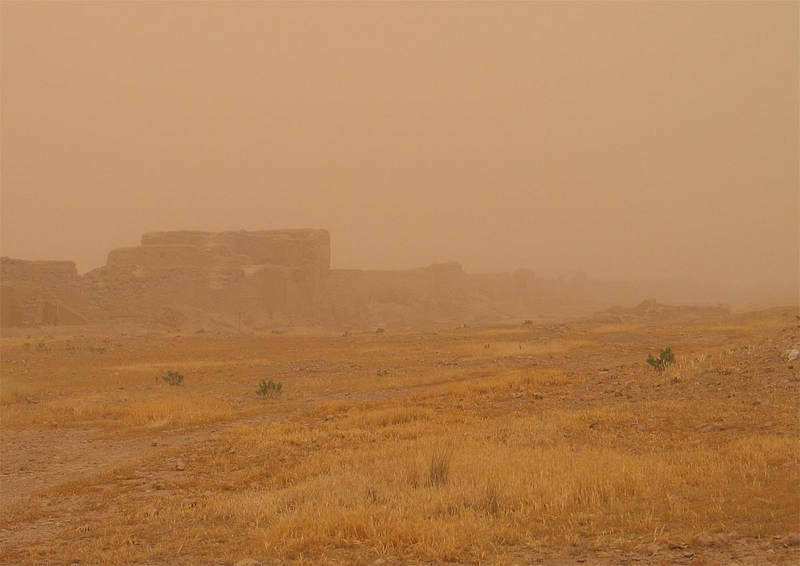
The synagogue murals are in Damascus, as Jesus and his virgins are at Yale University—as Dura-Europos fades back into the sand. 🔶
.