
The Best Way to Make Money Online Is to Make Free Content
People don’t want to pay for your stuff

The content creation economy has never been more booming than today. In 2020, 2 million content creators made more than 6 figures on Youtube, Instagram, and Twitch globally. During the same year, Medium paid out more than $11 million in earnings to the writers on its platform, while recording an increase of 106% writing members. Never before have creators been able to earn as much money consistently, across multiple channels, and without depending on a boss to execute their ideas.
There is one common factor across the few millions of online creators who can make money from what they do: 90% of what they have to offer is free. When I started blogging 2 years ago, I clearly outlined my strategy: first, make free content, and then convert some of that “free traffic” into paid customers, through downloadable resources and online courses.
That’s exactly what I did, but I had no idea how much money I’d end up making just by publishing free content online. Not only that, I didn’t think that 2 years later, a big chunk of my income would still come purely from giving away free content.
Some content creators may have secondary ventures like a clothing brand, paid courses, premium content… But the core of what they do is usually completely free. Why? Because free content is the most efficient way to generate a steady income as a creator in 2021 and beyond.
People don’t want to pay
The first very simple reason it’s hard to sell things to people is that not everyone has extra money to spend. Life is getting very expensive, in a crazy way. The housing market hasn’t been so hot in over a decade, and as a result, people have to spend a ton of money to buy a place to live. Consumer prices are on the rise too, and life, in general, has become incredibly expensive in a lot of big cities across the globe.
With that in mind, people are not very interested in having to pay to read/watch/download somebody’s content online, especially when they can often find something very similar elsewhere, and for free. Unless you’re a big company with a huge and exclusive offering (like Netflix, Hulu, HBO…), most people won’t pay $10 a month (let alone hundreds of dollars) to get to your content.
I often get emails from people who tell me that they enjoy my articles, how they relate to my content… I love hearing from my readers, it’s the most gratifying thing as a content creator. But I’m often surprised at how such a small portion of my audience converts into paying customers. It’s not that people think your stuff is bad, or that it’s not worth the money. It’s simple, quick maths:
The price they would have to pay for your contentVSThe amount of free stuff available online
+The chances of finding something very similar elsewhere=Not worth itYou need massive traffic/exposure
There are only 2 ways you might get a shot at getting people to buy your content:
- By having a lot of authority on a specific subject, or
- By having a ton of traffic to your platform
Authority is built up over time by working a lot and sharing (free) content on websites that lend you their platform to publish what you have to say.
Traffic to your own platform/website on the other hand is extremely hard to generate. Back in the early 2000s, if you knew more than average about a specific subject, were good at churning out content, and were willing to work hard on it, you had a pretty good shot at bringing people to your website. In 2020 and beyond, these days are over.
Here are a few key internet facts:
- There are over 4.9 billion active internet users
- There are 198.4 million active websites on the web
- Around 7 million blog posts get published per day (Source)
It doesn’t mean that it’s impossible to get people to check out your website if you’re starting from scratch. But it does mean that it’s virtually impossible to drive traffic without using the already existing platforms out there. Things like Instagram, Youtube, Twitch…
If you do manage to get your little slice of the internet cake (by getting actual users to check out your website), you will need to convince those people to pull out their credit cards for you. In online marketing, across all industries, a paltry 1 to 2% conversion rate is considered okay.
This means that you would need around 1000 visits of actual, interested users to generate 10 sales. Knowing that 50% of local businesses receive less than 500 visits per month, that’s a lot of work.
You might think to yourself “Can I not just pay for ads to drive people to buy my stuff?” You can, but you’ll need a huge ad budget. How big?
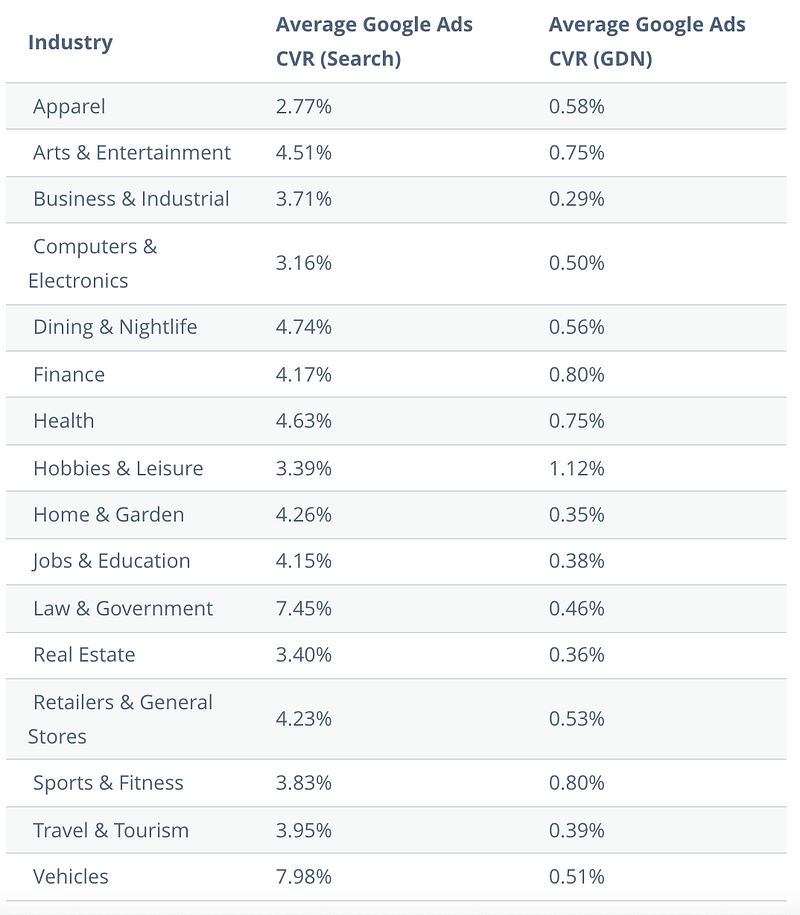
The average conversion rate across Google Ads is 0.57% for the display network (visual ads). All the industries have a conversion rate below 1%, except for one (Hobbies & Leisure at 1.12%). That’s scary low, and that means you would need to spend tens of thousands of dollars to hope to drive a few dozen sales.
Here is a personal example. After I published an article comparing Ticktick and Todoist (the 2 most popular productivity apps on the market), I managed to rank 1st in Google for the search term “Ticktick VS Todoist”.
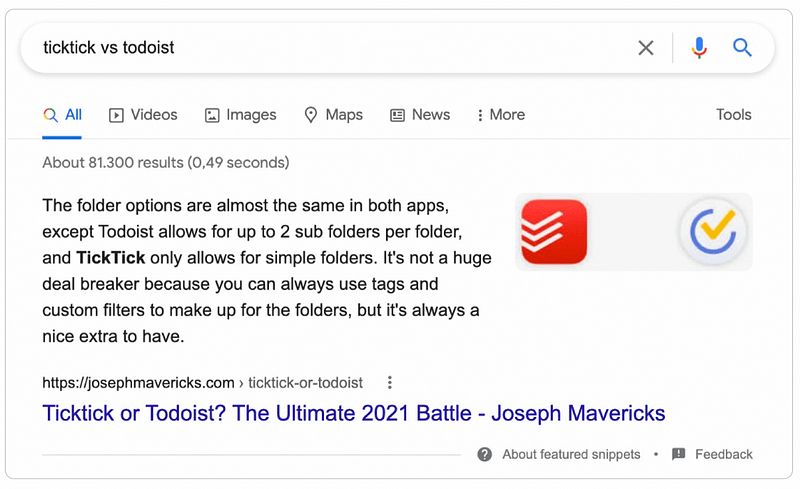
This has brought a steady increase to my monthly website traffic, yet again, not much of that traffic converts into paying customers. I’m playing the long-shot game anyway, so I can work on more content that the Google bots will like, but the point here is this: it takes a ton of traffic to get a bunch of customers.
The market is saturated
No matter what industry you’re in, your online market is probably saturated. Consider this: as we saw earlier, there are 198.4 million active websites in the world, and we’ll take only 25% of that number to stay conservative. We can then safely assume you’re up against 50 million websites at least. Even if only 1% of those websites are in the same niche as yours, that’s still 500,000 platforms to beat. And even if 90% of these platforms are doing a terrible job and are easy to beat, you’re still up against 50,000 active, relevant, and established websites on your topic.
Does it mean you shouldn’t try to sell to people? No, but you should probably consider first giving them free content, as a gateway into your offering. Nobody will find your website if you just sell things without added value on the side.
Free stuff reaches more people
A free article can easily be shared by anyone on Twitter, Linkedin, Facebook… So can a free video, a free ebook, or a free podcast episode. People share the free stuff they like with their social circles because they find it relevant, entertaining, and they know their connections might like it too.
Authoritative, good, free content works “on its own” when you:
- Publish great stuff on an existing platform
- Let people share it
- Drive more traffic/audience
- Get paid by the platform
- Optional: manage to drive a few people away from the platform to your website to purchase your stuff
- Repeat
By the way, this is not to say any of this is easy. Whether your content is free or paid, churning it out will require a ton of work. The reason there are “only” 2 million content creators making $100K+ per year online is that tens of millions of other ones either gave up or never worked hard enough. If it was easy, everyone would be a Youtuber or a Blogger.
I started blogging 2 years ago after literally 10 years of never finishing anything I’d start. I’d pick something up and drop it a few weeks or months later. Then one day, I decided to commit to the 6-month rule. I started writing like it was my job, showing up every day, just to see where it would take me. 2 years later I’m still here, and I don’t intend on stopping anytime soon.
The free content economy is not going anywhere
As we just saw, the basic framework of content creation on free platforms is very easy. The more people consume your content, the more the platforms will pay you, and the more value you can provide your audience too. This does require a ton of work, but so does paid content, so you might as well give it a shot.
The main upside of the free content economy is that it appeals to 99% of people online. It’s not going anywhere, so you have all the time to build up your project and an audience, slowly but surely.
The best time to start was always yesterday, and the most successful content creators today are the ones that started investing their time into creating content years ago. It’s not too late, but every day you keep waiting, the competition gets a little fiercer.
When I started writing online 2 years ago, a lot of authors were saying: “It’s too late to start making it with writing online, you missed the boat a few years back.” Everybody thought the platforms had gotten too big to get a little slice of an audience there. But people say the same thing about YouTube, yet new successful content creators keep coming up every year.
In 2021, a traditional business model “I sell, you buy” hosted on your website will prove unreliable and resource-heavy. It is also very, very hard to grow on your own. An existing platform on the other hand:
- Takes care of the maintenance for you
- Makes sure your content gets delivered to the right people from the start
- And usually does it all for free
The content creation economy is not going anywhere, because people have been consuming content exponentially since the creation of mainstream communication channels.
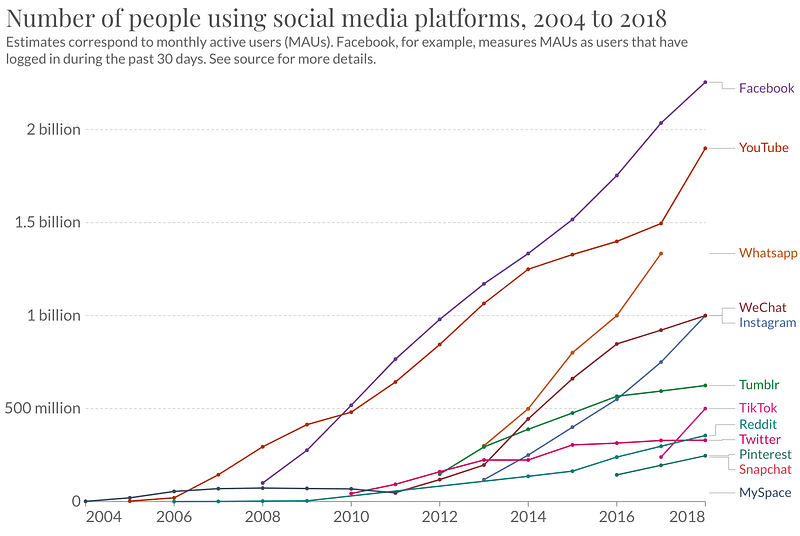
If you’re an aspiring content creator, I hope his article motivated you to get started, and I wish you great success!
Good luck, and enjoy the journey.
I interviewed 50 productivity/business experts and made a 150+ page guide out of the project. This is road-tested advice from real people who get things done. Get it for free here.


