
The Best Way to Generate Practical Ideas
All you have to do is ask yourself one very simple question.

“Man’s mind, once stretched by a new idea, never regains its original dimensions.” — Oliver Wendell Holmes
We all find ourselves in situations where we need to come up with a good idea.
We might be wondering what our newly formed startup should look like, or simply brainstorming for a new project at work. Or perhaps we are just thinking about what next to write about on Medium.
Either way, we need a good idea to get us moving in the right direction.
It gives us something to work with when we find ourselves clueless on how to begin. It’s what we fall back on when we question our decisions or try to justify any criticism that is thrown at us.
A good idea is what we use to lead us into oblivion while defending ourselves along the way.
So what makes an idea “good”?
A lesson from Henry Ford
To answer this, we need to go back to 1913 and relive the dilemma of Henry Ford.
Back in the day, most cars were manufactured one at a time. You couldn’t move on to the next car until the first one was finished.
As you might imagine, this turned out to be highly inefficient and extremely expensive. To break-even on the Model T, Ford had to charge a price that was beyond the affordability of most Americans, which was at complete odds with the company’s vision “to put the world on wheels.”
Henry Ford needed to find a way to cut costs.
So what did he do?
His idea was simple: the moving assembly line.
Instead of manufacturing one car at a time, the production process was reorganised into 84 distinct steps, each adding a new set of features to the chassis — which was being pulled by a rope through the warehouse — until all 3,000 auto parts had been correctly fitted.
It turned out to be a stroke of genius.
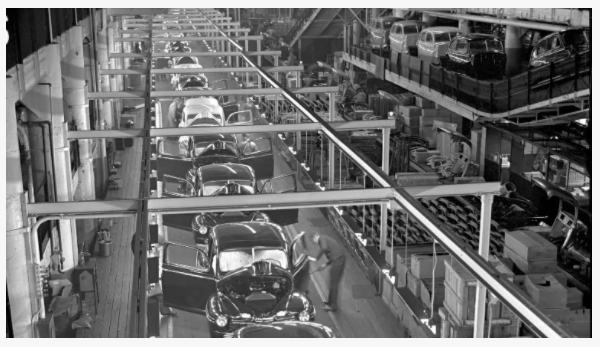
This single change to the Ford production process slashed the time taken to produce a Model T from 12 hours to 90 minutes. The company was able to lower the selling price from $850 to less than $300.
As for the moving assembly line, this would go on to revolutionise the industrial economy for many years to come.
Now the most interesting thing about this story is the order in which the events unfolded. Notice how the problem (cars were too expensive) arose before the idea (a moving assembly line).
Had there been no problem, there would most likely have been no idea.
The conclusion is simple: if you want to come up with a good idea, start by trying to solve a problem.
Fast forward a few decades and it’s easy to forget how many of the “disruptor” companies in today’s era were also born out of the need to fix a simple problem.
Uber was started from the the need to address San Francisco’s shortage of taxis. Spotify was born out of the belief that there was a better way to listen to music that didn’t require physical ownership. Netflix was formed after its founder was charged a late fee on a movie rental at Blockbuster Video.
Great ideas stem from being able to solve problems that matter.
Generating good ideas can be made easier
“A problem well stated is a problem half solved.” — John Dewey
Don’t get me wrong, coming up with a good idea is hard work, especially if you are working towards a tight deadline. But we make it harder for ourselves by starting from the wrong side of the fence.
We rush into trying to come up with a “really cool idea” that might work or impress others.
What we should be asking ourselves is “what’s the problem that needs fixing?”
It’s important we start with the correct mindset if we are to give ourselves any chance of generating powerful ideas that actually work.
Practice becoming more observant
“Begin challenging your own assumptions. Your assumptions are your windows on the world. Scrub them off every once in a while, or the light won’t come in.” — Alan Alda
To become better ‘innovators,’ we ought to practice the art of thinking in terms of what needs fixing, not what would be a nice-to-have. Had the founders of Uber, Spotify and Netflix failed to notice the problems that they and others were facing in their daily lives, I imagine we’d be living in a very different world right now.
Try this exercise every once in a while.
Start by finding a few minutes in your day to reflect on something that continues to bother you? What’s frustrated you today? What task has taken longer than you had budgeted for?
If you can’t think of anything, force yourself into noting what other people have struggled with in their daily lives. There is always something that needs fixing or can be done better.
Final thought
“Ideas come from everything” ― Alfred Hitchcock
Good ideas are the foundation of great innovation. It’s important you take the time to remind yourself how best to source them.
So remember, problem first, idea later.


