avatarMelissa Sirois

Free AI web copilot to create summaries, insights and extended knowledge, download it at here

2036

Abstract

">The inherent beauty of a commonplace book is that the author can make it into anything he or she desires. Ultimately, no two books are the same, just as no two minds are the same.</p><p id="b8eb">Think of a commonplace book as a physical representation of one’s neural networks. As cultural historian Robert Darnton <a href="https://www.thoughtco.com/what-is-commonplace-book-1689875">said</a>, “You [make] a book of your own, one stamped with your personality.”</p><figure id="9322"><img src="https://cdn-images-1.readmedium.com/v2/resize:fit:800/0*tefKw4UoE0Ai5ST3"><figcaption>Photo by <a href="https://unsplash.com/@dimhou?utm_source=medium&amp;utm_medium=referral">Dim Hou</a> on <a href="https://unsplash.com?utm_source=medium&amp;utm_medium=referral">Unsplash</a></figcaption></figure><p id="31d3">Your book can be whatever you’d like it to be, so long as it serves the purpose of capturing ideas (whether yours or someone else’s) and does so in a way that is somewhat organized and meaningful to you. To get started, consider these common uses:</p><ul><li>Transcribe thought-provoking passages from your favorite books.</li><li>Capture observations and lessons learned as you move through life.</li><li>Write down song lyrics that resonate with you or tell a story.</li><li>Gather story ideas and organize thought themes.</li></ul><p id="10ed">Now, re-reading and revisiting the materials captured in your commonplace book is key to extracting as much value as possible from the content. By exploring the passages with a fresh set of eyes and at different times, you open yourself up to new and exciting discoveries.</p><p id="f485">You are much more likely to connect themes, draw narratives, and recognize patterns in your notes when you assess them in this way. Taking care to organize your book’s contents also serves the same purpose.</p><p id="76eb">Johnson refers to commonplacing as “a duet between the present-tense thinking brain and all those past observations recorded on paper”. If it helped Darwin discover the t

Options

heory of evolution, surely it can be of use to you.</p><blockquote id="a9ff"><p>Have an empty notebook and don’t know how to start filling it? Check out some of these ideas:</p></blockquote><div id="59e8" class="link-block"> <a href="https://readmedium.com/5-unconventional-ways-to-get-inspired-ea63faf7e30d"> <div> <div> <h2>5 Unconventional Ways to Get Inspired</h2> <div><h3>Oddly effective tactics you can use to generate ideas</h3></div> <div><p>medium.com</p></div> </div> <div> <div style="background-image: url(https://miro.readmedium.com/v2/resize:fit:320/0*RTsHX1NnrPqlVtPN)"></div> </div> </div> </a> </div><blockquote id="68bc"><p>I’d like to give a shout-out to a fellow Medium-er, <a href="https://medium.com/@renaissancewriter97">Chauncey Simmons</a>. Chauncey writes about health and fitness and also shares stories that teach important life lessons. One of his more recent articles focuses on the difficult decision to turn down a football scholarship, which would’ve given him a tuition-free college experience. I admire Chauncey’s conviction and commitment to himself, and I think you will, too.</p></blockquote><div id="7010" class="link-block"> <a href="https://readmedium.com/it-was-a-full-ride-cj-i-turned-down-a-full-athletic-scholarship-126c56992229"> <div> <div> <h2>“It Was A Full Ride, CJ!”- I Turned Down A Full Athletic Scholarship.</h2> <div><h3>Football was fun to play as a kid, but I wasn’t sure if I was ready to be tied down to a scholarship.</h3></div> <div><p>medium.com</p></div> </div> <div> <div style="background-image: url(https://miro.readmedium.com/v2/resize:fit:320/1*pXiC17zIntW3v4pdhQFGyQ.jpeg)"></div> </div> </div> </a> </div></article></body>

The Best Way To Capture Your Thoughts, According to Charles Darwin

You might already be doing it!

Photo by Dollar Gill on Unsplash

Get this: A fair amount of the world’s greatest scientists, leaders, and philosophers all used a similar approach to systematically capturing and categorizing their many thoughts. Charles Darwin used the strategy, as did John Locke, Thomas Jefferson, and Mark Twain. Even more modern thinkers, like Ronald Reagan and Bill Gates, have supported it.

Enter commonplacing, what author Steven Johnson refers to as “a system for capturing hunches”. It has been around since 1512, and it works.

“The tradition of the commonplace book contains a central tension between order and chaos, between the desire for methodical arrangement, and the desire for surprising new links of association.” — Steven Johnson

“Commonplacing” is essentially a formal phrase for note-taking — capturing thoughts, feelings, quotes, data, passages, and poems of sorts. A commonplace book is a vessel in which all of this information is stored.

In the traditional sense, commonplace books were often physical notebooks filled with personalized musings. Nowadays, though, we have the means to produce and maintain digital books with the help of apps and social media platforms.

The inherent beauty of a commonplace book is that the author can make it into anything he or she desires. Ultimately, no two books are the same, just as no two minds are the same.

Think of a commonplace book as a physical representation of one’s neural networks. As cultural historian Robert Darnton said, “You [make] a book of your own, one stamped with your personality.”
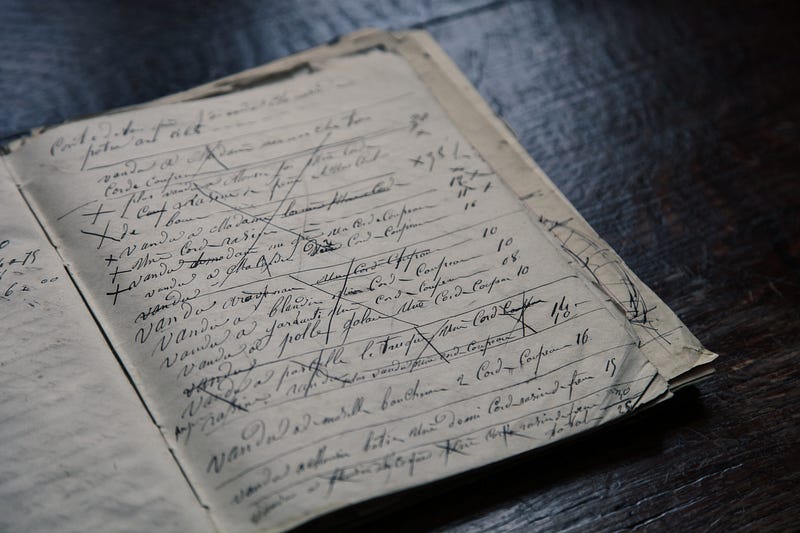
Photo by Dim Hou on Unsplash

Your book can be whatever you’d like it to be, so long as it serves the purpose of capturing ideas (whether yours or someone else’s) and does so in a way that is somewhat organized and meaningful to you. To get started, consider these common uses:

  • Transcribe thought-provoking passages from your favorite books.
  • Capture observations and lessons learned as you move through life.
  • Write down song lyrics that resonate with you or tell a story.
  • Gather story ideas and organize thought themes.

Now, re-reading and revisiting the materials captured in your commonplace book is key to extracting as much value as possible from the content. By exploring the passages with a fresh set of eyes and at different times, you open yourself up to new and exciting discoveries.

You are much more likely to connect themes, draw narratives, and recognize patterns in your notes when you assess them in this way. Taking care to organize your book’s contents also serves the same purpose.

Johnson refers to commonplacing as “a duet between the present-tense thinking brain and all those past observations recorded on paper”. If it helped Darwin discover the theory of evolution, surely it can be of use to you.

Have an empty notebook and don’t know how to start filling it? Check out some of these ideas:

I’d like to give a shout-out to a fellow Medium-er, Chauncey Simmons. Chauncey writes about health and fitness and also shares stories that teach important life lessons. One of his more recent articles focuses on the difficult decision to turn down a football scholarship, which would’ve given him a tuition-free college experience. I admire Chauncey’s conviction and commitment to himself, and I think you will, too.

Notebook
Inspiration
Writing
Ideas
Coffee Times Movement
Recommended from ReadMedium